
November 13, 2026
Explore: Fit Notes
How Should Men’s Dress Pants Fit? Waist, Rise, Seat and Break
How should dress pants fit? Check the waist, rise, seat, thighs and hem with practical sitting tests, break options and realistic tailoring advice.
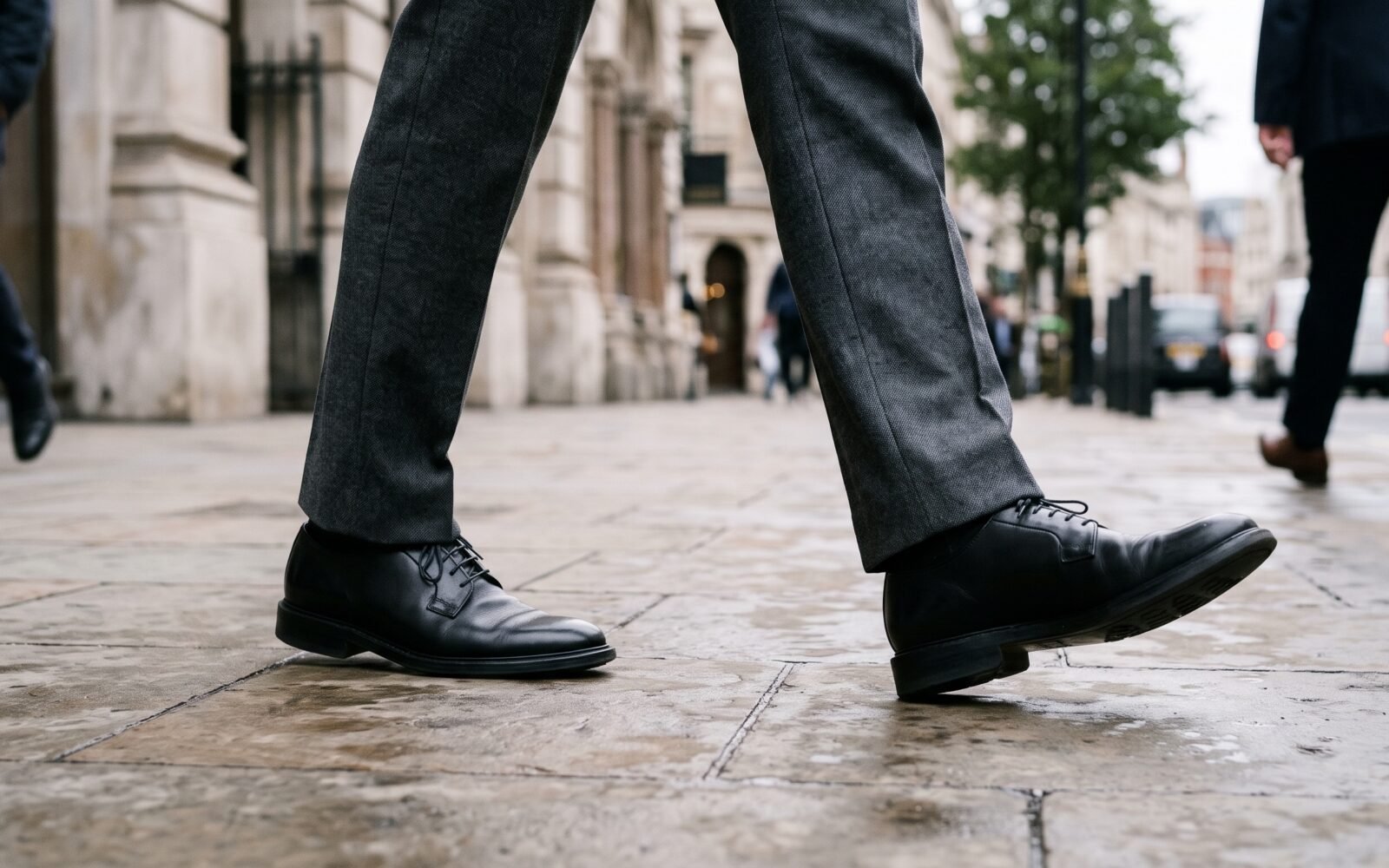
How should dress pants fit when you actually have to sit, walk and live in them? Start at the waistband and work down, not at the hem. A pair can look sharp in a mirror and still pinch through lunch, catch on your calves or slide down whenever you move. The right fit is the one that holds its intended shape while letting you get on with your day.
Short answer: Men's dress pants should stay comfortably at their intended waist position, give your seat and thighs room to move, and fall to a hem length chosen with your shoes on. The waistband should fasten without a struggle. Check comfort sitting as well as standing. Slim, straight and wide cuts can all fit well; unwanted pulling, restriction and constant adjusting matter more than whether the leg is narrow.
This guide is for dress trousers and suit pants, including relaxed tailoring. It is not a rule that every man needs a slim leg or an exposed ankle. Pick the silhouette you want, then check whether the pair delivers it comfortably. A different cut is often a better answer than repeatedly sizing up and down in the wrong one.
How should dress pants fit? Start with the whole silhouette
Before checking individual seams, decide what these pants are for. An office pair worn with lace-up shoes, a wedding suit and a relaxed pair worn with sneakers do not need identical hems. Their job, your footwear and the maker's intended cut help you choose the shape. Comfort is not the part you trade away to get it.
Slim trousers follow the leg more closely. Straight trousers keep a more consistent line below the thigh. Wide trousers deliberately leave more space. Those descriptions are broad shopping labels, not standardized measurements. Two brands can use the same word for different garments, so use their measurements and try the pants rather than treating the label as a promise.
Look at the front, side and back. Does the fabric hang in the shape you chose? Can you stand naturally without sucking in your stomach, shifting your hips or pulling the waistband to a position it will not stay? If a pair only works while you pose, keep looking. You are fitting clothes to yourself, not auditioning for them.
A crease can help you see the direction of the leg, but it is not a ruler your body must match. Some relaxed trousers have no pressed crease. Pleats also add deliberate fabric; they are not automatically evidence that the pants are too big. Judge them in the context of the design and how the trousers move.
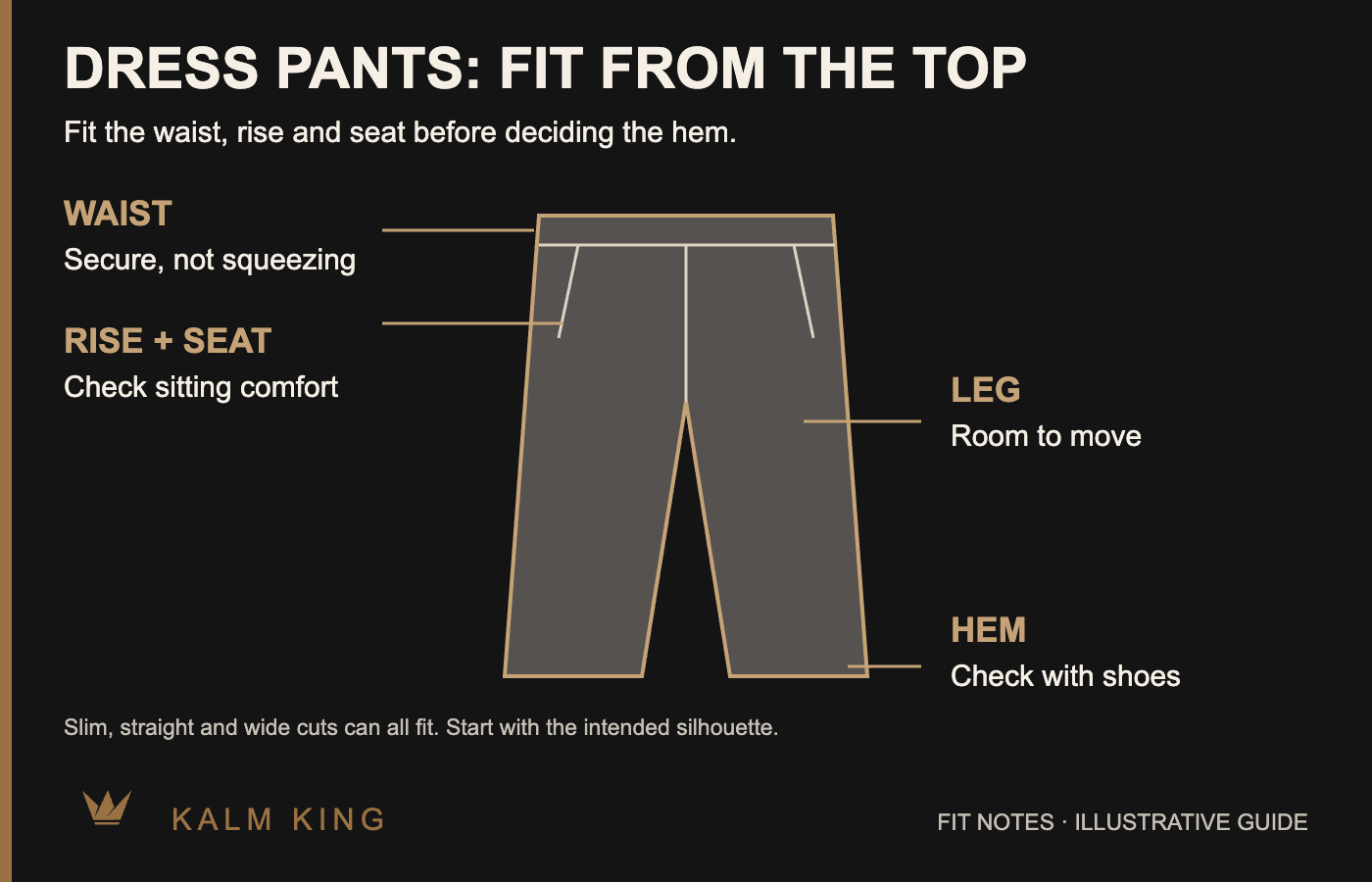
Waistband: secure without squeezing
Fasten the pants where they are designed to sit. Close the fly and waistband normally, then relax. You should not need to hold your breath or force the button into place. Equally, a conventional tailored waistband should not depend on a tightly cinched belt to stop the whole pair slipping down. Side adjusters and elastic sections are design features, not a reason to ignore discomfort.
Proper Cloth's trouser guidance uses a waistband that stays in position without a belt as a fit reference. It also discusses finger-room checks, but hand sizes and garment construction differ. For this guide, the useful test is practical: does it close comfortably, stay where you put it and remain comfortable when you sit? Do not turn a finger count into a universal sizing law.
Try the shirt you will actually tuck in. A lightweight shirt and a thick knit do not occupy the same space. Empty your pockets for the initial fitting so your phone and keys do not distort the fabric, then check again with what you normally carry. If the pockets bulge under a large wallet, that is not necessarily a problem a different waist size will solve.
Watch what happens when you add a belt. It should finish the outfit or make a modest adjustment, not gather a large fold of waistband into a tight bundle. If the hips and thighs work but the waist is loose, a tailor may be able to help. If the waist fits but the seat is tight, a different cut may give you a better starting point.
Do not assume your jeans number is your dress-pants number. Follow the maker's chart and check whether it refers to body measurements or the garment itself. A labeled waist size is not always the literal circumference of the finished waistband. Record the brand, style and measurements, not just a number that means something different elsewhere.

Rise: put the waistband where the pants were built to sit
Rise connects the crotch area to the waistband. Front and back rise work together with the seat and upper leg, so a pair can have enough waistband room and still feel wrong through the middle. The intended position may be lower on the hips, around them or higher toward the natural waist, depending on the design.
Try the pants at that intended position before judging length. Pulling low-rise pants higher can create tension through the crotch. Wearing a higher-rise pair much lower can leave excess fabric and change the way the legs hang. Neither move tells you whether the garment fits as designed. Check the product photographs and description, then see whether that position feels good on you.
Sit in a normal chair. The waistband should not become intolerably tight, and the crotch should not pull sharply as you settle. Notice whether the back drops more than you want or whether you immediately need to unfasten something. These are clues to assess the waist, seat and rise together, not a diagnosis of one measurement from a single wrinkle.
A deliberately dropped crotch belongs to some fashion cuts. It is different from unwanted sagging in a conventional trouser. Decide whether you like the intended effect and whether you can move comfortably. You do not have to reject a relaxed design because a classic tailoring checklist was written for a closer fit.
Changing rise is not something to assume a simple alteration will solve. If the trousers fight you through the crotch or waistband position, try another size or pattern first. Ask a tailor about the actual garment before buying it on the promise of a repair. A waistband adjustment alone does not remake the entire top block.
Seat and hips: check pockets, tension and movement together
The seat is the area around your hips and rear. For a conventional tailored fit, you are looking for a reasonably clean line between the waist and thigh, with enough room to sit. Proper Cloth identifies pulling across the seat and pockets flaring outward as signs to investigate. It also notes that waist tightness can contribute to pocket flare.
That connection matters. A pocket that sticks out does not automatically mean you need a larger hip measurement. Check whether it is empty, whether the waistband is pulling and whether the rise is sitting correctly. Compare a second size or cut instead of trying to solve everything from one photograph. Pocket shape and construction also affect what you see.
Turn sideways and look at the back. Strong horizontal pulling with discomfort can suggest insufficient room. A large unwanted fold below the seat can suggest that the shape is not right for you, but posture and the pattern also matter. Do not buy a new size solely because someone online named a wrinkle. Test what changes when you move and compare another pair.
Keep your normal underwear on during the fitting. Bunched fabric underneath can confuse the picture and affect comfort. That is not an instruction to buy special underwear to rescue poorly fitting pants. It is a reminder to test the layers you will wear. Our boxer-brief fit guide covers that layer separately.
For pleated pants, allow the pleats to do their job. They can open with movement. If they are being pulled wide open while you stand still and the front feels strained, assess the room through the waist, hips and upper thigh. A pleated design does not require the fabric to lie as flat as a flat-front pair in every position.
Thighs, knees and calves: leave room for real movement
Stand, walk and sit before deciding the leg is right. The fabric can follow your shape without gripping it. Slim should describe the silhouette, not your ability to bend your knees. If you have fuller thighs, look for a cut with more room through the upper leg rather than forcing a narrow pattern to work by oversizing the waist.
Check your normal stride and a comfortable step up. There is no need for an extreme squat in a shop, especially in delicate tailoring. You are testing ordinary movements: sitting at a desk, getting into a car, using stairs or bending to pick up a bag. Avoid forcing the fabric past resistance just to prove a point.
After sitting, stand again and see whether the lower legs settle. Proper Cloth's trouser guidance flags a leg that catches on the calves and does not return to length as a possible sign that the knee or opening is too narrow. Look at the lower leg as a whole. Shortening the hem will not necessarily fix fabric hanging up above it.
Stretch can add comfort, but it does not make the wrong pattern right. A pair that feels taut everywhere may still pull at the pockets or cling in a way you do not want. Conversely, non-stretch trousers can be comfortable when they have suitable room. Compare movement and drape rather than treating a fabric percentage as a fit guarantee.
Wide legs need a movement check too. Make sure the hem does not catch under your heel or create an unwanted tripping risk. The goal is not to narrow every pair. It is to keep a deliberate broad line while choosing a length and shoe combination you can walk in confidently.

How should dress pants fit over shoes? Choose your break last
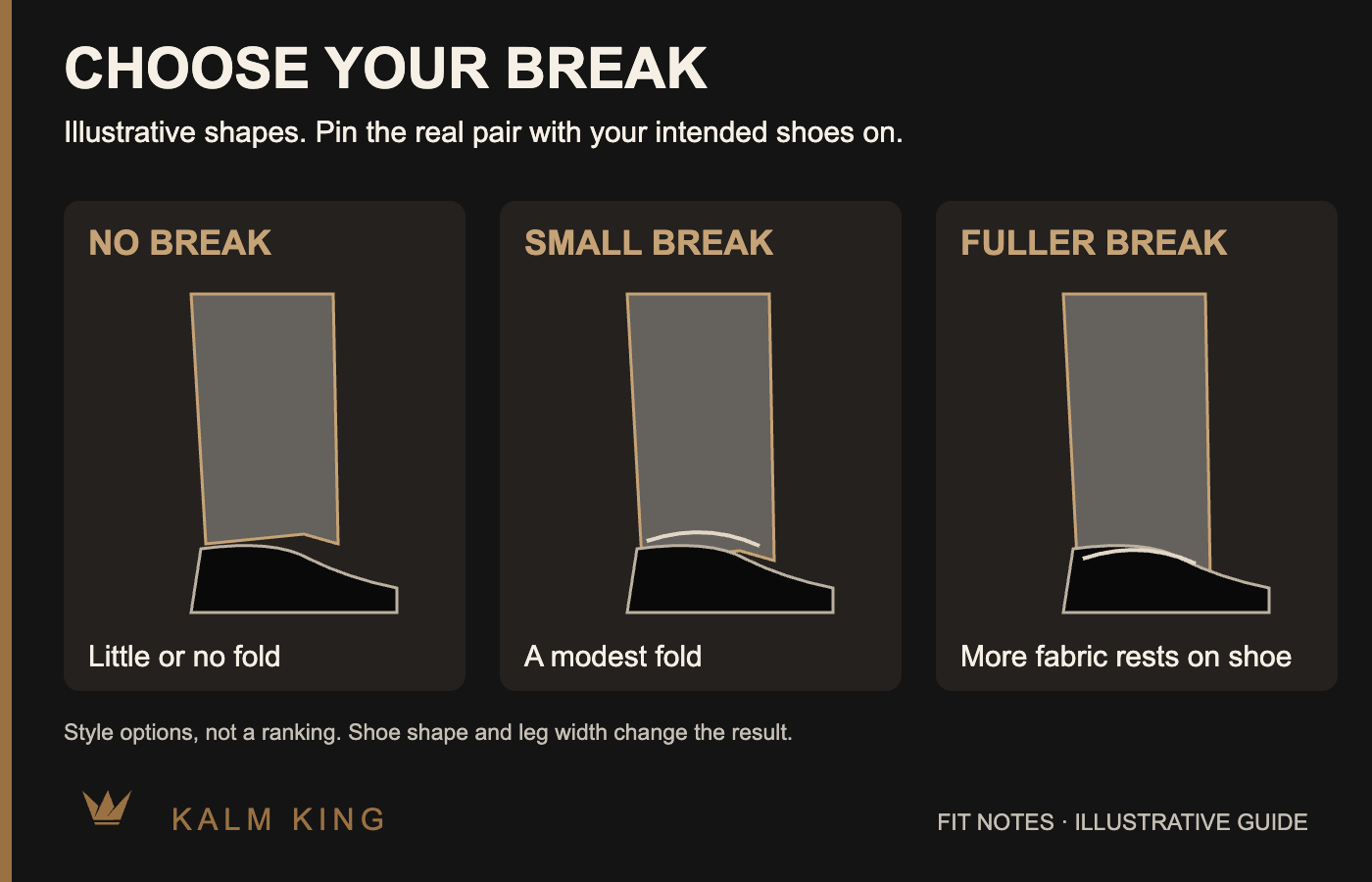
A trouser break is the fold formed when the hem meets the shoe. Proper Cloth explains that both length and lower-leg width affect it. That means a single inseam number cannot guarantee the same look across every pair. The shoes, the rise and where the waistband sits also change the result.
Put on the shoes you plan to wear. A loafer, a dress boot and a lace-up shoe present different shapes for the fabric to meet. Fit the upper part of the trousers first, then decide the hem. Otherwise you can pay to shorten pants that later sit higher or lower after another alteration.
No break: the hem meets or sits around the top of the shoe without a noticeable fold. Depending on the cut and shoe, some sock may show. It is a clean option, not the only correct one. Deliberately cropped trousers finish higher and should be judged as an intentional style rather than a failed version of a longer hem.
A small or half break: a modest fold forms where the front meets the shoe. This can be a useful starting point if you want a conventional dress-trouser look without much pooling. Ask the tailor to pin it so you can see the effect. Terminology varies, so a clear visual example is more useful than relying on a label alone.
Fuller break: more fabric rests on the shoe, often paired with a roomier opening. It can suit traditional or relaxed styling. There is a difference between choosing that fullness and accidentally walking on the back of your hem. Check the rear view and take a few steps before agreeing to the final length.
There is no mandatory break based on height, age or body type. Start with the look you like, then assess the whole outfit. If you regularly switch between very different shoes, one hem may not produce the same effect with both. Choose your main pairing or accept that the drape will change.
For the actual measuring method, use our body-versus-garment inseam guide. This article helps you decide the fit you want; that guide explains how to record a length without confusing a body measurement with the seam inside a finished pair.
A fitting-room check you can repeat
Bring the intended shoes, usual underwear and a shirt of roughly the thickness you will tuck in. If the pants are for a suit, try the jacket too. Keep tags attached and follow the retailer's try-on and return conditions. You are checking fit, not committing to an alteration before you know whether the pair is worth keeping.
First, stand naturally and fasten everything. Check that the waistband is at its intended height and that the pockets are empty. Look at the front, side and back without changing your stance to make the pants look better. Note any pressure, sliding or strong pulling rather than trying to remember the whole fitting later.
Second, sit and stand a few times. Walk, take an ordinary step up if it is safe to do so, and reach toward a bag. Your shirt may move and some wrinkles will form; clothing is not a rigid display. You are looking for repeated discomfort or restriction, not expecting a motionless studio photograph in every position.
Third, compare an alternative. Change one thing when possible: the same cut in another size, or a different cut in the same approximate size. Notice which problem improves and what new problem appears. If going larger fixes the thighs but leaves a loose waist, you have learned something useful about the pattern you need.
Finally, assess the shoes and hem. Photograph the front and side for your own reference if the store permits it. A mirror can distort your view when you look down. Write a short note such as “seat comfortable, waist loose, hem needs pinning.” Specific observations make a tailor conversation more productive than “these look wrong.”

What can a tailor change, and when should you choose another pair?
A tailor can assess the waistband, seat, leg width and hem, but the available change depends on the garment. Taking fabric in and letting it out are not equivalent. Letting out requires usable fabric reserve; seams, pockets, lining, cuffs and previous alterations can limit the result. Do not assume every dress pant has the same allowance.
Proper Cloth publishes alteration ranges for its own garments and explicitly says those ranges can vary with the tailor and overall size. They are not a universal chart for thrifted trousers or another brand. Ask the person doing the work to inspect your actual pants and explain what is realistic before you purchase on that basis.
Hemming an otherwise comfortable pair is a different proposition from rebuilding the rise, seat and leg all at once. If several major areas fight you, compare another cut first. A low purchase price stops being a bargain when the proposed alterations cost more than a pair that already fits well. Get a quote and consider the finished shape, not just the repair total.
For suit pants, think about the jacket too. A very aggressive taper may change the balance of the suit, even if the leg itself becomes wearable. Ask to see the pinned silhouette in the complete outfit. If you are considering cuffs, discuss the fabric available and the length required before the hem is cut.
After alterations, repeat the sitting and walking checks before leaving if possible. Wear the intended shoes and check both legs. Keep a note of the changes for future shopping, but do not assume a different fabric or style will fit identically. A successful alteration is a useful reference, not a permanent universal size.

Buying online without guessing from the size label
Start with a pair you like and the new maker's measurement instructions. Measure only in the way that chart asks. Some sellers give body measurements; others give flat garment widths or finished circumferences. Doubling a flat width may be relevant to a particular garment measurement, but it does not turn it into your body measurement or account for every shaped waistband.
Compare more than waist and inseam when the information is available. Rise, thigh and leg opening help explain why two pairs with the same label can feel different. If the chart omits an important measurement, ask the retailer rather than inventing it from a model photograph. Styling pictures can show a direction, not an exact fit on your body.
Check whether trousers arrive unfinished or already hemmed. Read the return policy before choosing custom length or alterations, since those options may affect returns. If you order two sizes to compare, that is a shopping choice, not a guarantee that either will solve a pattern mismatch. Keep the condition requirements in mind while trying them.
Build around clothes you already wear. Charcoal grey or navy trousers can work with several shirts, but the useful color is the one that fits your wardrobe and dress code. Our men's capsule wardrobe guide helps you plan those combinations. Do not buy an isolated “perfect” pair that has no job in your week.

Keep the fit after you bring them home
Follow the care label for washing, dry cleaning, drying and pressing. Dress pants can have linings, interfacings and mixed materials that need different treatment from a casual cotton pair. Do not use the hottest iron or dryer as a shortcut to reshape them. If the instructions are unclear, ask the maker or a qualified cleaner.
Before blaming the size after cleaning, compare the pants with your original notes and look for what changed. A wrinkled leg, an altered crease and a changed measurement are different issues. Our cotton shrinkage guide discusses cotton garments specifically; it is not a substitute for the care directions on wool or a lined blend.
Store trousers in a way that supports their shape without leaving unwanted marks, following any maker advice. Empty the pockets, and do not leave the pants crushed under a pile of clothing before judging their drape. Ordinary creasing is part of wearing fabric. The aim is presentable, comfortable trousers, not a promise that they will remain wrinkle-free.
Four common dress-pants fit questions
Should dress pants be tight or loose?
Dress pants should give you room to sit and walk comfortably while holding the intended silhouette. Slim, straight and wide cuts can all fit well. Unwanted pulling, pinching or constant slipping are reasons to compare another size or cut, not proof that every pair needs to be slim.
Where should dress pants sit on the waist?
Wear dress pants at the position intended by their rise and cut. That may be lower on the hips or higher toward the natural waist. Fasten them there, relax and sit down. The waistband should feel secure without squeezing; do not pull a low-rise pair higher to imitate a different design.
How long should men's dress pants be?
Choose the length with your usual shoes on and the waistband at its intended position. No break, a small break and a fuller break are style options, not universal rules. Check the front and back, then walk to make sure the hem does not catch under your heel.
Can a tailor fix dress pants that do not fit?
A tailor may be able to adjust the waist, seat, leg or hem, depending on the fabric reserve and construction. Changes are not guaranteed, particularly when the rise or several major areas are wrong. Have the actual pair inspected and get a quote before relying on alterations.
The Kalm King takeaway
Start with the part you cannot ignore all day: how the pants feel through the waist, seat and thighs. Choose a rise and silhouette you actually want. Then set the hem with the shoes you will wear. A clean line is good. A clean line you can sit down in is the point.
Complete the outfit with our dress shirt fit guide, covering the collar, chest and sleeves.
Sources
1. Proper Cloth: Advanced Tips for the Perfect Trouser Fit. Maker guidance for waist, hip, leg opening, inseam and rise. Its numerical sizing and alteration advice is specific to its products, not a universal rule.
2. Proper Cloth: What Is a Pant Break?. Defines break, explains the influence of length and leg opening, and notes the shoe context.
3. Proper Cloth: Having a Garment Altered by Your Tailor. Product-specific alteration ranges and their limitations. No reimbursement, price or alteration allowance from that page is promised here.
FIELD NOTES
Get the Overalls Fit Kit, free.
Your measurement card, the six fit checkpoints and a checklist to take shopping. Join Field Notes for new guides and a say in what Kalm King makes.
THE KALM KING JOURNAL
Continue reading
How Should a Dress Shirt Fit? A Men’s Guide to Collar, Chest and Sleeves
Check dress shirt fit at the collar, shoulders, chest, sleeves and hem. Learn what to measure, how to test movement and when to try another cut.
Men’s Capsule Wardrobe: How to Build One That Actually Works
A men’s capsule wardrobe is a small set of clothes that all work together. How to choose the pieces, colors and fit, and build one at your own pace.

Does Cotton Shrink? Jeans, Hoodies, Chinos and Overalls
Does cotton shrink? Often a little. How jeans, hoodies, chinos and overalls behave, what preshrunk means, and how to wash and dry to limit it.