
October 20, 2026
Explore: Style
How Should Boxer Briefs Fit? Waistband, Rise, Thighs and Length
Boxer briefs should feel secure without squeezing. How to check the waistband, rise, pouch, thighs and inseam, and what to change when something feels off.
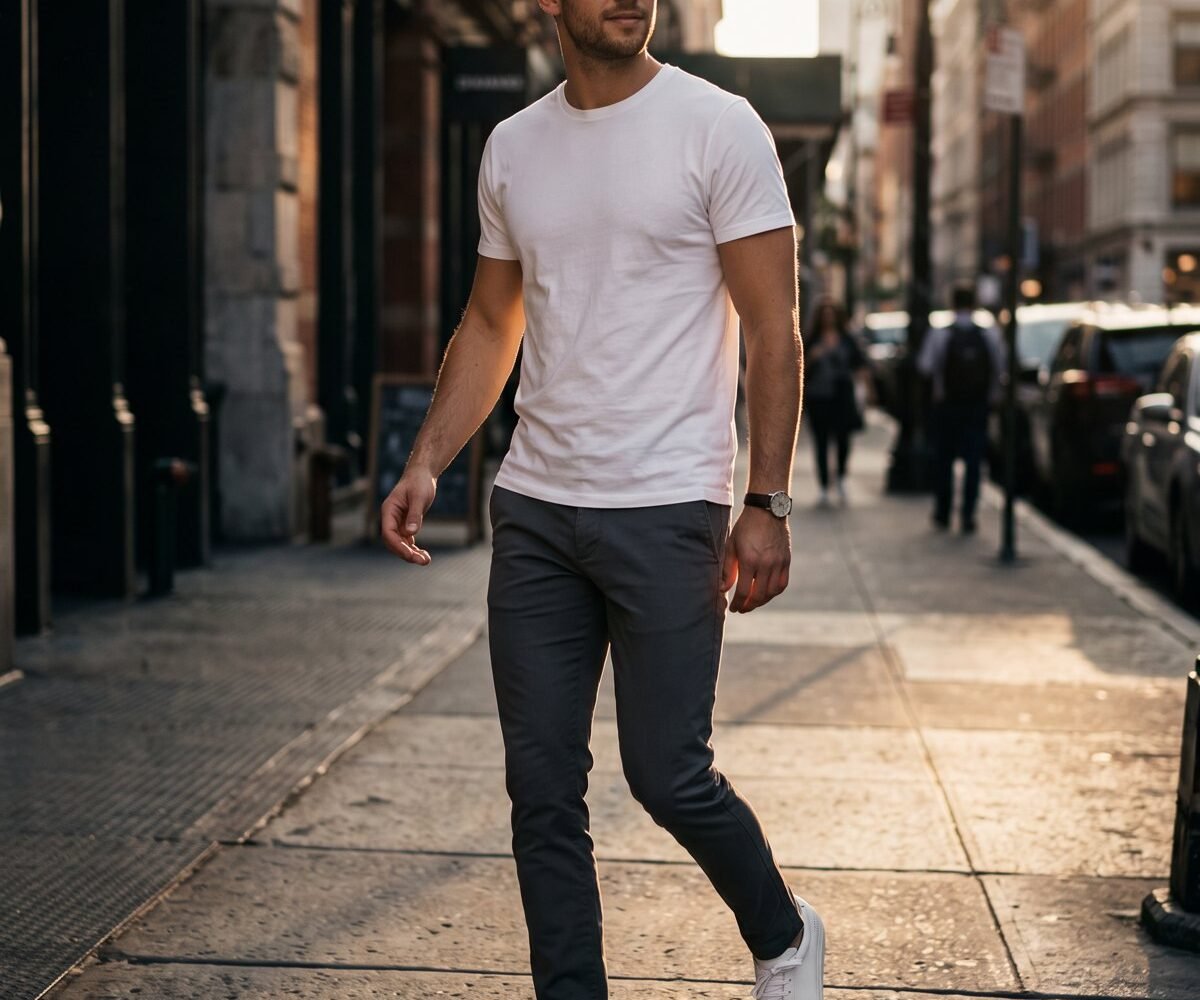
Most boxer briefs feel fine when you first pull them on. The trouble starts on the walk to the car. One leg creeps up the inside of your thigh, the waistband folds over, and you spend the rest of the day doing the quiet readjust and hoping nobody notices.
The usual advice is to buy a bigger size. Sometimes that’s right. Often it isn’t, because the part that’s failing has nothing to do with the number on the tag. So before you buy another multipack, find out which part doesn’t fit. This guide covers how boxer briefs should fit, why they ride up, and what to change first.
The short answer: boxer briefs should feel secure without squeezing. The waistband stays put when you sit and bend, the front supports you without pinching, the seat lies smooth, and the legs sit close to your thighs without gripping so hard they roll or gaping so much they climb. If you’re readjusting all day, something is off, and it’s usually one specific part rather than the whole garment.
Tip: tap any diagram to open it full size.

How should boxer briefs fit? Check six zones
Judge the fit standing up first, then moving. Each zone can fail on its own, which is why one size label can’t explain every complaint.
- Waistband. It sits where the cut is designed to sit and stays there. No digging, no folding over, no sliding down when you sit.
- Rise. The distance from the crotch to the waistband. The right rise lets the waistband sit at its intended height without pulling at the crotch.
- Front (pouch). Comfortable containment. Not flattened, not squeezed, and not so loose that you’re constantly repositioning.
- Seat. Smooth across the back without sagging or pulling into a wedgie when you sit.
- Thigh opening. The leg hem lies close to your thigh. It shouldn’t pinch, roll or leave a deep line, and it shouldn’t gape open.
- Inseam (leg length). Long enough to give the thigh coverage you want, short enough to stay hidden under the shorts you wear.
Measure before you blame the size
Underwear sizes don’t travel well between brands, and they don’t follow your trouser size either. Use the chart for the exact pair you’re buying.
- Waist. Measure where the waistband will actually sit. SAXX’s underwear fit guide, for example, says to measure just under your belly button where the waistband usually hits. That’s often a different spot from where your jeans sit, so your jeans size can mislead you.
- Thighs. Most underwear charts don’t list a thigh measurement, but knowing yours still helps. Measure around the fullest part of one thigh. If your thighs are large compared with your waist, look for cuts described as athletic or relaxed through the thigh.
- Your usual pair. Lay a pair that fits well flat and measure its inseam from the crotch seam to the leg hem. That gives you a real number to compare with product pages.
Two men with the same waist can land in different sizes of the same product. In one buyer discussion, two shoppers who both gave a 33-inch waist settled happily on different sizes, one medium and one large. The chart is a starting point, not a verdict.

Rise and inseam are not the same thing
People mix these up all the time. Rise runs from the crotch up to the waistband. It decides how high the waistband sits on your body. Inseam runs from the crotch down to the end of the leg. It decides how much thigh is covered. A boxer brief can have a long inseam and a low rise, or a short inseam and a high rise. If the waistband sits wrong, look at rise. If the legs are the problem, look at inseam and thigh cut.
First, name the problem
“It doesn’t fit” isn’t specific enough to fix. Before changing anything, work out which of these you’re dealing with, because each one points to a different fix:
- The legs ride up. The hem climbs toward your crotch, usually while walking.
- The waistband digs in or rolls down. Pressure, folding or slipping at the top.
- Support disappears. The front shifts, flattens or needs repositioning.
- It used to fit and now doesn’t. The problem started after some wear and washing.
Plenty of men have two at once, and that’s fine. Work through them one at a time.

“My waist fits, but my thighs don’t”
This is one of the easiest traps to fall into, and it’s where buying a bigger size so often fails. Most brands grade a size up as a package: waist, seat and legs all grow together. If your thighs are big compared with your waist, as they often are for lifters, cyclists, runners and anyone built through the legs, the leg openings can be tight while the waistband is fine.
Size up, and you get a loose waistband that slides and folds, while the thigh openings may still feel snug. One man on Reddit described exactly this: a 32 to 34-inch waist, 25-inch thighs, and legs that climbed every time he walked or ran, with squats still restricted even after sizing up.
The better first move is a different cut in your waist size: an athletic or relaxed-thigh version, or a brand that cuts its legs fuller. SAXX’s own ride-up guide puts the cut first and sizing up last, and suggests a longer leg in the same waist size when the leg is too short for the thigh. Shinesty’s fit guide suggests athletic cuts, or going up a waist size while checking the front still supports you. Both are reasonable. Just try the cut change before you give up a waistband that already fits.
When the legs ride up: five fit checks
“Riding up” is one symptom with several possible causes. Men report it in pairs that were too tight and in pairs that were too loose, so don’t let anyone tell you it always means one thing. Here’s what to check.
Want the full fix? Fabric, grippers, waistband rolling and how to measure are covered step by step in How to Stop Boxer Briefs From Riding Up. Start with these five fit checks.
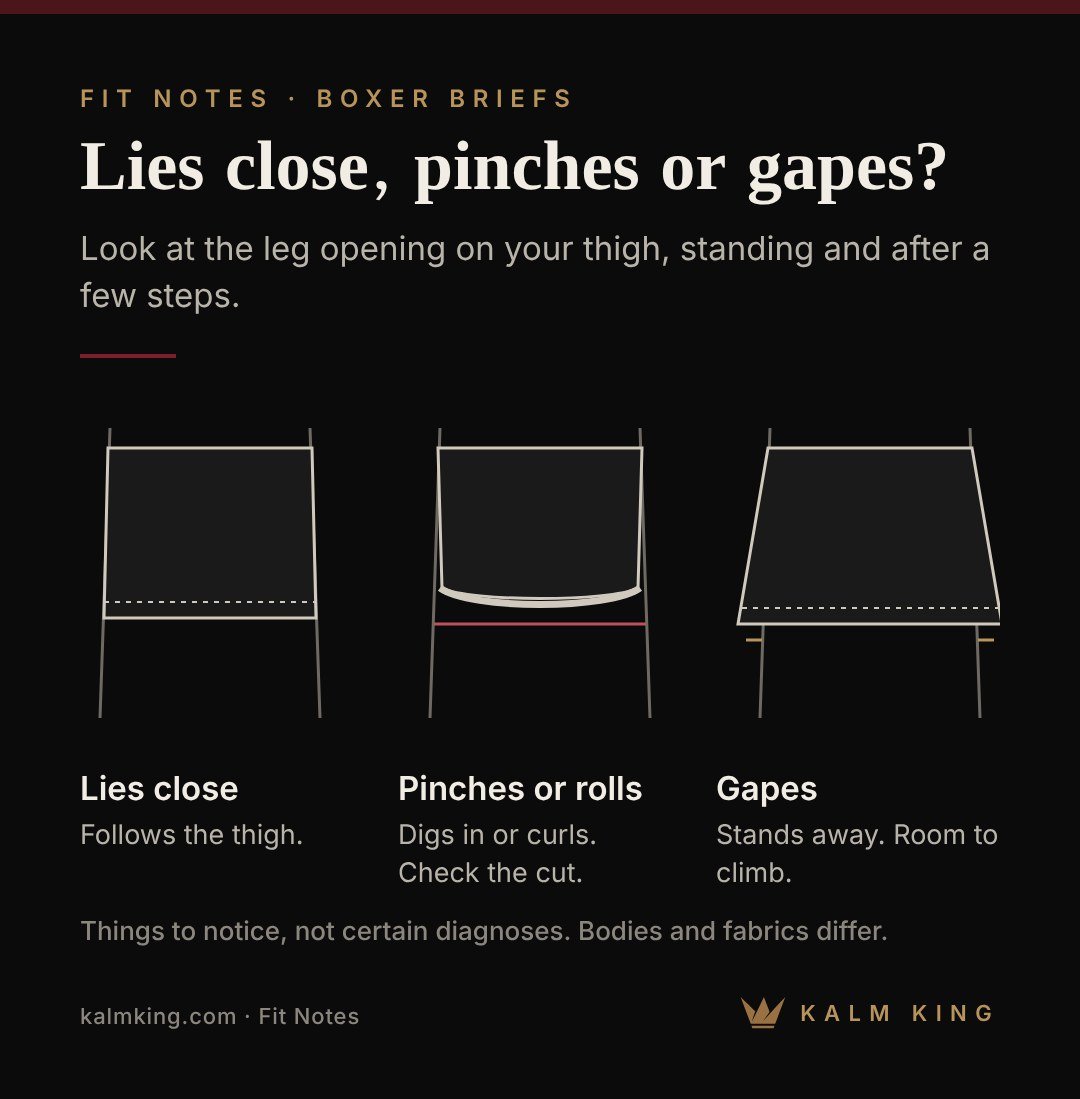
1. The leg opening grips too hard
A hem that squeezes your thigh can roll and get pushed upward as the muscle works with each stride. Signs: a deep red line where the hem sat, a hem that rolls into a band, or legs that feel tight the moment you squat. That points to the thigh cut or overall size being too small for your legs. See the section above.
2. The leg opening is too loose
A hem that gaps away from your thigh gives the fabric room to gather and climb. Signs: the hem visibly gapes away from your thigh, or fabric bunches and flaps when you walk. A smaller size, a slimmer cut or a leg with a gripper band may help. “Rides up” doesn’t automatically mean “too small.”
3. The leg is too short for your thigh
A short leg on a full thigh tends to work its way up. A longer inseam gives the hem more thigh to hold onto, and some men say it helps. It isn’t guaranteed, though. One cyclist found 9-inch boxer briefs rode up less but still crept while riding. Others with heavier thighs say a shorter leg, or briefs, suits them better. Your proportions and activity decide it.


There’s also a practical trade-off. Brands label lengths differently. SAXX, for example, lists 3-inch trunks, 5 to 6-inch boxer briefs and 7 to 9-inch long legs. A longer leg covers more thigh but can peek out under shorter shorts, so test new lengths with the clothes you actually wear.
4. Your trousers are dragging them
Slim jeans, tight chinos and tucked shirts can all pull underwear upward when you dress or move. A simple habit helps more than you’d expect: after you pull your trousers up, reach in and smooth each leg opening down so it lies flat before you fasten anything. If the problem only happens with one particular pair of trousers, the trousers are part of the cause.
The same goes for anything worn over the top. Overalls with a crotch or seat that’s too snug can drag on what’s underneath. Our guide to how men’s overalls should fit covers rise and seat in detail, and our guide to what to wear under overalls covers the layers on top.
5. The pair has stretched out
If ride-up appears suddenly in a pair that used to stay put, the elastic may be worn. SAXX calls this elastic fatigue and lists the signs: a waistband sitting lower than it used to, wider leg openings, and a baggy seat. No amount of resizing fixes a tired pair. Replace it.
Waistband digging in or rolling down
These feel related, but they’re separate problems. A band that rolls isn’t automatically too small, and a band that digs isn’t automatically too tight.
Rolling down
Start by asking where this cut is designed to sit. If the rise is meant to put the waistband above your belly but your shape pushes it down, it will fold over. Folding it lower by hand just leaves extra fabric bunched at the front. One man described this exact problem: briefs left his thighs to chafe, so he was looking for a lower rise while keeping thigh coverage. That’s a cut question, not a size question.
Rolling can also start after wear. In the same buyer discussion mentioned above, one wearer reported no leg ride-up at all, but a waistband that began rolling after several rounds of wearing and washing. That points to recovery and wear, not the original fit.
Digging in
Sit down and lean forward. A good band stays comfortable through that. If it cuts in, the size may be too small, but construction matters too: some men find exposed elastic rubs where a fabric-covered band doesn’t. One marathoner reported hip chafing from exposed elastic and preferred a covered band.
Don’t take band width as a rule either. Men report thin bands rolling and wide bands rolling, sometimes in the same product. Test the band on your body.
Support that disappears (and thigh rub)
Support doesn’t mean maximum compression. It means comfortable containment that holds up while you move. Signs it’s missing: the front feels flattened or squeezed, or there’s so much movement that you keep repositioning.
- Two different kinds of rubbing. Front-to-thigh rubbing and thigh-to-thigh rubbing involve different contact points. A pouch or separation design may help with the first; leg coverage that stays in place may help with the second. Choose based on where the rubbing happens rather than assuming either feature solves both.
- Pouch or no pouch. Contoured pouches and “separation” designs come up constantly when men discuss front-to-thigh rub. In the replies to one Reddit thread on stopping ball-to-thigh rub, pouch styles were the most common suggestion. Other men dislike pouches and prefer a plain front. Pouch designs vary a lot, from a thin extra flap to real shaping, so one bad pouch doesn’t rule them all out.
- The seat. A seat that bags or pulls into a wedgie when you sit can make the front shift too. Bagging often means the pair is too big or the fabric has lost its recovery.
- Briefs aren’t automatically the fix. Switching to briefs removes the leg fabric that rides up, which works for some men. It also removes the barrier between your thighs, which is exactly what others rely on to stop chafing.
- Activity changes the answer. A pair that’s fine at a desk may not be enough for sport. One reviewer liked a pouch design for everyday wear and martial arts but still preferred compression shorts when he wanted more hold.
When does it happen? Timing tells you a lot
Ask when the problem shows up. It narrows the cause faster than anything else.
| When it happens | What to look at first |
|---|---|
| Right away, standing still | Size and cut: waist, rise, thigh opening |
| During a specific movement | Leg opening, inseam, seat room, and what you’re wearing over the top |
| By the end of the day | How well the fabric holds its shape after hours of stretching |
| Only after washing | Shrinkage, worn elastic and care. Compare with a newer pair |
That last row is worth testing directly. Put on a fresh pair and an older pair of the same size on different days. If only the older one misbehaves, wear or laundering may be contributing, especially if the newer pair still fits comfortably.
Sweaty, swampy or sticky: what fabric actually changes
“Breathable” gets stamped on almost everything, and it lumps together several separate things: how soft the fabric feels, how damp it feels, how fast it dries, how much it rubs, and how warm it is.
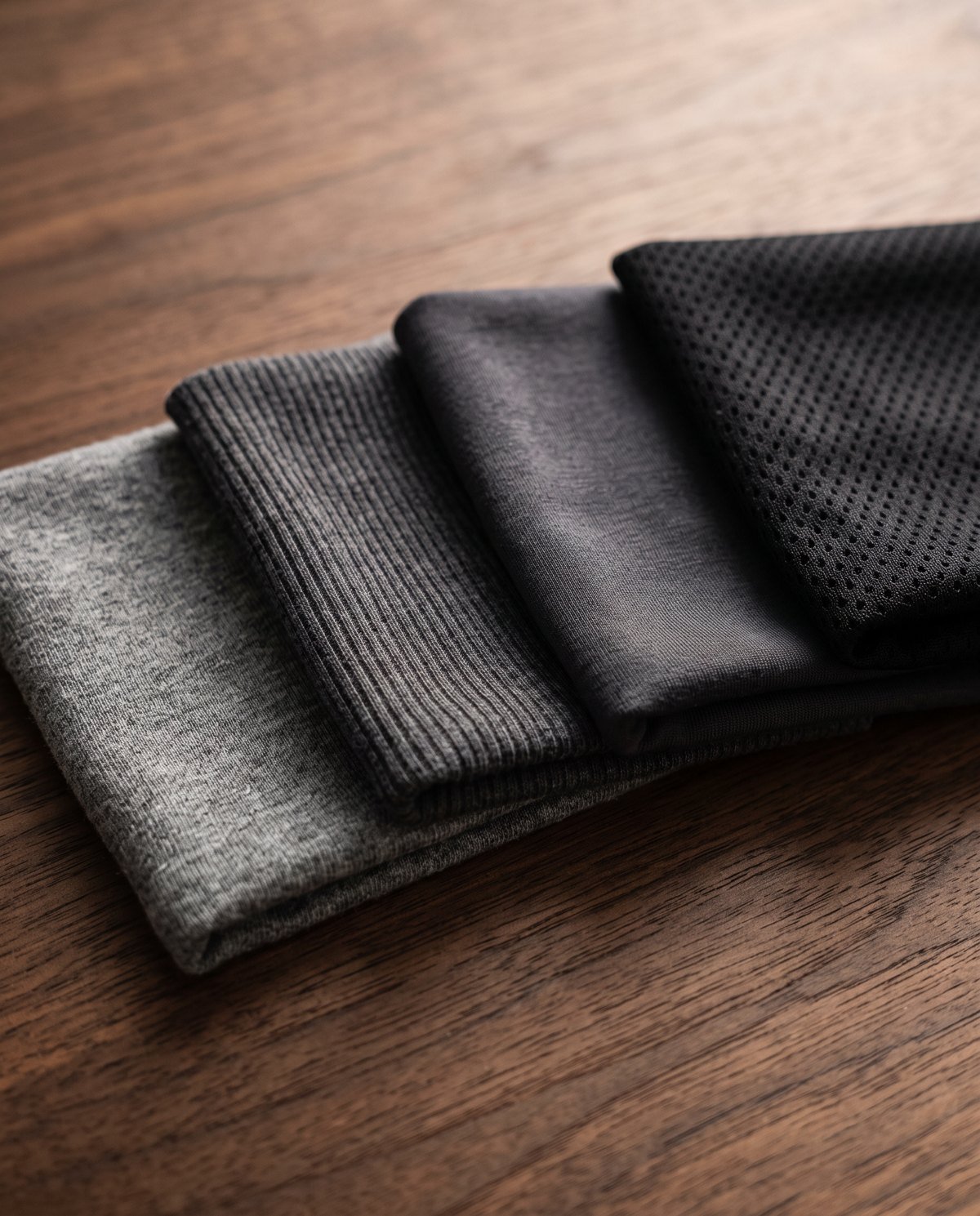
Textile labs test these separately. North Carolina State University’s textile protection and comfort center describes distinct tests for how fast a fabric absorbs water, how far liquid travels through it, and how much evaporates, including the moisture management tester used under AATCC Test Method 195. Those tests are run on fabrics, not fiber names. A knit, a blend and a finish can change how the same fiber behaves.

So read the label as a clue, not a promise:
- Cotton is soft and absorbs moisture readily. Plenty of men are happy in it on ordinary days; others say it feels heavy and clingy once they’re properly sweaty. In forum discussions, men often say cotton blended with elastane stays put better than plain cotton.
- Modal is a regenerated cellulose fiber made from wood pulp. Lenzing, which makes TENCEL Modal, describes it as naturally soft and smooth and says it helps fabrics stay soft through repeated washing. Men are split on how it feels during exercise: some love it, while others find it damp on long, sweaty days and switch to synthetics for hiking.
- Nylon (also labeled polyamide) and polyester are common in sport and travel underwear. How a finished garment handles sweat still depends on its knit, thickness and finish, not the fiber name alone.
- Elastane is the stretch. Elastane and spandex are the same fiber; The LYCRA Company says the terms are interchangeable. Stretch and recovery help a pair hold its shape, but a bigger percentage doesn’t guarantee a better fit.
- Merino wool comes up often among men who hike and travel. It’s usually expensive.

Then match the pair to the day. A desk day, a gym session, a humid summer afternoon and a trip where you’ll be rinsing underwear in a sink overnight are four different jobs. It’s normal to own different pairs for different days.
The 60-second movement check
A mirror only shows you standing still, and that’s not where boxer briefs fail. Check the retailer’s hygiene and try-on rules first: some won’t accept underwear back once it’s been opened or worn, even with tags still attached. Use this check on a pair you’re allowed to try on or intend to keep. It’s a practical check, not a lab test.

- Settle the waistband where the cut is meant to sit. Don’t haul it up to create support.
- Smooth the legs so each hem lies flat on your thigh.
- Walk twenty or so normal steps. Does a leg start climbing?
- Sit and lean forward. Does the band dig, fold or slip? Does the seat pull?
- Squat as far as is comfortable. Check the thigh openings and the front.
- Take a high step, like climbing a stair two at a time.
- Repeat in your usual trousers. Notice whether a problem only appears with a certain pair.
- Note what moved first: the waistband, the front or the hem. That’s the part to fix.
Some movement is normal. You’re looking for anything you’d have to fix by hand over and over during a real day.

Change one thing at a time
If you change the size, the cut and the fabric all at once, you’ll never know what worked. Change one variable, wear the new pair for a normal day, then decide.
- Waist fits, thighs don’t: try a different thigh cut in the same waist size.
- Legs climb but nothing squeezes: try a longer inseam or a leg with more grip.
- Legs pinch and roll: try a fuller thigh cut, then a size up if the cut alone doesn’t do it.
- Waistband rolls over your stomach: try a different rise before a different size.
- Everything feels tight: now a size up makes sense.
- Front shifts or needs repositioning: try a different pouch shape or front construction.
- Thighs rub against each other: try a longer leg that keeps fabric between your thighs. A pouch is aimed at a different contact point.
- Only older pairs misbehave: replace them, and follow the care label on the new ones.

Before you buy another multipack
Multipacks are cheap per pair, which makes a bad fit expensive. Buy one pair, or the smallest pack, of anything new first. Then check:
- The brand’s own size chart, measured where its waistband sits, not your trouser size.
- The cut: standard, athletic or relaxed thigh, and whether there’s a pouch.
- The rise, if it’s listed, especially if waistbands roll on you.
- The inseam in inches or centimeters, compared with a pair you already like.
- The fabric blend and the care label, so you know how it should be washed and dried.
- The retailer’s return and hygiene rules for underwear, before you open anything.
A higher price doesn’t guarantee a better fit. In the discussions we read, men described expensive pairs that didn’t suit them and cheaper ones that did. Fit is personal, so test on your body, not on reviews alone.
To keep a good fit for longer, see our guide on how to wash men’s underwear.
Quick answers
How tight should boxer briefs be?
Snug enough to stay in place when you move, loose enough that nothing digs, pinches or leaves a deep line. If you can’t sit or squat comfortably, they’re too tight somewhere. Find out where before you change size.
Should boxer briefs ride up at all?
A little movement during a long day is normal. Having to pull the legs down repeatedly isn’t. That usually points to the thigh cut, leg length, leg opening or outer trousers rather than a guaranteed size problem.
Do I size up or down if my boxer briefs ride up?
It depends which way they’re failing. If the leg openings squeeze, try a fuller thigh cut, then a size up. If they gape, a smaller size or slimmer cut may help. If the waist fits, change the cut before the size.
What inseam length is best for boxer briefs?
There’s no single best length. Shorter legs suit some builds and shorts; longer legs give more coverage and stay hidden under fewer shorts. Compare with a pair you already like and test new lengths with your usual clothes.
Why does my underwear waistband roll down?
Often because the rise puts the band somewhere your shape won’t let it stay, or because the elastic has worn. Try a different rise before a different size, and compare an older pair with a new one.
Are boxer briefs or briefs better for chafing?
Neither wins for everyone. Briefs have no legs to ride up, but they leave your thighs bare. Boxer briefs keep a layer between your thighs, which some men rely on, provided the legs stay put.
Help us ask better fit questions

Kalm King is a men’s apparel brand, and every guide we publish starts with the fit problems men actually describe. Which boxer-brief betrayal gets you most: legs that ride up, waistbands that dig in, fabric that feels sweaty, or support that disappears? Vote in our Fit Check poll on Kalm King’s socials.
For more practical fit and style guides, join Kalm King Field Notes. Interested in overalls too? You’ll also get the free Overalls Fit Kit.
FIELD NOTES
Get the Overalls Fit Kit, free.
Your measurement card, the six fit checkpoints and a checklist to take shopping. Join Field Notes for new guides and a say in what Kalm King makes.
THE KALM KING JOURNAL
Continue reading
How Should Men’s Dress Pants Fit? Waist, Rise, Seat and Break
How should dress pants fit? Check the waist, rise, seat, thighs and hem with practical sitting tests, break options and realistic tailoring advice.
How Should a Dress Shirt Fit? A Men’s Guide to Collar, Chest and Sleeves
Check dress shirt fit at the collar, shoulders, chest, sleeves and hem. Learn what to measure, how to test movement and when to try another cut.
Men’s Capsule Wardrobe: How to Build One That Actually Works
A men’s capsule wardrobe is a small set of clothes that all work together. How to choose the pieces, colors and fit, and build one at your own pace.