
November 12, 2026
Explore: Fabric & Care
How to Wash Men’s Underwear: Machine, Hand Wash and Drying
How to wash men's underwear by machine or by hand: reading the care label, water temperature, detergent, drying, and keeping waistbands in shape.
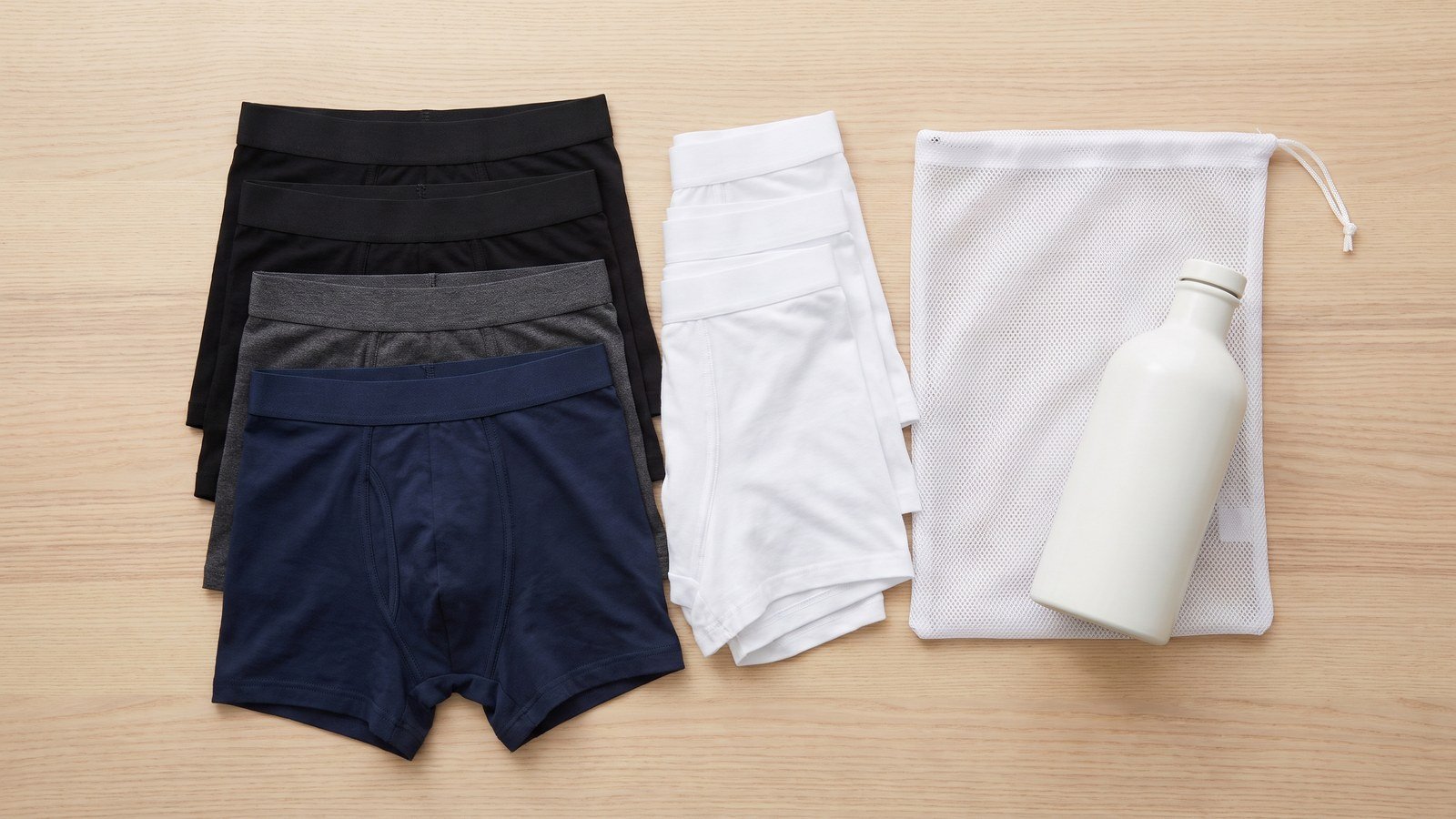
You probably wash underwear more often than anything else you own. It goes in the machine with everything else, comes out of the dryer, and goes back in the drawer. Then one day the waistband is wavy, the fabric has gone thin and the leg openings have lost their grip. Wear and age play a part, and so does how it’s washed and dried.
So how should you wash men’s underwear? This guide covers it step by step: how to read the care label, how to sort, which water temperature and cycle to use, how much detergent, when a laundry bag helps, how to hand wash, and how to dry without wearing out the waistband. It’s about keeping the fabric and the elastic in good shape. If yours already ride up or the waistband rolls, our guides on how boxer briefs should fit and how to stop boxer briefs from riding up cover the fit side.
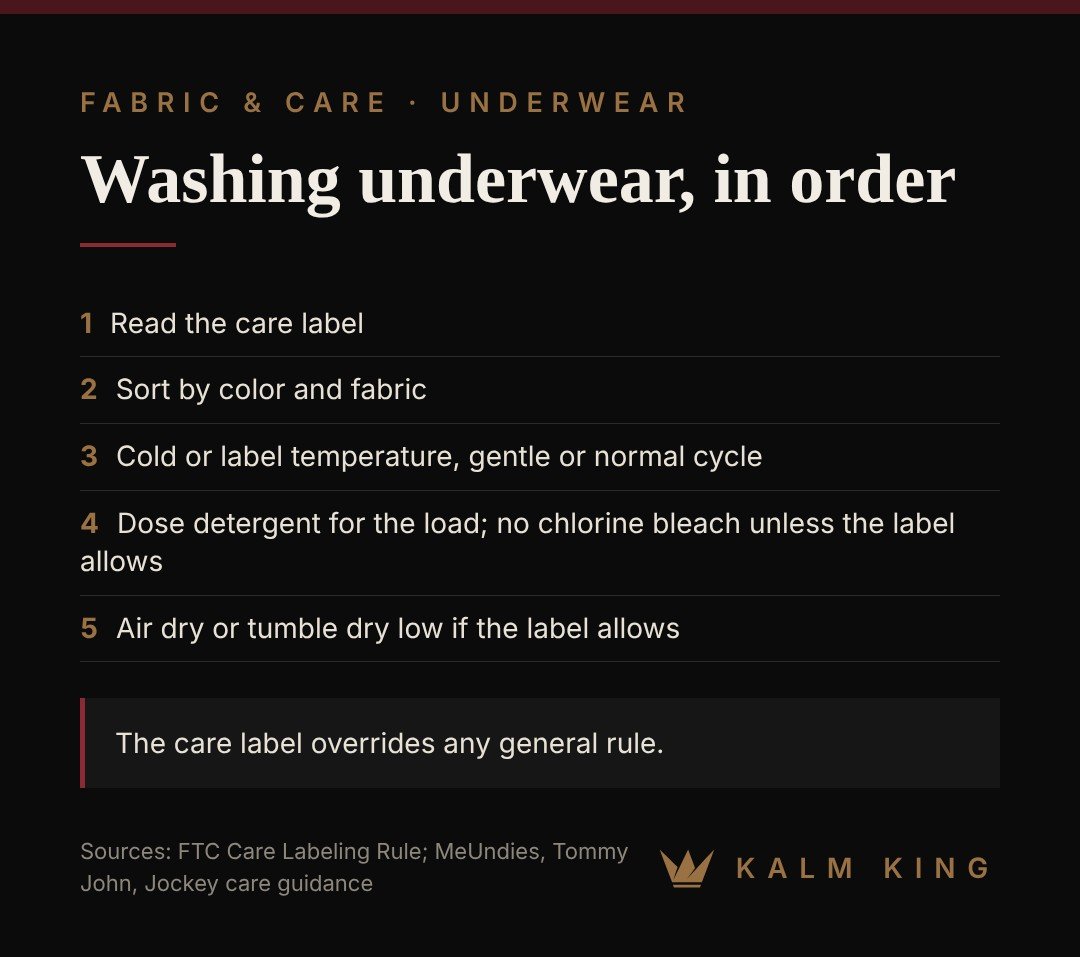
Short answer: Follow the care label first, because underwear fabrics differ. For most everyday cotton, modal and stretch blends, a machine wash on cold or the temperature on the label, with like colors, a gentle or normal cycle and the detergent dose the label recommends works well. Skip chlorine bleach unless the label allows it. Air dry or tumble dry on low heat if the label allows, because high heat can accelerate wear on the elastane in waistbands and leg openings. Hand washing can reduce mechanical stress; follow the label.
Start With the Care Label
Underwear is made from very different fabrics: cotton, cotton with elastane, modal, microfibre nylon or polyester, merino and blends of all of them. They don’t all want the same treatment, which is why the label comes first.
In the United States, the Federal Trade Commission’s Care Labeling Rule requires manufacturers and importers to attach care instructions to clothing. Under the rule, a label must “state what regular care is needed for the ordinary use of the product,” and if part of a normal washing procedure would harm the garment, the label must warn against it using words like “Do not,” “No” or “Only.” The FTC’s guidance says that, at a minimum, a washing instruction includes “a method of washing and a method of drying.”
In practice, that means the label on your underwear is the most specific advice you’ll get. It tells you the maximum water temperature, whether bleach is allowed and how to dry.
Even one brand’s labels vary by fabric. Jockey’s product care guide, for example, lists “Machine Wash Warm” with “Tumble Dry Medium” for some cotton styles, and “Machine Wash Cold” with “Tumble Dry Low” for many of its stretch and microfibre styles. So don’t assume every pair in your drawer takes the same care. Check the label on each type at least once.
Reading the symbols
Many labels use symbols as well as, or instead of, words. The basic ones:
- A tub of water means machine washing; dots or a number inside show the temperature. More dots means warmer.
- A hand in the tub means hand wash only.
- A triangle is about bleach. A crossed-out triangle means no bleach; a triangle with diagonal lines means non-chlorine bleach only.
- A square with a circle is tumble drying. One dot means low heat, two means medium. A crossed-out square with a circle means don’t tumble dry.
- An iron with dots shows ironing temperature; a crossed-out iron means don’t iron.
If a symbol isn’t clear, look it up or check the manufacturer’s care instructions rather than guessing.
How to Wash Underwear in a Machine
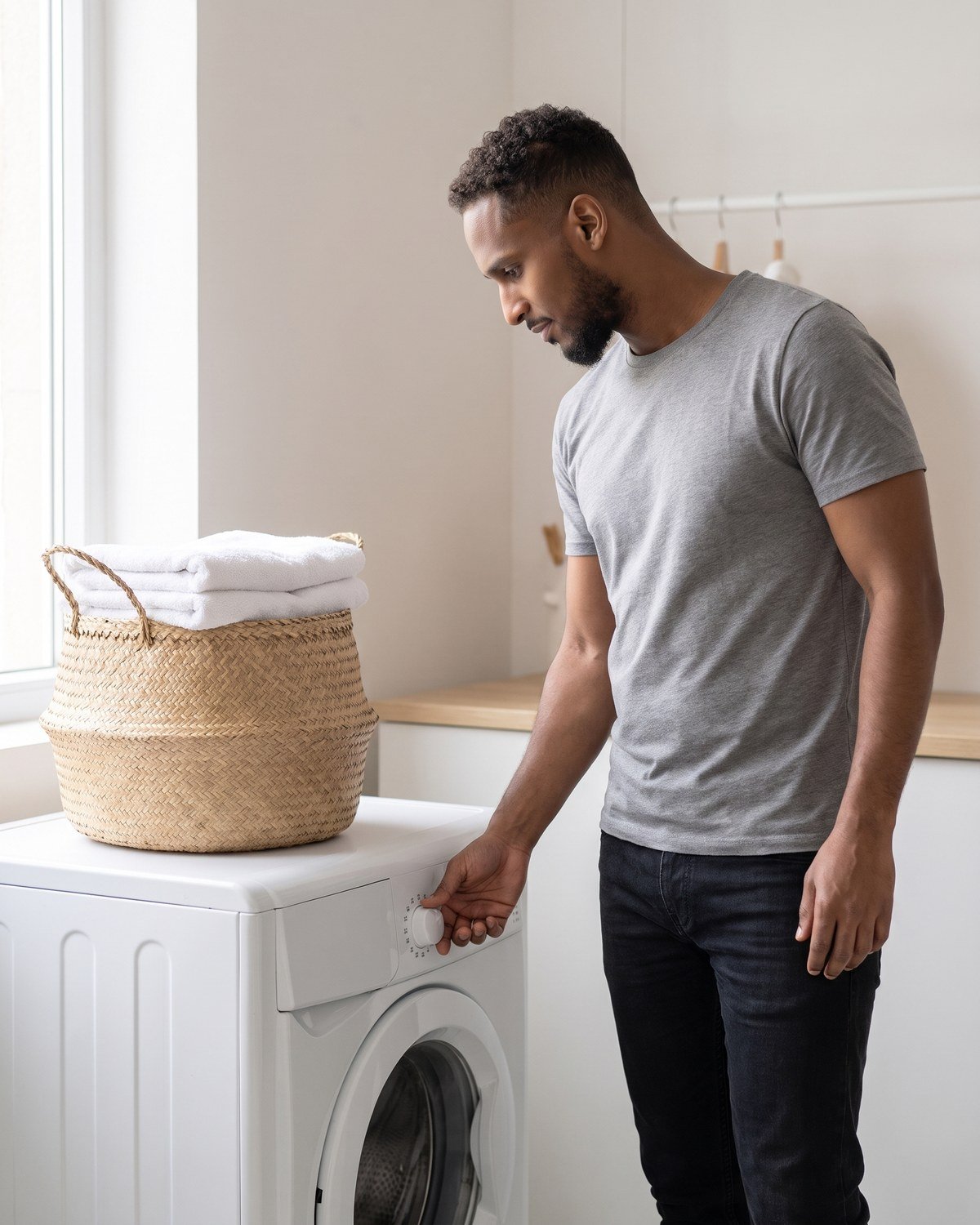
Most underwear can go in the washing machine. Here’s how to do it in a way that’s kind to the fabric and the elastic.
1. Sort by color and fabric
Wash dark underwear with darks and white with whites. New dark pairs can release dye in their first washes, so washing them with like colors keeps lighter items from picking up a tint. If you have delicate or technical pairs, like merino or very fine microfibre, consider washing them with similar lightweight items rather than with heavy jeans and towels, which rub against them in the drum.
2. Choose the temperature
Cold water is the default many underwear brands recommend. Tommy John says it recommends “machine washing on cold with like colors.” MeUndies says to wash on “COLD and DELICATE” if you use a machine. Some cotton underwear labels allow warm water, as Jockey’s guide shows. Use the temperature on the label; when in doubt, go cooler.
3. Choose the cycle
A gentle or delicate cycle is easiest on fabric and elastic, and it’s what MeUndies and Tommy John suggest. A normal cycle is fine for sturdier cotton underwear if the label allows it. Avoid heavy-duty cycles meant for workwear and towels.
4. Dose the detergent for the load
More detergent doesn’t mean cleaner underwear. Too much can leave residue in the fabric, especially with small loads. Follow the dose on your detergent for the load size, how dirty the clothes are and your water hardness. A mild detergent is a sensible choice for underwear; Tommy John’s washing guide suggests “a gentle detergent.” For dark underwear, a detergent made for dark colors can help limit fading.
5. Skip chlorine bleach unless the label allows it
Chlorine bleach can damage elastane and weaken some fabrics. Tommy John advises avoiding bleach and fabric softeners for its underwear. Some cotton underwear labels allow “non-chlorine bleach,” which is a different product. Follow the label.
6. Think twice about fabric softener
Fabric softener can build up on fabrics and reduce how well some performance materials handle moisture. Tommy John recommends avoiding softeners. If your label doesn’t mention it, use it sparingly or not at all on underwear.
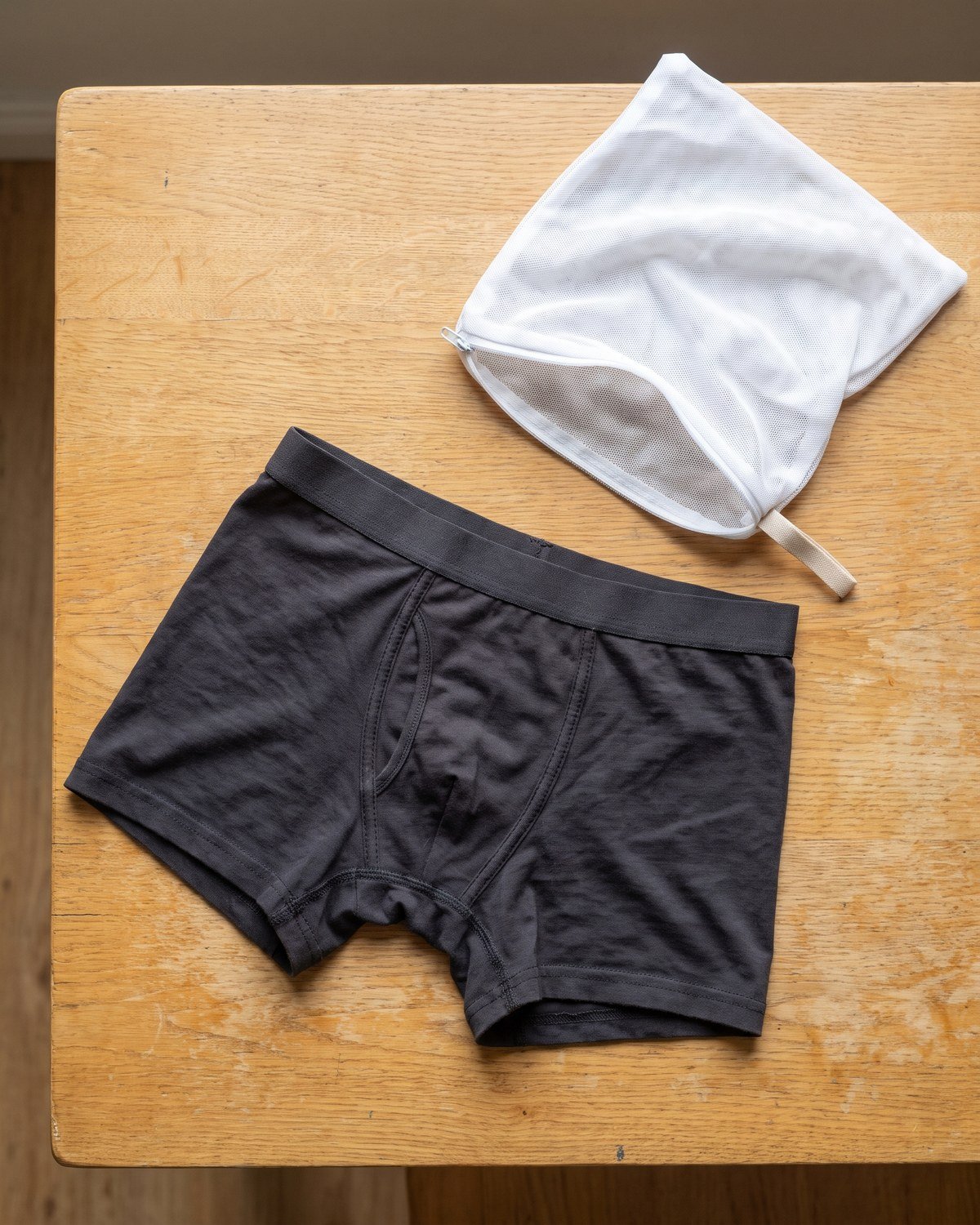
7. Consider a mesh laundry bag
A mesh laundry bag keeps small items together and away from zips, hooks and heavier garments. It’s most useful for delicate fabrics, or if you’re washing underwear with jeans or other items that have hardware. Turn underwear inside out before it goes in the bag to reduce surface wear.
How to Hand Wash Underwear
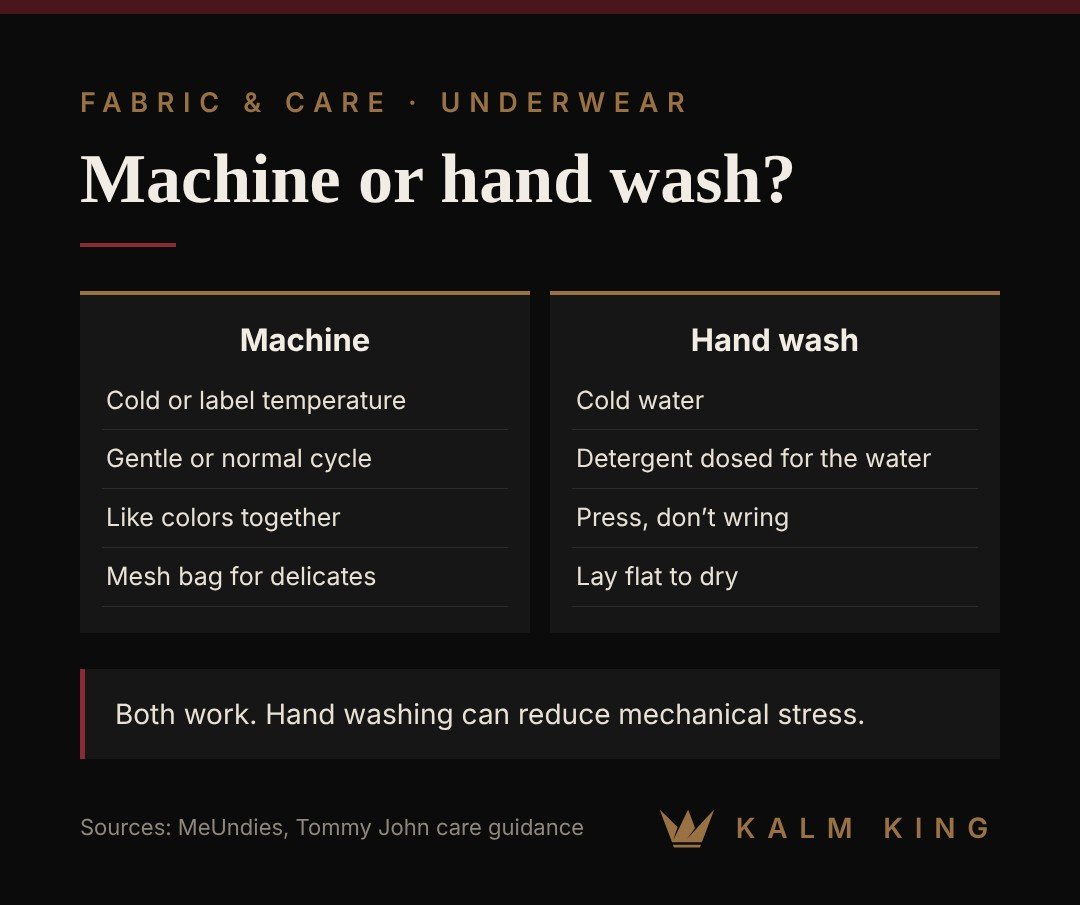
Hand washing can reduce mechanical stress compared with a machine, and MeUndies calls hand washing in cold water and laying flat to dry the best way to care for its underwear. You don’t need to do it every time, but it’s worth it for delicate pairs or when you’re traveling.
- Fill a clean sink or basin with cold or cool water. Use the temperature on the label.
- Add detergent for the amount of water. Follow your detergent’s hand-wash dose for the volume of water; Tommy John’s hand washing guide suggests “less than a penny size amount” for a sink load, because too much leaves residue.
- Turn the underwear inside out and submerge it. Swish it through the water and gently squeeze the fabric. Focus on the inside of the waistband and the pouch area.
- Let it soak briefly. A few minutes is enough for everyday wear.
- Rinse in clean cold water until no suds come out.
- Press out the water; don’t wring. Wringing twists and stretches the elastic. Instead, press the pair between your hands, or roll it in a clean towel and press down, as Tommy John’s guide describes.
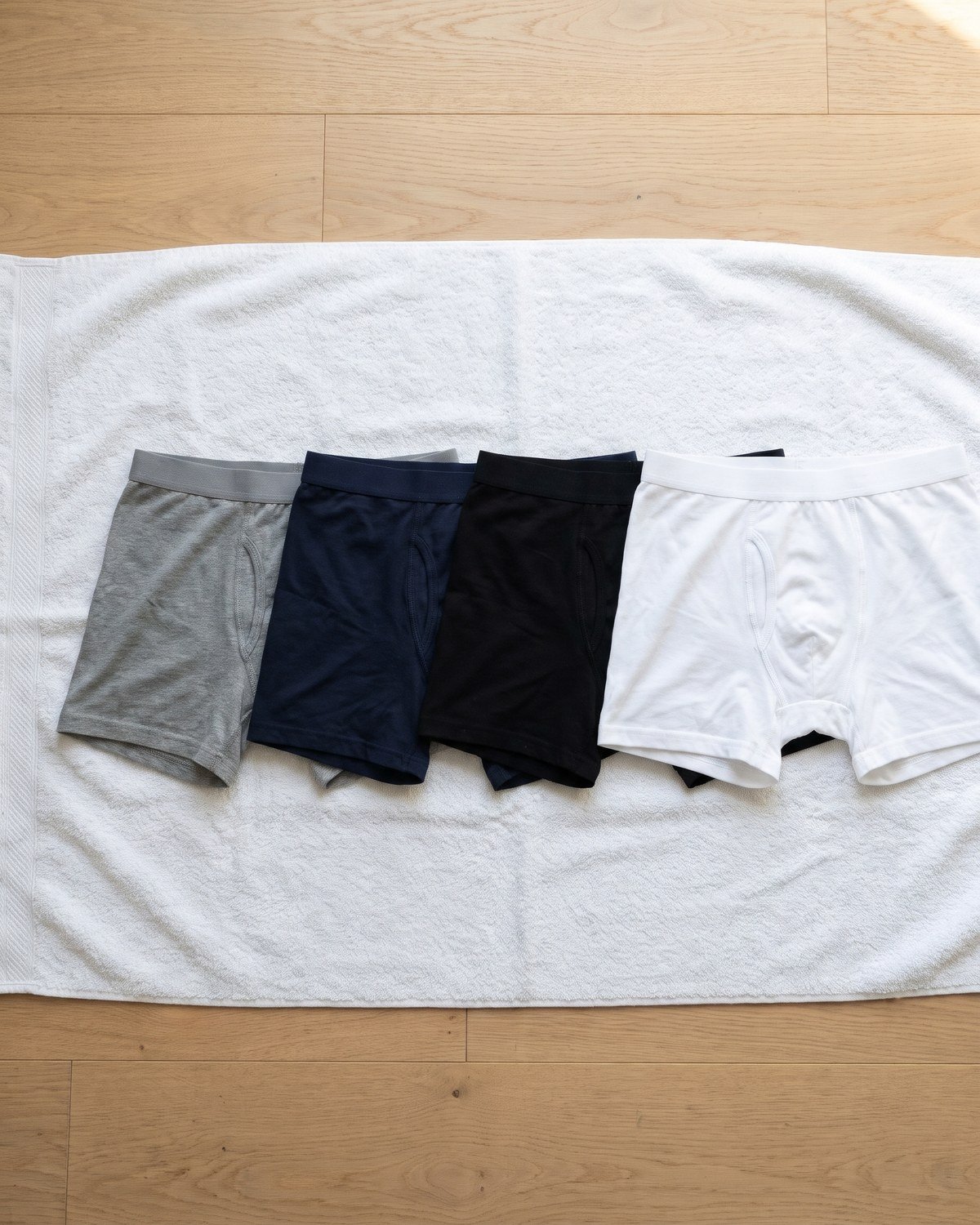
- Lay flat or hang to dry.
How to Dry Underwear Without Ruining the Waistband
Drying choices can affect fabric and elastic wear. High heat can accelerate wear; follow the care label.
Why heat matters
The stretch in a waistband and in many leg openings comes from elastane, also called spandex or Lycra. High heat can accelerate wear on elastane. Levi’s care guidance for stretch denim says to “avoid high heat when drying, as it can break down the elastic fibers over time.” MeUndies says its care recommendation helps “protect the colorfastness of the garment as well as the construction of the elastane fiber in the waistband.” Tommy John points out that a home dryer can get hot, up to 180°F on its account, which is why it recommends the lowest setting.
Air drying
Air drying is the gentlest option. Lay underwear flat on a clean towel or a drying rack, or hang it by the waistband from a rack. Avoid hanging it in strong direct sunlight for long periods if you want dark colors to stay dark. Allow enough time for it to dry completely before it goes back in the drawer.
Tumble drying
If you use a dryer, choose low heat or the “delicate” setting. Tommy John and MeUndies both say to tumble dry on low. Take the underwear out as soon as it’s dry rather than leaving it to bake in the drum. If you’re drying underwear with heavier items like jeans and towels, check lightweight pairs separately and remove them once dry.
What not to do
- Don’t dry on high heat, especially for stretch blends.
- Don’t iron underwear unless the label says you can.
- Don’t put underwear on a radiator to dry; direct heat can damage elastic.
Washing Underwear by Fabric
The label is the final word, but these general patterns help.
Cotton. Cotton underwear is usually the sturdiest and often tolerates warmer washes; check the label. Cotton can shrink, and the dryer’s tumbling action plays a part, so air drying or following the label’s dryer setting helps it keep its size. Our guide on why t-shirts shrink covers cotton knits in more detail.
Cotton with elastane. Most everyday boxer briefs and trunks. Treat them like cotton in the wash but be careful with dryer heat, because of the elastane.
Modal. Soft and smooth, and a common underwear fabric. Brands often recommend cool washes and low heat. Our guide on what modal fabric is covers its care in more detail.
Microfibre, nylon and polyester. Common in sport and performance underwear. They usually dry quickly and do well in cold washes. Fabric softener can affect how some of them handle moisture, so skip it unless the label says otherwise. Our guide on whether polyester shrinks explains how heat affects synthetics.
Merino. Wool needs a cool, gentle wash and usually no tumble drying. Follow the label closely.
How Often to Wash Underwear
Underwear is worn against the skin, so most people wash it after every wear. That’s the normal expectation, and it’s why care matters so much: underwear goes through more wash cycles than almost anything else in your wardrobe.
Because it’s washed so often, a few habits make a big difference over time:
- Rotate your pairs. Wearing the same few pairs every week wears them out faster. A drawer with enough pairs to cover a week or more between washes spreads the wear.
- Don’t overload the machine. Crowded loads rub items against each other and don’t rinse as well.
- Wash underwear soon after wearing, rather than leaving damp sports pairs in a closed bag.
When to Replace Underwear
Good care extends the life of underwear, but it doesn’t last forever. Signs it’s time to replace a pair:
- The band has lost its recovery: it looks wavy or loose next to a newer pair in the same style and size, or rolls when it used to sit flat.
- The leg openings no longer stay in place.
- The fabric is thin, pilled or has holes.
- The pair has stretched out of shape and no longer fits like it did.
Tommy John’s guidance is direct: if your elastic is too relaxed, “your undergarment will bunch and sag in all the wrong places.” Elastic that has lost its recovery can’t be washed back into shape. If you’re replacing pairs, our guide to boxers, briefs, trunks and boxer briefs helps you choose the shape before the size.
Washing Underwear When You Travel
When you’re away from a machine, hand washing in a hotel sink works well. Pack a little detergent, or use a gentle hand soap if that’s all you have, follow the hand washing steps above, and roll each pair in a towel to press out the water. Hang or lay flat, and allow enough time for each pair to dry completely before packing it.
Building a Simple Underwear Laundry Routine
Most of the damage to underwear happens through habit rather than one bad wash. A routine that takes a few seconds of thought at the machine does more for your pairs than any special product.
Keep a separate pile
If your underwear goes into the same basket as jeans, towels and work clothes, it ends up in the same load. Heavy items with zips, buttons and rivets rub against soft knits and can snag the waistband. A small separate pile for underwear, socks and tees makes it easy to run a gentler load of similar weights.
Wash full but not packed loads
A drum that’s too empty lets items slam around, and a drum that’s packed tight doesn’t rinse well, which can leave detergent in the fabric. Aim for a load that moves freely. If you’re washing only a few pairs, adding a few soft tees of similar color helps balance the drum without adding heavy, abrasive items.
Empty the machine promptly
Leaving wet underwear sitting in the drum for hours can leave it smelling musty and creased. Take it out soon after the cycle ends and get it drying. If you use the dryer, take pairs out as soon as the low-heat cycle finishes rather than letting them sit in a warm drum.
Rotate your drawer
If you always reach for the top few pairs, those pairs get washed and dried far more often than the rest. Putting clean pairs at the bottom of the stack spreads the wear more evenly, so the whole drawer ages at the same pace and you’re not left with a few tired pairs and a few that barely get worn.
Stains and Odor
Underwear rarely needs anything stronger than a normal wash, but stains and lingering odor do happen.
Treat stains early
Fresh marks come out more easily than set ones. Rinse the area in cold water from the back of the fabric, then wash as normal. Avoid hot water on fresh stains, since heat can set some of them, and it’s hard on the elastic too.
Don’t reach for bleach first
Chlorine bleach can weaken fibers and elastic, and many care labels say not to use it. If the label rules it out, a pre-soak in cold water with detergent dosed for the water is a gentler first step. Follow the care label for anything stronger.
Odor that won’t wash out
If a pair still smells after washing, the usual causes are too much detergent building up in the fabric, overloaded drums that don’t rinse well, or underwear left damp for too long. Dose detergent for the load, soil level and water hardness, give the load room to rinse and dry pairs promptly. Performance and synthetic fabrics in particular can hold on to odor when detergent builds up, so avoid overdosing.
Caring for a New Pack of Underwear
New underwear doesn’t need special treatment, but a little care in the first washes helps.
- Wash new pairs before wearing them if you prefer, especially dark colors that may release some dye at first.
- Wash dark new pairs with similar colors for the first few washes so any loose dye doesn’t transfer to lighter items.
- Read the label before the first wash rather than after. Different fabrics in the same pack usually share the same care, but not always.
- Don’t judge the fit after a hot first wash. If a new pair feels different after its first wash, check how it was washed and dried before deciding the size is wrong.
Storing Clean Underwear
How you put underwear away matters less than how you wash it, but a few habits help. Make sure pairs are fully dry before they go in a drawer, since damp fabric shut away can smell musty. Fold or roll them loosely rather than stretching the waistband around a tight bundle. And give the drawer enough room that pairs aren’t crushed in, which keeps them easier to rotate and stops the elastic being held under tension. Our guide on how boxer briefs should fit explains what a healthy waistband should feel like when you put a pair on.
Common Underwear Washing Mistakes
Ignoring the label. It’s the most specific advice you have.
Ignoring the temperature on the label. Warm or hot water isn’t needed for most everyday underwear; follow the label.
High-heat drying. High heat can accelerate elastic wear; follow the label’s dryer setting.
Overdosing detergent. Leaves residue; dose for the load, soil and water hardness.
Chlorine bleach on stretch fabrics. Can damage elastane. Use only what the label allows.
Wringing by hand. Twists and stretches elastic. Press instead.
Washing with zips and hooks. Snags fine fabrics. Use a mesh bag or wash separately.
Quick Underwear Washing Checklist
- Read the care label on each type you own.
- Sort by color, and keep delicates together.
- Wash cold or at the label temperature on a gentle or normal cycle.
- Dose detergent for the load; skip chlorine bleach unless allowed.
- Go easy on fabric softener, or skip it.
- Air dry or tumble dry low if the label allows; take it out as soon as it’s dry.
- Rotate pairs and replace ones whose bands have lost recovery.
Bringing It Together
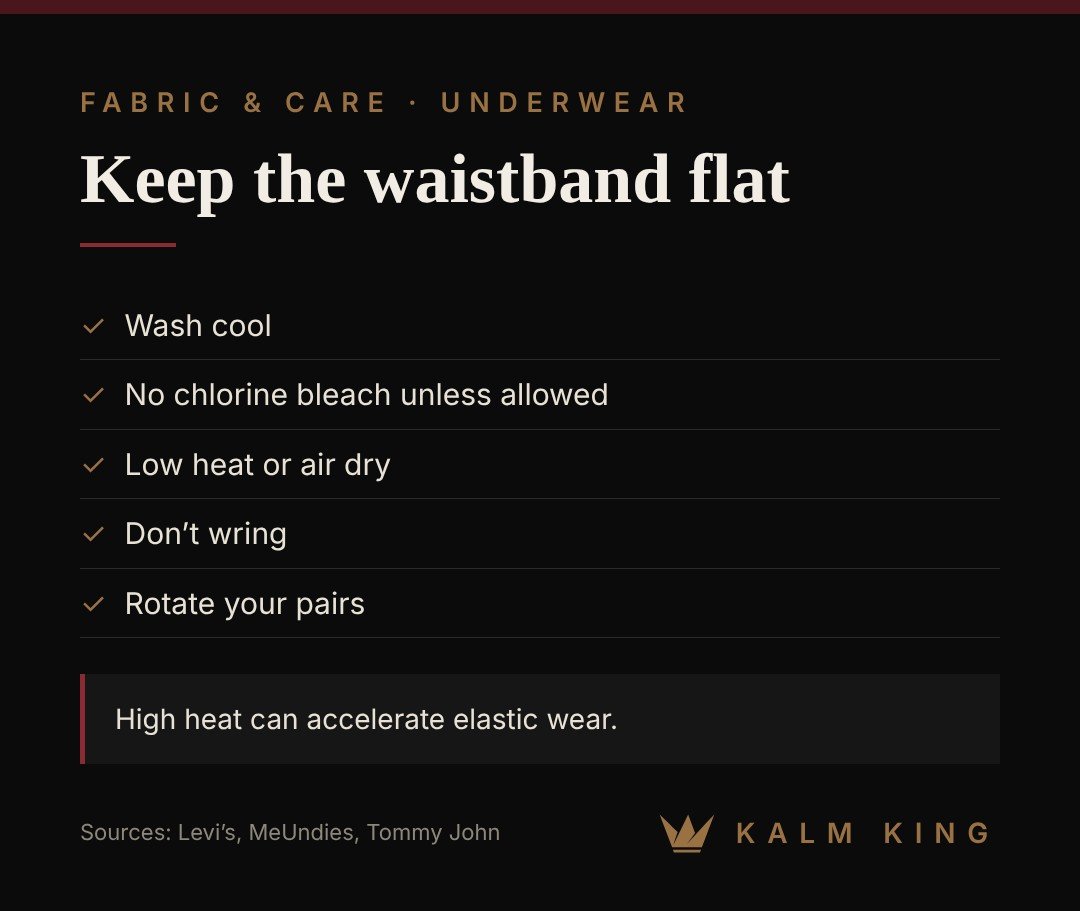
Washing underwear well isn’t complicated. Read the label, sort by color, wash cool on a gentle or normal cycle with detergent dosed for the load, and skip chlorine bleach unless the label allows it. Then dry it gently, on low heat or in the air, because high heat can accelerate wear on the elastic that keeps waistbands flat and leg openings in place.
Do that and rotate your pairs, and your underwear will hold its shape for longer. When a band has lost its recovery and no longer springs back, that’s the sign to replace it rather than to wash harder.
If you want fit and care notes like this in your inbox, join Field Notes.
Frequently asked questions
Should you wash underwear in hot or cold water?
Follow the care label. Many underwear brands, including Tommy John and MeUndies, recommend cold water, and some cotton styles allow warm. Cold water is gentler on elastic and colors and works well for most everyday underwear.
Can you put underwear in the dryer?
Usually, yes, on low heat if the label allows it. High heat can accelerate wear on the elastane in waistbands and leg openings, so tumble dry low or air dry, and take the underwear out as soon as it’s dry.
Should I use a laundry bag for underwear?
It helps for delicate fabrics and when you’re washing underwear with items that have zips or hooks. Turn the underwear inside out, put it in a mesh bag, and wash with like colors.
Why does my underwear waistband get wavy?
A wavy or loose waistband is a clue that the elastic may be losing its recovery, and high heat can accelerate that wear. Compare it with a newer pair in the same style and size. Following the care label helps new pairs last longer, but elastic that has lost its recovery can’t be restored by washing.
Sources
- Clothes Captioning: Complying with the Care Labeling Rule (FTC) and 16 CFR 423.6 (eCFR) (government)
- How should I care for MeUndies in the wash? (MeUndies Help Center) (manufacturer, commercial)
- How to Wash Underwear + Underwear Care Tips (Tommy John) and If Your Boxer Briefs Do This, Throw Them Away (Tommy John) (manufacturer, commercial)
- Shopping Guide: Product Care (Jockey) (manufacturer, commercial)
- Levi’s Product Size Guide: stretch denim care (Levi’s Customer Service) (manufacturer, commercial)
FIELD NOTES
Get the Overalls Fit Kit, free.
Your measurement card, the six fit checkpoints and a checklist to take shopping. Join Field Notes for new guides and a say in what Kalm King makes.
THE KALM KING JOURNAL
Continue reading
How Should Men’s Dress Pants Fit? Waist, Rise, Seat and Break
How should dress pants fit? Check the waist, rise, seat, thighs and hem with practical sitting tests, break options and realistic tailoring advice.
How Should a Dress Shirt Fit? A Men’s Guide to Collar, Chest and Sleeves
Check dress shirt fit at the collar, shoulders, chest, sleeves and hem. Learn what to measure, how to test movement and when to try another cut.
Men’s Capsule Wardrobe: How to Build One That Actually Works
A men’s capsule wardrobe is a small set of clothes that all work together. How to choose the pieces, colors and fit, and build one at your own pace.