
November 9, 2026
Explore: Fabric & Care
What Is Modal Fabric? Feel, Uses and Care
What modal fabric is, how it differs from viscose, lyocell and cotton, why it shows up in tees and underwear, and how to care for it.
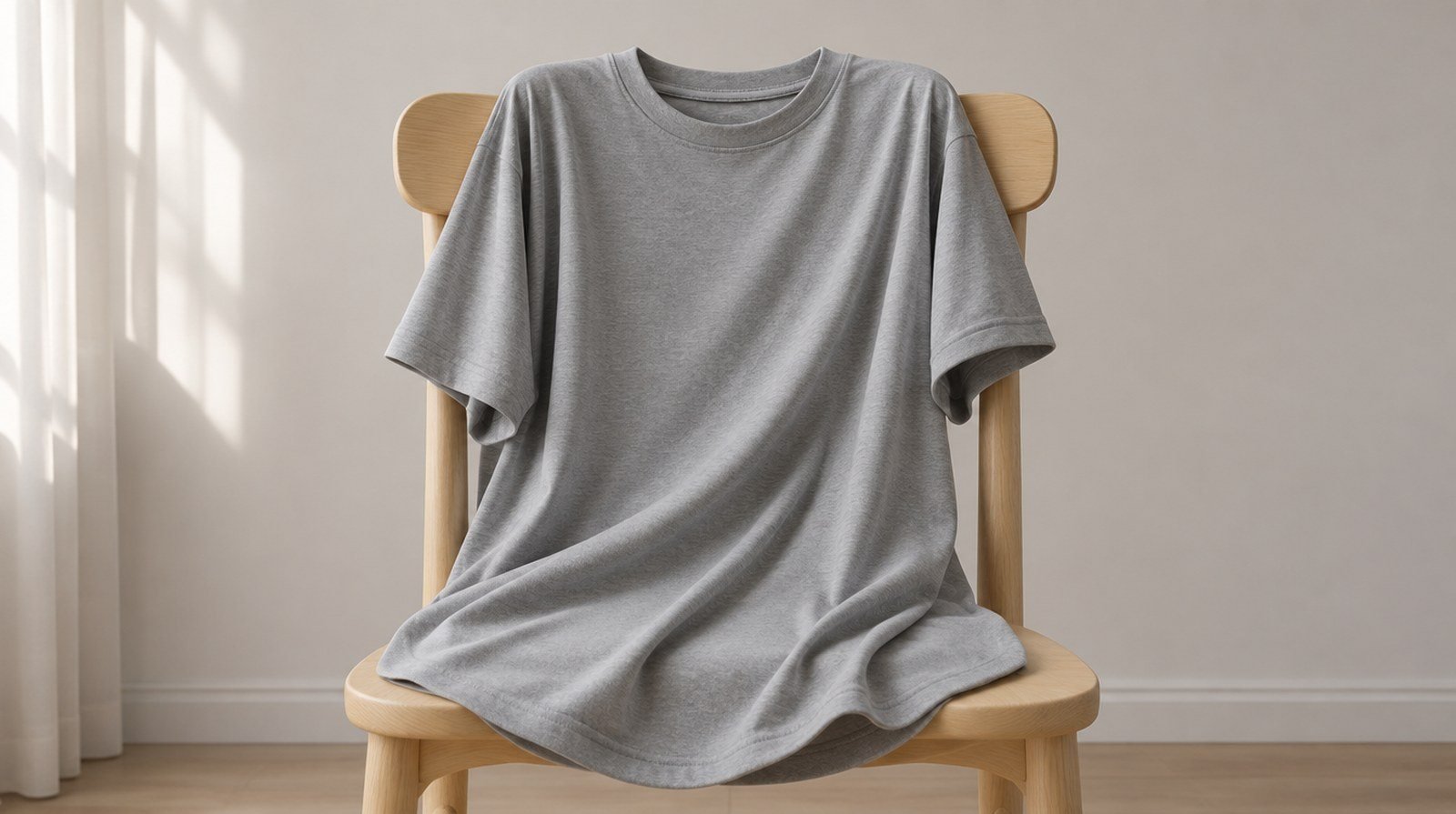
You pick up a pair of boxer briefs or a tee and the label says “modal” or “rayon,” maybe next to cotton and a little elastane. It feels smoother than the cotton next to it on the shelf, and it costs a bit more. So what is modal fabric, and is it worth choosing over cotton? The short version is that modal is a manufactured fiber made from wood cellulose, and it behaves differently from cotton in a few ways that matter for things you wear close to the skin.
Below: what modal is and how it is made, what US labeling rules say about the name, how it differs from viscose and lyocell, how it feels and behaves, an honest modal vs cotton comparison for tees and underwear, what to make of brand names like TENCEL Modal, care, buying checks and mistakes. There is a checklist at the end.
Short answer: Modal is a regenerated cellulose fiber and a type of rayon; viscose and lyocell are other types. The international standard for fiber names, ISO 2076, defines it as a cellulose fiber with high breaking strength and a high wet modulus. It is often described as being made from beech wood. In the one controlled study cited here, which tested particular nylon-plated socks, the modal socks were more breathable, took up more moisture and pilled less than the cotton socks, but were less abrasion resistant before washing. That is one set of samples, not a rule for every modal tee or pair of underwear. Follow the care label.

What Is Modal Fabric, Exactly?
Start with the word “fabric,” because it hides a distinction that clears up a lot of confusion. Modal is a fiber. That fiber is spun into yarn. The yarn is then knitted (as in a jersey tee or a pair of boxer briefs) or woven (as in a shirt or sheet). So “modal fabric” really means a fabric made mostly or partly from modal fiber. Two modal garments can feel very different because the yarn, the knit and the finish are different, even when the fiber is the same.
A regenerated cellulose fiber
Cellulose is the main structural material in plants, including wood and cotton. Cotton gives you cellulose already in fiber form: it grows that way. Wood does not. To make a textile fiber from wood, the cellulose has to be separated out, dissolved and then re-formed into long, thin filaments that can be cut and spun. That re-forming is what “regenerated” means.
US rules put modal in the rayon family. The Federal Trade Commission’s textile rules, at 16 CFR 303.7, define rayon as “a manufactured fiber composed of regenerated cellulose.” So modal is neither a natural fiber in the way cotton is, nor a synthetic made from petrochemicals in the way polyester is. It is a manufactured fiber built from a natural polymer.
What modal is made from
Modal is commonly described as a beech-wood fiber. Textile Exchange, a nonprofit that works on fiber and materials sourcing, describes modal in its glossary as a “second generation regenerated cellulosic fiber” and a variation of rayon (viscose). Its description of the raw material is tied to one producer: it says Lenzing’s TENCEL Modal fibers are extracted from beech wood grown in PEFC-certified forests in Europe.
That is worth reading carefully. It tells you what one major producer says about its branded fiber. It does not tell you that every garment labeled “modal” is made from the same wood, in the same place, by the same process. If origin matters to you, look for a maker that states it.
How it is made, at a high level
Wood is pulped to get at the cellulose. The cellulose is dissolved, pushed through fine holes to form filaments, and then set back into solid fiber. The fiber is cut to length, spun into yarn and made into fabric.
The international fiber-name standard, ISO 2076, defines ordinary viscose as cellulose fiber “obtained by the viscose process.” Textile Exchange calls modal a variation of viscose. What sets modal apart in ISO 2076 is not a different raw material but a performance definition: a cellulose fiber “having a high breaking strength and a high wet modulus.” Wet modulus is a measure of how much force it takes to stretch the fiber while it is wet. ISO 2076 sets minimum values for both properties, so in the standard’s terms, modal is a higher-strength, higher-wet-modulus type of regenerated cellulose, while viscose is defined by its process. Both are types of rayon.
Textile Exchange also notes that high-wet-modulus fiber of this kind was first developed in Japan in 1951, and that Lenzing began selling modal in 1964. So this is not a new invention, even if it can look like one on a hang tag.

Is Modal Natural or Synthetic?
The honest answer is “neither, exactly.” The FTC classes rayon, and so modal, as a manufactured fiber. But the raw material is plant cellulose, not oil. Shoppers and brands sometimes call it “semi-synthetic,” and sometimes call it “natural.” Both labels flatten something real.
The practical takeaway: do not assume modal behaves like cotton just because both are cellulose, and do not assume it behaves like polyester just because it is made in a factory. It has its own profile, which is what the rest of this article is about.
Modal on the Label: What US Rules Say
One tee labeled “modal” and a similar one labeled “rayon” are not necessarily different.
Under 16 CFR 303.7, the FTC establishes the generic fiber names defined in that section, and also the generic names set out in ISO 2076:2013, which the rule incorporates by reference. ISO 2076 lists “modal” as its own generic name, with the code CMD, and notes that in the US the same fiber also goes by “rayon.” Read together, those two documents indicate that a US content label can identify this fiber either as “modal” or as “rayon.” The FTC rule itself does not use the word “modal,” so the permission comes through the ISO standard it adopts.
The same pattern applies to modal’s cousins. ISO 2076 lists viscose (code CV) and lyocell (code CLY) as separate names, and gives “rayon” as the US alternative for each. The FTC rule separately says that “lyocell” may be used as a generic description for rayon made from cellulose precipitated from an organic solution without chemical substitution.
What this means when you shop:
- “Rayon” on a label does not tell you which kind. It could be viscose, modal or lyocell.
- “Modal” is more specific. Under ISO 2076, it names the high-strength, high-wet-modulus type.
- A brand name is not a fiber name. “TENCEL” is a trademark. The generic fiber name (modal or lyocell) is what tells you what the fiber is.

What Is Modal Fabric Compared With Viscose and Lyocell?
All three are regenerated cellulose fibers, all three can appear as “rayon” in the US, and all three show up in soft knits. Here is how they differ at a summary level, using the definitions in ISO 2076. A separate article on viscose goes deeper into that fiber.
Viscose
Viscose is one type of rayon, not a synonym for all of it. ISO 2076 defines it simply by process: cellulose fiber “obtained by the viscose process.” There is no strength or wet-modulus minimum in that definition.
Modal
Modal is defined in ISO 2076 by its properties: high breaking strength and high wet modulus, with minimum values set in the standard. Textile Exchange describes it as a variation of viscose. In everyday terms, it is a type of rayon defined by greater strength and more resistance to stretching when wet. Like viscose, it is rayon, but not every rayon is modal.
Lyocell
Lyocell is defined in ISO 2076 by a different route: cellulose fiber “obtained by an organic solvent spinning process,” where the cellulose is dissolved and spun without forming a chemical derivative. The FTC rule describes it in similar terms. So lyocell is not a grade of viscose; it is made by a different method.
What the definitions do not tell you
None of these definitions tells you which fiber feels best, lasts longest or shrinks least in your machine. Those depend on yarn, knit, weight, finish and blend. A definition is a floor for what the fiber must be, not a ranking of finished garments, so use it to read labels rather than to pick a winner.
How Modal Feels and Behaves
Here is what the cited sources describe, and where they stop.
Feel
Softness is the quality modal is best known for. Textile Exchange’s glossary says the fiber is known for its softness. A 2023 peer-reviewed study in the journal Materials, by Tomljenović, Živičnjak and Mihaljević, says in its introduction that cellulose fibers such as modal “offer a silky handle, exceptional contact comfort and better hydrophilicity than cotton.” Note that the study did not measure softness itself; that sentence is background for its tests.
Softness is also partly a product of the yarn and finish, so a coarse modal yarn can feel less smooth than a fine combed cotton. Judge the garment in your hand, not the word on the tag.
Drape
Many brands describe modal as drapey, meaning it falls and moves rather than holding a shape. None of the primary sources cited here measured drape, so there is no sourced comparison to give. In practice, drape depends heavily on fabric weight and knit. If you want a tee that skims rather than stands away from the body, hold it up by the shoulders and see how it hangs.
Moisture
This is where the study gives real numbers. In the Materials study, the researchers knitted socks from modal and micro modal yarns, plated with nylon (polyamide), and compared them with cotton socks made the same way. They measured moisture regain, which is how much water vapor a fabric takes up from the air. Untreated modal socks in one group averaged 9.28%, while untreated cotton ring-spun socks ranged from 4.68% to 5.91%. The authors conclude that modal “provided better hydrophilicity than cotton,” meaning it took up more moisture.
The same study found the untreated modal and micro modal socks were more breathable, measured as air permeability, than the cotton socks.
Two cautions. These were socks with nylon plating, not tees or underwear. And taking up more moisture is not the same as feeling dry; the study did not test how quickly the fabrics dried or how they felt in wear.
Pilling
You will often read that modal pills. The one controlled study cited here points the other way, at least for its samples. In the untreated group, the authors write that “the pilling tendency of the conventional cotton socks was higher” than that of the other tested socks, and the abstract describes the modal and micro modal socks as having “a generally better pilling resistance” than cotton.
That does not mean modal never pills. Pilling depends on yarn hairiness, twist, knit tightness and blend, and one study of socks cannot cover every garment. It means “modal always pills” is not a safe assumption either.
Abrasion and strength
Here cotton had an edge. In the Materials study, “lower abrasion resistance values were obtained” for the untreated modal and micro modal socks than for the cotton socks. After a pretreatment of five wash and dry cycles, the modal socks were broadly comparable to cotton. The study was about areas of a sock that take hard rubbing, like the heel and sole, so it is most relevant to the parts of any garment that rub.
At the fiber level, ISO 2076 defines modal by its high breaking strength. Fiber strength and fabric durability are different things, though, and a smooth, fine knit can still wear through in a high-friction spot.
Shrinkage
All the socks in the Materials study shrank after five cycles of washing at 30°C and line drying, mostly in length. The authors report that leg-length shrinkage was lower and comparable for the modal and cotton ring-spun socks. That is one construction and one wash routine, so it does not give you a general rule for modal at home. The garment’s care label is the best guide to how a specific piece should be washed and dried.

Why Modal Shows Up in Underwear and Tees
Look at the content label on soft underwear and you will often see modal blended with elastane, sometimes with cotton too. There are sensible reasons.
Contact comfort
Underwear and tees sit directly on skin all day. The Materials study’s authors describe cellulose fibers such as modal as important for lingerie and other garments worn against the skin, citing their contact comfort and moisture uptake. A smooth, soft knit is simply pleasant there.
Stretch from elastane
Modal by itself is not elastic in the way underwear needs. That job usually goes to elastane, which the US calls spandex. ISO 2076 defines elastane as a segmented polyurethane fiber that, if stretched to three times its length, “rapidly reverts substantially to the unstretched length when the tension is removed.” A small share of elastane gives a modal knit the stretch and recovery that keeps a waistband and leg opening where they belong.
That recovery is a big part of fit. If a pair of boxer briefs feels great at first and then loosens through the day, it is worth reading our guide on how boxer briefs should fit and our notes on how to stop boxer briefs from riding up. Fiber is only one part of that story; leg opening, hem and cut matter too.
Blending with cotton
Cotton and modal are often blended, too. In the sock study’s samples, modal took up more moisture and pilled less, while cotton resisted abrasion better before washing. Blending is one way makers try to balance a smooth feel with other properties. The sources cited here did not test tee or underwear blends, so how a given blend performs depends on the whole fabric.
If you are choosing between underwear styles as well as fabrics, our breakdown of briefs vs trunks vs boxer briefs covers coverage and cut.

Modal vs Cotton: Honest Trade-Offs
This is the comparison most people are really asking about. The only direct comparison cited here is one lab study of particular nylon-plated socks, so the table below shows what those samples did, not how every modal or cotton garment behaves.
| Modal | Cotton | |
|---|---|---|
| Fiber type | Regenerated cellulose (a type of rayon) | Natural cellulose |
| Moisture uptake (one sock study only) | Higher | Lower |
| Air permeability (same study) | Higher | Lower |
| Pilling (same study) | Less | More |
| Abrasion, before washing (same study) | Lower | Higher |
| Feel | Often described as silky; not measured | Depends on yarn and finish |
What the comparison shows
In that sock study, the modal samples came out ahead on moisture uptake, breathability and pilling, and behind on abrasion resistance before pretreatment. After five wash and dry cycles, abrasion resistance was broadly comparable. Those results describe those particular socks. They don’t show that cotton underwear or tees are tougher than modal ones. For durability in a specific pair or tee, check the construction instead: seam quality, how dense and even the knit feels, the elastane content and stretch recovery, and the waistband.
What it does not show
There is no evidence in these sources that modal is healthier for your skin, or that it lasts a set number of washes longer or shorter than cotton. Those claims show up in marketing; they are not in the sources cited here.
Modal vs cotton underwear
No study cited here tested modal against cotton in underwear. If smooth feel and moisture uptake matter most to you, a modal blend may be worth trying; if you are hard on your underwear or prefer a firmer, more structured knit, a cotton or cotton-rich blend may suit you better. Treat that as a starting point, not a rule. Either way, the elastane content and the construction of the waistband and leg openings will decide more about fit and staying power than the main fiber does.
Modal vs cotton tees
No study cited here tested modal against cotton in tees either. In the hand, a light modal knit may look smoother and more fluid, while a heavier cotton tee may hold more of its own shape, but weight and knit drive that as much as fiber. Neither is better in general; it depends on the look you want. Our guide to how a men’s t-shirt should fit covers shoulder, chest and length, which matter regardless of fiber. If shrinkage is your main worry with cotton, see how to prevent a t-shirt from shrinking.

TENCEL Modal and Environmental Claims
You will see “TENCEL Modal” on many labels and product pages. TENCEL is a trademark of the fiber producer Lenzing, and TENCEL Modal is its branded modal fiber. A trademark tells you which company’s fiber the maker says it used. It is not a separate fiber type; the generic name, modal, is what tells you what the fiber is.
Environmental claims around modal are mostly company claims, and they are worth reading as such. Textile Exchange’s glossary, describing Lenzing’s process, says the beech wood comes from PEFC-certified European forests and that Lenzing’s integrated pulp-to-fiber process is “self-sufficient in energy” and recovers co-products from the wood. That is a description of one producer’s operation as summarized by a sourcing nonprofit. It is not an independent lifecycle comparison, and it does not apply automatically to unbranded modal from other producers.
So, a fair way to think about it:
- A branded fiber name can point you to a producer’s published claims. You can then judge those claims for yourself.
- “Modal” alone does not tell you where the wood came from or how the fiber was made.
- “Eco,” “natural” or “sustainable” on a tag is not a fiber name and is not defined by the fiber standards discussed here.
We are not recommending any brand here. The point is to know what a name does and does not tell you.
How to Care for Modal
There is no single “modal care rule,” because a modal garment is a fiber, a yarn, a knit, a blend and a finish all at once. That is why the care label comes first. It is the maker’s instruction for that specific piece.
With that in place, here are plain-language habits that suit most soft knits. These are practical handling suggestions, not tested results:
- Read the label before the first wash. If it says cold, gentle, or lay flat to dry, it is telling you how that garment was designed to be handled.
- Turn tees and underwear inside out. It reduces rubbing on the outer surface, which is the surface you see.
- Use a gentle or normal cycle as the label allows. Less agitation means less friction on the fabric surface.
- Do not overload the machine. Crowding increases rubbing between garments.
- Go easy on the dryer if the label allows it at all. For many knits, drying flat or on a rack is gentler than a long tumble. If you do tumble, take pieces out promptly rather than letting them over-dry.
- Fold knit tops rather than hanging them for long periods. A soft, drapey knit can stretch at the shoulders on a narrow hanger.
- Watch the neckline. Smooth it while damp and do not pull it to reshape. Our piece on how to keep a t-shirt collar from stretching has more on this.
If a modal tee has already lost length or shape, the label is still your guide for what is safe to try. Do not assume a cotton fix works the same way on a different fiber.

How to Check a Modal Garment Before You Buy
You can learn a lot in the store, or from a good product page, before you commit.
Read the content label properly
Look for the fiber names and percentages. “95% modal, 5% elastane” tells you it is mostly modal with stretch added. “Rayon” alone could be viscose, modal or lyocell. If a page uses a trademark such as TENCEL and never names the generic fiber, look for the actual content label.
Check the hand and the weight
Hold a tee up to the light. Very thin knits can look sheer, especially in light colors, and can show more wear sooner where they rub.
Do a quick stretch-and-recover check
Gently stretch the waistband, leg opening or a section of the body and let go. It should spring back without staying rippled. This is a quick in-hand check, not a lab test, but it tells you whether the garment has the recovery it needs.
Look at seams and edges
Check that seams lie flat and that stitching is even. On underwear, look at where the waistband joins the body and how the leg openings are finished, since those areas take strain.
Read reviews for wear, not just day-one feel
“Soft out of the bag” is common. Look instead for reviews that mention how the piece held up after weeks of wear and washing: pilling, holes at the seat or thighs, loss of stretch. Patterns beat single loud reviews.
If you are buying for someone else
Ask what he likes in a tee or underwear, smooth and light or firmer and structured, and check his usual size against the brand’s chart. Our guide on how to buy clothes for him without guessing covers the rest.

Common Mistakes With Modal
A few assumptions trip people up.
- Treating “modal” and “rayon” as unrelated, or rayon as always viscose. In the US, modal and viscose are both types of rayon, and a modal label may use either name.
- Assuming a trademark is a fiber. TENCEL is a brand name. The fiber is modal or lyocell.
- Assuming it will behave like cotton in the wash. Both are cellulose, but they are different fibers with different properties. Follow the label rather than your cotton habits.
- Assuming it will always pill. The one controlled study cited here found less pilling than cotton in its sock samples. Construction matters more than the word on the tag.
- Judging durability by fiber name alone. One sock study isn’t a rule for underwear or tees either way. Check seams, knit density, stretch recovery and the waistband, because high-friction areas still wear.
- Buying on fiber and ignoring fit. The best fabric in the world will not fix a tee with the wrong shoulder or underwear with the wrong leg opening.
- Taking environmental claims at face value. Company descriptions are a starting point, not independent proof, and they do not automatically apply to unbranded modal.
Who Modal Suits
Modal and modal blends make sense if you:
- Want a smoother, softer feel against the skin in underwear and lightweight tees.
- Like a tee that falls and moves rather than holding a boxy shape.
- Are happy to follow a care label rather than wash everything the same way.
Cotton or cotton-rich blends may suit you better if you:
- Prefer a firmer, more structured tee.
- Are hard on garments in high-friction areas.
- Want a fabric whose behavior in the wash you already know well.
Plenty of people keep both.
Your Modal Checklist
When you shop
- [ ] Read the content label: fiber names and percentages.
- [ ] Remember that “rayon” can mean viscose, modal or lyocell.
- [ ] Treat trademarks as brand names, and look for the generic fiber name.
- [ ] Check thickness against the light, especially in pale colors.
- [ ] Stretch and release waistbands and openings to check recovery.
- [ ] Read reviews that talk about wear over weeks, not just first feel.
- [ ] Check fit first: shoulder and length for tees, leg opening and rise for underwear.
When you wash
- [ ] Follow the garment’s care label.
- [ ] Turn pieces inside out.
- [ ] Use a gentle or normal cycle as the label allows.
- [ ] Don’t overload the machine.
When you dry and store
- [ ] Air dry flat or on a rack if the label allows and you have time.
- [ ] If you tumble, take pieces out promptly.
- [ ] Fold soft knit tops rather than leaving them on narrow hangers.
Bringing It Together
Modal is a regenerated cellulose fiber and a type of rayon, defined in the international standard by high strength and high wet modulus, and often described as made from beech wood. In the one controlled study cited here, modal socks took up more moisture, breathed better and pilled less than cotton socks, while the cotton socks resisted abrasion better before washing; that is a guide, not a rule for every garment. That makes modal a sensible choice for soft, close-to-skin basics, provided you read the label, check the construction and follow the care instructions. The fiber is only part of the answer; the fit is the rest.
Keep going in Fabric & Care: what viscose is and how it differs from modal, whether polyester shrinks, and what a heavyweight t-shirt is.
Frequently asked questions
What is modal fabric made of?
Modal is a regenerated cellulose fiber and a type of rayon (as are viscose and lyocell), made by dissolving cellulose from wood and re-forming it into fiber. It is commonly described as made from beech wood; Textile Exchange, for example, says Lenzing’s TENCEL Modal comes from beech grown in PEFC-certified European forests.
Is modal the same as rayon?
In the US, modal is a type of rayon, as viscose and lyocell are; not every rayon is modal. The FTC’s textile rules adopt the generic names in ISO 2076, which lists modal as its own name and notes it is also called rayon in the US, so a label may use either word.
Is modal better than cotton for underwear?
Not as a general rule. One controlled study of particular nylon-plated socks found the modal samples took up more moisture, were more breathable and pilled less than cotton, but were less abrasion resistant before washing; no cited study tested underwear. Fit, elastane content and construction matter as much as the main fiber.
How should you wash modal?
Follow the garment’s care label first, because the yarn, blend and finish affect how it should be handled. Turning pieces inside out, using a gentle or normal cycle as allowed, and avoiding long tumble drying are reasonable habits for soft knits.
Sources
- 16 CFR 303.7, Generic names and definitions for manufactured fibers (Electronic Code of Federal Regulations) (government)
- ISO 2076:2013(E), Textiles: Man-made fibres: Generic names, as incorporated by reference in 16 CFR 303.7 (public copy via law.resource.org) (standards body)
- Modal, Glossary (Textile Exchange) (nonprofit, fiber sourcing)
- Tomljenović, Živičnjak and Mihaljević, “Usage Durability and Comfort Properties of Socks Made from Differently Spun Modal and Micro Modal Yarns,” Materials 16(4):1684, 2023 (peer-reviewed)
FIELD NOTES
Get the Overalls Fit Kit, free.
Your measurement card, the six fit checkpoints and a checklist to take shopping. Join Field Notes for new guides and a say in what Kalm King makes.
THE KALM KING JOURNAL
Continue reading

How Should Men’s Dress Pants Fit? Waist, Rise, Seat and Break
How should dress pants fit? Check the waist, rise, seat, thighs and hem with practical sitting tests, break options and realistic tailoring advice.
How Should a Dress Shirt Fit? A Men’s Guide to Collar, Chest and Sleeves
Check dress shirt fit at the collar, shoulders, chest, sleeves and hem. Learn what to measure, how to test movement and when to try another cut.
Men’s Capsule Wardrobe: How to Build One That Actually Works
A men’s capsule wardrobe is a small set of clothes that all work together. How to choose the pieces, colors and fit, and build one at your own pace.