
November 1, 2026
Explore: Style
How to Stop Boxer Briefs From Riding Up
How to stop boxer briefs from riding up: the leg length, leg opening, fabric, waistband and sizing details a size chart misses, plus a quick fit checklist.
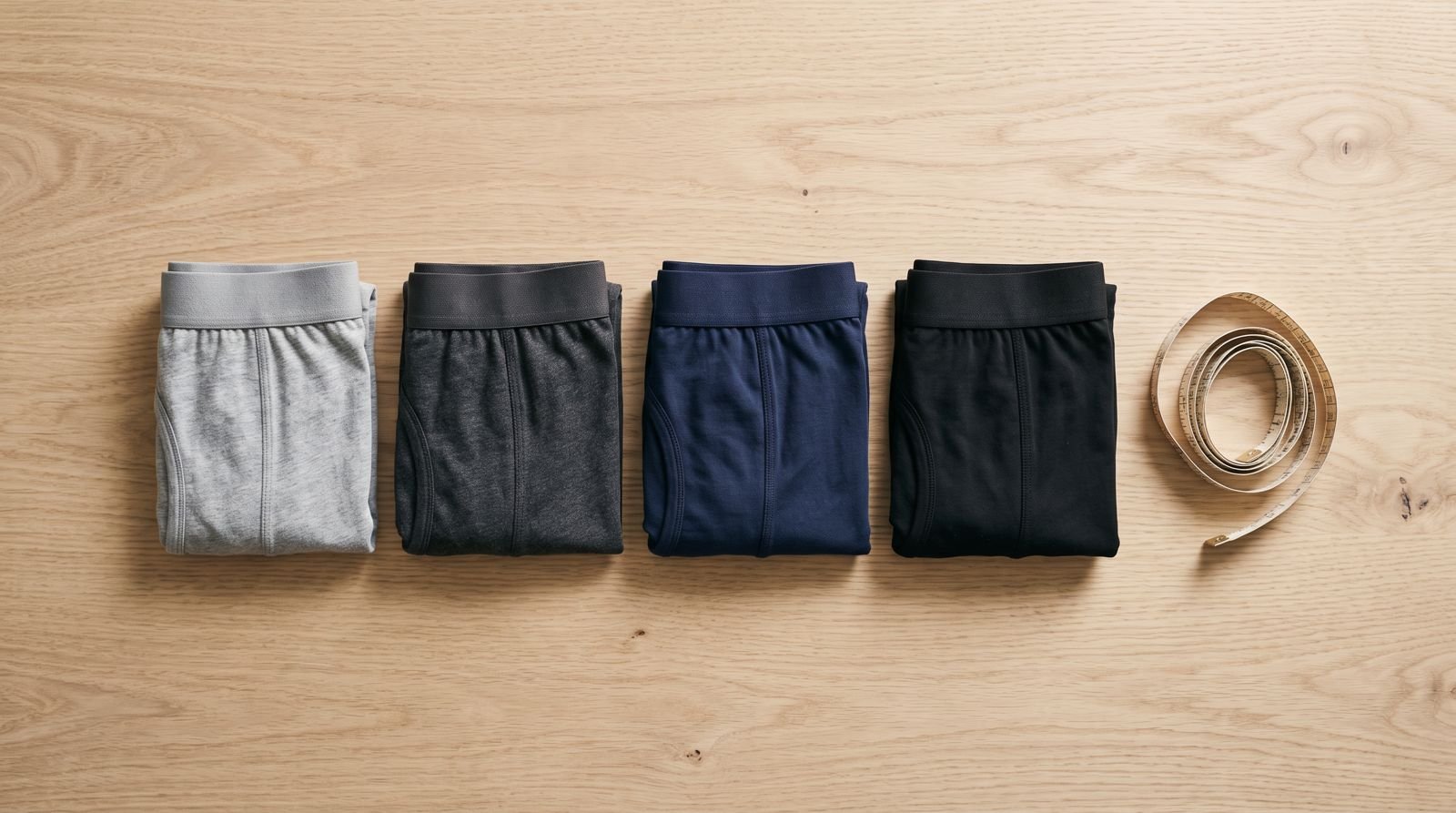
You pull them down in the morning. By lunch they’ve crept up your thighs again. If you’ve been searching for how to stop boxer briefs from riding up, the fix usually isn’t one magic pair. It’s a handful of fit details working together: leg length, leg opening, fabric, waistband and a size that suits your actual body, not just your waist number. This guide walks through each one so you can buy with a plan instead of guessing.
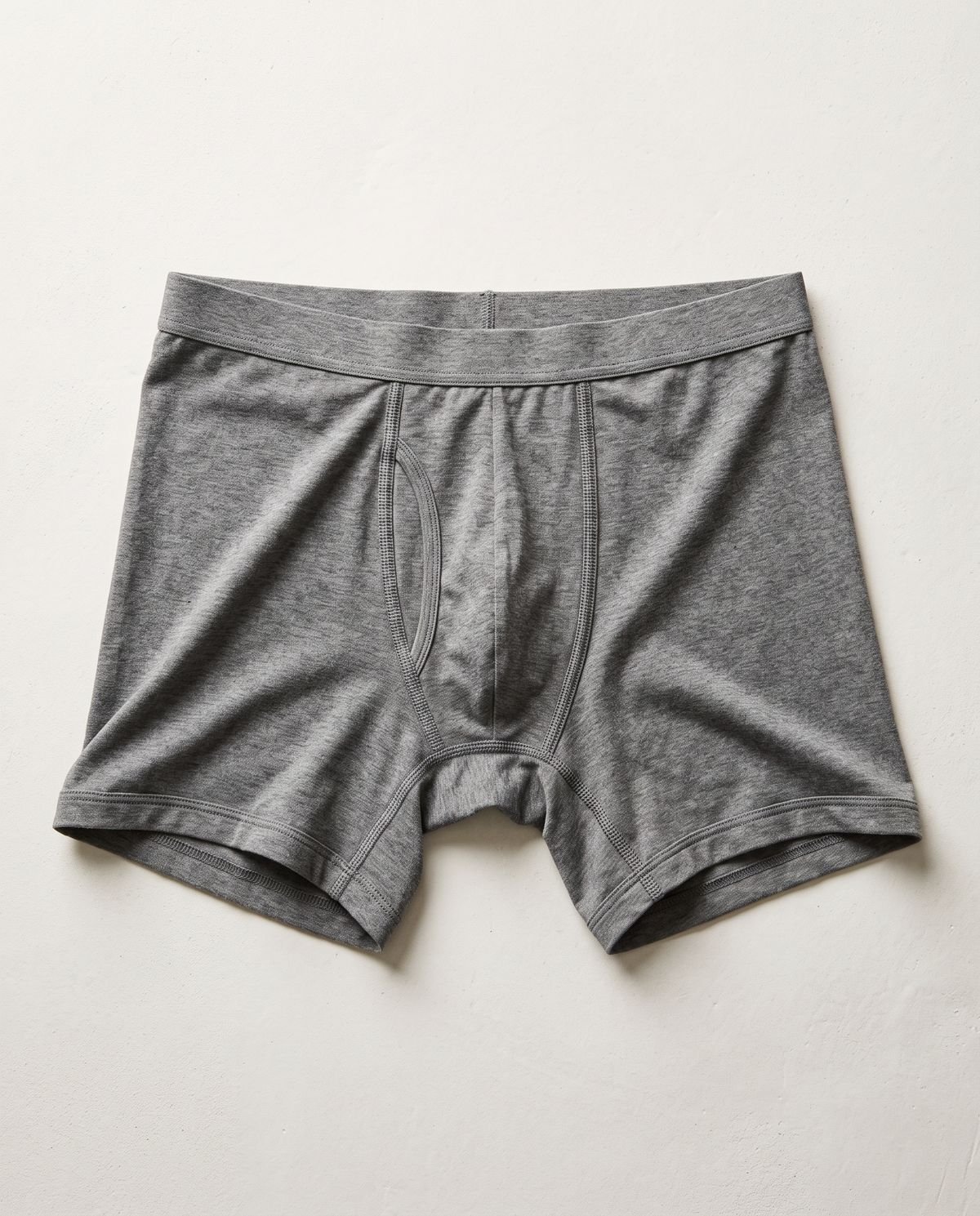
Short answer: Boxer briefs ride up when the legs can’t hold their place on your thigh. That can come from loose leg openings, a leg length that ends at the wrong spot for your thigh shape, fabric with too little stretch or recovery, or the wrong size. Look for a leg that sits snug without squeezing, a finished or taller hem, a fabric with some stretch, and a sturdy waistband, then test the fit by walking, sitting and squatting before you commit.
Checking the basics first? How Should Boxer Briefs Fit? walks through the waistband, rise, thighs and length. This guide is for fixing legs that keep riding up.
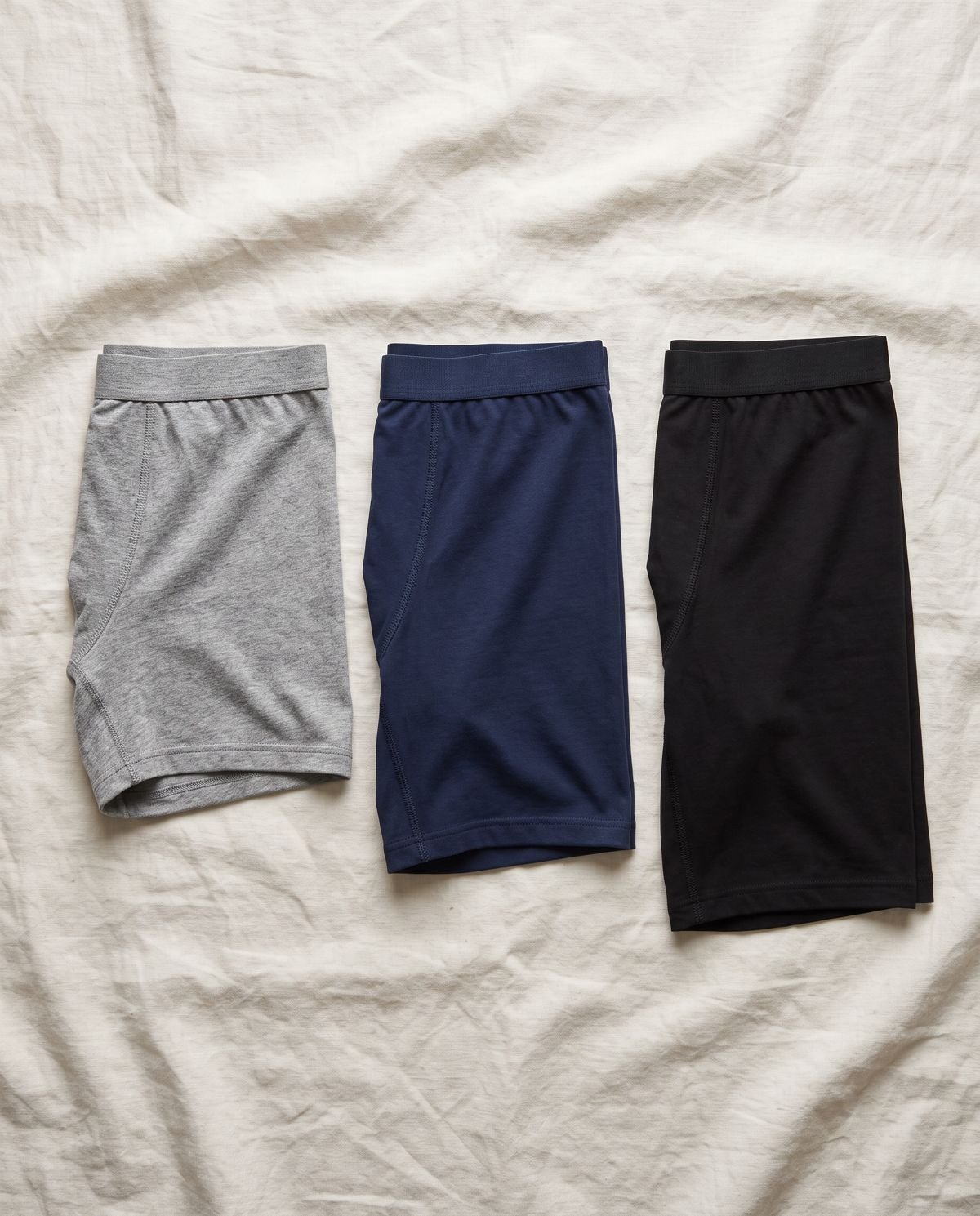
Why boxer briefs ride up
Riding up is the leg of the underwear moving toward your hip while you move. Every step, the inner thigh pushes against the fabric. If nothing holds the hem in place, the fabric slides up the slope of your thigh and bunches near the crotch.
A few things tend to cause it, alone or together.
The leg is too loose for your thigh. The brand guide from Bamigo puts it plainly: loose legs that don’t fit your thighs properly let the fabric creep upward. A leg opening that gapes has nothing to grip with.
The size is off. Bamigo also notes that the wrong size leads to a poor fit, which can cause riding up. Too big, and the legs flap. Too small, and the whole garment gets pulled toward your hips as you move.
The style doesn’t match your build. The same guide points to the wrong style for your body shape as one cause of bunching under clothes. A short leg that works on narrow thighs may climb on broader ones.
The hem has nothing to hold it. OutdoorGearLab, an independent testing site, says a good pair will have a seamed hemline on the legs to prevent riding up. In their testing, a pair with a taller-than-normal hem stayed put even though its inseam was short.
So when you ask why your underwear keeps riding up, the honest answer is that it’s usually a combination. That’s also why one fix rarely solves it on its own.
Why a size chart alone may not fix it
Here’s a recurring frustration: you measure, check the chart, buy the “right” size, and the legs still ride up. That’s not you doing it wrong. An underwear size chart may be built mainly around the waist. The retailer Bergfreunde’s chart for one underwear brand, for example, lists waist ranges from XS to XXL.
A waist number tells you nothing about:
- Your thigh circumference. Two people with the same waist can have very different thighs. The leg opening that hugs one person can gape or squeeze on the other.
- Where the leg ends on your thigh. Inseam length interacts with thigh shape. A hem that lands on the narrow part of one person’s thigh might land on the widest part of someone else’s.
- How the fabric stretches and recovers. Two pairs labeled the same size can fit differently because one fabric has more give than the other, or springs back better after stretching.
- The rise. How high the waistband sits changes how the whole garment hangs, including where the legs land.
- The waistband. A soft, thin band can roll or slide, which drags the rest of the garment with it.
So use the chart as a starting point, not the final word. The rest of this guide covers the details the chart leaves out.
How to stop boxer briefs from riding up: start with leg length
Leg length (the inseam of the underwear) is one of the biggest levers you have. It’s also one of the most misunderstood.
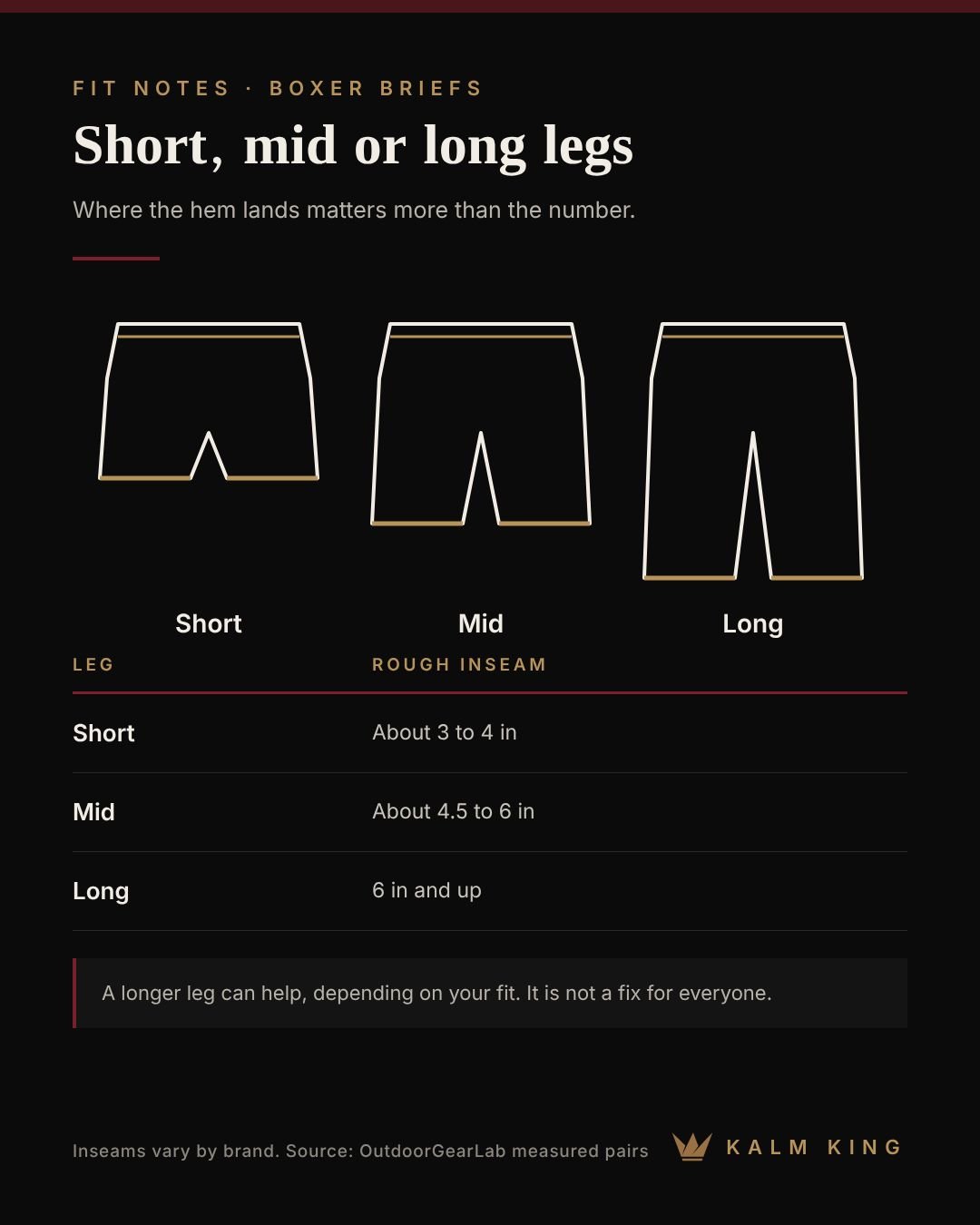
OutdoorGearLab measured the inseams of the pairs they tested, and the spread is wide. Their shortest was about 3 inches. Others came in at 3.5, 4, 4.5 and 5 inches, and one longer style was listed at 9 inches. So “boxer brief” can mean very different things depending on the brand.
When a longer leg helps
OutdoorGearLab notes that some people prefer a longer inseam, 6 inches or more, to further prevent riding up. They also mention that an extra-long inseam can help with chafing on hot and humid days. Bamigo’s guide suggests that broad thighs suit longer legs, because the added length reaches farther down the leg and stays in place better.
When it doesn’t
A longer leg can help depending on fit. It is not a universal fix. If the leg opening is loose, a longer leg just gives more loose fabric to bunch up. If the hem ends right at the widest part of your thigh, it can still get pushed upward. Bamigo’s guide suggests narrower thighs may do fine with shorter legs.
The better question isn’t “long or short?” It’s “where does the hem land on my leg, and does it stay snug there?”
A quick way to think about inseam
| Leg length (approx.) | Often suits | Watch for |
|---|---|---|
| Short (about 3 to 4 in) | Narrower thighs, shorter shorts | Can ride up if the hem is soft or loose |
| Mid (about 4.5 to 6 in) | A wide range of builds | Hem landing on the widest part of the thigh |
| Long (6 in and up) | Broader thighs, long days on your feet, warm weather | Loose openings that bunch; extra fabric under slim trousers |
These ranges follow the inseams OutdoorGearLab measured and the guidance from both sources. They’re a starting point. Your thighs get the final vote.
Leg openings and grippers
The leg opening is where the battle is won or lost. Even a perfect inseam will climb if the opening doesn’t hold.
What a good leg opening does
Bamigo describes slim-fit legs as designed to close around your legs. It also recommends a tapered bottom so the fabric doesn’t slide over the thicker part of your thigh. In plain terms, the opening should be snug enough that it doesn’t move on its own, but not so tight it leaves a deep mark or cuts into your skin.
OutdoorGearLab points to the hem itself. They say a seamed hemline on the legs helps prevent riding up. In their reviews, one pair with a taller bottom hem kept its short legs from riding up, and another with a flatlock seam at the hem stayed in place.
What about grippers?
If you come across leg grippers (strips inside the hem meant to hold it in place), know that none of the sources reviewed for this article tested them, so there’s no data here on whether they work better than a well-built hem. If you try them, check how they feel on bare skin over a full day. If you’d rather avoid them, a taller, finished hem and a snug opening are the approach the tester’s notes support.
How to check the opening in the store or at home
- Put the pair on and stand normally. The hem should lie flat against your thigh with no gap.
- Run a finger under the hem. It should slide in without much force, but the fabric should spring back when you pull it out.
- Take ten steps. If the hem moves after ten steps, that is an early warning. Check the fit again while sitting and walking before deciding whether the pair works for you.

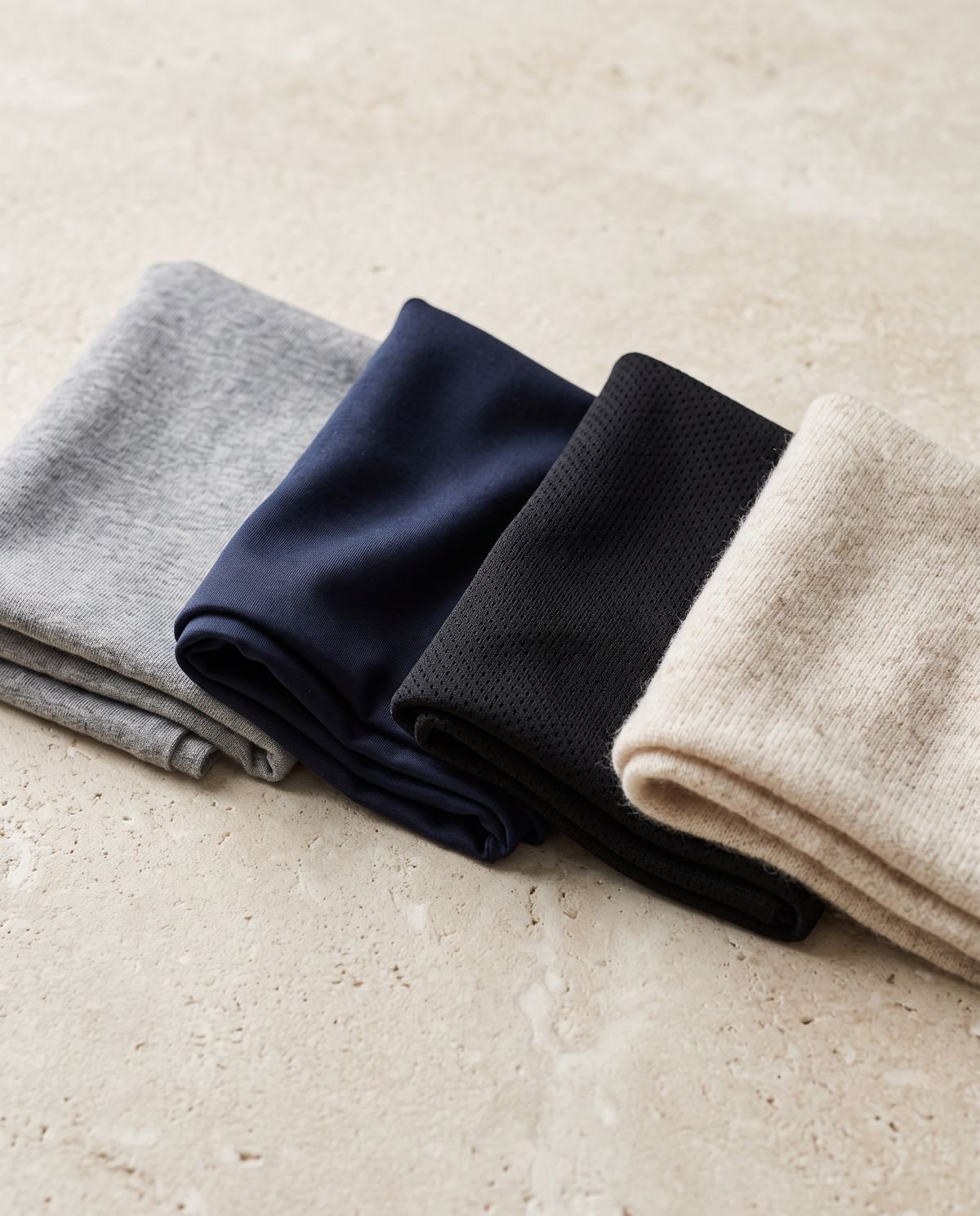
Fabric: cotton, modal, synthetics and merino
Fabric decides three things that affect riding up: how much the garment stretches, how well it springs back, and how it handles sweat. Fabric that has lost its shape gives the leg less to hold with.
A fact sheet from Oregon State University Extension makes a useful general point: a fabric that does not fully recover may sag or stretch out of shape during wear. That’s the slow version of riding up. The fabric gets baggy, the leg loosens, and the hem starts to travel. OutdoorGearLab also notes that a little stretch in the fabric can help underwear mold to your shape.
Cotton
OutdoorGearLab says cotton is usually used for the most economical pairs. Their testers found cotton dries slower than synthetics, and a thicker cotton pair didn’t wick as well as synthetic alternatives in their lab tests. A thin cotton pair, by contrast, breathed better than heavier pairs with a similar fabric makeup.
The Oregon State fact sheet notes natural fibers like cotton are naturally absorbent and porous, but they can also shrink if they’re not handled carefully. OutdoorGearLab flags the same thing for an all-cotton pair: there’s a good chance it will shrink slightly.
Cotton can be a comfortable everyday choice. Just know that shrinkage can change the fit after washing, so check the leg opening again after the first few washes.
Modal
OutdoorGearLab tested a pair made mostly from modal. The tester described the modal pair as silky smooth. That describes its feel, not a proven tendency to ride up. Check the leg opening, hem and stretch recovery on the finished pair.
Synthetics (nylon, polyester and blends)
OutdoorGearLab says synthetic fabrics have better wicking properties. Their mostly-nylon pick was quick-drying, though the reviewers noted it may not breathe as well as regular cotton when dry, and its fabric tended to pill over time. A cotton and polyester blend dried quickly in their line-dry tests, but the testers expected synthetic content to get smellier than natural fibers.
The Oregon State fact sheet adds that man-made fibers are highly resilient and resist creases, but because many are not very absorbent, they may feel uncomfortable in hot or humid weather.
Merino wool
OutdoorGearLab tested a merino and polyester blend. They note wool offers natural odor resistance and keeps moisture away from the skin even when wet, which could help prevent chafing. The trade-off: it can run a bit warm in hot weather. The polyester in that blend made it quite durable for wool, in their view. That pair also had a thick waistband and a flatlock seam at the hem, which the testers credited with keeping it from slipping down or riding up.
Fabric at a glance
| Fabric | Strengths (per sources) | Trade-offs (per sources) |
|---|---|---|
| Cotton | Absorbent, breathable when thin, economical | Dries slower, can shrink |
| Modal | Very smooth feel | Check finished-garment fit and recovery; no fiber-specific ride-up comparison here. |
| Synthetics | Wick well, dry fast | May breathe less when dry, can hold odor, can pill |
| Merino blend | Odor resistant, manages moisture | Can run warm in heat |
A note on testing: OutdoorGearLab scored pairs using weights of 40% comfort, 25% breathability, 20% construction quality and 15% odor control. Those weights are the testers’ scoring method. They’re not survey results and they don’t tell you what other buyers prefer.
Waistband rolling and the rise
If you’ve wondered why your underwear rolls down, or why your underwear keeps rolling up at the band, the waistband is the place to look. A band that folds over doesn’t just feel annoying. It shifts the whole garment, and that can pull the legs out of position too.
What helps
OutdoorGearLab says they prefer a thicker top waistband, which helps keep underwear from slipping down or rolling. In their reviews, a tall, thick band resisted rolling more than most. A pair with a thinner band was noted as not quite as thick, though those testers didn’t experience rolling with it. So a thin band isn’t automatically a problem, but a sturdier band gives you more margin.
What can make it worse
- A band that’s too loose. If it doesn’t hold on its own, it slides and folds.
- A band that’s too tight. It can dig in and flip at the top edge, especially when you sit.
- The wrong rise for your trousers. If the band sits much higher or lower than your pants’ waistband, the two can fight each other. If you wear overalls or jumpsuits, this matters less at the waist, which is one reason what to wear under overalls is its own question.
- Worn-out elastic. Over time, the Oregon State point about fabric that doesn’t fully recover applies here as well. A band that’s lost its spring tends to roll.
A simple waistband test
Sit down in a firm chair, lean forward as if tying your shoes, then stand. If the band has folded over or slipped, try a pair with a taller or firmer band, or check whether you’re between sizes.
Chafing, seams and skin comfort
People searching how to stop constant chafing from boxer briefs are often dealing with the same root cause as riding up: fabric moving against skin, over and over.
What chafing is
The American Academy of Dermatology describes chafing as a painful skin irritation that occurs when body parts rub together or rub against clothing. Jock itch is a fungal infection, not another name for chafing. MedlinePlus notes that warmth, moisture and rubbing can contribute; its advice for jock itch includes loose-fitting underwear. Persistent or recurring irritation needs medical advice rather than a tighter fit.
How underwear can help
OutdoorGearLab points out that boxer briefs cover your inner thighs snugly, which can minimize chafing compared with plain briefs. That only works if the legs stay down. Once they ride up, the bare inner thighs can rub together again.
Seams matter too. OutdoorGearLab says flatlock seams, which sit flat rather than as a raised ridge, go a long way to reduce chafing. They also favor pairs with no seams running underneath and between the legs, since those can sometimes cause irritation. One pair they tested had no seams at all in the most sensitive areas.
Simple habits that support your skin
- Keep the area clean and dry. MedlinePlus advises keeping the groin skin clean and dry.
- Avoid clothing that rubs. MedlinePlus also advises against clothing that rubs and irritates the area.
- Consider a barrier. The American Academy of Dermatology suggests applying petroleum jelly to problem areas, such as the thighs, to help prevent chafing that can lead to blisters.
- Choose fabric for the day. For hot, sweaty days, OutdoorGearLab’s notes on wicking synthetics and moisture-managing wool may help you pick.
When to see a doctor
If irritation keeps coming back, gets worse, or doesn’t clear up, see a doctor or dermatologist. MedlinePlus says to contact your provider if jock itch does not respond to home care after two weeks or if you have other symptoms. Don’t try to solve a persistent skin problem with underwear alone.
Sizing beyond the chart: how to measure
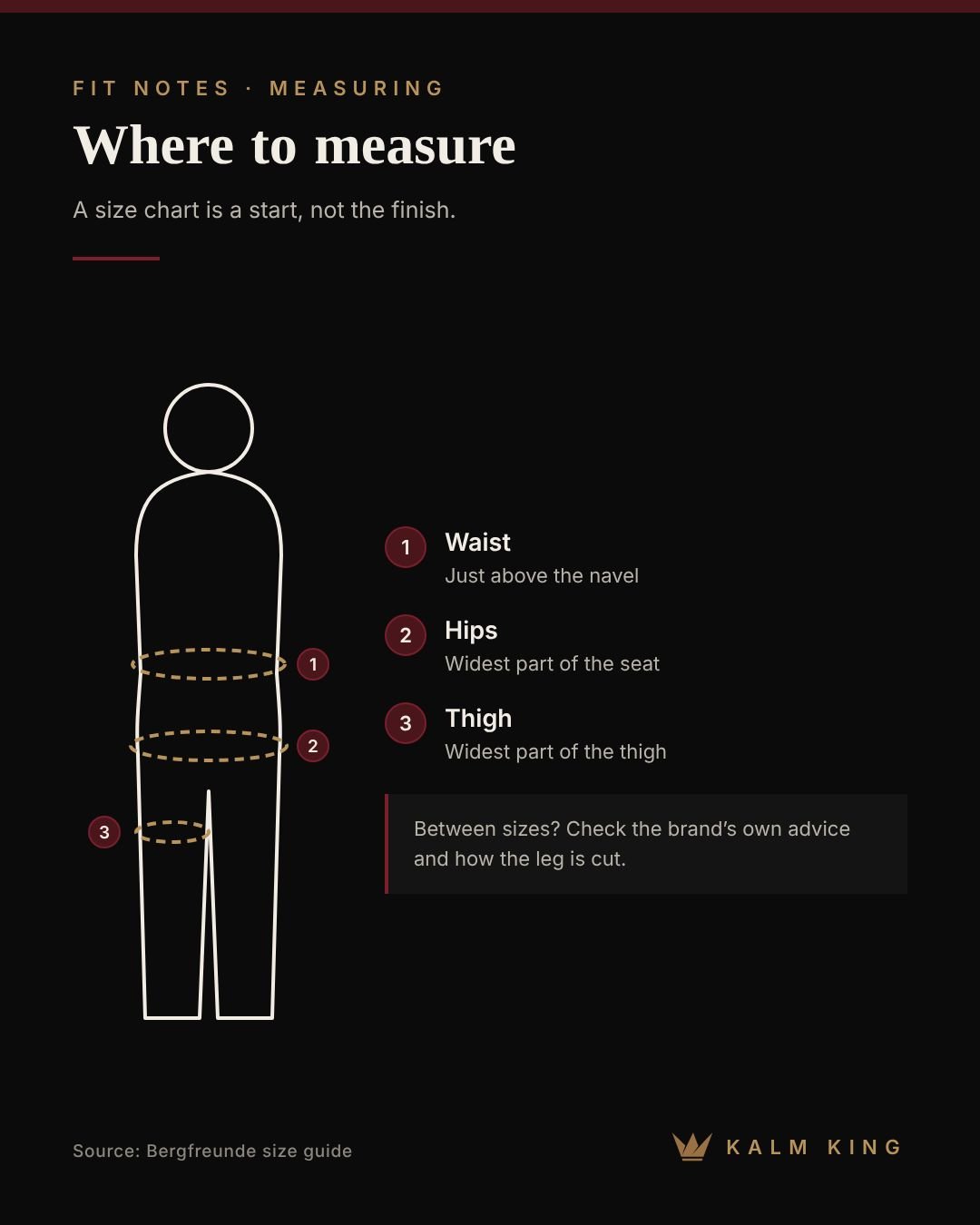
A size chart works better when you bring better numbers to it. Here’s how to measure, based on the method in the Bergfreunde retailer guide.
What to measure
- Waist: Measure just above the navel without pinching the tape.
- Hips: Measure around the widest part of your seat.
- Thigh: Measure around the widest part of your thigh.
Bergfreunde also suggests having someone help, since the results will be more precise. Use a soft tape measure, keep it level, and breathe normally.
How to use those numbers
- Start with the waist. Find your size on the brand’s chart.
- Check your thigh against the style. If your thighs are broad compared with your waist, look for a longer leg or a more generous leg opening in the same size. If your thighs are slim, a shorter, snug leg may sit better.
- Look at the fabric content. More stretch can help the garment mold to you. All-cotton may shrink a little.
- Read the inseam. If the brand lists it, compare it with what’s worked for you before. If you can, measure a pair you like by laying it flat and measuring from the crotch seam to the bottom of the leg.
- Think about in-between sizes. Bergfreunde recommends the larger size when you’re between sizes. For underwear, keep in mind that Bamigo warns a size that’s too loose can reduce support too. If you size up, a snug leg opening becomes even more important.
Buying for someone else
If you’re shopping for a partner, dad or brother, the waist number alone is a guess. A pair he already likes is your best measuring tool. For more on that, see how to buy clothes for him without guessing.
How to get used to boxer briefs
If you’re switching from boxers or briefs, the first few days can feel different. Boxer briefs are closer-fitting than boxers and cover more leg than briefs. Some people need time to adjust to that snug feel.
A few ways to make the switch easier:
- Start with a mid-length leg. It’s a middle ground between briefs and long-leg styles.
- Pick a fabric with some stretch. OutdoorGearLab notes that stretch can help underwear mold to your shape.
- Try one pair first. Wear it on a normal day and a busy day before buying a full set.
- Notice where it bothers you. If the leg climbs, adjust leg length or opening. If the band digs in, look at the rise or size. If seams rub, look for flatlock or minimal seams.
Fit is personal. The same thinking that applies to how men’s overalls should fit applies here: start with how your body moves, not just a number on a tag.
Care, holes and when to replace
Good care helps a pair keep its shape longer, and shape is what keeps the legs where they belong.
Care basics
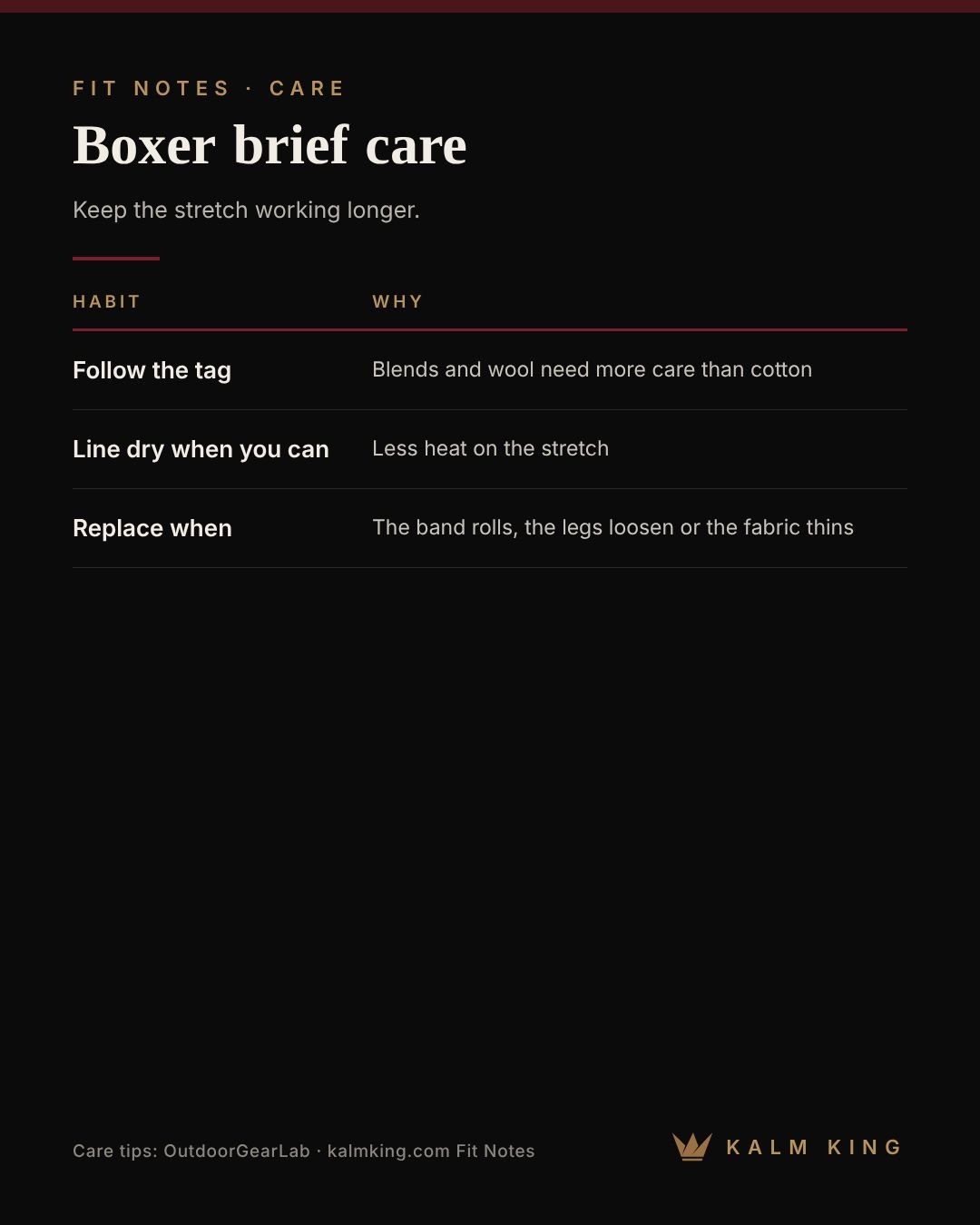
- Follow the tag. OutdoorGearLab’s first rule is always follow the manufacturer’s suggestions on the tag.
- Line dry when you can. OutdoorGearLab recommends line drying to get the most performance out of your boxers for as long as possible. Many cotton-based pairs list tumble dry low on the tag.
- Give blends extra care. The testers say synthetics and wool blends may need a little more TLC.
- Handle cotton carefully. The Oregon State fact sheet notes natural fibers can shrink if they’re not handled carefully.
How to stop boxer briefs from getting holes
None of the sources reviewed here tested what causes holes in underwear, so there’s no single proven fix to share. What the testing does show is that fabric weight and wear matter. OutdoorGearLab notes that a thin, lightweight pair may have a shorter lifespan, and that one synthetic pair started to pill after many wears and washes. Thicker or blended fabrics, like the merino and polyester pair they called quite durable for wool, may hold up better. Following the tag, line drying and rotating several pairs so no single pair takes all the wear are reasonable ways to get more life out of what you own.
Signs it’s time to replace
There’s no fixed replacement date in the sources reviewed. Instead, watch for these signs:
- The waistband rolls or folds when it didn’t before.
- The leg openings feel loose or wavy and no longer spring back.
- The legs ride up on a pair that used to stay put.
- The fabric is thin, pilled or has holes.
- Seams are coming apart in the crotch or along the legs.
A pair that used to stay put and now rides up may have lost its shape. If an old favorite has started riding up, the cause may be stretched-out fabric, not your body or the original fit. As the Oregon State fact sheet puts it, fabric that doesn’t fully recover may sag or stretch out of shape.
Join Field Notes and get the free Overalls Fit Kit.
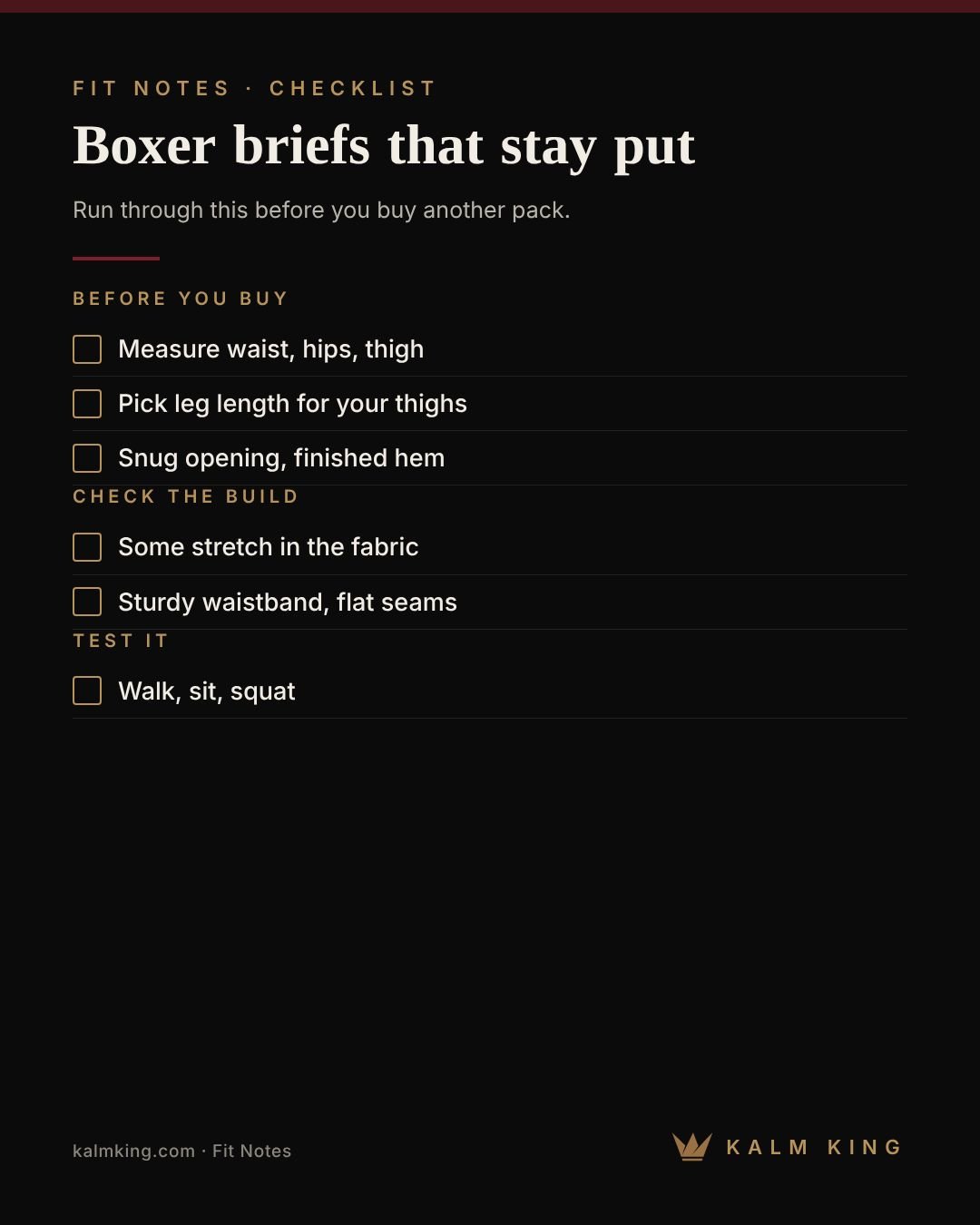
Checklist: how to stop boxer briefs from riding up
Use this before you buy and again when you try a pair on.
Before you buy
- [ ] Measure your waist, hips and the widest part of your thigh.
- [ ] Check the size chart, then check the leg length (inseam) if it’s listed.
- [ ] Choose a leg length that suits your thighs. Longer can help broader thighs, but it isn’t a guaranteed fix.
- [ ] Look for a snug, tapered leg opening and a finished or taller hem.
- [ ] Read the fabric content. Some stretch helps. All-cotton may shrink a little.
- [ ] Look for a sturdy waistband and flat seams.
When you try them on
- [ ] The hem lies flat on your thigh with no gap.
- [ ] After ten steps, the legs haven’t moved (an early check, not a guarantee for the whole day).
- [ ] You can sit, lean forward and stand without the band rolling.
- [ ] A squat or lunge doesn’t drag the legs up.
- [ ] Nothing pinches, cuts in or rubs along a seam.
Over time
- [ ] Follow the care tag and line dry when you can.
- [ ] Replace pairs when the band rolls, the legs loosen or the fabric thins.
- [ ] See a doctor if skin irritation keeps coming back or doesn’t clear up.
The bottom line
Boxer briefs that stay put come from a few details lining up: a leg length that suits your thighs, a leg opening and hem that hold, a fabric that stretches and recovers, a waistband that doesn’t roll, and a size you chose with more than your waist in mind. A longer leg can help, but it isn’t the answer for everyone. Measure, test the fit by moving, take care of the pairs that work, and replace them once they lose their shape. And if your skin is still unhappy after you’ve sorted the fit, get it checked by a doctor.
If the problem is at the top instead, see our guide on why underwear waistbands roll down.
Frequently asked questions
Why does my underwear keep riding up?
Usually the legs can’t hold their place on your thigh. Loose leg openings, the wrong leg length for your thigh shape, fabric that has lost its stretch, or the wrong size can all let the hem slide up as you walk.
Will a longer leg stop boxer briefs from riding up?
It can help depending on fit, especially for broader thighs, but it isn’t a universal fix. A longer leg with a loose opening can still bunch, so the opening and hem need to stay snug too.
Why does my underwear roll down at the waistband?
A band that’s too loose, too tight, worn out or sitting at the wrong rise for your trousers can fold over. Independent testers prefer a thicker waistband because it helps keep underwear from slipping down or rolling.
How do I stop constant chafing from boxer briefs?
Choose a leg that stays down over your inner thighs, flat seams, and a fabric suited to how much you sweat, and keep the area clean and dry. If irritation keeps coming back or doesn’t clear up, see a doctor.
Sources
- Best Boxer Briefs for Men, OutdoorGearLab (independent tester)
- Which boxers don’t ride up?, Bamigo (brand guide)
- 5 ways to use petroleum jelly for skin care, American Academy of Dermatology (industry body / medical association)
- Jock itch, MedlinePlus Medical Encyclopedia, US National Library of Medicine (standards or government)
- Fibers and Fabrics, Oregon 4-H Clothing Construction Fact Sheet, Oregon State University Extension (2014) (research / university extension)
- Saxx size chart and measuring guide, Bergfreunde (brand guide / retailer)
FIELD NOTES
Get the Overalls Fit Kit, free.
Your measurement card, the six fit checkpoints and a checklist to take shopping. Join Field Notes for new guides and a say in what Kalm King makes.
THE KALM KING JOURNAL
Continue reading
How Should Men’s Dress Pants Fit? Waist, Rise, Seat and Break
How should dress pants fit? Check the waist, rise, seat, thighs and hem with practical sitting tests, break options and realistic tailoring advice.
How Should a Dress Shirt Fit? A Men’s Guide to Collar, Chest and Sleeves
Check dress shirt fit at the collar, shoulders, chest, sleeves and hem. Learn what to measure, how to test movement and when to try another cut.
Men’s Capsule Wardrobe: How to Build One That Actually Works
A men’s capsule wardrobe is a small set of clothes that all work together. How to choose the pieces, colors and fit, and build one at your own pace.