
November 23, 2026
Explore: Fit Notes
How to Measure Your Hips and Thighs for Pants
Waist and inseam aren't enough. Here's how men measure hips (seat) and thighs for pants, on the body and on a pair you own, and how to use the numbers.

Most men buy trousers by two numbers: waist and inseam. Then they wonder why a pair that fastens perfectly still pulls across the seat, squeezes the thighs when they sit down, or hangs in loose folds below the belt.
The missing measurements are your hips (often called the seat) and your thighs. They decide how a pair of trousers fits through the part of your body that moves the most. Waist gets the trousers on. Hips and thighs decide whether you can climb stairs, sit through a meeting or crouch down without the fabric fighting you.
This guide shows how to measure your hips and thighs accurately at home, how to measure a pair of trousers you already own, how to read those numbers against a size chart, and what to do when your waist and hips point to different sizes.
Short answer: Stand straight with your feet together. For your hips (seat), wrap a soft tape measure around the fullest part of your buttocks, keeping it level all the way round and snug but not tight. For your thighs, measure around the fullest part of one thigh, usually just below the crotch. Record both in inches or centimetres. Trousers need extra room on top of these body measurements, so compare your numbers with the brand’s size chart, which usually lists body sizes, or measure a pair that already fits you well and compare garment measurements instead. If your waist and hips fall into different sizes, size for the larger one and have the waist taken in.
Why Hip and Thigh Measurements Matter
Your waist measurement tells a brand how big the waistband needs to be. It doesn’t tell them anything about the shape below it. Two men with a 32-inch waist can have very different seats and thighs, especially if one of them cycles, squats, plays football or simply has a more athletic build.
When trousers are too tight through the hips and thighs, you’ll notice:
- Horizontal pulling lines across the front of the thighs or seat
- Pockets that flare open
- Fabric that rides up when you sit
- Seams under strain, and eventually wear or splitting
- A waistband that gets dragged down at the back when you bend
When they’re too loose, you’ll notice the opposite: excess fabric bunching under the seat, baggy folds down the thigh, and a sloppy look even when the waist fits.
Having your hip and thigh numbers lets you shop with more confidence, especially online, and it’s the information a tailor or made-to-measure brand will ask for anyway.
Waist, Hips and Seat: Clearing Up the Terms
Men’s sizing uses these words loosely, so it helps to pin them down before you measure:
- Natural waist: the narrowest part of your torso, usually around the belly button. Dress trousers often sit here.
- Trouser waist: where your trousers actually sit, often a little lower, especially on jeans and chinos.
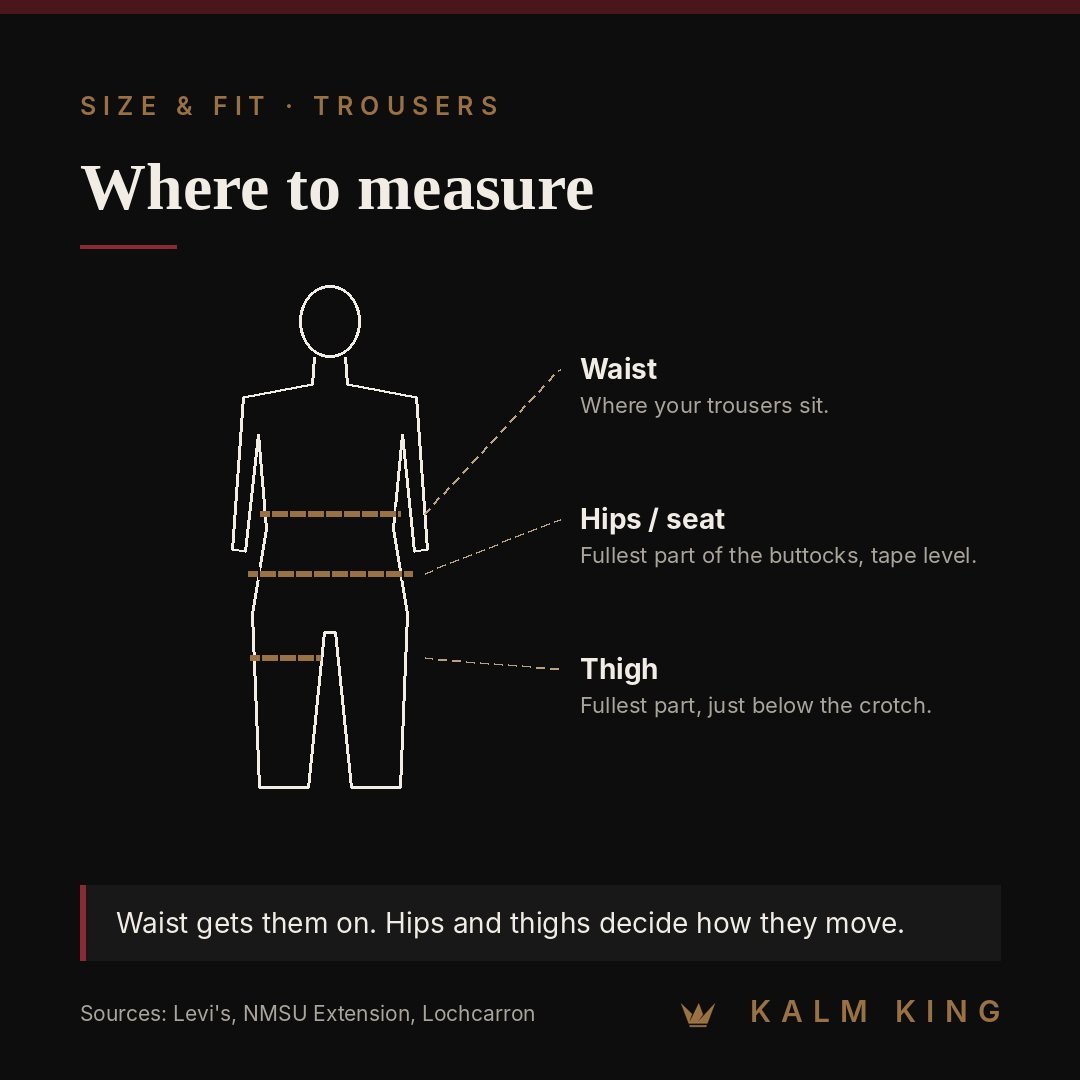
- Hips or seat: the circumference around the fullest part of your buttocks. This is the measurement this guide is about.
- Thigh: the circumference of one leg at its fullest point, just below the crotch.
- Rise: the distance from the crotch seam to the waistband. It decides where the trousers sit, and it affects how the seat fits.
What You’ll Need
- A soft tape measure, the flexible fabric or plastic kind used for sewing. A metal tape won’t wrap around your body accurately.
- A mirror, or someone to help, so you can check the tape stays level.
- Light, close-fitting clothing, or just underwear. Measuring over thick jeans or a heavy pocket adds inches.
- A pen and paper or your phone to record the numbers.
How to Measure Your Hips (Seat)
In menswear, “hip” and “seat” usually mean the same measurement: the circumference around the fullest part of your buttocks. Levi’s size guide describes the seat this way, as the fullest part of the hips, with the tape kept horizontal.
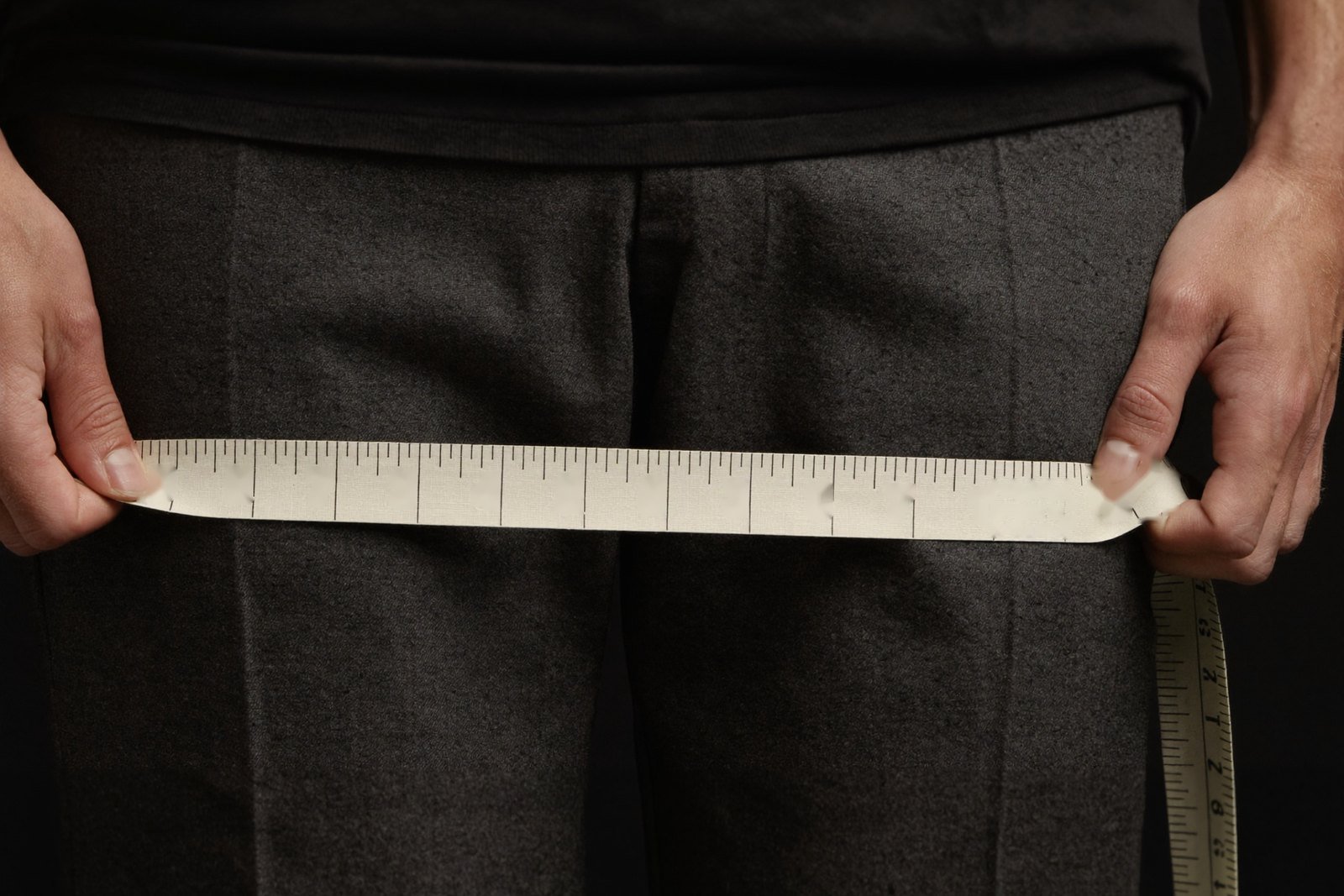
- Stand naturally with your feet together and your weight even. New Mexico State University’s Cooperative Extension guide to body measurements and Lochcarron’s trouser measuring guide both specify feet together, because standing with your feet apart changes the reading.
- Find the fullest point. Look at yourself side-on in a mirror. The fullest part of your buttocks is usually several inches below your waist. If you’re unsure, take a few readings at different heights and use the largest.
- Wrap the tape around the fullest point, going over the hip bones and buttocks.
- Keep it level. Check in the mirror that the tape doesn’t dip at the back or rise at the front.
- Snug, not tight. The tape should sit flat against you without compressing anything. Lochcarron suggests keeping two fingers behind the tape for comfort.
- Read and record the measurement where the tape meets the zero end.
NMSU’s guide also suggests noting how far below your natural waist the fullest point sits. That distance is useful if you ever buy made-to-measure trousers, because it tells the maker where to place the extra room.
How to Measure Your Thighs
Thigh measurements are less standard than hips. Brands measure them at slightly different heights, so it’s worth knowing what yours means.
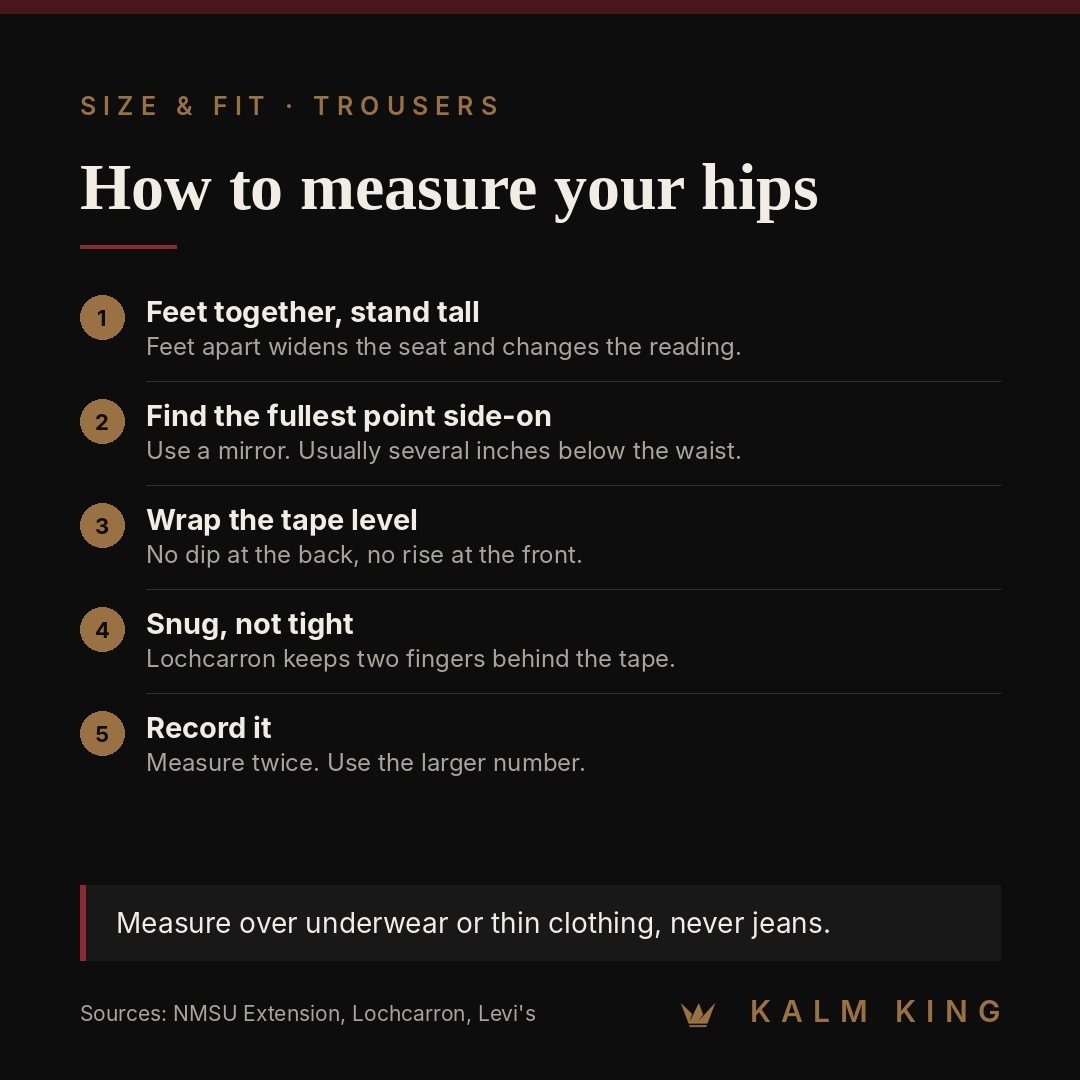
- Stand straight with your weight evenly on both feet.
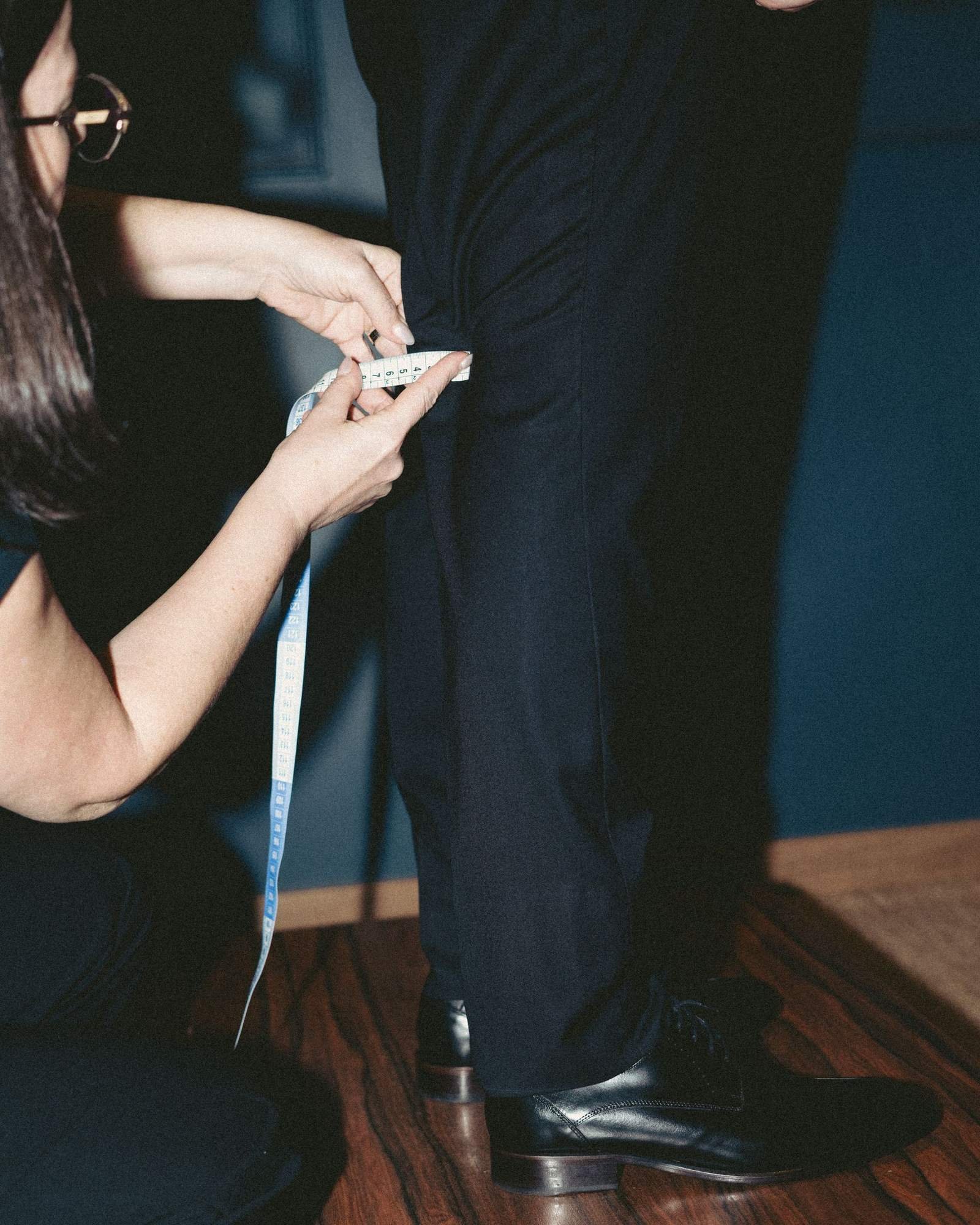
- Find the fullest part of one thigh. For most men, this is just below the crotch. Levi’s measures the thigh at its fullest part. NMSU’s guide measures just below the crotch. Lochcarron measures about 2 inches below the crotch.
- Wrap the tape around the thigh, keeping it horizontal.
- Keep it snug, not tight, and don’t flex the muscle.
- Record the number and note where you measured, for example “1 inch below crotch.”
- Measure the other thigh too. If they differ, use the larger number.
If you train legs seriously or cycle a lot, your thigh number is especially worth knowing. Slim and skinny cuts are often where athletic builds run out of room first.
Measuring With a Helper
You can measure yourself, but a second pair of hands makes the hip measurement noticeably more accurate, because it’s hard to see the back of the tape. If someone is helping:
- Stand still and relaxed with your feet together and your arms loose at your sides, or folded across your chest so they’re out of the way.
- Let them find the fullest point by looking at you side-on, then wrap the tape around.
- Ask them to check the back. The tape should sit at the same height at the back as at the front.
- Don’t hold your breath or tense your glutes. Breathe normally.
- Have them read the tape at your side, not at the front, so they aren’t pulling it tighter as they lean in.
For thighs, a helper can make sure the tape sits at the same height on both legs, which makes the comparison between your two thighs more reliable.
Common Measuring Mistakes
- Measuring over bulky clothing. Jeans, belts and full pockets add a surprising amount.
- Letting the tape tilt. A tape that dips at the back can add an inch or more.
- Pulling it too tight. You want the true size of your body, not the size you wish it was.
- Standing with your feet apart. It widens the seat and changes the reading.
- Measuring once. Take each measurement two or three times and use the average, or the largest if they vary.
- Measuring the wrong place on the thigh. Note where you measured so you can compare it with the brand’s chart.
Measuring for an Athletic Build
Men who lift, cycle, sprint or play field sports often find that standard sizing is built for a straighter shape than theirs. A few extra steps help:
- Measure both thighs. Training often makes one leg slightly bigger. Use the larger number.
- Measure your thigh in a seated position too, as a check. Thigh muscles spread when you sit, and a trouser that only just fits standing will feel tight at a desk.
- Compare your hip-to-waist difference. If your hips measure much more than your waist, look for cuts described as athletic, which build in more room at the seat and thigh.
- Prioritise stretch. A small percentage of elastane in cotton or wool gives through the thigh without making the trousers look baggy.
- Check the knee. Some athletic cuts taper sharply below the knee. If your calves are large too, a gentler taper may fit better.
Why Your Measurements Change
Your body numbers aren’t fixed. Expect them to shift with:
- Training. Leg-focused training can add to your thigh and seat measurements within months.
- Weight changes, which often show at the hips as well as the waist.
- Time of day. Many people measure slightly larger later in the day, especially after a big meal or a long day on their feet.
- Posture. Standing tall versus slouching can change where your fullest point falls.
Measure at a similar time of day each time, and re-measure before any major trouser purchase or a visit to a tailor.
Inches, Centimetres and International Sizes
US and UK trouser sizes are usually given in inches, while European brands often use centimetres or numbered sizes. One inch is 2.54 centimetres, so a 40-inch hip is about 102 centimetres. If a brand lists only numbered sizes, such as 48 or 50, look for its conversion chart rather than guessing, because the numbers aren’t consistent between countries or brands.
Body Measurements vs Garment Measurements
This is the part most guides skip, and it’s where most sizing confusion comes from.
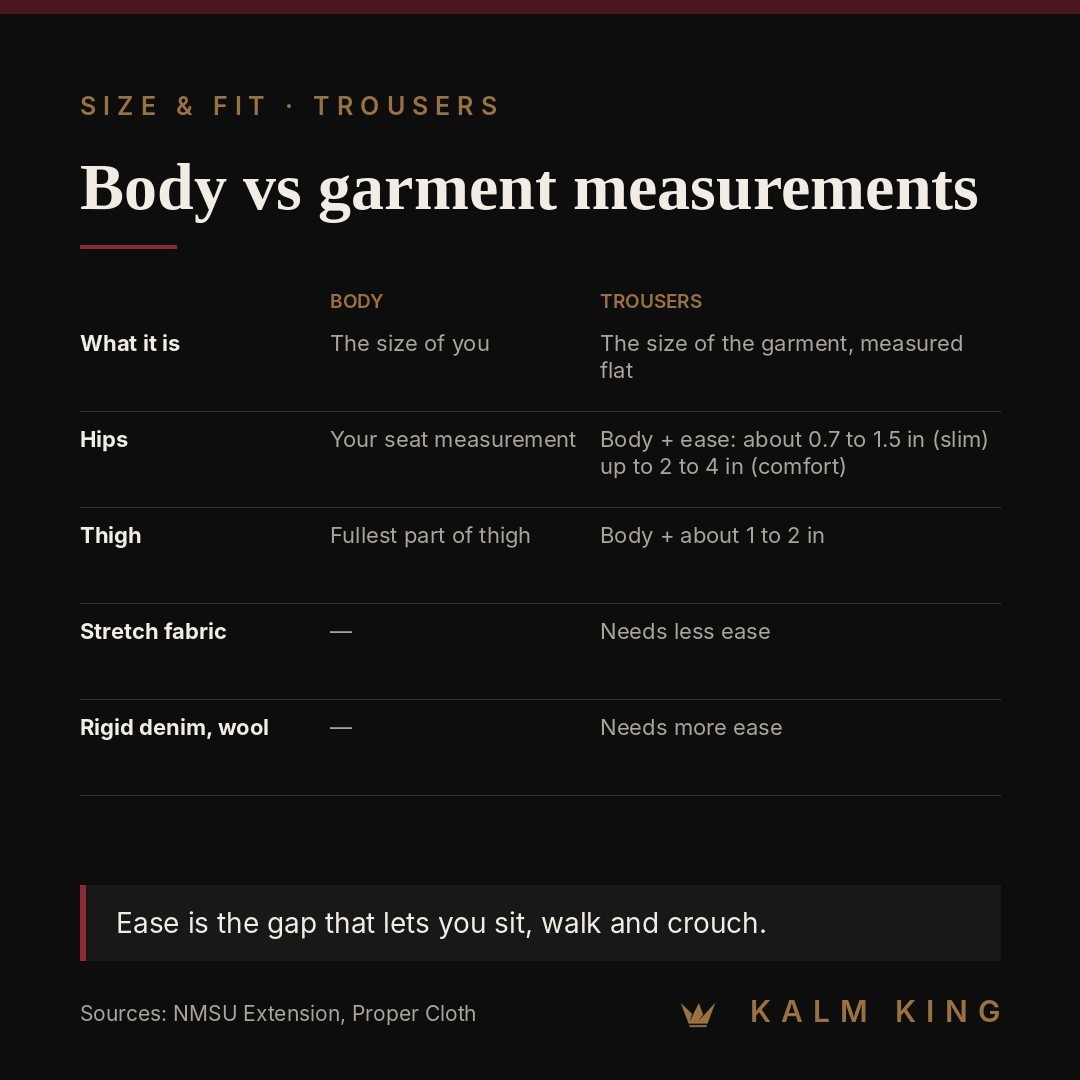
Body measurements are the numbers you just took: the size of you.
Garment measurements are the size of the trousers themselves, measured flat. They’re always larger than your body, because trousers need extra room, called ease, so you can sit, walk and move.
Size charts can list either one, and they don’t always say which. As a rule:
- A chart titled “body measurements” or “find your size” compares directly with your body numbers.
- A chart titled “garment measurements,” “product measurements” or “flat measurements” lists the size of the trousers. Compare those with a pair you already own.
How much extra room do trousers need?
There’s no single rule, because cut and fabric change everything, but some reference points help:
- NMSU’s guide recommends at least 2 to 4 inches of ease at the hips and 1 to 2 inches at the thigh for comfortable movement in woven garments.
- Proper Cloth, a made-to-measure menswear brand, recommends trouser hips about 0.7 to 1.5 inches larger than your body hip measurement for its slimmer cuts.
- Stretch fabrics need less ease, because the fabric gives. Rigid denim and wool need more.
Those ranges are different because the sources describe different styles. A trim modern trouser in stretch cotton can sit much closer to the body than a classic pleated wool trouser.
How to Measure Trousers You Already Own
The most reliable way to buy new trousers is to measure a pair that already fits you well and compare it with the brand’s garment measurements.
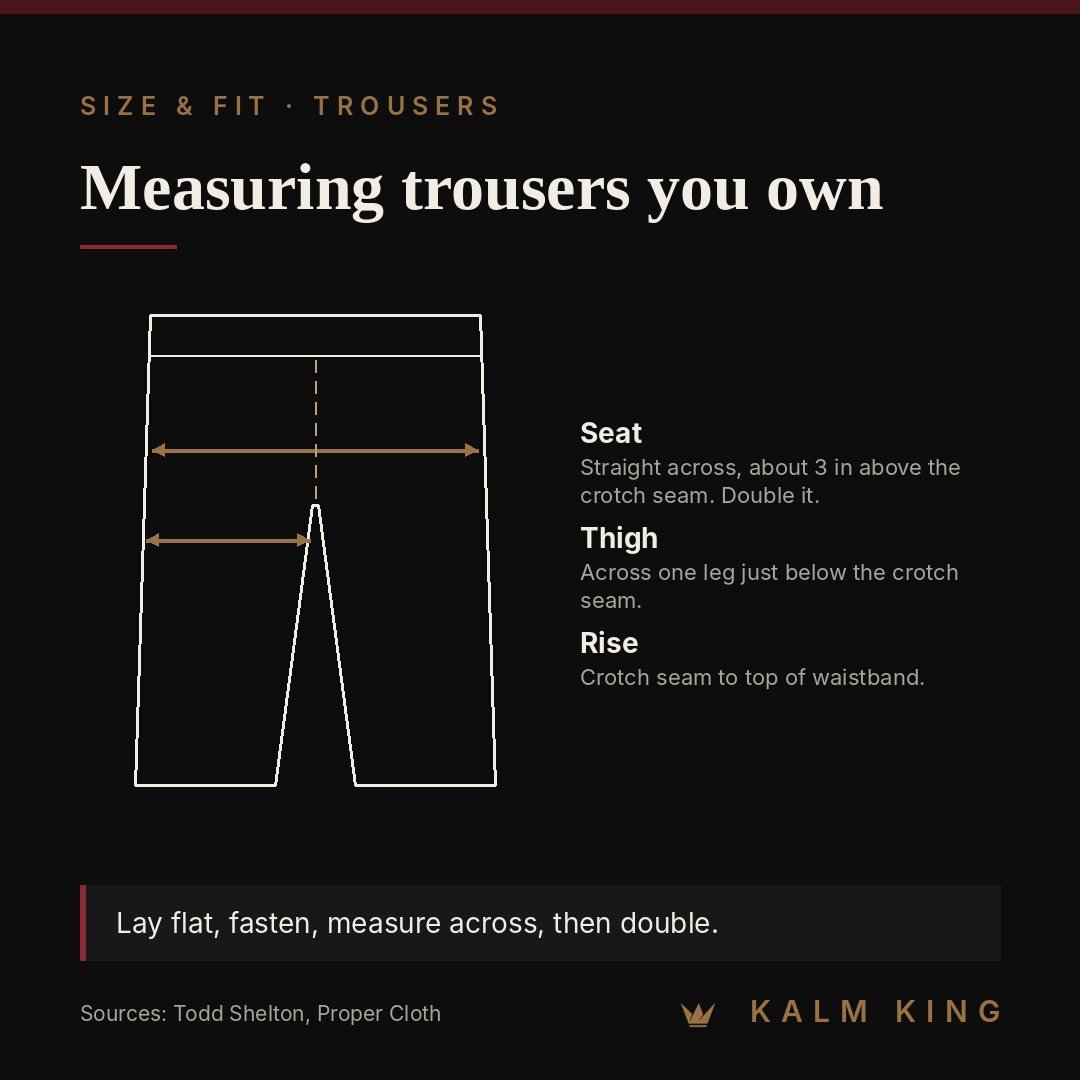
- Lay the trousers flat on a table, front facing up, with the legs straight and the fabric smoothed out. Fasten the button and zip.
- Measure the seat (hip). Todd Shelton, a US trouser maker, measures straight across the trousers 3 inches above the crotch seam. Proper Cloth measures 7 inches below the top of the waistband. Use whichever matches the brand you’re comparing with, then double the flat measurement to get the full circumference.
- Measure the thigh. Measure straight across one leg just below the crotch seam, at the widest point. Some brands give this as a flat measurement and some double it, so check how the chart is labelled.
- Measure the rise if you want a complete picture: from the crotch seam to the top of the waistband, front and back.
- Note the fabric. Stretch trousers will measure smaller flat than they feel on.
Todd Shelton also points out that the seat and thigh of trousers stretch a little with wear, especially in cotton and denim. A pair that feels snug on day one may relax.
How to Use Your Measurements With a Size Chart
- Find out what the chart lists. Body or garment measurements? Circumference or flat?
- Match your waist first, using the method in our guide to how to measure your waist for pants.
- Check the hip (seat) column against your hip measurement.
- Check the thigh column, if the brand gives one, against your thigh measurement.
- Check the inseam last. Our guide to how to measure inseam covers that.
- Look at the cut description. “Slim,” “tapered,” “athletic” and “relaxed” tell you how much ease the brand has built in.
When your waist and hips are different sizes
This happens all the time, particularly for men with athletic legs or a slimmer waist. MPG, a sportswear brand, gives straightforward advice in its size guide: if your waist and hips fall into different sizes, choose by your hip measurement.
The logic is simple. A tailor can take in a waistband easily and cheaply. Letting out a seat or thigh is limited by how much spare fabric is in the seams, and sometimes there’s none at all. So:
- Size for the larger measurement, usually the hips or thighs.
- Have the waist taken in if it gaps.
- Look for “athletic” or “tapered” cuts, which are designed with more room in the seat and thigh and a narrower lower leg.
Reading the Fit: What Your Trousers Are Telling You
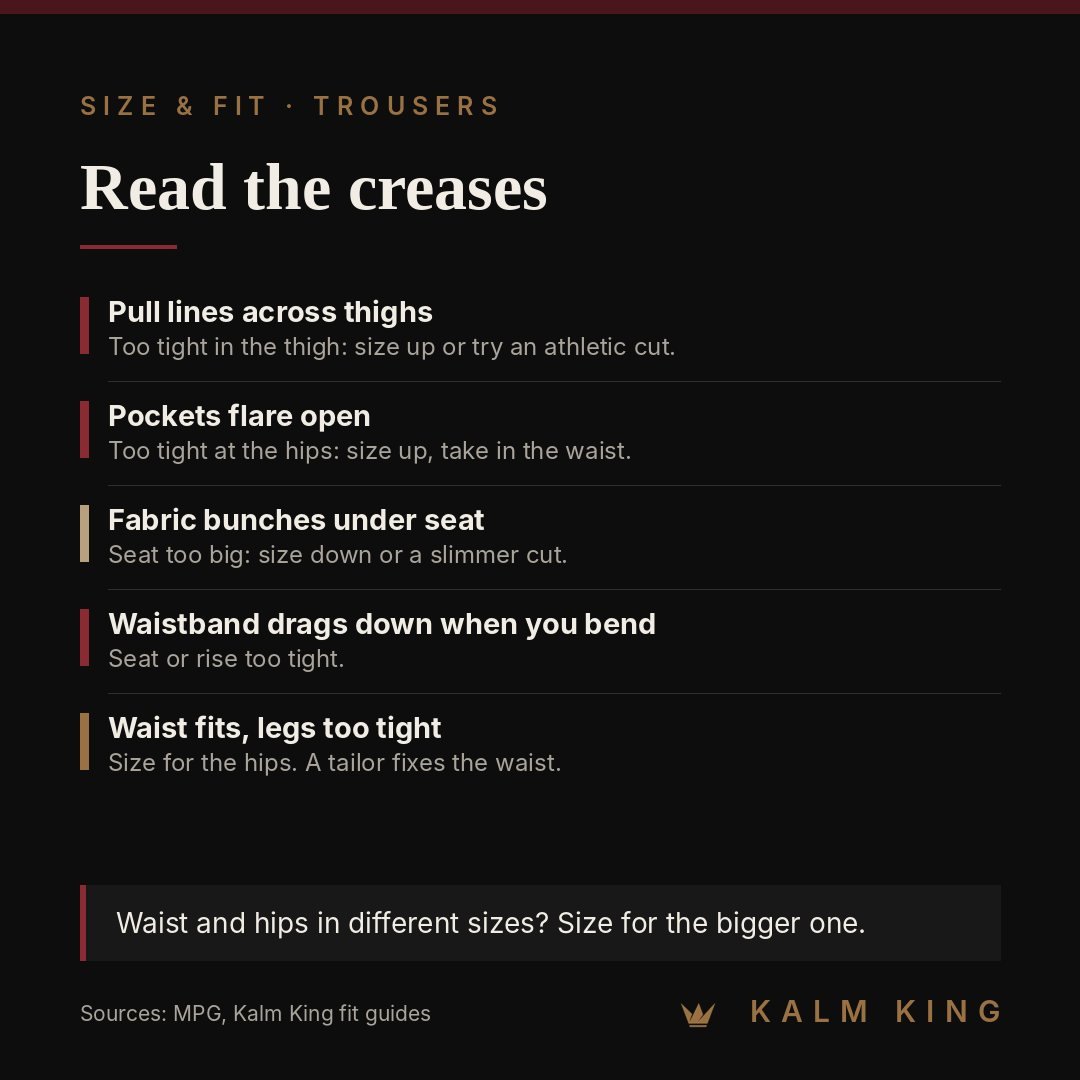
| What you see | What it means | What to do |
|---|---|---|
| Horizontal pull lines across the thighs | Too tight through the thigh | Size up or choose an athletic cut |
| Pockets flaring open | Too tight through the hips | Size up, then take in the waist |
| Fabric riding up when you sit | Seat too tight or rise too short | More room in the seat, or a higher rise |
| Excess fabric bunching under the seat | Seat too big | Size down or choose a slimmer cut |
| Baggy, folding fabric down the thighs | Thigh too wide | Try a slimmer or tapered cut |
| Waistband dragged down at the back when you bend | Seat or rise too tight | More seat room or a higher back rise |
| Waist fits, but everything below is tight | Waist and hip in different sizes | Size up for hips and alter the waist |
For a full fit check of tailored trousers, see our guide on how dress pants should fit.
Hip and Thigh Measurements by Trouser Style
How much your hip and thigh numbers matter depends on the cut.
- Slim and skinny trousers: the most sensitive to thigh size. Check the thigh measurement every time.
- Tapered and athletic cuts: more room in the seat and thigh, narrowing below the knee. Often the best fit for muscular legs.
- Straight cuts: a consistent width from the thigh down. More forgiving through the leg.
- Relaxed cuts: plenty of room. Hip and thigh matter less, but a seat that’s too big can look sloppy.
- Pleated trousers: pleats add room through the hip. Proper Cloth notes that single and double pleats add a little extra hip room compared with flat-front versions.
- Overalls and jumpsuits: hip and seat room matter a lot, because the garment hangs from your shoulders and needs to move with you. Our guide on how men’s overalls should fit covers the details.
Your Measurement Record
Keep a simple record and update it once or twice a year, or whenever your training or weight changes:
| Measurement | Your number | Where you measured |
|---|---|---|
| Waist | Where your trousers sit | |
| Hips (seat) | Fullest part of the buttocks | |
| Thigh | Fullest part, just below crotch | |
| Inseam | Crotch to hem | |
| Favourite trousers: flat seat | Across, 3 in above crotch | |
| Favourite trousers: flat thigh | Across, just below crotch |
Our size and fit guide gathers all of our measuring guides in one place.
The Kalm King Take
Good trousers aren’t about the number on the label. They’re about how the fabric behaves when you move. Waist and inseam get you in the right neighbourhood. Your hip and thigh measurements get you to the right address.
Spend five minutes with a tape measure, write the numbers down, and measure the pair you love most. You’ll waste less money on returns, you’ll know exactly what to ask a tailor, and you’ll stop putting up with trousers that only fit while you stand still. We’re building our own essentials around the same idea: fit should work in motion. If you want to hear about them first, along with more fit and care notes, join Field Notes.
Frequently asked questions
Where do you measure hips for men’s pants?
Measure around the fullest part of your buttocks, which is usually several inches below your waist. Stand with your feet together, keep the tape level all the way round, and keep it snug without squeezing. In menswear, this measurement is often called the seat.
Are hip and seat measurements the same?
In most menswear size charts, yes. Both refer to the circumference around the fullest part of the buttocks. Some made-to-measure brands measure the trouser seat at a fixed distance from the waistband or crotch, so check the brand’s instructions.
How do you measure thigh size for pants?
Wrap a soft tape around the fullest part of one thigh, usually just below the crotch, keeping it horizontal and without flexing. Note where you measured, because brands measure thighs at slightly different heights. If your thighs differ, use the larger number.
How much bigger should pants be than my hip measurement?
It depends on the cut and fabric. NMSU’s guide recommends at least 2 to 4 inches of ease at the hips for comfortable movement in woven garments, while some slim made-to-measure trousers sit 0.7 to 1.5 inches larger than the body. Stretch fabrics need less room than rigid ones.
What if my waist and hips are different sizes?
Size for the larger measurement, usually the hips or thighs, then have a tailor take in the waist. Taking in a waistband is simple and inexpensive, while letting out a seat or thigh is limited by the spare fabric in the seams.
How do I measure the hips on a pair of pants?
Lay the trousers flat, fastened, with the front facing up. Measure straight across at the seat, commonly about 3 inches above the crotch seam, then double that number to get the full circumference. Compare it with the brand’s garment measurements, not its body measurements.
Should I measure my hips with clothes on?
Measure over underwear or thin, close-fitting clothing. Jeans, belts and full pockets add bulk and can make the reading an inch or more too large.
Sources
- Levi's: Size Guide (brand size guide)
- New Mexico State University Cooperative Extension, Guide C-209: Taking Body Measurements (university extension)
- Lochcarron of Scotland: Measuring Guide, Classic Trousers (PDF) (tailoring guide, PDF)
- Todd Shelton: How to Measure Men's Pants (trouser maker)
- Proper Cloth: How to Measure Dress Pant Hip Width (made-to-measure menswear)
- MPG: Men's Size Guide (brand size guide)
- Vans: Pants Measurement Guide (brand size guide)
FIELD NOTES
Get the Overalls Fit Kit, free.
Your measurement card, the six fit checkpoints and a checklist to take shopping. Join Field Notes for new guides and a say in what Kalm King makes.
THE KALM KING JOURNAL
Continue reading
What Is Pouch Underwear? Benefits, Designs and Fit
Pouch underwear gives everything its own shaped space. Here’s how the main designs work, what they can and can’t do, and how a pouch should fit.
How to Prevent Thigh Chafing for Men
Stop thigh chafing before it starts: the layers, fabrics, balms and habits that keep your inner thighs comfortable, plus how to treat a rub that’s already sore.
How to Keep Black Clothes From Fading
Black clothes fade from dye loss, friction, heat and sun. Here’s how to wash, dry and store black so it stays black, and what to do when it’s already gone grey.