
November 23, 2026
Explore: Fit Notes
How to Prevent Thigh Chafing for Men
Stop thigh chafing before it starts: the layers, fabrics, balms and habits that keep your inner thighs comfortable, plus how to treat a rub that's already sore.
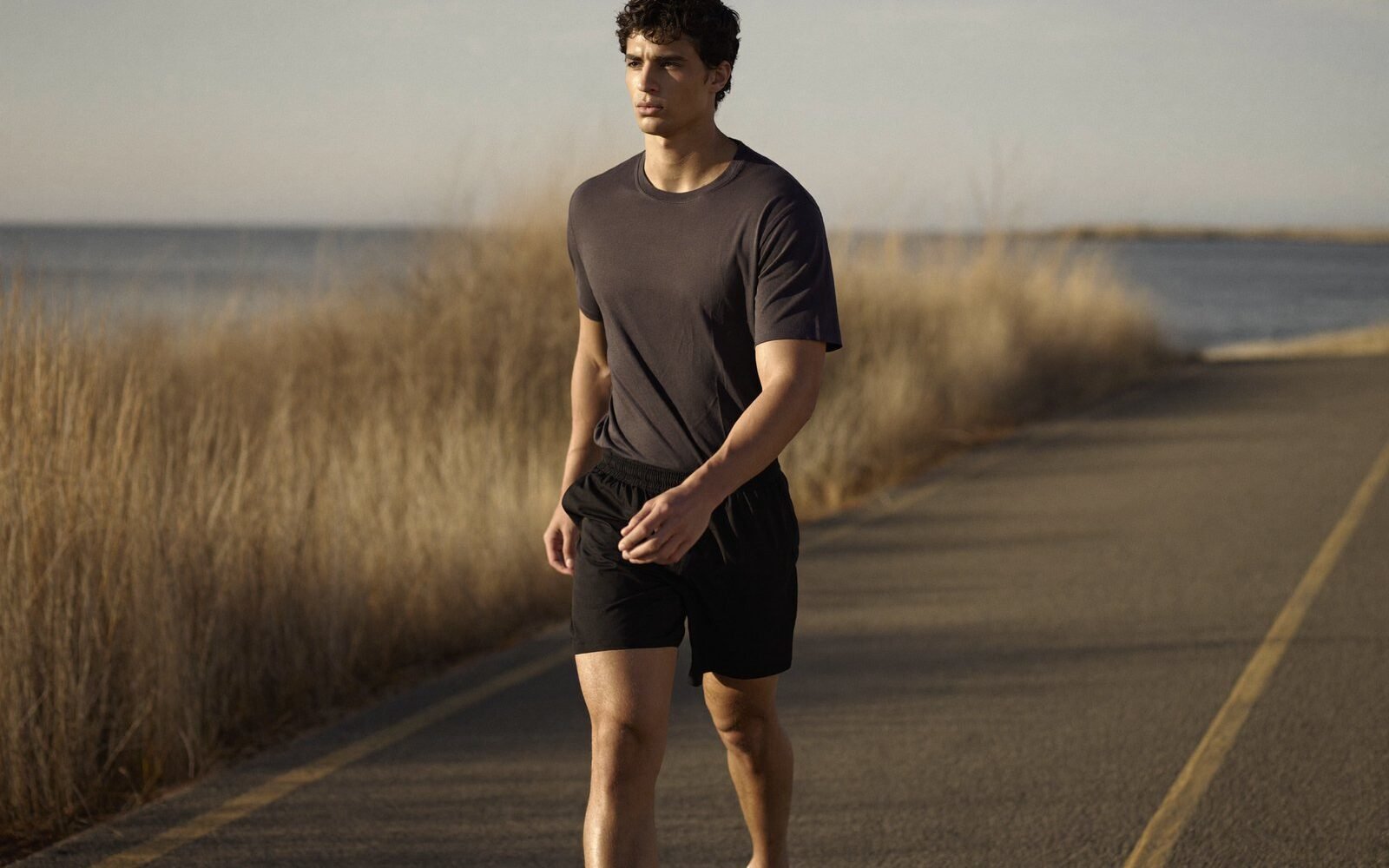
It starts as a warm spot on a long summer walk. By the end of the day the inside of your thighs feels raw, your stride has changed, and every step stings. The next morning it’s red, tender and still there.
That’s thigh chafing, and it’s one of the most common skin complaints men put up with in silence. It isn’t a weight problem, a fitness problem or a sign that something is wrong with you. Runners, cyclists, footballers, men who walk a lot for work and men who simply live somewhere hot all get it. Wherever two surfaces rub over and over, skin eventually gives up.
The good news is that chafing is mostly preventable once you understand what causes it. This guide covers why thighs chafe, the underwear and fabrics that help, the products worth using, how to treat skin that’s already sore, and how to tell chafing apart from a rash that needs different care.
Short answer: Thigh chafing is caused by friction, and moisture makes it worse. To prevent it, put a layer between your thighs: longer-leg boxer briefs or compression shorts made from a smooth, moisture-wicking fabric that stays put. Add an anti-chafe balm or a little petroleum jelly to the inner thighs before long or sweaty days, and reapply it. Keep the area clean and dry, change out of sweaty clothes promptly, and stop at the first warm “hot spot” rather than pushing through. If the skin is already raw, wash it gently, pat it dry, protect it with a barrier ointment and let it heal before the next long day.
What Is Thigh Chafing?
Chafing is skin irritation caused by repeated rubbing. Cleveland Clinic describes it as damage to the skin from friction, either skin rubbing against skin or skin rubbing against clothing. The inner thighs are one of the most common places it happens, along with the groin, underarms and nipples.
At first it shows up as redness and a stinging or burning feeling. Keep going and the outer layer of skin can wear away, leaving a raw, tender patch that may weep or bleed. Once the skin barrier is broken, the area is more vulnerable to irritation and infection, which is why it’s worth stopping chafing early instead of toughing it out.
Men tend to notice it in a few specific situations:
- Long walks in the heat, such as holidays, city days or festivals
- Running and cycling, where the same motion repeats thousands of times
- Team sports, where you sweat hard in shorts that ride up
- Physical jobs, especially in work trousers with a thick inner seam
- Humid weather in general, even on an ordinary day
Why Your Thighs Chafe
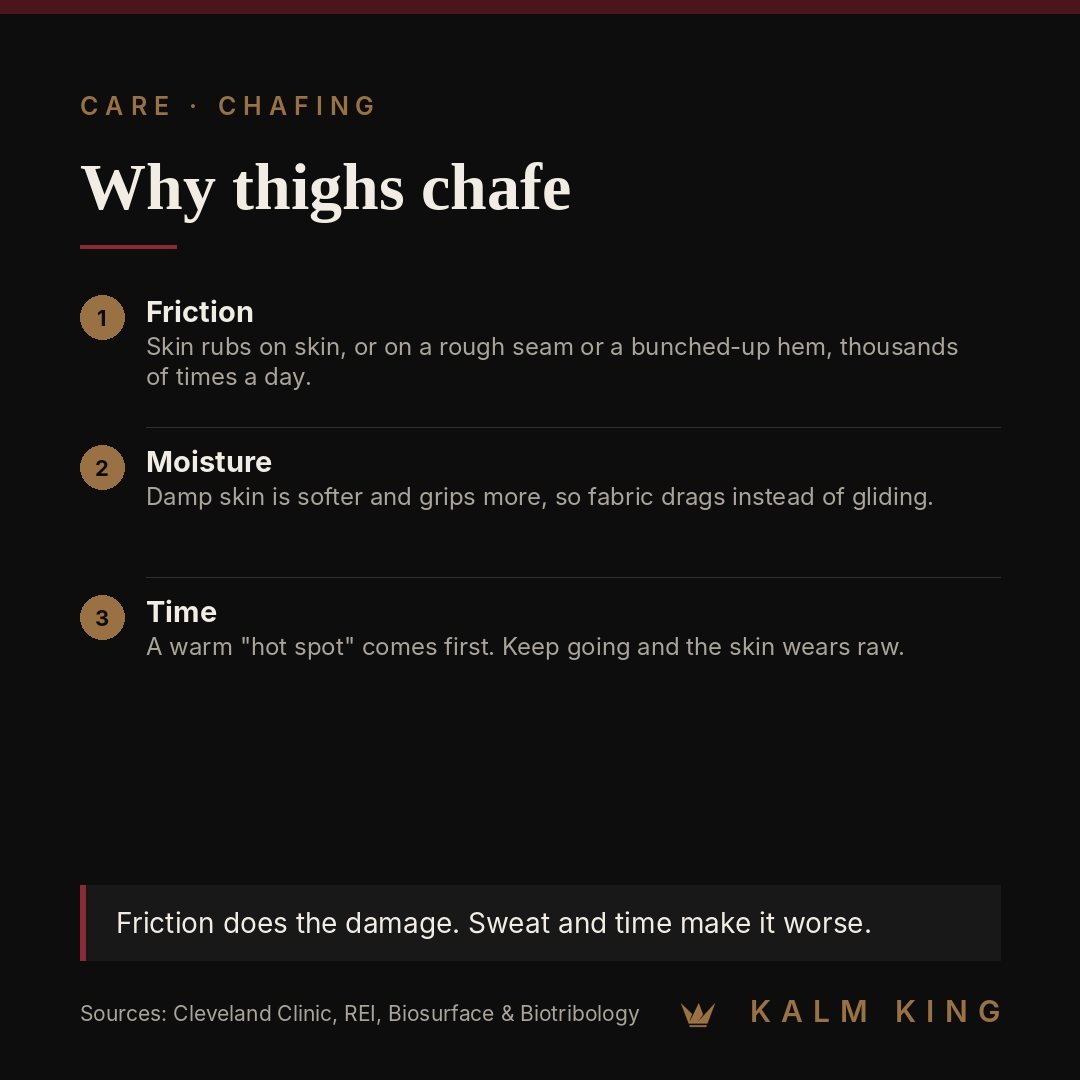
Three things work together: friction, moisture and time.
Friction is the root cause
Every stride brings your inner thighs past each other. If bare skin meets bare skin, or skin meets a rough or bunched-up fabric, there’s friction. On its own, one step does nothing. Thousands of steps in a row wear the surface down.
A review of skin tribology (the science of friction and wear) in sport, published in Biosurface and Biotribology, lists the inner thigh among the classic chafing sites and notes that seams and rough textiles increase friction against skin. That’s why a thick seam running down the inside of a pair of shorts can cause trouble even when the rest of the garment feels fine.
Moisture makes skin stickier
Sweat doesn’t lubricate the way you might expect. The same review explains that hydrated skin has higher friction than dry skin. Damp skin is softer and grips more, so fabric drags across it instead of gliding. Research on fabric against skin, published in Royal Society Open Science, found the same thing: as skin gets wetter, fabric sticks to it more.
Cleveland Clinic puts it plainly: friction is the cause, and moisture makes it worse. That’s why chafing is so much more common in summer, during exercise, and in clothes that hold onto sweat.
Time turns a warm spot into a wound
REI’s outdoor experts describe the first sign of chafing as a “hot spot,” a warm or slightly stinging patch. At that stage, the skin is irritated but intact. The longer you keep moving, the more the surface wears down, until you’re dealing with raw skin. The hot spot is your warning. Act on it.
Who Gets Thigh Chafing?
Anyone whose thighs touch while they move can chafe, and that’s most men, at least some of the time. Muscular legs from cycling, squatting or football rub just as easily as softer ones. Several factors raise the odds:
- Heat and humidity keep skin damp for longer
- Sweating heavily, whether from exercise, work or simply your body
- Long distances, because chafing is cumulative
- Loose shorts or boxers that let skin meet skin, or bunch into a ridge
- Thick inner seams, rough fabrics and worn-out elastic that shifts as you move
- Wet clothing, from rain, sweat or swimming
None of these mean you have to give up the activity. They tell you which variables to change.
How to Prevent Thigh Chafing: 9 Practical Steps
1. Put a layer between your thighs
The single most effective change is to stop skin from meeting skin. A pair of boxer briefs with a longer leg, or snug compression shorts, puts smooth fabric on both thighs so they glide past each other instead of rubbing.
REI recommends snug, stretchy clothing such as compression shorts for exactly this reason. MedlinePlus, the US National Library of Medicine’s health site, also suggests athletic tights or cycling shorts to help prevent chafing.
The leg needs to be long enough to cover the area that rubs. A short-leg brief or trunk often stops right where the rubbing starts, which can leave a line of friction at the hem. If you chafe, try a boxer brief with an inseam long enough to reach past the point where your thighs meet. Our guide to how boxer briefs should fit explains how to judge leg length and leg opening.
2. Choose fabrics that move moisture
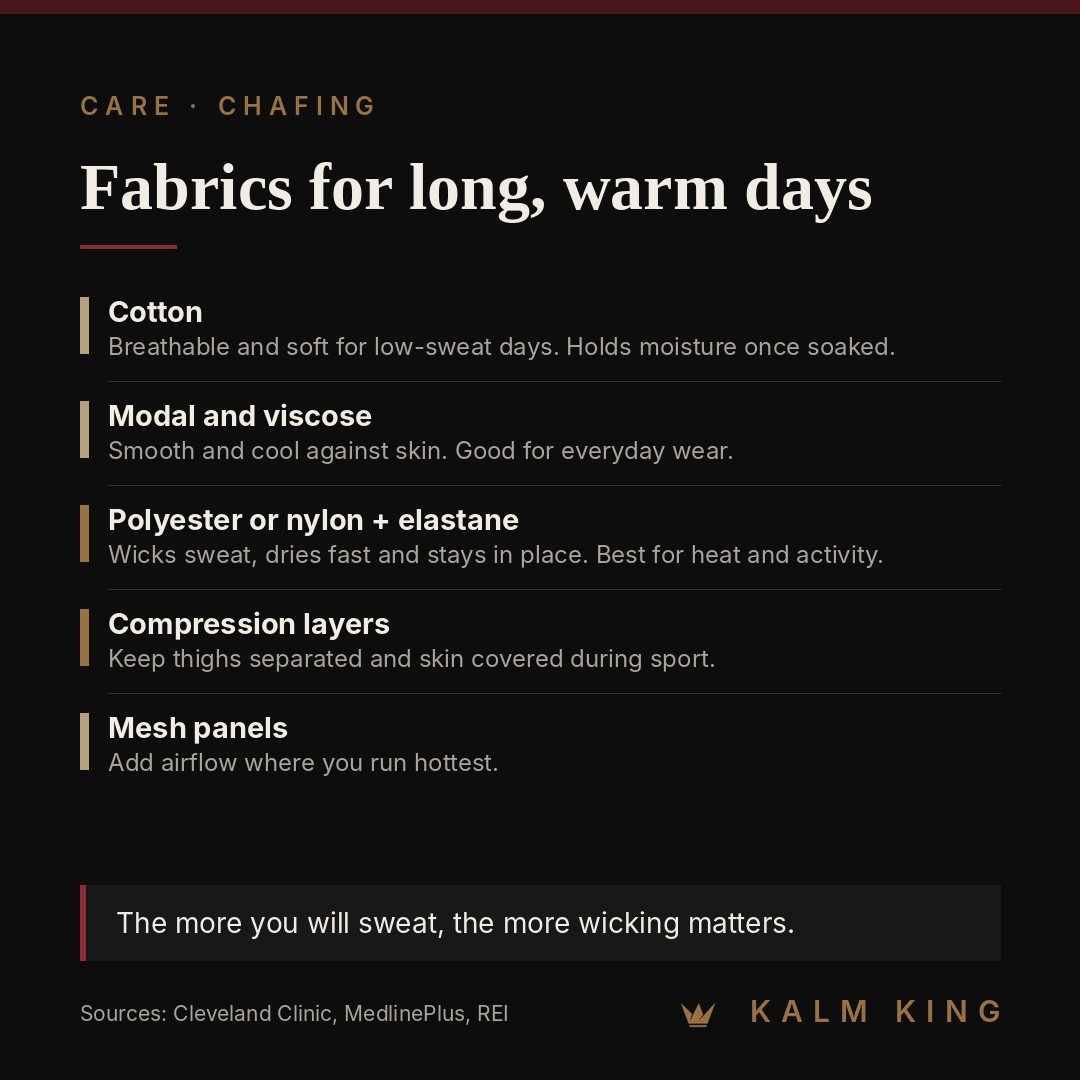
Because sweat raises friction, the fabric touching your skin should help keep it drier. Cleveland Clinic advises moisture-wicking fabrics for activity and suggests avoiding cotton when you’re going to sweat, because cotton holds moisture against the skin.
Not every source agrees about cotton, and it’s worth being honest about that. MedlinePlus says 100% cotton clothing may help, and Cleveland Clinic’s own page on intertrigo describes cotton as breathable. The way to square those views is to think about how much you’ll sweat:
- For everyday, low-sweat wear, breathable cotton can be perfectly comfortable.
- For heat, exercise or long days on your feet, a moisture-wicking synthetic blend or a smooth, quick-drying fabric is usually the better choice, because cotton stays wet once it’s soaked.
Our guide to the best underwear material for men compares cotton, modal, bamboo viscose, polyester and nylon blends in more detail.
3. Pick underwear that stays put
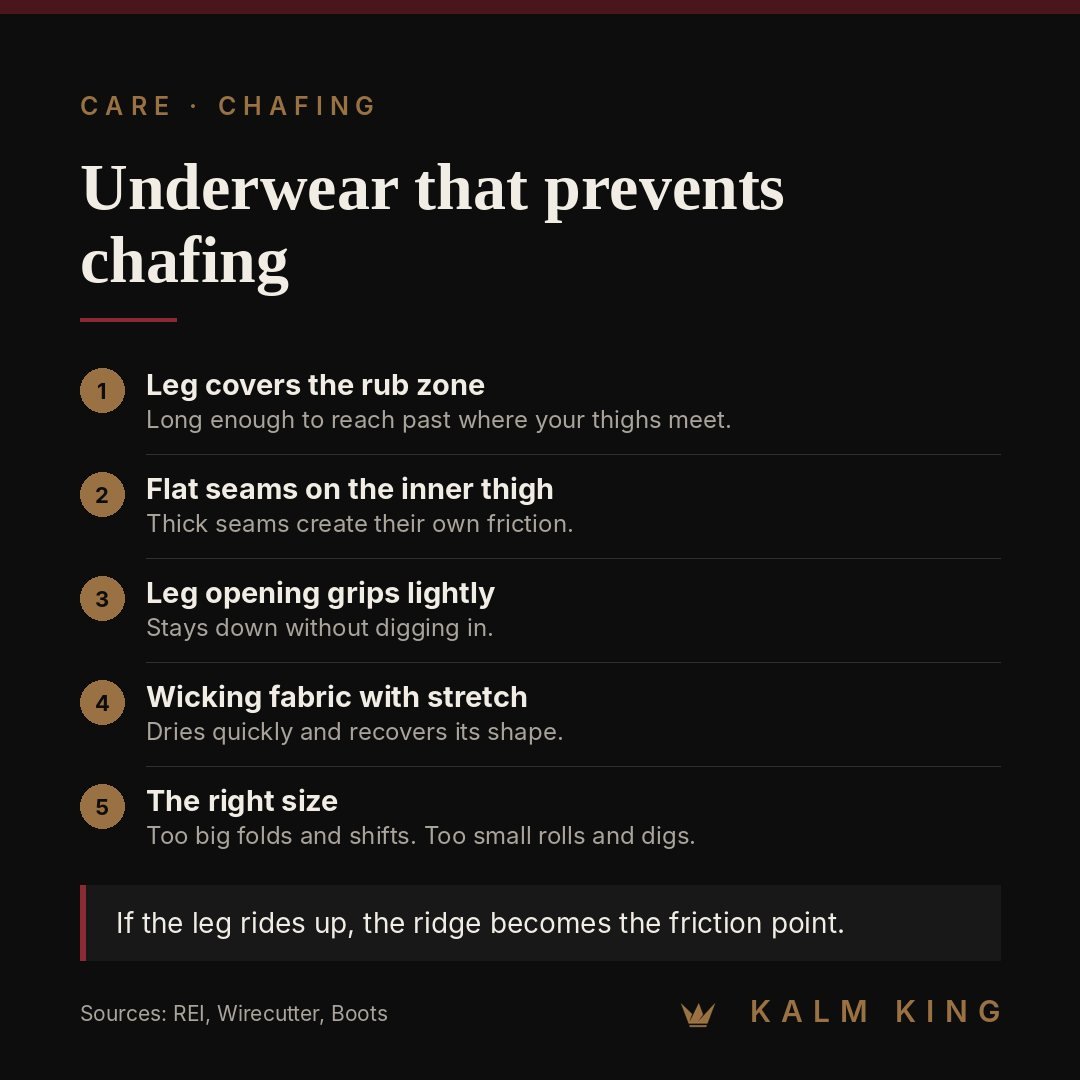
A good fabric doesn’t help if the leg rides up into a rope of cloth between your thighs. That ridge becomes the friction point. Look for:
- A longer leg that covers the rub zone
- Enough stretch, usually from elastane, to recover its shape as you move
- A leg opening that grips lightly without digging in
- Flat or bonded seams, especially on the inner thigh
- The right size, because a size too big shifts and folds while a size too small rolls and digs
If your underwear creeps up as you walk, our guide on how to stop boxer briefs from riding up walks through the common causes and fixes. Getting the size right matters too, so check the men’s underwear size chart before you buy.
Some underwear is designed with a separate pouch, a contoured front panel that holds everything in place and keeps it off the thighs. Wirecutter’s underwear testing points to multi-panel boxer briefs whose panels wrap around the thighs to reduce chafing. A contoured pouch can also reduce skin-on-skin contact in the groin, but neither feature will fix a leg that’s too short or a fabric that stays soaked.
Pouch underwear cuts down on skin-on-skin contact at the front.
4. Use an anti-chafe balm or lubricant
A thin barrier on the skin lets surfaces glide instead of drag. Cleveland Clinic and MedlinePlus both mention petroleum jelly as an option, and there are many anti-chafe balms and sticks made for the job. Apply it to clean, dry skin on the inner thighs before you head out.
Two things to know:

- It wears off. A review of blister prevention published in PubMed Central notes that lubricants lose their effect over time. On long days, reapply every few hours or whenever the area starts to feel warm.
- Choose the format that suits you. Sticks are clean to apply and easy to carry. Petroleum jelly is cheap and effective but can mark clothing. Whatever you use, test it on a small patch of skin first if you’re prone to irritation.
5. Be careful with powders
Powders are often suggested for chafing, and some sources, including MedlinePlus, list baby powder as an option. But the evidence for powders is mixed. The blister prevention review found that talc showed no benefit, or even made things worse, in the studies it examined. The Primary Care Dermatology Society’s guidance on intertrigo advises avoiding absorptive powders such as talc and cornstarch, which may irritate.
If you like the dry feel of a powder, use a little on clean, unbroken skin and pay attention to how your skin reacts. For long, sweaty days, a balm or a fabric layer usually does more.
6. Watch out for seams and waistbands
Inspect your shorts and trousers. REI advises avoiding clothing with seams in areas that rub, and the inner thigh is one of them. A thick, raised seam along the inside of a leg, or a gusset that sits at an awkward angle, can cause chafing on its own.
For running and gym wear, look for flatlock or bonded seams. For everyday trousers, a well-cut pair with the right rise and enough room through the thigh rubs less than one that’s tight and pulled down by a low waist. If your trousers feel snug through the upper leg, our guide on how to measure your hips and thighs for pants shows how to find a better fit.
7. Stay as dry as you can
Since moisture raises friction, anything that keeps skin drier helps:
- Shower and dry off thoroughly before a long day out, including between the legs.
- Change out of sweaty or wet clothes as soon as you can after exercise.
- Pack a spare pair of underwear for long hot days, travel or festivals.
- Stay hydrated. REI notes that as you dehydrate, sweat gets saltier, and salt irritates skin.
- After swimming, rinse and change rather than walking home in wet shorts.
8. Act on the hot spot
This is the habit that separates a mild warning from a raw patch. When you first feel warmth or stinging on your inner thighs, stop. Wipe the area clean and dry, reapply a balm, and straighten out any underwear that has bunched. Two minutes on a bench saves days of soreness.
9. Keep your kit in good shape
Old underwear with stretched-out elastic doesn’t hold its position, and pilled, roughened fabric creates more friction than a smooth new surface. Wash your underwear properly (our guide to how to wash men’s underwear covers temperatures, detergent and drying) and replace pairs that have lost their shape.

Preventing Chafing by Activity
Different situations call for slightly different setups.
| Situation | What causes the chafing | What helps |
|---|---|---|
| Everyday summer wear | Heat, sweat, loose boxers or short-leg briefs | Longer-leg boxer briefs in a breathable, smooth fabric; balm on hot days |
| Long walks and travel days | Hours of repeated strides | Boxer briefs that stay put, balm reapplied every few hours, a spare pair |
| Running | High repetition, heavy sweat | Compression shorts or running shorts with a built-in liner, balm, flat seams |
| Cycling | Saddle pressure plus pedalling | Fitted cycling shorts, chamois cream if you use a padded short |
| Gym and team sports | Sweat, shorts riding up | Snug compression layer under loose shorts |
| Physical work | Heavy trousers, thick seams, long shifts | Longer-leg underwear, trousers with room through the thigh, changing out of wet clothes |
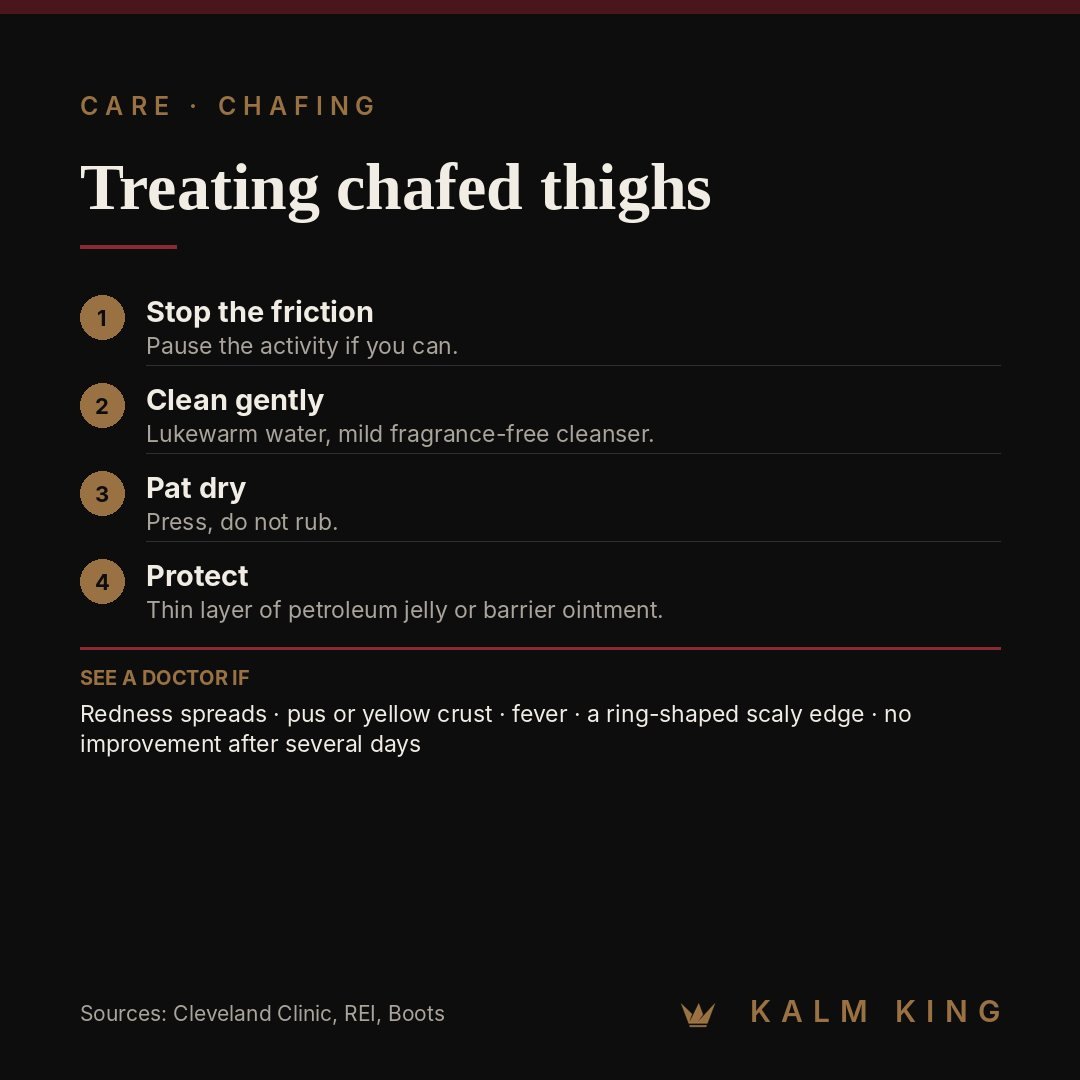
How to Treat Chafed Thighs
If you’re already sore, the priority is to calm the skin and protect it while it heals.
- Stop the friction. If you can, stop the activity that caused it. Pushing on makes raw skin worse.
- Clean gently. Rinse the area with lukewarm water and a mild, fragrance-free cleanser. Don’t scrub.
- Pat dry. Use a clean towel and press, don’t rub. Let the skin air dry for a few minutes if possible.
- Protect the area. A thin layer of petroleum jelly or a fragrance-free barrier ointment protects raw skin from further rubbing.
- Let it breathe. Wear loose, soft clothing over the area while it heals, and sleep in something that doesn’t rub.
- Give it time. Mild chafing usually settles within a few days once the friction stops. Avoid repeating the same long walk or run until the skin has recovered.
Avoid putting anything harsh on broken skin. Perfumed lotions, alcohol-based products and aftershave will sting and can irritate it further.
When to see a doctor
Chafing is common and usually minor, but see a doctor or pharmacist if:
- The area isn’t improving after several days of rest and care
- The redness is spreading, or the skin feels hot, swollen or increasingly painful
- You notice pus, yellow crusting, or a bad smell
- You develop a fever
- The rash has a distinct ring or raised, scaly border
- It keeps coming back despite changing your clothing and habits
Broken skin can become infected, and a few other conditions look like chafing at first glance.
Chafing vs Jock Itch vs Intertrigo
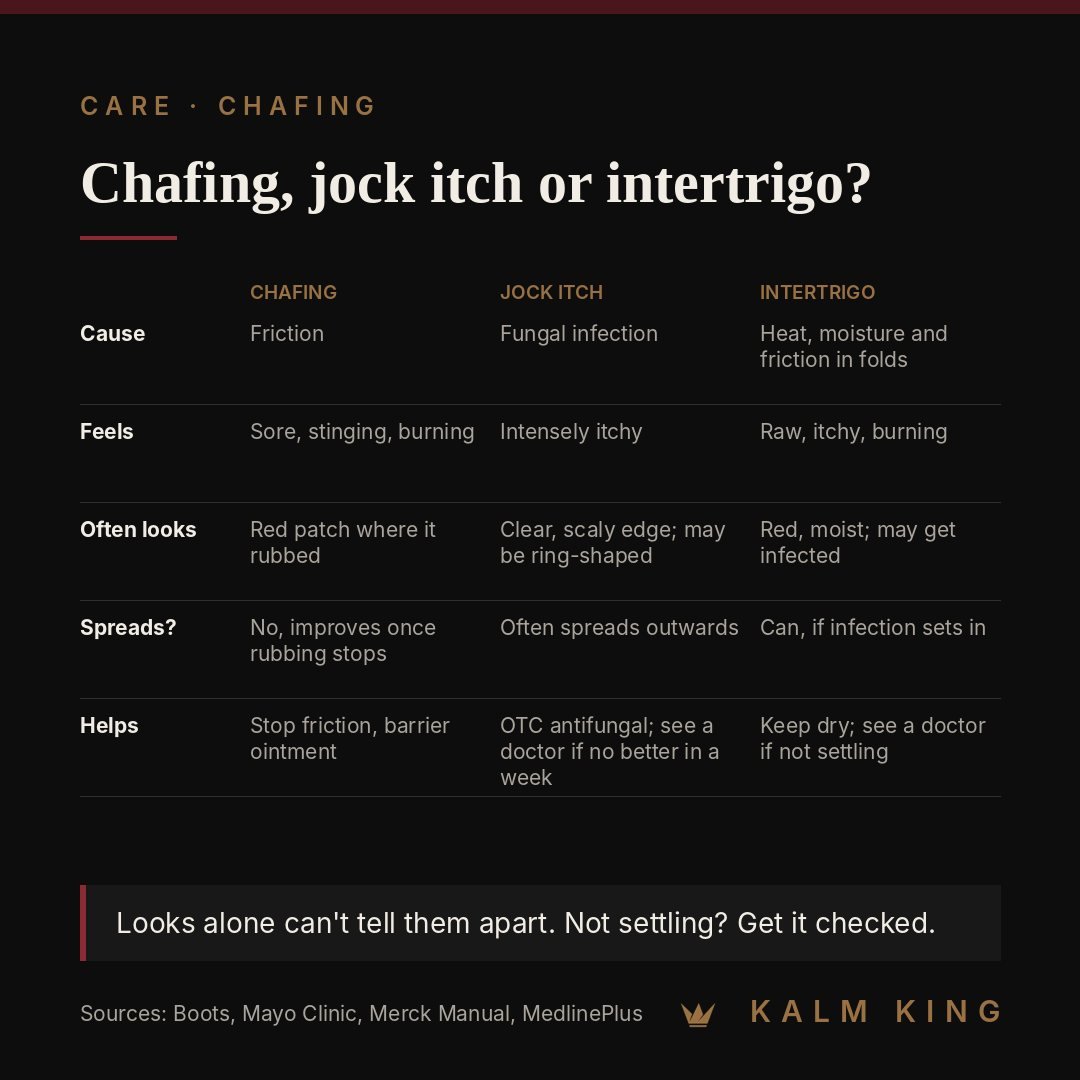
Not every red patch on the inner thighs is chafing. Two common lookalikes are jock itch and intertrigo, and they need different treatment. The differences below are useful clues, but appearance alone isn’t a reliable way to tell a fungal infection from chafing, so treat them as reasons to get it checked rather than a way to diagnose yourself.
Chafing is caused by friction. It’s usually tender, stinging or burning, and it appears where something rubbed. It isn’t contagious and generally improves within days once the rubbing stops.
Jock itch (tinea cruris) is a fungal infection of the groin and inner thighs. The Merck Manual notes that it’s far more common in men, partly because of the way the scrotum and thighs sit against each other. It tends to itch more than it stings, and Boots’ pharmacy guidance says a fungal rash is more likely to be intensely itchy, scaly, clearly edged or ring-shaped, and to keep spreading outwards, while chafing stays where the rubbing happened. Those are tendencies, not rules: the two can look alike, and they can overlap when broken skin picks up an infection. Mayo Clinic recommends over-the-counter antifungal treatment and advises seeing a doctor if the rash doesn’t improve after a week of self-care. Because the fungus that causes athlete’s foot can spread to the groin, Mayo suggests drying your feet last after a shower, and Boots notes it can spread when underwear is pulled on over infected feet.
Intertrigo is inflammation in skin folds caused by heat, moisture and friction together. MedlinePlus explains that the warm, damp environment can let yeast or bacteria grow on top of the irritation. It often looks red and raw, and it may need treatment for the infection as well as the friction.
Cleveland Clinic notes that chafing itself isn’t contagious, but damaged skin makes it easier for an infection to take hold. If you’re unsure which one you have, don’t guess from how it looks. A pharmacist or doctor can examine it and, if needed, test a skin sample to confirm whether it’s fungal.
Common Mistakes That Make Chafing Worse
- Wearing loose boxers on long, hot days. They let skin rub against skin and bunch into a ridge.
- Ignoring the first warm spot. By the time it hurts, the skin is already damaged.
- Choosing cotton for sweaty activity. It’s comfortable dry, but once soaked it stays wet against the skin.
- Applying balm once and forgetting about it. It wears off over a long day.
- Wearing shorts with a thick inner seam. A seam that sits on the rub zone can cause chafing on its own.
- Using perfumed products on sore skin. They irritate rather than soothe.
- Assuming every rash is chafing. A spreading, itchy rash may be fungal, and you can’t always tell by looking. If it doesn’t settle once the rubbing stops, get it checked.

A Quick Anti-Chafing Checklist
Before a long, warm or active day:
- Boxer briefs or compression shorts with a leg long enough to cover the rub zone
- Smooth, moisture-wicking fabric with some stretch
- The correct size, so nothing rides up or rolls down
- Shorts or trousers without a thick seam on the inner thigh
- Anti-chafe balm or petroleum jelly on clean, dry skin
- A small stick of balm and a spare pair of underwear for long days
- A plan to stop and fix it at the first hot spot
The Kalm King Take
Chafing is one of those problems men tend to put up with because nobody talks about it. It’s not something to be embarrassed about, and it isn’t something you have to accept. In most cases, the fix is simple: keep skin from rubbing on skin, keep it as dry as you can, and pay attention to the first warning sign.
The biggest part of that fix is what you wear closest to your body. A pair of underwear that covers the right area, stays where you put it and doesn’t trap sweat does more than any cream. That’s exactly the kind of everyday problem we’re thinking about as we build our own essentials. If you want to hear about them first, along with practical fit and care notes, join Field Notes.
Frequently asked questions
What is the fastest way to stop thigh chafing?
Stop the rubbing first. Put a smooth layer between your thighs, such as longer-leg boxer briefs or compression shorts, and apply an anti-chafe balm or petroleum jelly to clean, dry skin. If you feel a warm spot starting mid-walk, stop, wipe the area dry, reapply and straighten your underwear before you continue.
What underwear is best for preventing thigh chafing?
Boxer briefs with a leg long enough to cover the area where your thighs meet work best for most men. Look for a smooth, moisture-wicking fabric with some stretch, flat seams on the inner thigh, and a leg opening that grips lightly without digging in. Make sure the size is right so the leg doesn’t ride up.
Is cotton underwear good for chafing?
It depends on how much you’ll sweat. Cotton is breathable and comfortable for everyday wear, and MedlinePlus says it may help. But Cleveland Clinic advises avoiding cotton for activity, because once it’s soaked it holds moisture against the skin. For heat, exercise or long days, a wicking fabric is usually the better choice.
Does Vaseline help with thigh chafing?
Yes. Petroleum jelly creates a slippery barrier that reduces friction, and both Cleveland Clinic and MedlinePlus list it as an option. It wears off over time, so reapply it on long days. It can also mark clothes, which is why some men prefer a purpose-made anti-chafe stick.
How long does thigh chafing take to heal?
Mild chafing usually settles within a few days once the rubbing stops and the skin is kept clean, dry and protected. Deeper, raw chafing can take longer. If it isn’t improving after several days, or the redness is spreading, see a doctor or pharmacist.
How do I know if it’s chafing or jock itch?
Chafing tends to sting or burn, appears where something rubbed and improves within days of stopping the friction. Jock itch is a fungal infection that usually itches more and can spread outwards. These are only clues: the two can look similar, so appearance alone can’t reliably tell them apart. If a rash itches, spreads or doesn’t settle, ask a pharmacist or doctor to check it.
Can you get chafing even if you’re fit?
Yes. Chafing is about friction and moisture, not fitness. Muscular thighs from cycling, running or squatting touch and rub just like any others, and athletes who repeat the same movement for hours are some of the most common sufferers.
Sources
- Cleveland Clinic: Chafing (medical centre)
- Cleveland Clinic Health Essentials: How to Prevent Chafing (medical centre)
- MedlinePlus (US National Library of Medicine): Chafing (government health resource)
- MedlinePlus: Intertrigo (government health resource)
- Cleveland Clinic: Intertrigo (medical centre)
- Primary Care Dermatology Society: Intertrigo (clinical guidance)
- Mayo Clinic: Jock itch, diagnosis and treatment (medical centre)
- MedlinePlus: Jock itch (government health resource)
- Merck Manual Consumer Version: Tinea cruris (jock itch) (medical reference)
- Boots Health Hub: Itchy inner thighs, is it chafing or a fungal infection? (pharmacy guidance)
- REI Expert Advice: Managing Chafing (outdoor retailer expert advice)
- MacFarlane, Skin tribology in sport, Biosurface and Biotribology (2021) (peer-reviewed review)
- Assessing the accumulated stickiness magnitude from fabric-skin friction: effect of wetness level of various fabrics, Royal Society Open Science (2018) (peer-reviewed study)
- Blister prevention: a review of interventions (PMC10783476) (peer-reviewed review)
- Wirecutter: The Best Men's Underwear (independent product testing)
FIELD NOTES
Get the Overalls Fit Kit, free.
Your measurement card, the six fit checkpoints and a checklist to take shopping. Join Field Notes for new guides and a say in what Kalm King makes.
THE KALM KING JOURNAL
Continue reading
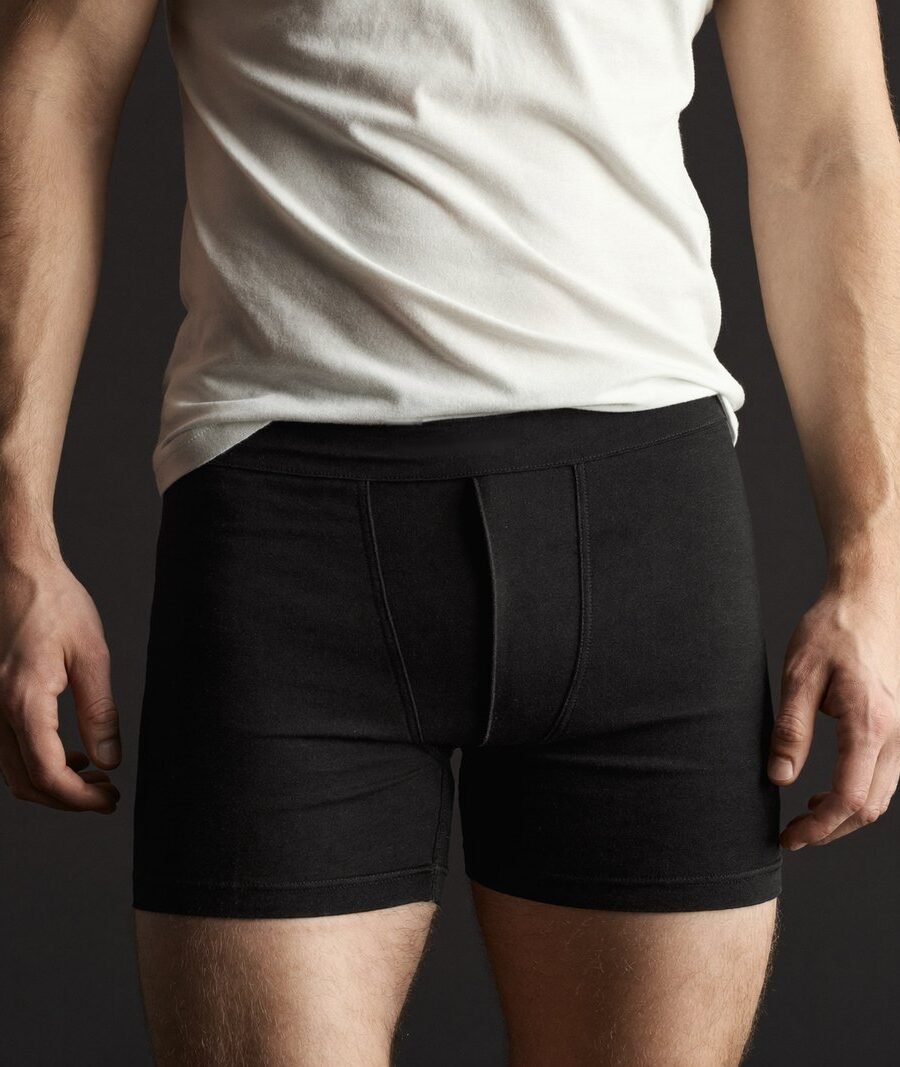
What Is Pouch Underwear? Benefits, Designs and Fit
Pouch underwear gives everything its own shaped space. Here’s how the main designs work, what they can and can’t do, and how a pouch should fit.
How to Keep Black Clothes From Fading
Black clothes fade from dye loss, friction, heat and sun. Here’s how to wash, dry and store black so it stays black, and what to do when it’s already gone grey.

How to Measure Neck Size for a Dress Shirt
Measure your neck size for a dress shirt in two minutes: where the tape goes, how much room to add, how to read collar sizes, and how a collar should fit.