
November 23, 2026
Explore: Fabric & Care
How to Keep Black Clothes From Fading
Black clothes fade from dye loss, friction, heat and sun. Here's how to wash, dry and store black so it stays black, and what to do when it's already gone grey.

A new black T-shirt looks deep and sharp. A few months later, next to a new one, it looks charcoal. The same thing happens to black jeans, black hoodies and black chinos: the colour drifts towards grey and the whole outfit starts to look tired.
Fading isn’t bad luck. It comes from a handful of specific things that happen in the washer, the dryer and the sun, and most of them are within your control. Change a few habits and your black clothes can stay black for far longer.
This guide explains why black clothes fade, the exact washing and drying settings that slow it down, which popular tricks don’t work, and what you can do to bring back black that has already faded.
Short answer: Black clothes fade because dye washes out in warm water, friction roughs up the fibres so they scatter light and look grey, bleaching agents attack the dye, and sunlight breaks it down. To keep black clothes black, wash them less often, turn them inside out, use cold water on the shortest cycle that gets them clean, choose a detergent without bleach or bleach alternatives, wash them with other dark clothes of a similar weight, and air dry them indoors out of direct sun. Salt and vinegar won’t “lock in” modern dyes. If black has already faded, removing surface fuzz can help, and re-dyeing is the only way to restore the colour fully.

Why Black Clothes Fade
It helps to know there are two kinds of fading, because they need different fixes.
1. Real colour loss: the dye leaves the fabric
Every wash removes a little dye. Iowa State University Extension’s AnswerLine explains that fading happens as the fixing agents that bind dye to fibre gradually wash out, and that hot water speeds that up. Warm or hot water can make fibres swell and release colour.
Research backs this up. A study published in Dyes and Pigments compared a warm, long wash (40°C for 85 minutes) with a cold, quick one (25°C for 30 minutes) using real retail clothing. The warmer, longer cycle caused significantly more colour loss, and the rate of dye loss increased most sharply between 20°C and 40°C.
Cotton, which most black T-shirts, hoodies and jeans are made of, is especially prone. AnswerLine notes that natural fibres like cotton, wool and silk fade more than synthetics such as polyester and nylon, which hold dye better.
2. Apparent fading: the surface turns fuzzy
Sometimes your T-shirt hasn’t lost much dye at all. It just looks lighter. Consumer Reports explains that tumbling in the dryer roughs up the surface of the fibres, creating a “halo of fuzz” that catches light and makes black clothes appear faded. Cotton Incorporated’s technical bulletin on colourfastness lists abrasion as one of the ways cotton loses its colour, and notes that the textile industry uses cellulase enzymes to remove the surface fibres that create a fuzzy appearance.
Those tiny broken fibre ends scatter light, so the fabric reads as grey. It’s the same process that causes pilling. Our guide on how to remove pilling from clothes explains it in more detail.
3. Bleach and bleach alternatives
Chlorine bleach is obviously a problem for black. Less obvious are the oxygen-based bleaching agents found in many everyday detergents. A study in Textile Research Journal by Fergusson and Padhye found that detergents containing an oxidising bleach (sodium perborate or sodium percarbonate) increased colour loss in washing, and the effect was especially clear on black dye. Consumer Reports advises avoiding detergents that contain bleach alternatives when washing black clothes.
4. Sunlight
Ultraviolet light breaks down dye. The same Textile Research Journal study found that fabric faded faster when it was exposed to light while wet than when dry, which is exactly what happens when you hang a damp black T-shirt in the sun. Consumer Reports and AnswerLine both advise against drying black clothes outdoors in direct sun.
5. Heat
Dryer heat adds to the damage. The American Cleaning Institute notes that hot water and machine drying can make fading happen faster, and AnswerLine says heat is hard on dark colours.
How to Wash Black Clothes Without Fading
1. Wash them less often
The simplest fix of all. Consumer Reports notes that the more you wash, the more black dye washes away, especially with denim. Many items don’t need washing after every wear:
- Air out jeans, chinos, jumpers and outer layers between wears.
- Spot clean small marks instead of washing the whole garment.
- Save full washes for when something is actually dirty or smells.
Base layers, socks and underwear are different. Wash those after each wear. Our guide to how to wash men’s underwear covers the details.
How often to wash black clothes
There’s no fixed rule, but a sensible starting point looks like this:
- Underwear, socks and gym kit: after every wear.
- T-shirts: after every wear in warm weather, or every two light wears in cool weather if they don’t smell.
- Jeans and chinos: every several wears, airing them out in between.
- Jumpers and knitwear: every several wears, unless they’re marked.
- Jackets and outer layers: only when they’re actually dirty.
2. Turn everything inside out
Turning a garment inside out protects the outer face from rubbing against the drum and other clothes. Consumer Reports, AnswerLine and the American Cleaning Institute all recommend it. The inside will still wear, but nobody sees the inside.
While you’re at it, close zips, fasten buttons and empty pockets so nothing snags or rubs.
3. Use cold water
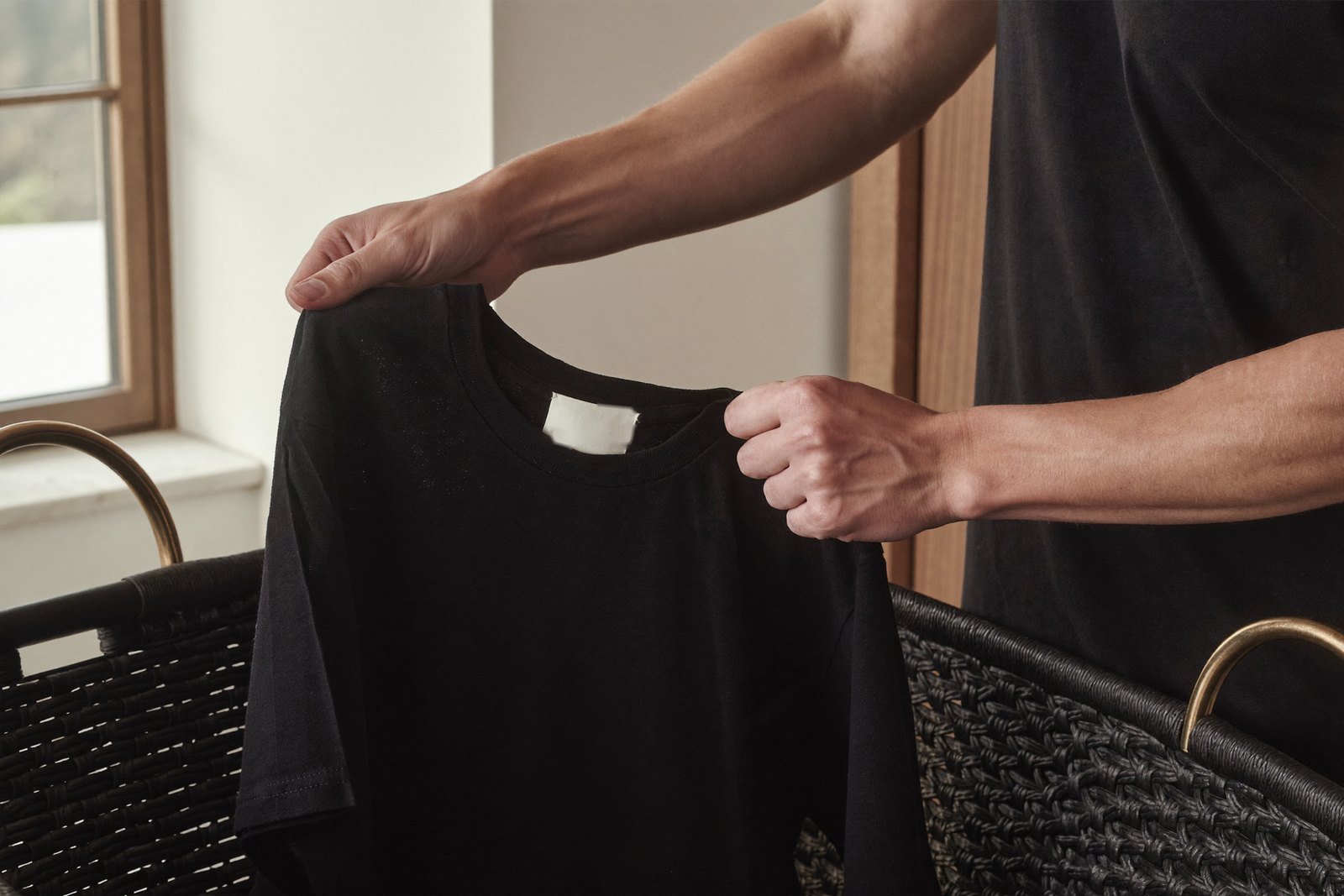
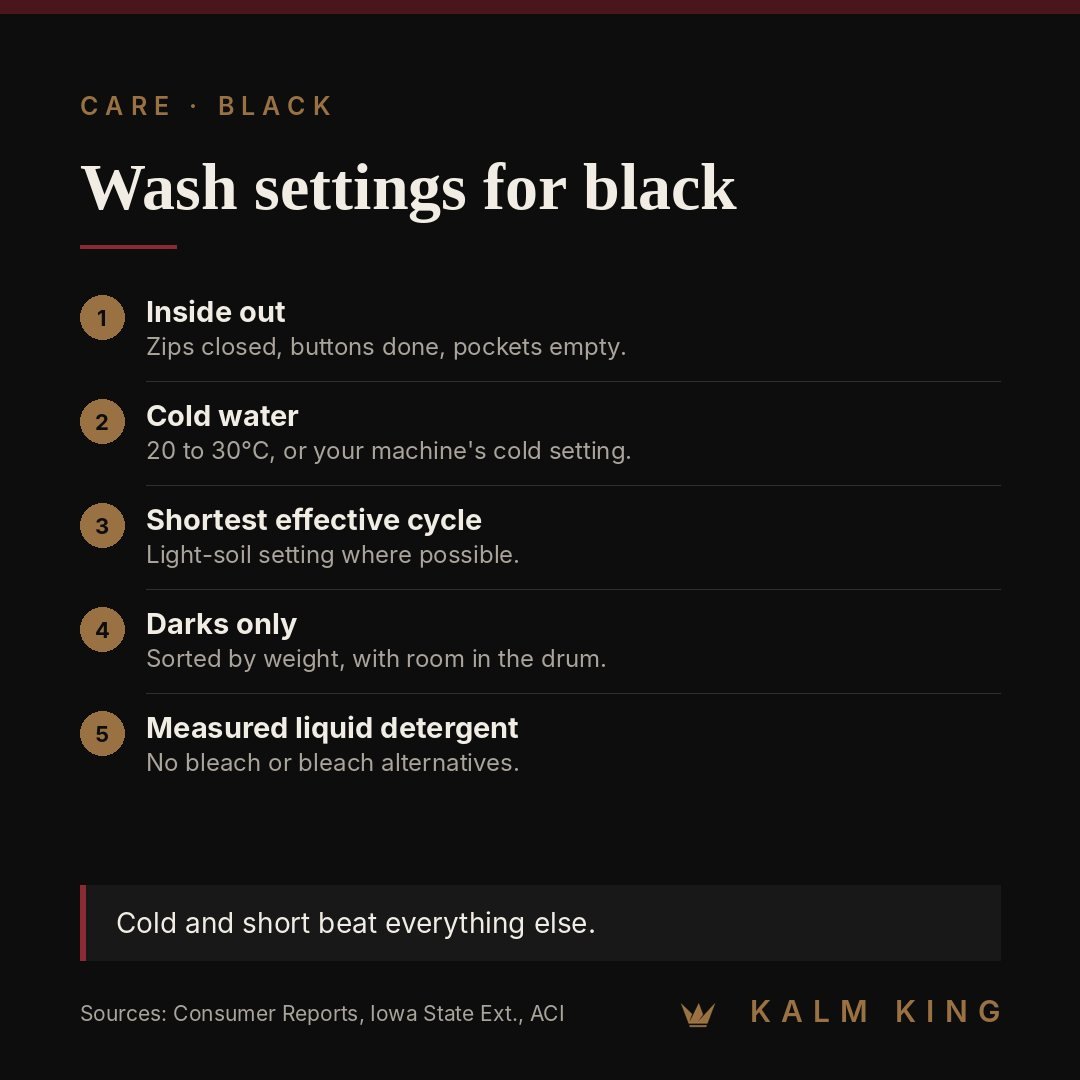
Cold water is the single biggest washing change you can make. Warm water speeds up dye loss, and the research shows the steepest rise happens between 20°C and 40°C. Use your machine’s cold setting, or 20 to 30°C if you choose by temperature.
One note from Consumer Reports: detergent dissolves poorly in very cold water, which can leave streaks on dark clothes. Use a liquid detergent, measure it properly, and if your tap water is very cold in winter, use the coolest standard setting rather than the absolute coldest.
4. Choose the shortest effective cycle
Less time in the drum means less friction and less dye loss. Consumer Reports recommends the shortest cycle that will get your clothes clean and the light-soil setting where possible. The American Cleaning Institute also recommends a shorter cycle.
5. Wash black with black
Sort by colour and by weight. New black clothes can bleed dye onto lighter colours, and heavy items like jeans and hoodies rub harder against lighter T-shirts. AnswerLine notes that washing like colours together is the only reliable way to prevent colour transfer. Put your black T-shirts, black underwear and dark knits in one load, and your heavy black denim in another.
6. Don’t overload the machine
A packed drum means more rubbing and less rinsing. Leave enough room for clothes to move freely.
7. Use the right detergent
- Skip bleach and bleach alternatives. Check the label for oxygen bleach, sodium percarbonate or sodium perborate, and avoid “brightening” formulas for dark loads.
- Consider a detergent for dark clothes. The American Cleaning Institute points to products labelled for darks or with colour-protection features.
- Look at the enzymes. Some colour-care detergents contain cellulase, the same type of enzyme the textile industry uses to remove fuzzy surface fibres from cotton. Check the label and follow the directions.
- Measure. Too much detergent leaves white streaks on dark fabric.

8. Wash new black clothes separately the first time
AnswerLine advises that if a label says “wash separately,” you should expect the dye to bleed, and wash the garment on its own for the first wash or two. Excess dye comes out early, which also reduces rubbing off onto skin and furniture.
How to Dry Black Clothes Without Fading
Drying does as much damage as washing, sometimes more.
- Air dry where you can. Consumer Reports recommends hanging black clothes to dry indoors and laying knits flat. It avoids both the heat and the tumbling that create the faded-looking halo.
- Keep them inside out while they dry.
- Avoid direct sun. Light fades wet fabric faster. If you dry outside, choose shade and bring clothes in as soon as they’re dry, as AnswerLine advises.
- If you use a dryer, go low and short. Use the lowest heat setting and take clothes out while they’re still very slightly damp.
- Clean the lint filter. The American Cleaning Institute suggests cleaning it after every use, and a dryer sheet can help repel lint that shows up on dark clothes.
- Remove clothes promptly from the washer, so damp dark clothes don’t sit pressed against each other.

Myths That Don’t Work
“Soak new black clothes in salt or vinegar to set the dye”
This is one of the most repeated laundry tips online, and it doesn’t work for modern clothes. Iowa State’s AnswerLine calls it a common myth, and its specialists say the old salt and vinegar methods no longer work with the dyes the industry uses today. Vinegar can even shift some colours.
“Hot water gets clothes cleaner, so it’s worth it”
For most everyday black clothes, cold water with a good detergent cleans well enough, and the research is clear that warmer, longer washes increase colour loss.
“Fabric softener protects colour”
It’s mixed. AnswerLine notes fabric softeners can reduce friction. But softener can build up on some fabrics, especially performance and wicking fabrics, so follow the care label.
“Colour-catcher sheets prevent fading”
Colour-catcher sheets trap loose dye in the water so it doesn’t stain other clothes. They help with transfer, not fading. AnswerLine also notes they work well but aren’t totally reliable.

What About Dye Fixatives?
Commercial dye fixatives, such as Retayne or Rit ColorStay Dye Fixative, are a real product category, but they have a narrow job. AnswerLine explains that they reduce colour bleeding in cotton fabrics where the dye wasn’t properly fixed or rinsed. The catches:
- They need hot water, around 140°F (60°C), to work.
- They don’t work on polyester or acrylic.
- Retayne isn’t suited to energy-efficient front-loading machines, because they don’t use enough water.
- They’re mainly about stopping dye from bleeding onto other clothes, not about restoring colour.
They can be worth trying on a new cotton item that bleeds heavily. They’re not a routine fix for keeping everyday black clothes dark.
How to Wash Specific Black Pieces
The general rules apply to everything, but a few items need a little extra thought.
Black T-shirts. Wash inside out, cold and short, then hang to dry on a hanger or drape over a rack. If you rotate several black tees, wash them together so they fade at the same rate and still match.
Black jeans. Wash them as rarely as you can. Turn them inside out, button and zip them, and wash cold on a short cycle with other dark, heavy items. Hang them by the waistband to dry. Black denim loses the most dye in its first few washes, so wash new pairs on their own.
Black hoodies and sweatshirts. The fleece inside sheds lint and fuzz. Wash inside out with other heavy darks, never with towels, and air dry. A quick pass with a lint roller before you wear them removes surface fluff.
Black gym and performance wear. Synthetic fabrics hold dye well but can trap odour. Wash cold soon after wearing, skip fabric softener, and air dry. Heat can damage the stretch.
Black underwear and socks. Wash after every wear, inside out, cold or at the temperature on the label, with other darks. Air drying keeps waistbands and elastic in better shape.
Black tailoring and wool. Follow the care label. Many black suits and wool trousers are dry clean only, and brushing and airing between wears does more good than frequent cleaning.
Storing Black Clothes
Fading doesn’t only happen in the wash.
- Keep them out of the sun. A black jacket hung next to a sunny window can fade along the shoulders over a season.
- Watch your wardrobe lighting. AnswerLine notes that leaving closet lights on can contribute to fading, so switch them off.
- Give them room. Packed rails rub fabrics together and crush knits.
- Fold knits. Hanging heavy jumpers stretches the shoulders. Fold them on a shelf.
Common Marks on Black Clothes
Black shows everything that isn’t black. A few frequent culprits:
- White detergent streaks usually mean too much detergent or water that was too cold for it to dissolve. Measure carefully and rinse again.
- Deodorant marks come off with a damp cloth or a gentle rub with a dry sock before the garment goes in the wash.
- Lint and hair are easiest to remove with a lint roller once the garment is dry, and easier to prevent by washing darks away from towels.
Fabric by Fabric
Different fabrics fade in different ways.
| Fabric | How it fades | What helps most |
|---|---|---|
| Cotton T-shirts and hoodies | Dye loss plus surface fuzz | Cold, short, inside out, air dry |
| Black denim | Dye loss, especially early on | Wash rarely, cold and inside out; never tumble hot |
| Polyester and nylon | Hold dye well; can pick up lint | Cold wash, low heat, lint control |
| Wool and knits | Surface fuzz and pilling | Wash rarely, cool and gentle, dry flat |
| Linen | Dye loss and soft creasing | Cold, gentle, air dry in shade |
| Blends | Varies with the fibre mix | Follow the most delicate fibre in the blend |
Our guides to whether cotton shrinks and whether polyester shrinks cover how heat affects each fibre’s size as well.
How to Restore Black Clothes That Have Faded
You can’t put lost dye back with a laundry trick, but you can sometimes improve how faded clothes look.
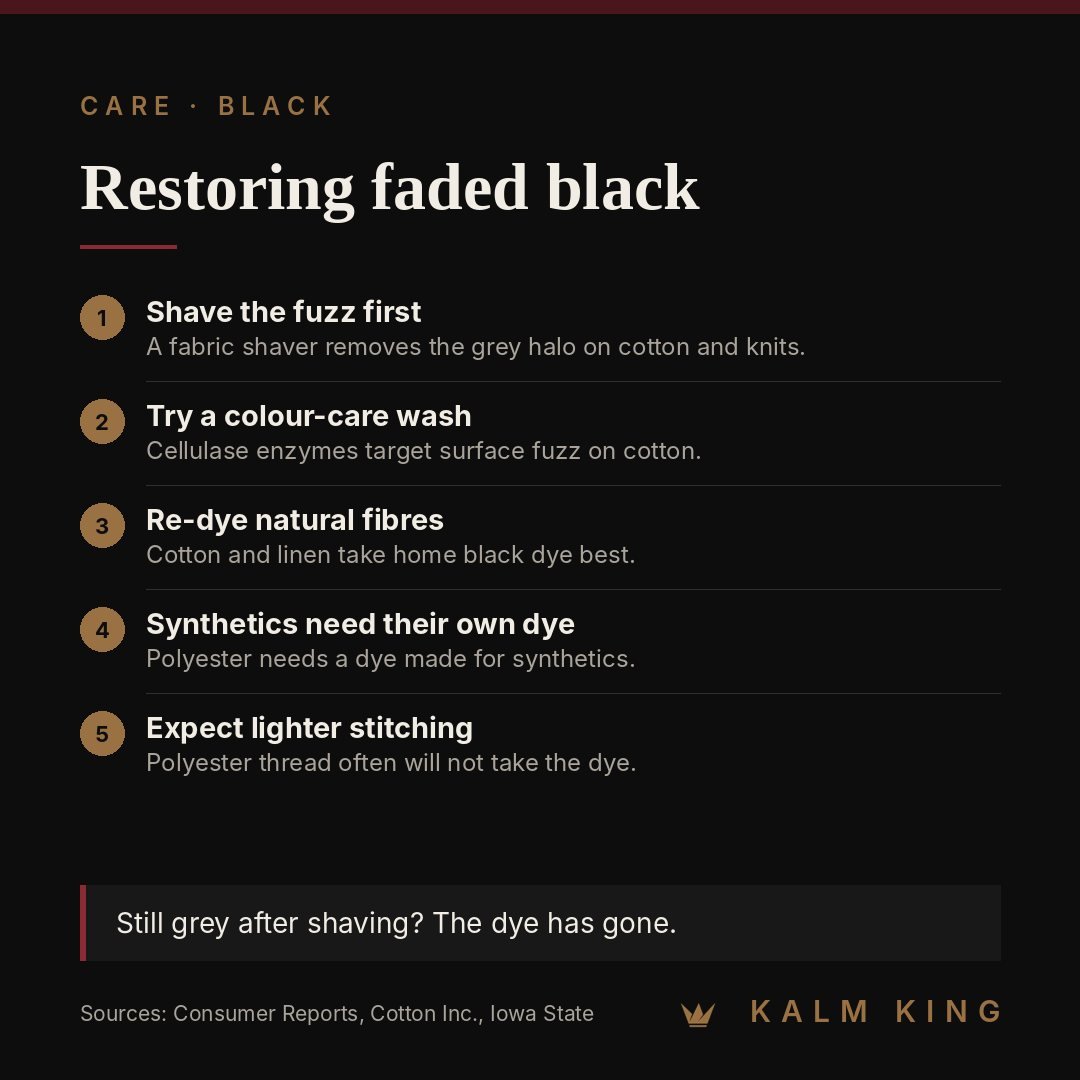
Remove the fuzz first
If the fading is mostly the “halo” effect, removing surface fuzz can make a real difference. Go over the garment lightly with a fabric shaver, on a flat surface, testing on a hidden area first. A colour-care detergent containing cellulase may also help with cotton over several washes.
Re-dye
If the dye itself has gone, the only real fix is re-dyeing. Home dye products for black work best on natural fibres like cotton and linen. Polyester and other synthetics need dyes made specifically for synthetics. Results vary, and stitching thread, often polyester, may not take the dye, so expect visible seams. Follow the product’s directions closely.
Retire it gracefully
Some faded black pieces have a second life as gym wear, sleepwear or layering pieces under other clothes. Not everything needs to be rescued.
Buying Black Clothes That Stay Black
Care helps every garment, but some start with an advantage:
- Tighter, smoother fabrics shed less fuzz than loose, fuzzy ones.
- Heavier-weight cotton generally holds its shape and surface better than very thin jersey.
- Synthetic blends tend to hold dye better than pure natural fibres, according to AnswerLine.
- Check the care label. “Wash separately” warns of a dye that will bleed at first.
- Buy fewer black basics of better quality, and care for them properly.
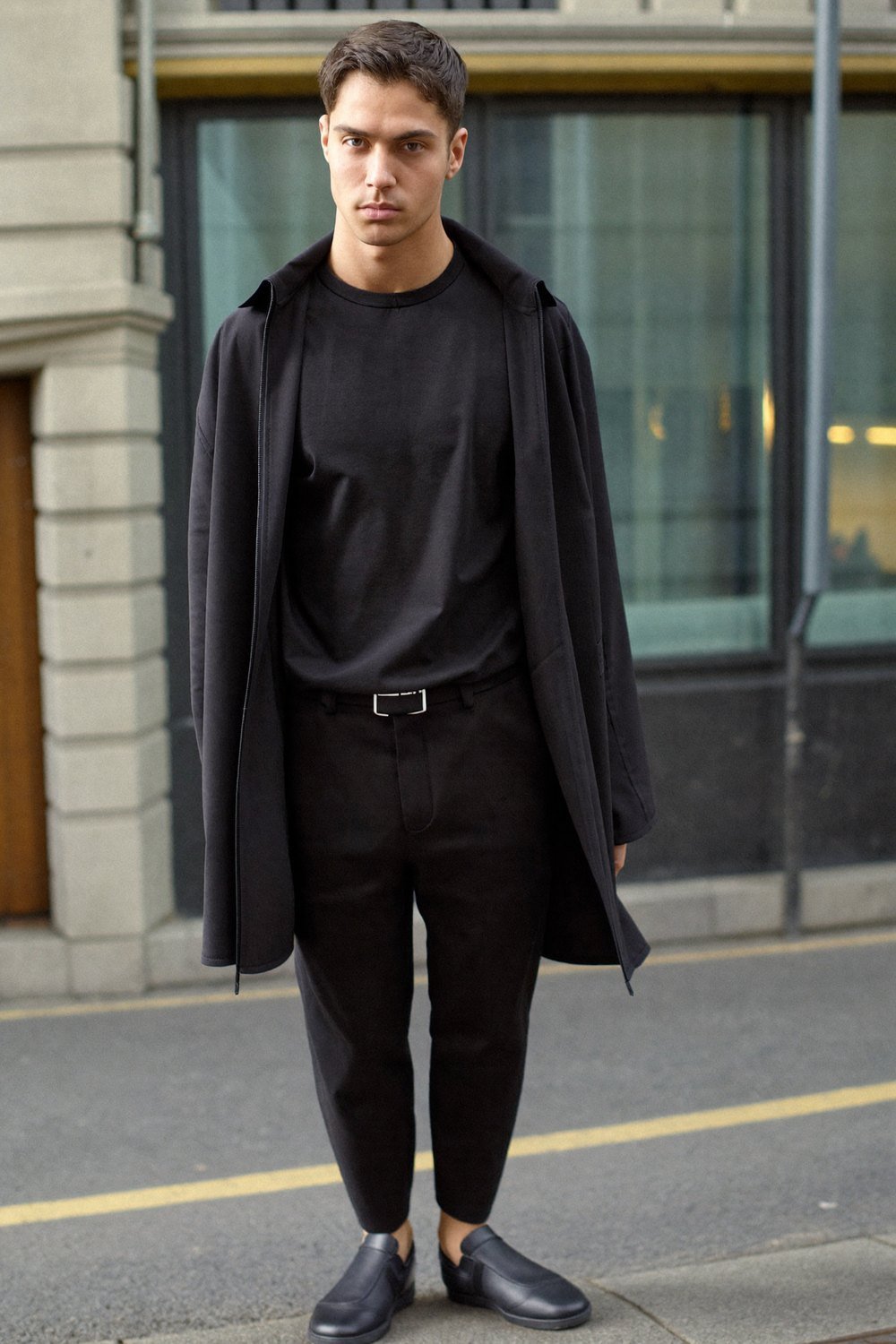
If black is the backbone of your wardrobe, our guide to making black feel considered covers styling, texture and how to wear it so it never looks flat. For building a wardrobe around a few reliable colours, see our men’s capsule wardrobe guide.
A Quick Black Clothes Care Checklist
- Wash less. Air out jeans and outer layers between wears.
- Inside out, zips closed, pockets empty.
- Cold water, shortest cycle, light soil setting.
- Darks only, sorted by weight, with room in the drum.
- Liquid detergent without bleach or bleach alternatives, measured.
- Air dry indoors, out of direct sun. Low and short if you must tumble.
- Skip salt and vinegar soaks.
- Shave off fuzz on older pieces before deciding they’ve faded.
The Kalm King Take
Black is the colour men reach for when they want to look composed, and nothing undermines that faster than a shirt that has turned grey. The fix isn’t expensive products. It’s a few calm habits: cold, short, inside out, and out of the sun.
Look after black properly and it rewards you for years. We’re designing our own essentials with that in mind, built to be worn hard and still look like themselves. If you want to hear about them first, along with more care and fit notes, join Field Notes.
Frequently asked questions
How do you wash black clothes so they don’t fade?
Turn them inside out, wash in cold water on the shortest cycle that gets them clean, and use a liquid detergent without bleach or bleach alternatives. Wash them with other dark clothes of a similar weight, don’t overload the machine, and air dry them indoors out of direct sun.
Does cold water keep black clothes from fading?
Yes. Warm water speeds up the loss of dye. A study comparing a 40°C, 85-minute wash with a cold, quick cycle found significantly more colour loss in the warmer, longer wash, with the biggest increase between 20°C and 40°C.
Does vinegar or salt stop black clothes fading?
No. Iowa State University Extension calls it a common myth and says salt and vinegar methods don’t work with the dyes used in clothing today. Vinegar can even change some colours.
Why do my black clothes look grey after washing?
Often it’s surface fuzz rather than lost dye. Tumbling roughs up the fibres, and the broken ends scatter light so the fabric looks lighter. Washing inside out, air drying and using a fabric shaver on older pieces can help. If the garment still looks grey after that, the dye itself has faded.
Should you put black clothes in the dryer?
It’s best to avoid it. Dryer heat and tumbling create surface fuzz that makes black look faded. If you need to use a dryer, keep the clothes inside out, use the lowest heat, keep the cycle short and clean the lint filter first.
What detergent is best for black clothes?
A liquid detergent without chlorine bleach or bleach alternatives such as sodium percarbonate or sodium perborate. Detergents labelled for darks or colour protection are a good choice, and some contain cellulase enzymes, which target the fuzzy surface fibres that make cotton look faded.
Can you restore faded black clothes?
Partly. Removing surface fuzz with a fabric shaver can make faded-looking cotton look darker. If the dye has gone, re-dyeing is the only way to restore the colour. Use a dye suited to the fibre, and expect polyester stitching to stay lighter.
Sources
- Consumer Reports: How to Keep Your Black Clothes Looking Their Best (consumer testing organisation)
- Iowa State University Extension AnswerLine: Preventing Color Transfer by Bleeding or Crocking (university extension)
- Improved garment longevity and reduced microfibre release are important sustainability benefits of laundering in colder and quicker washing machine cycles, Dyes and Pigments (2020) (peer-reviewed study)
- Fergusson and Padhye, The effect of domestic laundry detergents on the light fastness of certain reactive dyes on 100% cotton, Textile Research Journal (2019) (peer-reviewed study)
- American Cleaning Institute: Keep Dark Clothes from Fading (industry association)
- Cotton Incorporated: Colorfastness of Cotton Textiles (ISP 1001, PDF) (industry research body, PDF)
FIELD NOTES
Get the Overalls Fit Kit, free.
Your measurement card, the six fit checkpoints and a checklist to take shopping. Join Field Notes for new guides and a say in what Kalm King makes.
THE KALM KING JOURNAL
Continue reading
What Is Pouch Underwear? Benefits, Designs and Fit
Pouch underwear gives everything its own shaped space. Here’s how the main designs work, what they can and can’t do, and how a pouch should fit.
How to Prevent Thigh Chafing for Men
Stop thigh chafing before it starts: the layers, fabrics, balms and habits that keep your inner thighs comfortable, plus how to treat a rub that’s already sore.

How to Measure Neck Size for a Dress Shirt
Measure your neck size for a dress shirt in two minutes: where the tape goes, how much room to add, how to read collar sizes, and how a collar should fit.