
September 20, 2026
Explore: Style
How to Wear an All-Black Outfit for Men: Texture, Shape and One Point of Contrast
How to wear an all-black outfit as a man: mix textures, place the volume, add one point of contrast, keep black from fading, plus outfits by occasion.
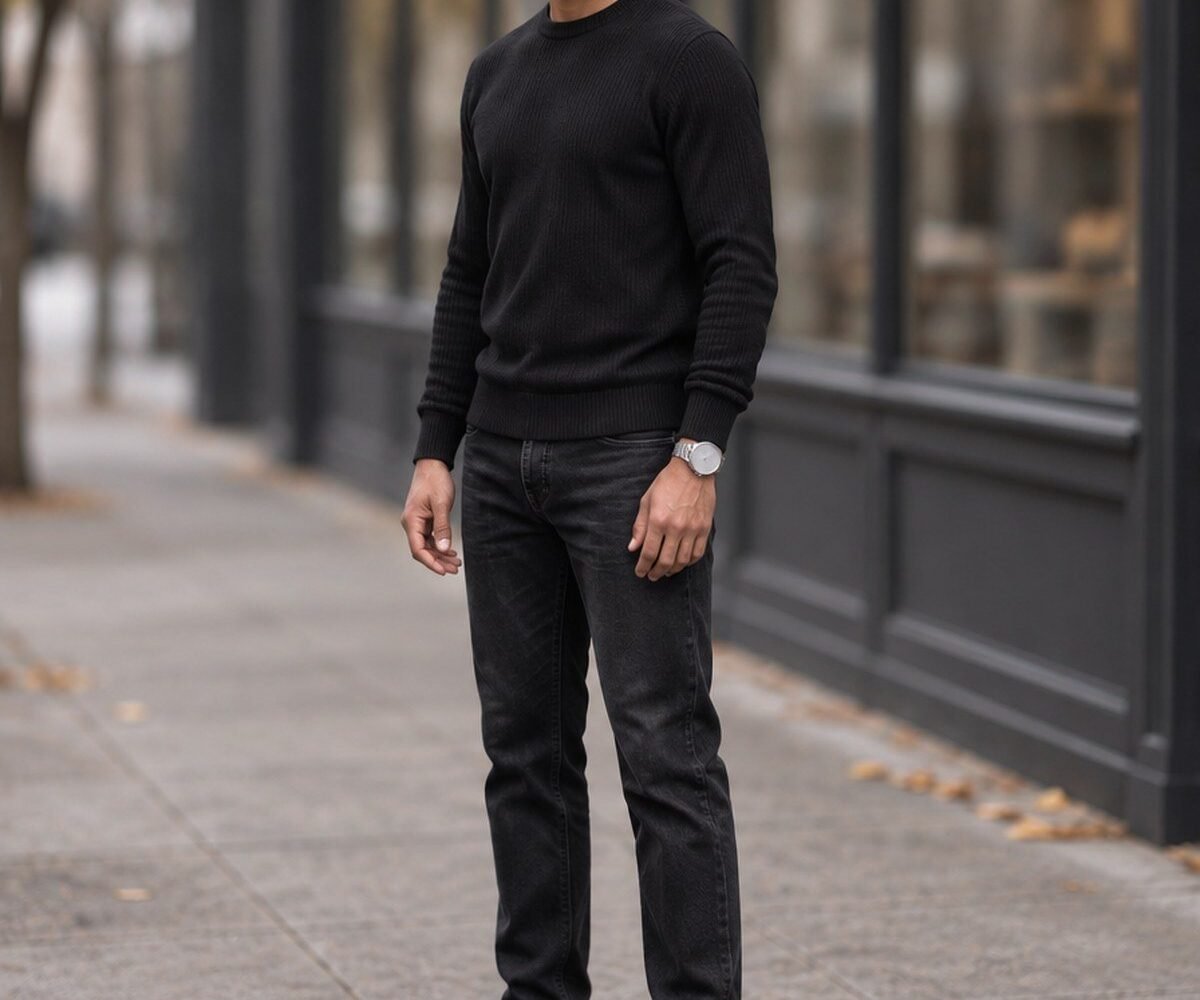
Black makes getting dressed look easy, which is why an all-black outfit can expose every weak decision. When color stops separating the pieces, the eye notices surface, shape and proportion instead. A flat cotton shirt, smooth trousers and polished shoes can merge into one dark block. Change one fabric or one silhouette and the same palette begins to look deliberate. That is the whole game with an all-black outfit for men: not finding a better black, but giving each piece enough definition to be seen.
The useful question is whether the pieces give one another enough definition. Three choices do most of that work: texture, proportion and a controlled point of contrast. Below, we cover each one, then move into outfit formulas by occasion, shoes and belts, mixing near-blacks with charcoal and navy, fit, care, common mistakes and a checklist you can run in front of the mirror.
Short answer: An all-black outfit works when the pieces look different from each other without changing color. Combine surfaces that react to light differently, let one piece control the silhouette, and add one small point of contrast, such as a watch, a belt or an open collar. When you want a deep black to stay deep, follow each garment’s care label, wash less, and keep dark clothes out of the dryer and out of the sun where the label allows. A washed, softer black can be part of the look too, as long as it looks chosen.
Start With Surface, Not Another Shade
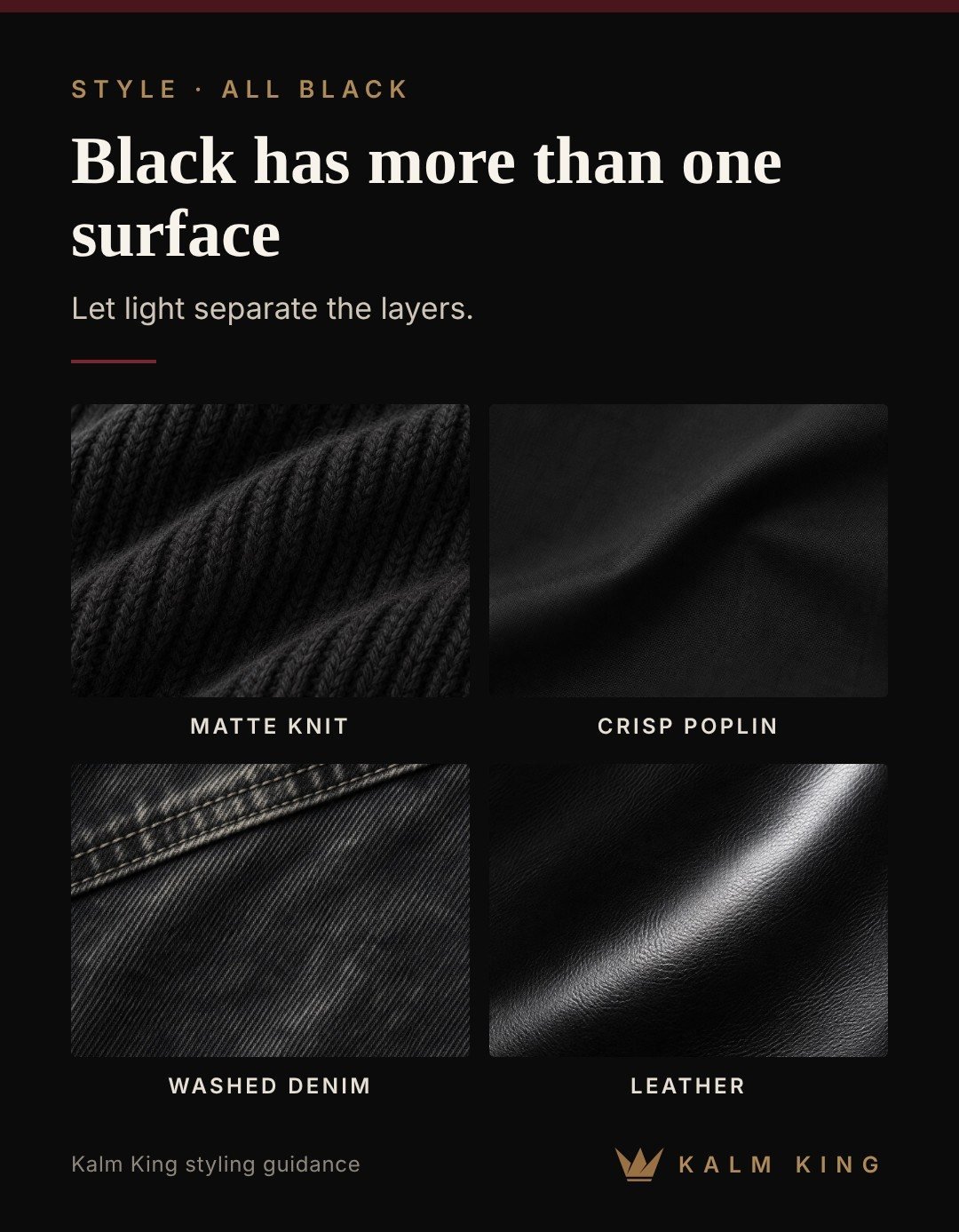
Two black garments can look completely different under the same light. Brushed wool absorbs light softly. Leather returns a sharp highlight. Washed denim shows its weave and fades along seams. Poplin looks clean and dry, while satin or nylon catches movement. Those differences keep the outfit readable without adding a new color.
Build around one clear surface contrast. Pair a matte knit with a smoother trouser, a crisp shirt with worn denim, or a structured wool coat with a softer jersey layer. You do not need every piece to announce a different texture. One strong change is usually enough, and two is plenty. Past that, the outfit starts to look like a fabric sample book.
A useful way to think about it: put the roughest or most matte surface on the piece you want people to notice first, and keep the smoothest surface for the piece that should recede. A chunky knit on top with smooth trousers draws the eye up toward your face. Smooth shirt and textured denim shifts attention down. Neither is wrong. Just decide.
Weight matters as much as texture
Texture is about surface. Weight is about how a fabric hangs and holds its shape. A heavy cotton tee and a fine knit can both be matte, but one sits off the body and the other follows it. Mixing weights gives an all-black outfit depth even when the surfaces are similar. A heavier jacket over a lighter shirt, or a substantial trouser under a thin knit, creates visible layers because the edges and folds behave differently.
If you are not sure whether two pieces read as different, step back about six feet and squint. If the top and the trousers blur into one shape, swap one of them for something with a different surface or weight.
Give the Silhouette a Hierarchy
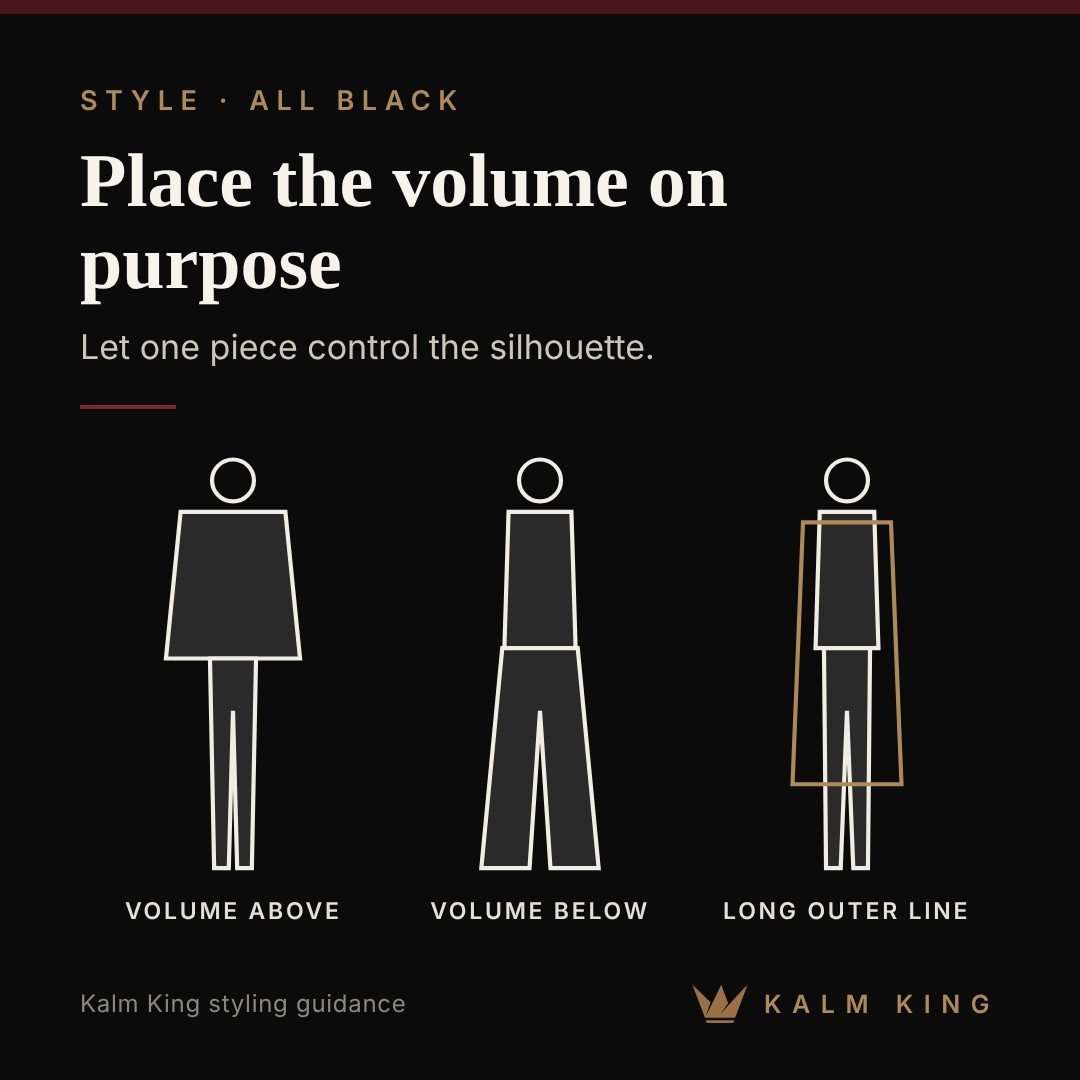
An outfit needs one dominant shape. If the shirt, trousers and outerwear are all close-fitting, the result can feel severe. If all three are oversized, the body disappears and the hems compete. Decide which piece carries the volume, then let the others support it.
A relaxed overshirt works over a cleaner T-shirt and straight trouser. A wide trouser benefits from a shorter jacket or a top that ends clearly at the waist. A long coat can carry the outfit when the layers underneath stay simple. The aim is to keep the silhouette from expanding everywhere at once.
This matters more in black than in color. In a navy jacket with grey trousers, the color change marks where one piece stops and the next begins. In all black, the outline is doing that job alone. Hems, cuffs, collars and the line where a jacket ends become the only edges the eye can follow, so they need to land where you meant them to.
Three silhouettes that work
- Volume above. A boxier overshirt, a heavier knit or a relaxed jacket on top, with straight or slightly tapered trousers below. This is the easiest everyday shape and suits most builds.
- Volume below. A wider or pleated trouser with a shorter, neater top: a tucked tee, a cropped jacket or a knit that ends at the waist. The waistline becomes the key edge, so a belt or a clean tuck matters.
- Long outer line. A coat or long overshirt carries the shape, and everything under it stays simple and close. This is the natural cold-weather silhouette and the one that looks most composed in black.
Fit and Shoulders: Where Black Shows Everything
Shoulders are especially visible in black because the outline does so much work. A conventional jacket should finish close to the shoulder point, while a dropped overshirt needs enough width through the sleeve and body to look designed. Our guide on why the shoulder changes everything walks through how to find your shoulder point, how to test movement, and how to tell an intentional dropped shoulder from a garment that is simply too big. Use those checks before judging the rest.
A few fit points matter most in an all-black outfit:
- Shoulder seams. On set-in sleeves, the seam should land near where your shoulder turns into your arm. A seam that slides down the arm makes a black top look borrowed rather than relaxed.
- Sleeve length. With no color change at the wrist, a sleeve that covers your hand looks like a mistake. A little wrist or a watch showing gives the arm an end point.
- Trouser break. Black trousers that pool heavily over black shoes merge into one shape. A cleaner hem, or a slight break that shows the shoe, keeps the legs and feet separate.
- Top length. An untucked top that ends at an indecisive point, neither clearly at the waist nor clearly over the hip, blurs the line between top and trousers. Pick a length that commits.
If you are between sizes, choose the one that fits your shoulders and chest, then deal with length through alterations or a different cut. Sizing up to get extra length usually costs you the shoulder line, and in black the shoulder line is what people see.

Use Contrast Where the Eye Needs a Stop
Contrast does not require a bright sneaker. It can be the white edge of an undershirt, a silver watch, a warm brown belt, exposed skin at the wrist or a brass zipper. A small change gives the eye a place to land and separates the neckline, waist or footwear from the rest.
If the upper half feels heavy, open the collar or show a lighter layer at the neck. If the trousers and shoes disappear into one shape, use a different leather finish or allow a small break of sock or ankle. If the center looks empty, a belt buckle, chain or watch can introduce a harder surface without becoming the subject.
Keep it to one point of contrast, two at most. A white undershirt edge, a gold chain, a brown belt and a bright sneaker in the same outfit stop being punctuation and start competing. Pick the zone that needs help, neck, waist, wrist or feet, and put the contrast there.
What the research can and can’t tell you
Research on dress and person perception is useful here, but it does not prove that black produces one universal reaction. In a 2010 study in Evolutionary Psychology, Roberts and colleagues photographed ten male and ten female undergraduates, aged 18 to 22, in shirts of six colors. Raters gave higher attractiveness scores when the targets wore red or black, and the authors report that the two colors had “approximately equivalent effects.”
The more interesting part concerns the wearer. The color effect persisted when the shirt was hidden from raters, which led the authors to conclude there was an effect on the people wearing the colors, not only on the people judging them. They suggest this most likely works through subtle cues “such as facial expression, posture and head-tilt,” though they did not measure those directly, and they report that the wearer effects were limited to male targets. With twenty young targets and a call from the authors themselves for more research with a larger sample, treat this as evidence of a possible effect, not a rule.
A broader 2023 review of dress research by Hester and Hehman, in Personality and Social Psychology Review, adds context. The authors note that black has received some attention for its potential to increase perceived attractiveness, but they also stress that “the psychological meaning of dress is socially and culturally constructed,” and that preferences for dress “clearly vary across time and place.”
What you can control is coherence. Clean fit, intentional texture and appropriate formality do more for an impression than the color name on the label. Our guide to clothes, confidence and first impressions explains why context and fit matter more than one wardrobe trick.
All-Black Outfit Formulas for Men, by Occasion
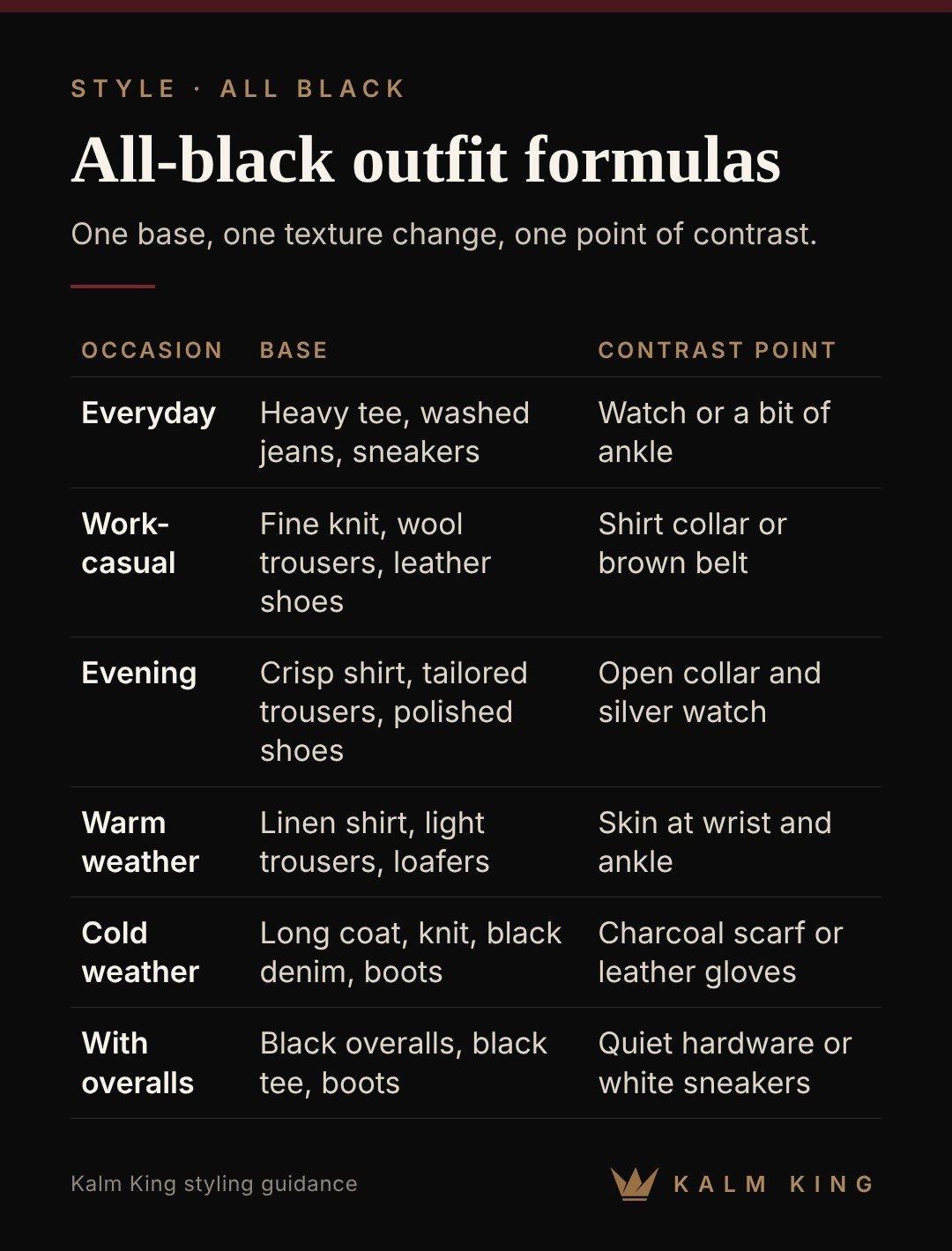
The principles above work anywhere. Here is how they translate into outfits you can copy. Each formula names a base, a texture change and one point of contrast. Swap pieces for what you already own; the structure matters more than the exact garment.
Everyday
Start with a heavier black tee or a crew-neck knit, black washed jeans and black sneakers or boots. The texture change is built in: cotton jersey or knit on top, visible denim weave below. Keep the tee’s length in a clean place at the hip, and let the contrast come from a watch, a small break of ankle or a sock that is not black. In an all-black outfit the sock is more visible than you might expect, so our guide on how to choose everyday socks is worth a look for the ankle zone.
Work-casual
For an office that allows smart casual, switch the tee for a fine-gauge knit or a black poplin shirt, and the jeans for wool or wool-blend trousers with a crease or clean front. Add black leather derbies, loafers or plain leather sneakers. This is where a deliberately different belt can work: a warm brown leather belt or a matte black one with a small buckle marks the waist. A collared shirt under a crew-neck knit also gives you a neat edge at the neck without adding color.
Evening
Evening is where black is most at home, and the risk is looking severe rather than composed. Choose one piece with a little sheen, such as a shirt with a smooth finish, polished shoes or a satin-faced lapel if you are wearing tailoring, and keep the rest matte. Open the collar one button more than you would for work. A silver or steel watch, or a simple chain, gives the eye a point to land without pulling focus from your face.
Warm weather
In heat, the challenge is looking light while wearing the darkest color. Choose lighter-weight fabrics with visible texture, such as a black linen or loosely woven cotton shirt, and pair it with lightweight trousers or tailored shorts. Let the shirt sit a little looser and roll the sleeves once. Loafers or simple leather sandals and some skin at the wrist and ankle do the contrast work. Keep the layers to two at most; a third black layer reads heavy fast.
Cold weather
Cold weather is the easiest season for all black because layers give you natural texture changes. A long black wool coat carries the silhouette. Under it, a ribbed or chunky knit, black denim or wool trousers and leather boots. The contrast can come from a charcoal scarf, leather gloves against wool, or a light undershirt edge at the neck. Keep everything under the coat close to the body so the coat’s line stays clean.
With overalls
Black overalls can be one of the easiest ways into an all-black outfit because the bib and straps add structure on their own. A plain black tee underneath, black boots or leather sneakers, and that’s the base. Our guide on how to style overalls for men notes that black and charcoal overalls dress up more easily, and that twill and canvas surfaces can look cleaner in black. For contrast, keep the hardware quiet and let a clean pair of white-soled sneakers, or a watch, give the eye a stop. If a black tee under black overalls looks too flat, switch to a black knit or a henley with a different surface.
Shoes and Belts in an All-Black Outfit
Footwear sets the formality of an all-black outfit faster than anything else, because it sits at the end of the longest line in the outfit. A few guidelines:
- Match formality first. Polished leather shoes push an outfit toward evening or work. Suede and matte leather boots sit in the middle. Canvas or knit sneakers keep it casual. Choose the shoe for where you are going, then check that the rest of the outfit agrees.
- Use the finish as the contrast. Black suede next to black wool trousers reads differently from shiny leather next to the same trousers. If your trousers are smooth, a matte or textured shoe separates them. If your trousers are textured, a smoother shoe does the same.
- Decide on the sole. A white or gum sole is a strong point of contrast at the feet. That can be the single contrast in the outfit. If you also have a light undershirt and a bright watch, a black sole may be calmer.
- Mind the gap at the ankle. Black trousers into black shoes with black socks makes one long dark column, which can look sleek or heavy depending on the outfit. A cropped hem with a little ankle, or a sock in charcoal or another quiet color, breaks the line.
Belts follow the same logic. A black belt with a matte buckle disappears, which is right when you want a long, unbroken line. A brown belt, a polished buckle or a different leather finish marks the waist, which helps when the top and trousers are merging. Match the belt’s formality to the shoes, but you don’t need to match the exact black.

Mixing Near-Blacks, Charcoal and Navy
Check the outfit in daylight. Some garments sold as black lean blue, brown or grey. That variation can work when it looks intentional, especially with washed denim or garment-dyed cotton. It becomes distracting when two formal pieces almost match but do not. If a jacket and trouser are meant to read as a suit, buy them as a set. If they are separates, make the difference obvious through fabric or shape.

The rule of thumb is simple: either match or clearly differ. A black jacket over black trousers from different makers can look like a mismatch under bright light. A charcoal jacket over black trousers looks chosen, because the difference is big enough to read as a decision.
That is where the near-blacks come in:
- Charcoal. The easiest companion to black. A charcoal knit, coat or trouser keeps the outfit dark while giving the eye an edge to follow.
- Navy. Deep navy works as a quiet contrast, especially in outerwear or a single layer such as a chore jacket. It reads as dark from a distance and as a deliberate second color up close.
- Dark brown. Brown leather in shoes or a belt warms an all-black outfit without breaking its mood.
- Faded black. Washed black denim that has gone slightly grey is its own shade, and it can be a deliberate choice. Pair it with a deeper black on top so the difference looks planned rather than worn out.
You don’t need to avoid these mixes. You just need one of them to be the obvious choice, not an accident you notice later in a photo.
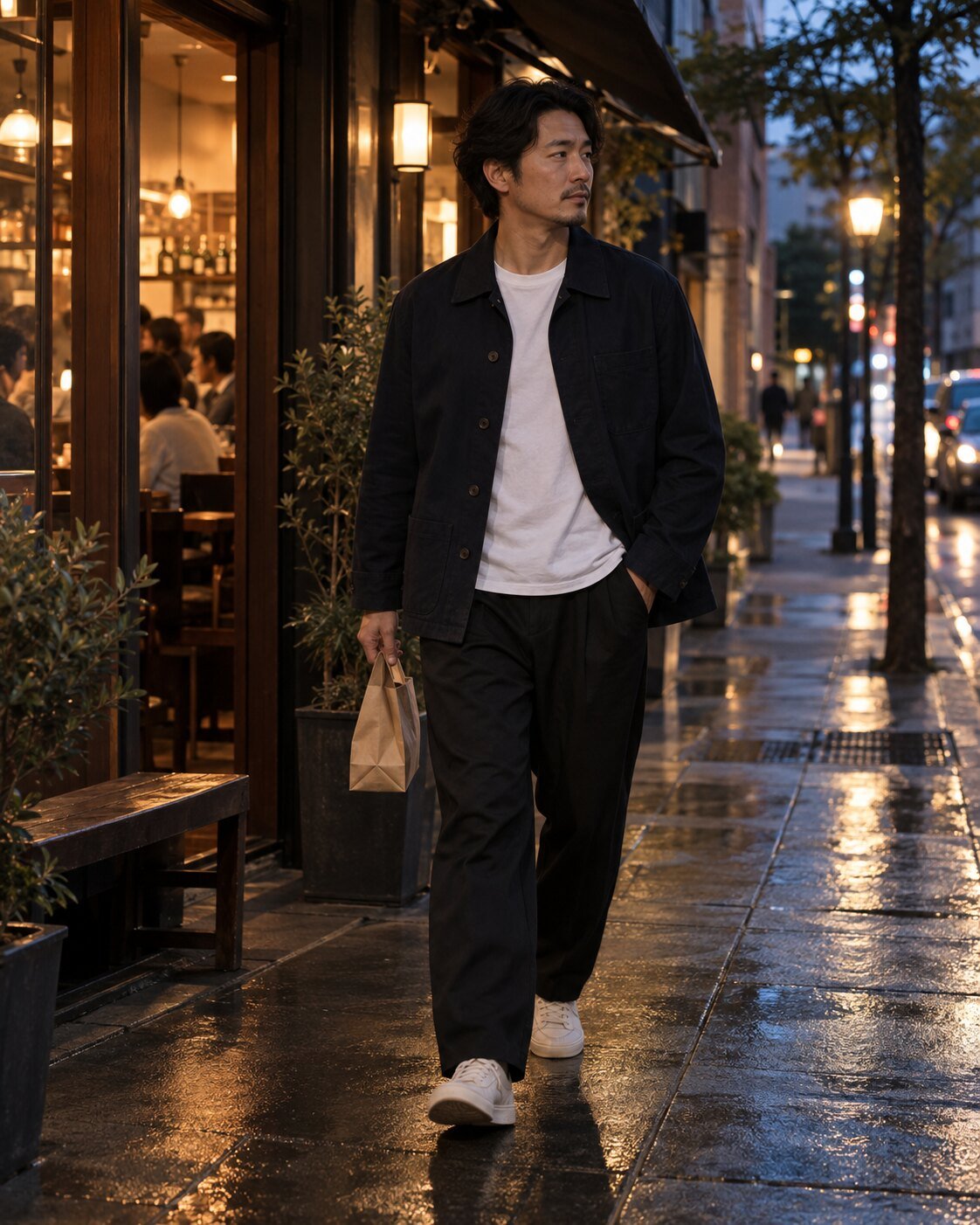
How to Keep Black Clothes From Fading
Not every black needs to stay jet black. Washed black denim or a softened black tee can be exactly the texture an outfit needs, as the near-blacks section above shows. The problem is fading you didn’t choose: a once-matching black tee and black jeans drift apart wash by wash and land in the near-match zone described above. The advice below is for the pieces you want to keep deep and dark. If you like a garment’s washed-out look, you can relax some of it.
Read the care label first
Start with the garment’s own care label. In the US, the Federal Trade Commission’s guide to the Care Labeling Rule says makers “must have a reasonable basis for all care instructions and warnings,” and that instructions, if followed, should cause no substantial harm to the product. The same guide says that if an item is not colorfast, the label must warn you. So if a black garment’s label says to wash it separately or with like colors, take that seriously.
Wash with less wear and tear
Consumer Reports offers practical steps for black clothes. In plain words:
- Wash cold. Consumer Reports says cold water helps keep black fabrics from losing their color.
- Turn garments inside out. That protects the outer surface during the wash.
- Choose a gentler, shorter cycle. It recommends the light-soil setting when possible and the shortest cycle that gets the clothes clean.
- Sort by color and weight. New black clothes can bleed onto lighter items.
- Skip detergents with bleach alternatives, and measure your detergent. Consumer Reports notes that too much detergent, or very cold water, can leave streaks. Follow the detergent’s own temperature instructions and the garment’s care label.
- Zip zippers and button shirts before washing so they don’t snag other items.
- Wash less often. “The more you wash, the more black dye washes away, especially with denim,” Consumer Reports says. Air pieces out between light wears.
Dry with care
Drying is where black often looks faded fastest. Consumer Reports says tumbling with other clothes roughs up the fibers and creates fuzz that makes black clothes look faded. Its advice is to keep garments inside out, hang them to dry indoors and lay sweaters flat. It also says not to hang black clothes outside, because the sun will fade them.
If your black tees are cotton, the dryer also affects their length. Our guide on why t-shirts shrink and how to help prevent it explains what is going on and how to wash and dry with fit in mind. The habits overlap: cold water, fewer washes and less tumbling help both the color and the fit.
Refresh, don’t replace too early
When one piece has faded and the rest of the outfit has not, you have options before you replace it. Move the faded piece into a role where the difference looks intentional: faded black denim with a deeper black knit, or a washed black tee under a charcoal overshirt. That way the fade becomes texture rather than a mismatch.

Keep it deep: how to keep black clothes from fading.
Common All-Black Outfit Mistakes
Most all-black outfits that fall flat make one of the same few mistakes:
- Every piece has the same surface. Smooth shirt, smooth trousers, smooth shoes. The fix is one texture change.
- Every piece has the same volume. All tight looks severe; all loose swallows you. Let one piece lead.
- Two blacks that almost match. Close-but-not-quite looks accidental. Either buy a set or make the difference obvious.
- Too many points of contrast. A white undershirt, gold chain, brown belt and bright sneakers at once compete. Pick one zone.
- Unplanned fading next to fresh black. A tee that faded by accident beside crisp black trousers can look tired. Faded black works when it looks chosen: pair it with other washed pieces, with charcoal, or with a deeper black that makes the difference obvious.
- Lint and fuzz. Black shows every speck. Keep a lint brush near the door and treat the outfit to a quick pass before you leave.
- Ignoring the occasion. All black can read as formal, creative or casual. Shoes and fabrics decide which, so check where you are going.
Your All-Black Outfit Checklist
Start with the piece you wear most. Add trousers with a visibly different surface or weight. Decide where the volume belongs. Finish with footwear that matches the formality, then inspect the outfit from several feet away.
- Can you distinguish the top from the trousers?
- Does one piece clearly control the silhouette?
- Do the shoulders and hems look intentional?
- Is there one useful point of contrast?
- Are the blacks close enough to match, or different enough to look deliberate?
- Did you check the blacks in daylight, not just under indoor light?
- Do the shoes set the right formality for where you are going?
- Is the outfit free of lint, and does any fading look intentional?
- Does the outfit suit where you are going?
If you are buying black clothing for someone else, do not assume the safest color makes the garment a safe gift. Fit, fabric and daily life still decide whether it leaves the closet. Use How to buy clothes for him without guessing to read the evidence already hanging in his wardrobe.
Bringing It Together
An all-black outfit isn’t about finding the perfect black. It is about texture, a clear silhouette and one place for the eye to stop. Get those three right, keep the fit honest at the shoulders and hems, and wash the pieces you want to keep deep black gently. The palette stays simple; the outfit doesn’t look it.
If you want style notes like this in your inbox, join Field Notes.
For more looks to copy, browse the Outfit Library, or build the basics with our men’s capsule wardrobe guide.
Related: what a heavyweight t-shirt is for the base layer, and how to measure your chest before you buy anything new.
Frequently asked questions
Do all the black pieces need to match exactly?
No. Separate pieces can vary when the difference looks intentional through fabric, wash or shape. Pieces meant to read as a suit should match.
How do you stop an all-black outfit from looking flat?
Combine surfaces that react to light differently, place volume in one part of the silhouette and add one controlled point of contrast.
Can navy or brown be worn with black?
Yes. Deep navy and dark brown can work as quiet contrasts when their role is clear, especially in footwear, outerwear or a single layer.
How do you keep black clothes from fading?
Follow the garment’s care label first. Consumer Reports suggests washing black clothes in cold water, inside out, on a short, gentle cycle, washing them less often, and hanging them to dry indoors rather than tumbling them or drying them in the sun.
Sources
- Roberts, S. C., Owen, R. C. and Havlicek, J. (2010). “Distinguishing Between Perceiver and Wearer Effects in Clothing Color-Associated Attributions.” Evolutionary Psychology 8(3), via PubMed Central (peer-reviewed)
- Hester, N. and Hehman, E. (2023). “Dress Is a Fundamental Component of Person Perception.” Personality and Social Psychology Review 27(4), via PubMed Central (peer-reviewed review)
- Clothes Captioning: Complying with the Care Labeling Rule (Federal Trade Commission) (government)
- How to Keep Your Black Clothes Looking Their Best (Consumer Reports) (independent consumer tester)
FIELD NOTES
Get the Overalls Fit Kit, free.
Your measurement card, the six fit checkpoints and a checklist to take shopping. Join Field Notes for new guides and a say in what Kalm King makes.
THE KALM KING JOURNAL
Continue reading
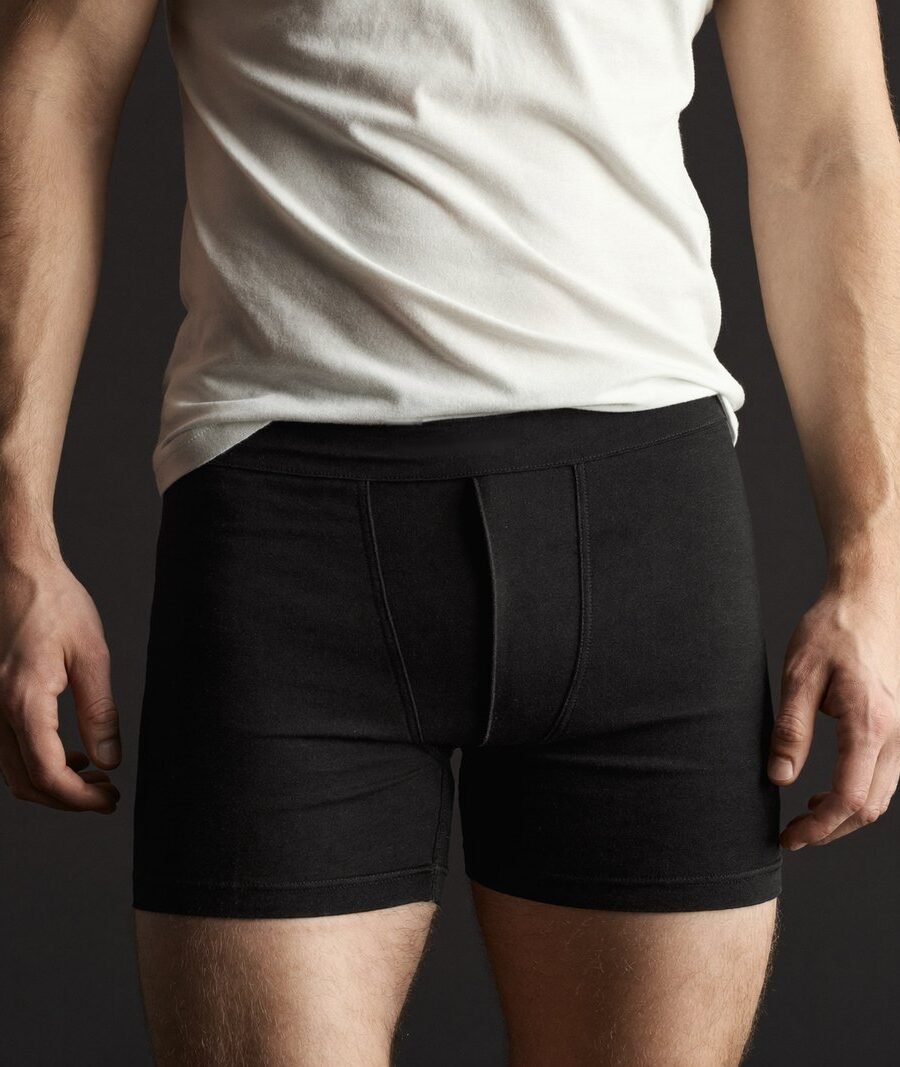
What Is Pouch Underwear? Benefits, Designs and Fit
Pouch underwear gives everything its own shaped space. Here’s how the main designs work, what they can and can’t do, and how a pouch should fit.
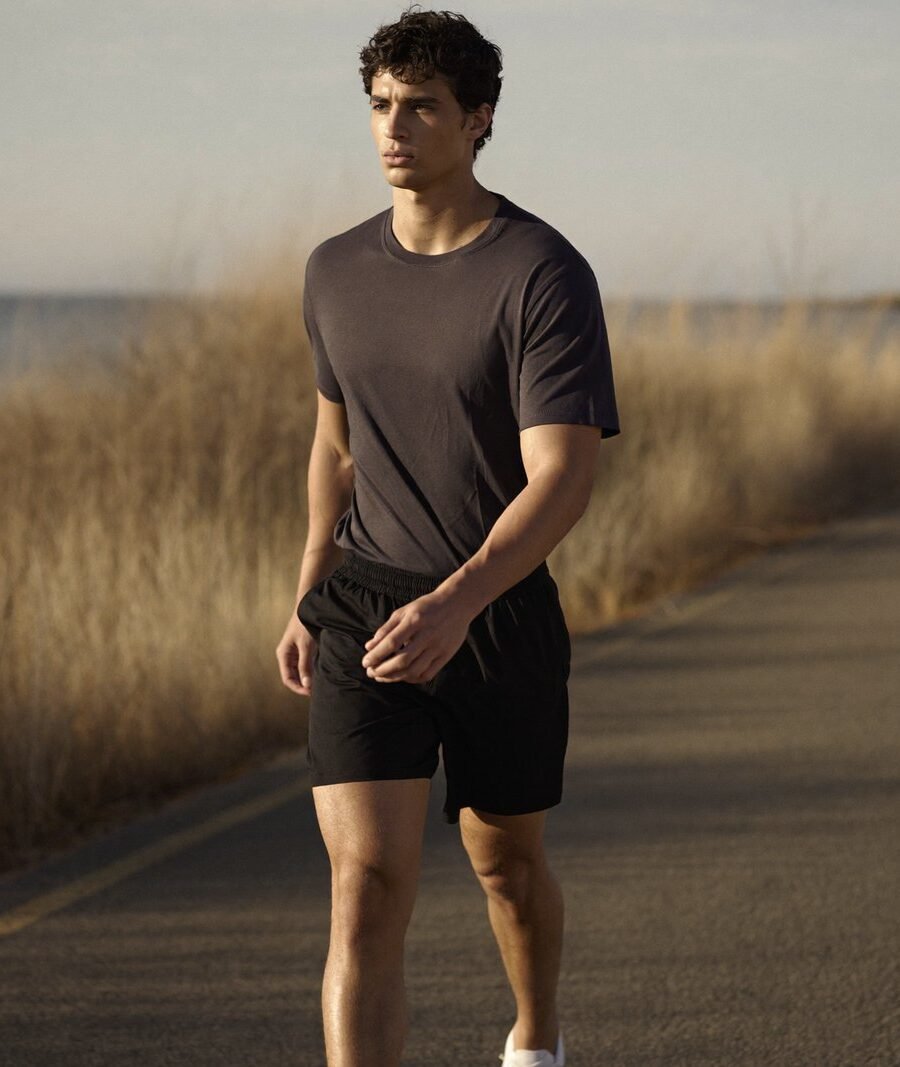
How to Prevent Thigh Chafing for Men
Stop thigh chafing before it starts: the layers, fabrics, balms and habits that keep your inner thighs comfortable, plus how to treat a rub that’s already sore.
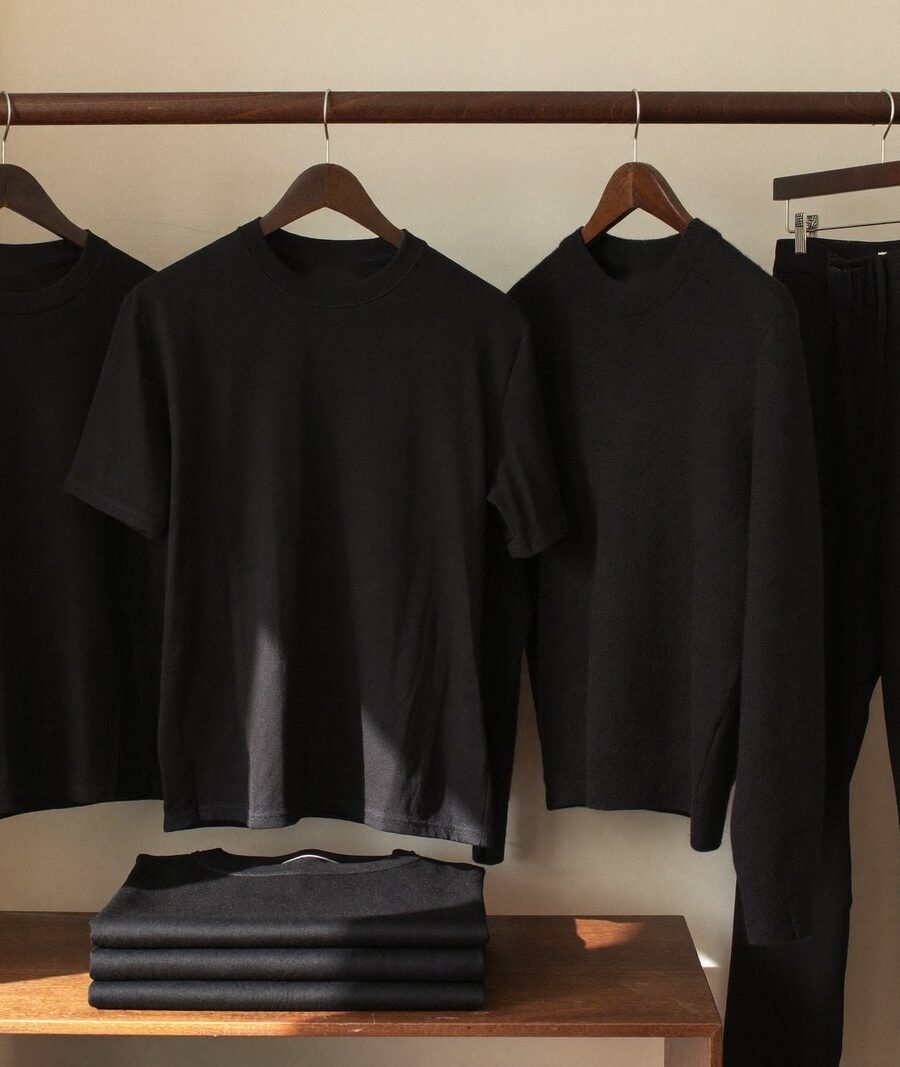
How to Keep Black Clothes From Fading
Black clothes fade from dye loss, friction, heat and sun. Here’s how to wash, dry and store black so it stays black, and what to do when it’s already gone grey.