
October 20, 2026
Explore: Style
How to Choose Everyday Socks for Men: Fit, Fabric and Comfort
How to choose everyday socks: check heel and toe fit, read the fibre label, match height to your shoes, fix slipping or sagging pairs, then test one pair.
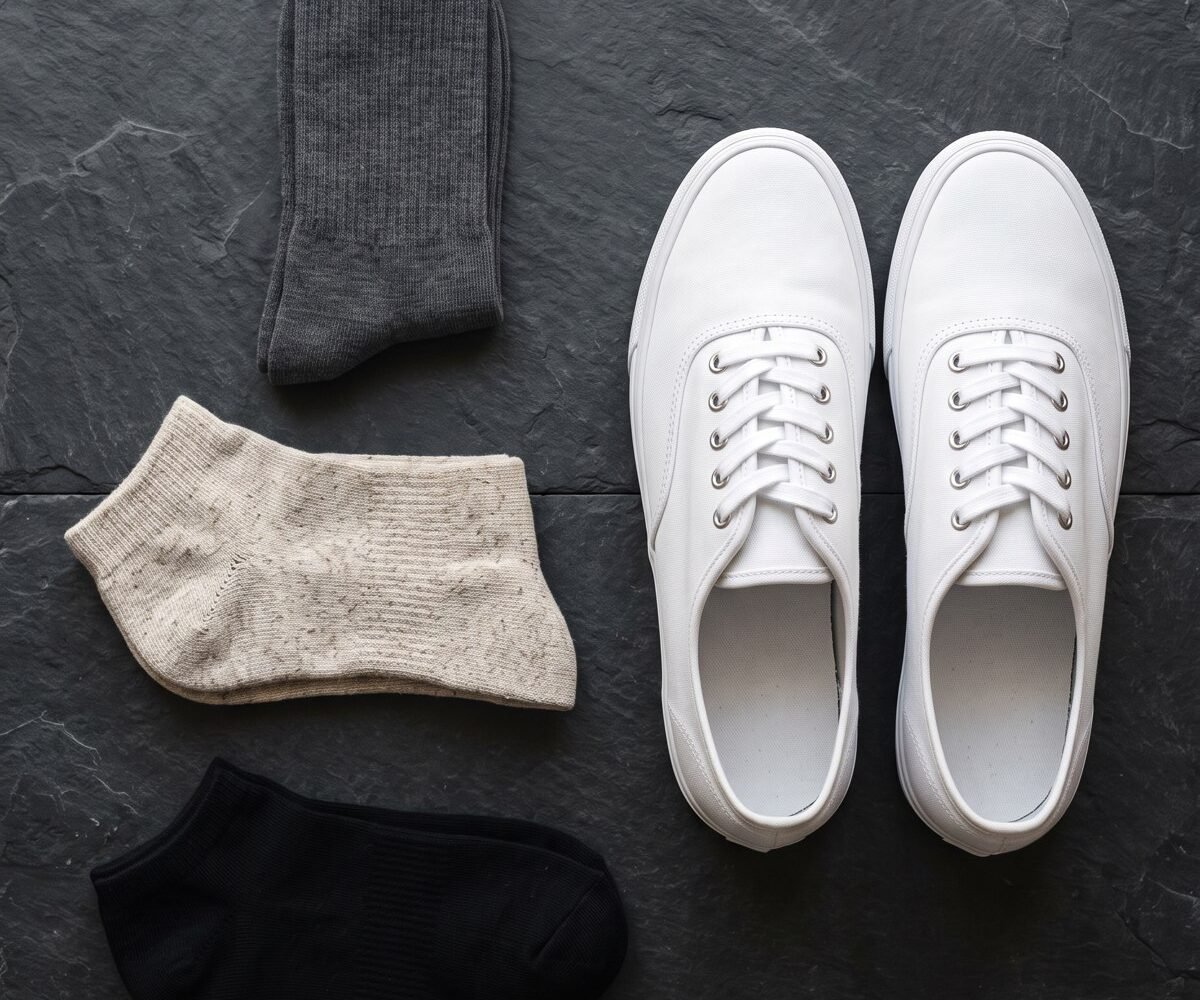
You only notice socks when they go wrong. The no-show that creeps under your heel before you’ve reached the car. The crew sock you hitch up every twenty minutes. The pair that feels fine in the drawer and crowds your toes inside your sneakers. The favorite that gets a hole in the big toe just as you’d learned to trust it.
The usual fix is to buy a new multipack and hope. This guide suggests something calmer: work out what actually bothers you about the socks you own, check one better pair properly, and only then replace the drawer.
The short answer: a good everyday sock fits your foot’s length and shape, sits with its heel in the heel pocket, gives you enough coverage for the shoe you’re wearing, and has a thickness and fiber mix that suits your day. You shouldn’t feel the toe seam, adjust the cuff, or retrieve it from under your arch. Judge all of that in the shoes you’ll actually wear, not on the bedroom carpet.
Tip: tap any diagram to open it full size.
Start with your shoes and your day
A sock works inside a particular shoe, on a particular foot, for a particular number of hours. The same pair can be perfect in one shoe and wrong in another without anything being faulty.
Think about an ordinary day before you think about fibers:
- Mostly sitting, short walks, indoors. Comfort and a cuff you forget about matter more than moisture handling.
- A long commute, plenty of walking, or a warm building. Now the fiber mix, thickness and how your shoe breathes start to show.
- On your feet most of the day. Reinforcement, cushioning in the right places and a sock that doesn’t shift become worth paying attention to.
Then think about the shoe. With a low sneaker, the sock’s job is coverage under a low collar without slipping. A casual boot rises above the ankle, so the sock’s job is to sit higher than the boot’s edge and not add so much bulk that the boot feels tight. Neither is the correct shoe. They just ask different things of the sock.
REI’s guide to choosing socks makes the same point for padded socks: try them on with your shoes, because extra padding can make a shoe too tight.
How should socks fit? A quick check
Start with the brand’s size chart, but treat it as a starting point: sock sizes cover a range of shoe sizes, and your foot’s width and calf shape aren’t on it.
Then put the sock on and check these, in this order:
- Heel. The heel pocket should cup your heel, not sit above it on your Achilles or under it towards your arch. Darn Tough’s fit explanation describes the check well: if the heel area rides up the back of your ankle, the sock is likely too big; if the heel pocket isn’t centered on your heel, it’s likely too small. That’s a manufacturer describing its own socks, but the check works on most shaped heels.
- Toes. The fabric should lie flat over your toes, with no loose fold at the end. Flex your toes. If the sock moves with them, good. If you can barely flex against it, it’s too small or too narrow.
- Foot width. Look for fabric pulling tight across the widest part of your foot, or loose wrinkles across the top.
- Cuff. It should stay where it was designed to sit without leaving a deep groove in your leg. A crew cuff that’s tight on a slim ankle may be fine; the same cuff on a broad calf may not be.
- In the shoe. Put your shoes on, walk around, sit down, stand up. Notice any bunching, slipping, pressure points, or the urge to adjust.
Keep length, width and calf separate in your head. Sizing up adds length. It won’t necessarily add width where your foot needs it, and it can leave a loose fold at the toe while the sides still pinch. If the right length still feels tight across the foot, a different cut or a wider-fitting style is a better comparison than the next size.
There’s also a difference between close and tight. Some socks are designed to sit close to the skin and feel snug when you first pull them on. That can be perfectly comfortable. A sock that leaves you counting the minutes until you take it off, or that feels painfully restrictive, is the wrong sock for you, whatever the size chart says.

Choose the material, but read the whole sock
Most everyday socks are blends: a soft fiber for comfort, a synthetic for strength, a little stretch so it holds its shape. Read the label as a list of ingredients, not a verdict.
| Fiber | What it can bring | What to watch |
|---|---|---|
| Cotton and cotton blends | A familiar, soft feel for ordinary, less active days | Absorbs moisture and can hold it; may feel damp on a warm or busy day |
| Merino wool blends | Soft, absorbent, comfortable across a range of temperatures | Not automatically a thick winter sock; weight and knit vary a lot |
| Nylon / polyester | Durability, shape retention, faster drying | “Synthetic” on its own tells you little about comfort |
| Elastane / spandex | Stretch and recovery | The percentage won’t tell you if the cuff or toe will fit you |
| Rayon / viscose “from bamboo” | A soft, smooth feel | Ignore claims that it’s naturally antibacterial |
Cotton gets mixed press, and the sources don’t fully agree. The NHS page on smelly feet suggests breathable or natural fabrics on your feet, naming cotton. Texas A&M AgriLife’s Howdy Health guide to choosing socks advises against 100% cotton socks for sweaty feet, because cotton absorbs moisture and holds it against the skin, and REI notes that all-cotton socks saturate and dry slowly in active use. Both can be true: cotton can feel comfortable and airy on a quiet day, and less comfortable once it’s soaked. Your day decides which matters more.
The same AgriLife guide notes that research doesn’t clearly identify a perfect sock composition, and that even a good moisture-wicking sock won’t help much if your shoe gives the moisture nowhere to go. That’s worth remembering when a label promises dry feet. One small field study of military recruits found a merino-wool blend sock was rated cooler, less damp and more comfortable than an almost all-polypropylene one on daily marches. Useful, but it compared two specific socks in one setting, not a winner for your office.
On “bamboo”: the US Federal Trade Commission explains that soft fabrics marketed as bamboo have usually been processed into rayon or viscose, and that there’s no evidence such fabric is naturally antibacterial. Judge a bamboo-viscose sock on how it fits and feels, like any other.
Words like “premium”, “performance” and “natural” describe marketing, not fit. Compare like this instead:
- Quiet indoor day: compare how two socks feel after several hours. Fiber matters less than seams and cuff.
- Warm commute plus walking: compare how damp each pair feels by the afternoon, in the same shoes.
- Cool day in roomier shoes: compare a thicker sock against your usual one and check the shoe still feels right, not just warmer.
No-show, ankle, quarter or crew? Choose coverage, not a rule
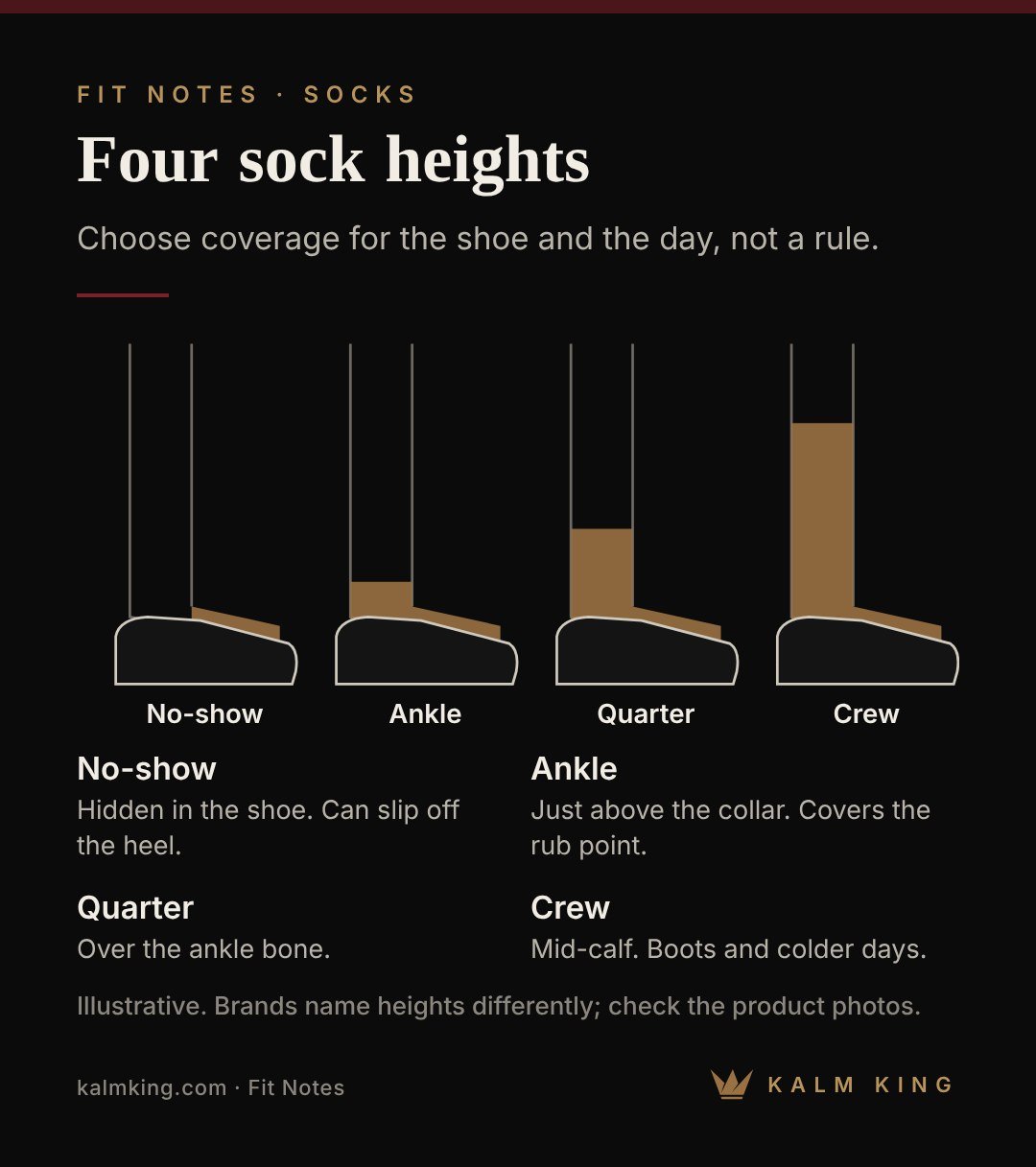
Height is mostly about coverage and comfort.
- No-show (or liner): designed to sit below the shoe’s collar. It needs to grip your heel, because there’s very little sock to hold it in place.
- Ankle (or low-cut): sits around or just below the ankle bone. Often visible with a low shoe, but gives the heel and the back of the ankle more fabric between skin and shoe.
- Quarter: covers the ankle bone. Useful where a shoe’s collar rubs.
- Crew: rises onto the lower calf. Covers more, shows more, and needs a cuff that holds without digging in.
Brands don’t use these names consistently. One brand’s ankle sock is another’s low-cut. Product photos on a foot, and any stated cuff height, tell you more than the name.
The trade-off with a more hidden cut is simple: less sock means less fabric where the shoe touches your foot, and less fabric to hold the sock in place. If a no-show keeps slipping, an ankle sock that peeks out slightly is a perfectly reasonable choice. Nobody is grading your ankles.
Which socks with which shoes
Style guides differ here, which tells you these are starting points, not laws. Real Men Real Style’s sock-length guide suggests no-shows with loafers most days, and mid-calf with loafers when it’s cold or dressier. MR PORTER’s journal, styling four loafer outfits, put visible socks with every one and said no-shows weren’t invited. Both are well-dressed positions. Pick the one that suits your outfit and your feet.
- Sneakers. Match the sock to the shoe’s height and to how sporty the shoe is. A no-show or ankle sock keeps a low sneaker clean; a crew sock is a deliberate look with a chunkier or high-top sneaker. Check the heel grips if you go hidden.
- Loafers. The low, open collar is where no-shows slip most, so heel grip and size matter. If you’d rather show sock, a thinner sock keeps the shoe from feeling tight.
- Dress shoes. Real Men Real Style suggests mid-calf or over-the-calf with trousers, so sitting down doesn’t reveal a strip of bare leg. A thinner sock also suits a closer-fitting shoe.
- Boots. The sock should rise above the boot’s top edge so the boot doesn’t rub skin or push a short sock down. REI recommends at least crew or quarter height with mid- or high-cut boots for that reason. Crew suits casual boots with jeans; Real Men Real Style suggests mid-calf with trousers or in cold weather.
How much sock shows depends on your hem as much as your shoe. With boots, a straight hem usually covers the sock while you stand, and the sock appears when you sit or cross your legs. A cuffed trouser or overall hem sits higher and moves more, so more sock shows as you walk. If you cuff, choose a sock tall enough to meet the hem when you sit, and a color you’re happy to see. A sock that blends with the hem or the boot keeps the look quiet; a contrasting one makes it a feature. For which shoes work with overalls in the first place, see our guide on how to style overalls.

Cushioning, seams and construction: the small things you feel
Thin and cushioned socks aren’t a quality ladder. They’re different amounts of fabric. A cushioned sock adds terry loops inside, often just under the heel and the ball of the foot, sometimes throughout. That can feel great on hard floors and long walks. It also takes up room in the shoe. In a close-fitting dress shoe or a slim sneaker, a thick sock can turn a comfortable shoe into a tight one. Thicker isn’t automatically more comfortable.
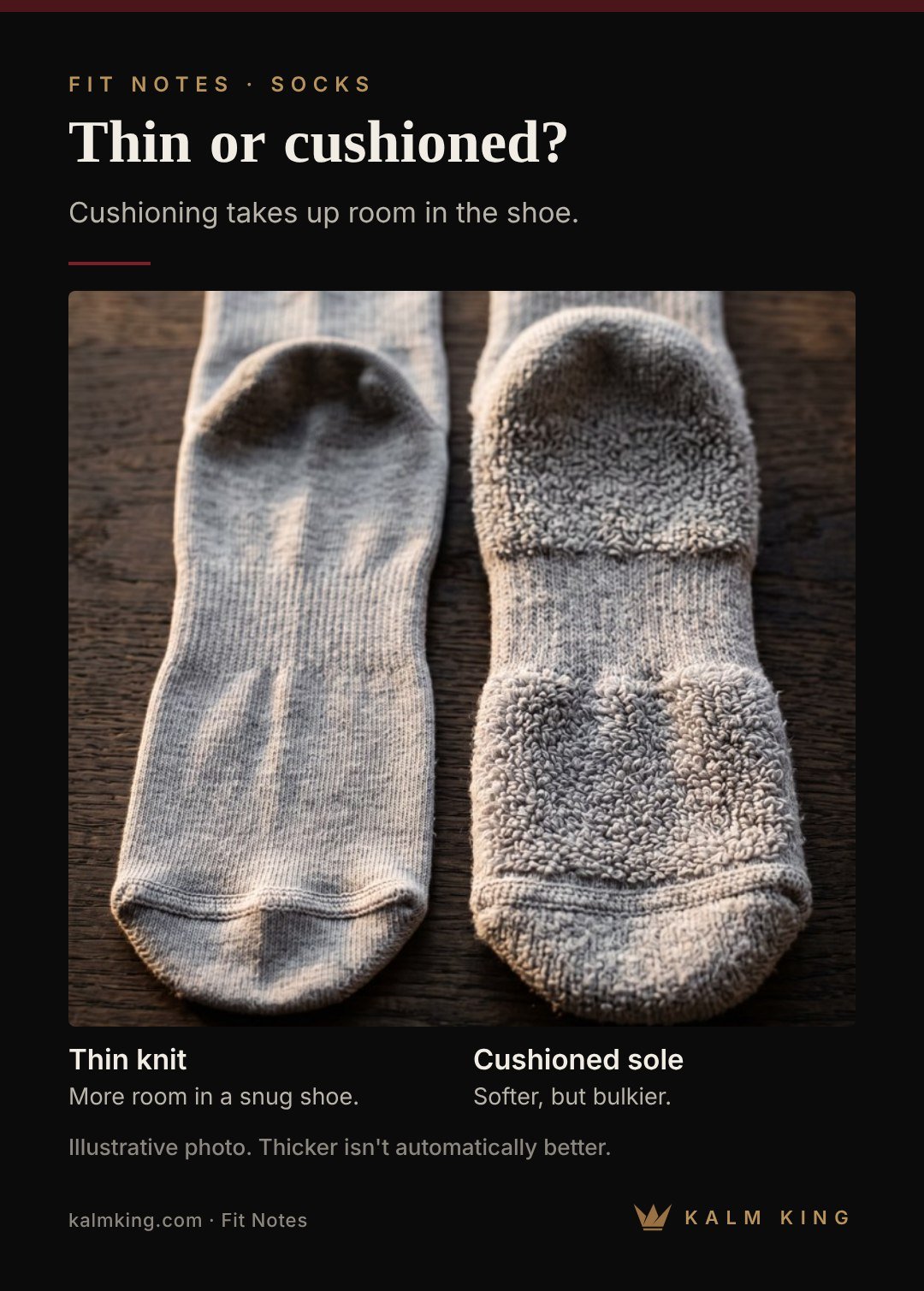
Turn a sock inside out before you judge it. Three things are worth a look:
- The toe seam. A flat, smooth seam across the toes is easier to forget than a thick ridge. “Seamless” is a product term, and construction varies between brands, so look rather than assume. AgriLife’s guide also suggests checking seams for smooth construction, especially at the toe.
- Heel and toe reinforcement. A denser knit or a tougher yarn at the heel and toe is where many socks wear first. Reinforcement can help; it isn’t a guarantee.
- The heel grip on no-shows. A silicone strip or textured band inside the heel helps a no-show stay put. It helps less if the sock is the wrong size or the grip has worn smooth.
Also check cuff recovery: stretch the cuff gently and see whether it springs back. “Arch support” on a label usually means a tighter band around the middle of the foot to hold the sock in place. Some people like it. It’s a fit feature, not treatment for foot pain.

Troubleshoot the pair you already own
Before you buy anything, name the problem. Each has a different fix.
Want the full fix? Causes, fixes by sock type and care tips are in How to Keep Socks From Sliding Down. Here are the quick checks.
No-shows slipping off your heel
This one is old and stubborn. A 2009 Ask MetaFilter question described hidden socks sliding down to the arch within a few steps, and a Reddit poster in 2015 said their no-shows slipped off whenever they walked, with no idea why. Things to check:
- Size. A no-show that’s too big has nothing holding it to your heel. Check the size range, especially for one-size-fits-most packs.
- Grip. Is there a heel grip, and is it still grippy after washing?
- Your heel, not just the sock. If your heel lifts inside the shoe with every step, the shoe is pulling at the sock. That’s a shoe-fit question no sock can fully fix.
- The cut. Try a no-show with a deeper heel, or simply an ankle sock that shows a little.
Crew cuffs falling down
One BuyItForLife poster kept buying one crew sock mainly because it stayed up; constantly lifting their socks was the thing they hated. If yours sag, check whether the cuff springs back when stretched, whether the sock is too long for your leg so the extra slides down, and whether the cuff is simply too loose for your calf. A cuff that sags from day one is the wrong fit, not bad luck.
Toes feel crowded
Check for a loose fold at the toe, or a short sock pulling your toes down. Then the combination: a cushioned sock can crowd toes in a close shoe that are fine in a thinner one. Try a thinner sock in the same shoe before blaming either.
Damp, “swampy” feet
Fiber helps, but so do the shoe and the routine. The American Academy of Dermatology’s tips for sweaty feet include changing socks and shoes often, avoiding the same shoes two days in a row so they can dry, and choosing socks labeled moisture-wicking. The NHS also suggests letting shoes dry out before wearing them again. A woman asking Reddit for socks for her husband’s very sweaty feet said she didn’t trust search results not to be ads, then updated to say he loved the merino wool socks people suggested. One person’s experience, but a fair reason to try a merino blend. If you’re still struggling after sensible changes, or there’s a rash, smell or skin problem that self-care isn’t fixing, see a doctor or GP. Socks are clothing, not treatment.
Holes, again
Note where the hole appears. In an AskMenOver30 thread about socks wearing through fast, replies split between “trim your toenails”, the dryer and rough washing, time on your feet, and sock quality. Any of them could be right for someone. A hole at the big toe can point to toenails, a short sock, or a tight toe box. Holes at the heel or sole often come down to friction, so check the inside of the shoe for a worn or rough lining. Then choose reinforcement where yours wear.
When you test a fix, change one thing at a time: same shoe, different sock; then, if you can, same sock, different shoe. It’s not a lab test, but it stops you blaming the wrong thing.

Care, wear and when a pair stops working
Follow the label on the sock you own. Care advice varies more than people expect. Darn Tough’s care FAQ says to machine wash its merino socks cold, inside out, on a gentle cycle, with no bleach, then tumble dry low or hang dry. So “all wool needs hand-washing” isn’t true for every wool sock, and one brand’s instructions aren’t a rule for every other.
MR PORTER’s journal guide to caring for socks and underwear adds two easy habits: a zip mesh bag, which stops pairs going missing and protects stretchy socks from tangling and snagging; and hang-drying, because the tumble dryer is hard on elastic.
After washing, check fit again. Pull the sock on: does the cuff still recover, does the heel still sit where it should? Then separate cosmetic wear from real failure. Pilling or fading is appearance. A hole, a cuff that won’t stay up, or a heel that has thinned enough to see through means the pair has stopped doing its job. There’s no universal replacement date, and a higher price doesn’t guarantee a longer life.
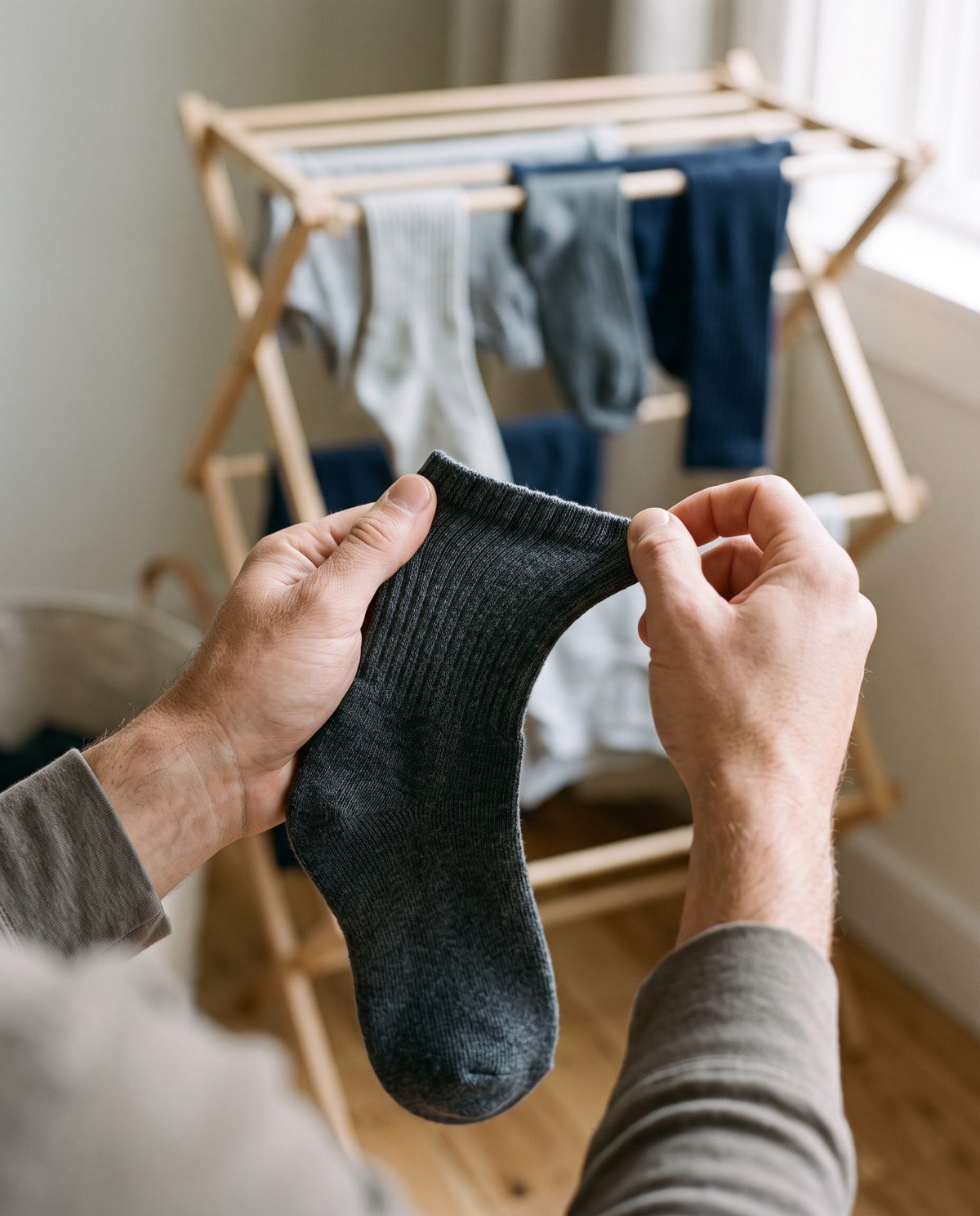
Try one pair before replacing the drawer
A twelve-pack of something you’ve never worn is how you end up with twelve mildly annoying socks. Try one pair first.
- Wear it through a normal day, in your normal shoes.
- Notice anything you adjust, feel or think about.
- Wash it according to its label.
- Wear it again and check the fit.
If it passes, buy more of exactly that sock. Identical pairs make life simpler: no pairing up, and a stray sock still has a partner. Keep a specialist pair only where your week calls for it, such as thicker socks for boots or a thin pair for dress shoes. If you’ve already sorted your T-shirts with our guide on how a men’s T-shirt should fit, it’s the same idea: find one that works, then repeat it.
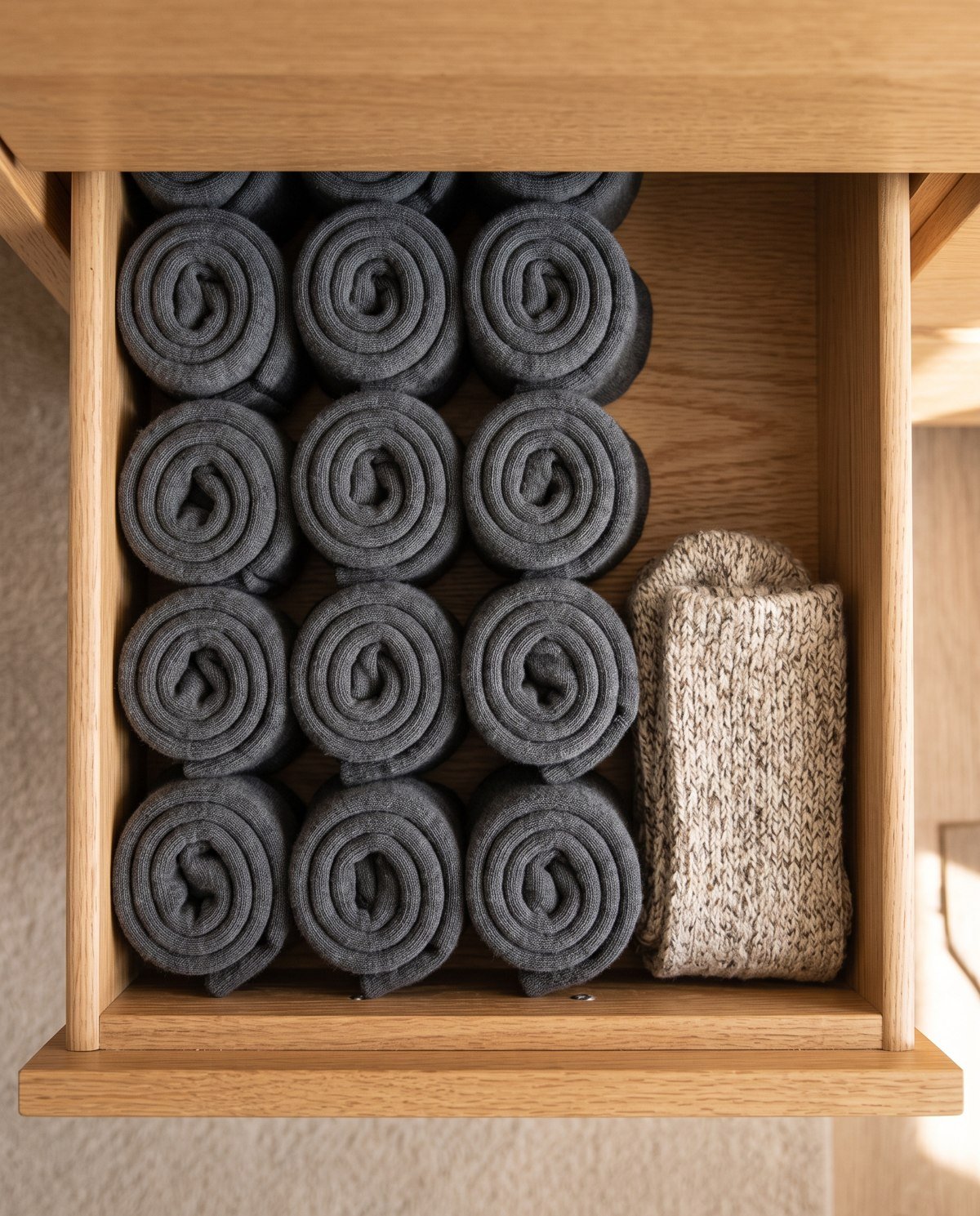
A five-point checklist
- Your day. Mostly sitting, lots of walking, warm or cool?
- Your shoes. Which pair will these socks live in, and how much room is there?
- Your size and shape. Heel in the pocket, toes flat and free, width and cuff comfortable.
- Your comfort details. Toe seam, cushioning, cuff pressure, height against the shoe collar.
- Your care routine. Can you wash them the way the label asks, and do they still fit afterwards?
A worked example. Your no-shows slip off your heel in loafers. Before buying a new pack, check the size range, look at the heel grip, and notice whether your heel lifts inside the shoe. If the socks are too big, try one no-show in the right size with a deeper heel. If that still slips, try one low-cut sock that shows slightly. Whichever one you forget about by lunchtime, buy more of that.
There isn’t a perfect sock, just one that works for your feet, your shoes and your day. Once you’ve found it, you can stop thinking about socks. Which is the whole point.
Quick answers
New socks feel tight. Will they loosen?
Sometimes. Socks designed for a close fit can feel snug at first and settle with wear; Darn Tough says its merino socks relax after a little wear following a wash. Snug is fine. Don’t keep wearing painfully tight socks or rely on wear-in to fix deep pressure marks; try a different size or cut.
Is it fine to wear the same pair two days running?
It’s better not to. The NHS advises against wearing the same socks or shoes two days in a row. Fresh socks daily, and giving shoes a day to dry, is the easy habit.
Are athletic socks okay for everyday wear?
Yes, if they fit and suit the shoe. Cushioned ones can feel bulky in closer-fitting shoes.
What about compression socks or socks for a medical condition?
This guide is about everyday comfort. If you need socks for circulation, diabetes, a skin condition or another medical reason, ask your doctor, GP or a podiatrist which type suits you.
For more practical fit and style guides, join Kalm King Field Notes. Interested in overalls too? You’ll also get the free Overalls Fit Kit.
FIELD NOTES
Get the Overalls Fit Kit, free.
Your measurement card, the six fit checkpoints and a checklist to take shopping. Join Field Notes for new guides and a say in what Kalm King makes.
THE KALM KING JOURNAL
Continue reading
How Should Men’s Dress Pants Fit? Waist, Rise, Seat and Break
How should dress pants fit? Check the waist, rise, seat, thighs and hem with practical sitting tests, break options and realistic tailoring advice.
How Should a Dress Shirt Fit? A Men’s Guide to Collar, Chest and Sleeves
Check dress shirt fit at the collar, shoulders, chest, sleeves and hem. Learn what to measure, how to test movement and when to try another cut.
Men’s Capsule Wardrobe: How to Build One That Actually Works
A men’s capsule wardrobe is a small set of clothes that all work together. How to choose the pieces, colors and fit, and build one at your own pace.