
October 8, 2026
How to Style Overalls for Men: Everyday Outfits Beyond Workwear
How to style overalls for men without looking like a farmer or a kid: fit rules, what to wear underneath, shoes and seven everyday outfits to copy.
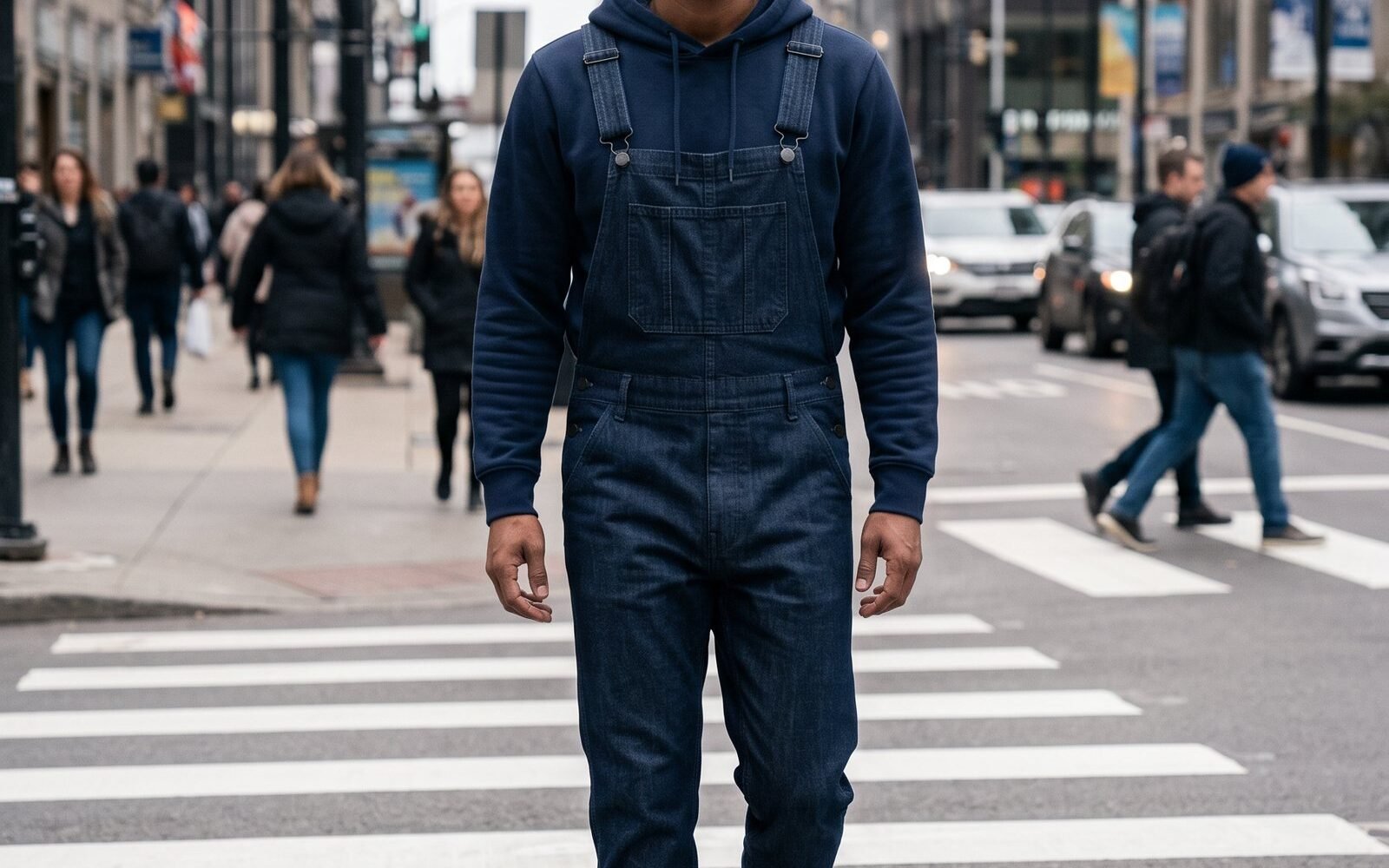
Most men who like the look of overalls have the same worry before they ever try a pair: will I look like I’m off to the farm, or like an overgrown kid? It’s a fair question. Overalls carry a lot of history, and a garment with that much history can easily read as a costume if you wear it without a plan.
The good news is that the plan is short. Overalls look grown-up and deliberate when three things are in place: a fit that sits close to your body, an outfit where the overalls are the only statement, and a finish (shoes, outer layer, grooming) that matches where you’re going. Get those right and overalls stop looking like a theme and start looking like your clothes.
This guide walks through the rules, then seven everyday outfits you can copy for errands, coffee, the office, dinner and cold weather. It links to our deeper guides on how overalls should fit and what to wear underneath where you need more detail.
Why overalls can look like a costume
Overalls began as work clothes. In the early twentieth century they were standard wear for farmers, miners, railroad workers and other manual laborers, and that association has never fully gone away. They have also been a fashion piece for decades: young Americans picked them up from the 1960s on, and hip hop artists made them part of their style in the 1990s, according to the history summarized on Wikipedia’s overalls entry. So the garment can point in two directions at once.
Which direction it points depends on what surrounds it. Put overalls with a plaid flannel, a straw hat and work boots and you’ve built a character. Put the same overalls with a clean white tee, good sneakers and a neat haircut and you’ve built an outfit. The costume effect almost always comes from stacking several obvious references together, not from the overalls themselves.
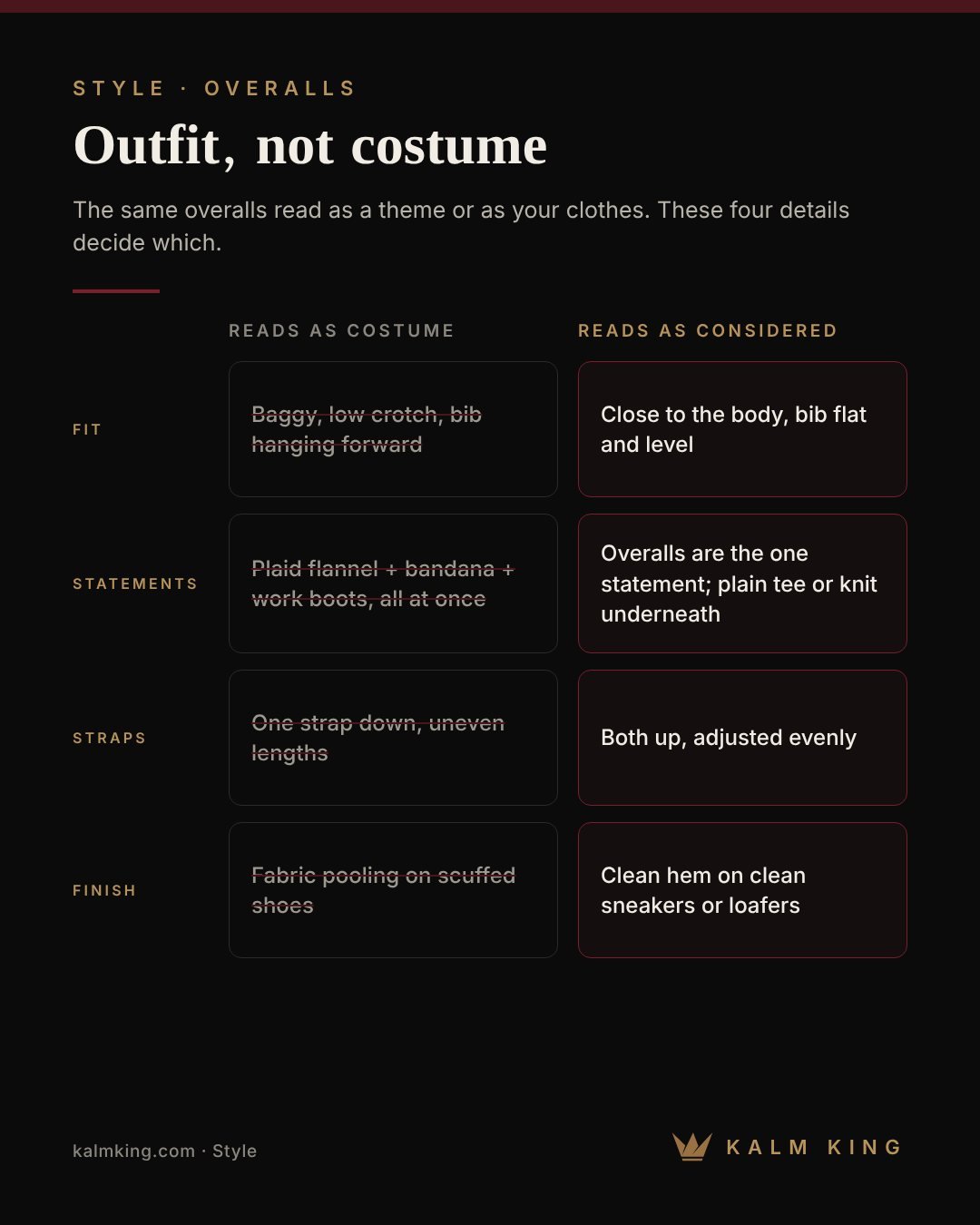
The other thing that pushes overalls toward costume is fit. Very baggy overalls with a low crotch and a bib hanging off the chest look borrowed. The same style cut closer to your frame looks chosen. That’s why fit comes first in everything below.
The three rules that make overalls look grown-up
Rule 1: Fit first, always
Overalls should follow your body without gripping it. The bib should sit flat against your chest rather than flapping forward or riding up toward your collarbone. Where the strap adjusters end up matters less than how the overalls sit and move: fully shortened straps can be perfectly fine if the bib sits right. What does matter is enough room through the torso and rise to sit, squat and reach without the crotch pulling or the straps digging into your shoulders. The legs should fall cleanly to your shoes without a big pool of fabric at the hem.
A slightly tapered or straight leg tends to look the most modern. Extremely wide legs read as either vintage workwear or a deliberate fashion statement, which can work, but it’s harder to pull off as everyday wear. If you only take one thing from this guide, make it this: a good fit does more for overalls than any styling trick. Our full overalls fit guide covers bib height, rise, seat and length step by step.
Rule 2: Let the overalls be the only statement
Overalls are already the most noticeable thing you’re wearing. Everything else should support them rather than compete with them. That means plain or quietly textured tops, one pattern at most, and accessories you’d wear with jeans anyway. A white tee, a grey knit, a navy hoodie or a plain oxford shirt all let the overalls do the talking.
This is also where most “farmer” outfits go wrong. Plaid shirt plus bandana plus boots plus overalls is four references to the same idea. Pick one, if any, and keep the rest neutral.
Rule 3: Finish the outfit for where you’re actually going
The pieces around the edges decide how dressed-up overalls look. Clean sneakers keep things casual and city-ready. Leather boots add weight and work best in cooler months. Loafers or smooth leather shoes push overalls toward dinner. A structured jacket or overcoat on top changes the whole silhouette and makes the outfit look intentional rather than practical.
Grooming counts too. A sharp haircut, a trimmed beard and a decent watch all signal that the overalls were a choice. None of it needs to be expensive. It just needs to look looked-after.
Start with the right pair
You don’t need a closet of overalls to make this work. One well-fitting pair in a versatile color covers most of the outfits in this guide. A few choices make that first pair easier to style.
- Color. Dark indigo denim is the easiest starting point because it pairs with almost everything you already own, the same way dark jeans do. Black and charcoal are a close second and dress up more easily. Olive, tan and cream are great second pairs but take a little more thought.
- Fabric. Denim looks the most familiar and goes from casual to smart-casual easily. Twill and canvas have a smoother or flatter surface that can look cleaner in black or grey. Heavier fabrics feel more rugged; lighter ones drape more softly and tend to be more comfortable in warm weather.
- Leg shape. Straight or gently tapered is the safest everyday shape. Very wide legs and very skinny legs both narrow the outfits a pair will work with.
- Hardware. Plain, matte or dark-toned buckles and buttons look quieter than bright, shiny ones. If you want the outfit to read polished rather than rugged, quiet hardware helps.
- Pockets and details. Fewer loops, hammer loops and extra pockets make overalls look less like workwear. Those details aren’t bad, but they push the read toward the job site.
Before you buy, check the brand’s size chart and measure a pair of trousers you already like. Overalls fit through the torso as well as the waist, so torso length matters more than it does with jeans. If you’re tall, have a long torso or a broader build, pay extra attention to the shoulder-to-crotch length and how much strap adjustment is left once they fit.
What to wear underneath
The layer under the bib has a quiet job: frame the bib, keep you comfortable and stay out of the way. A plain crew-neck tee works almost everywhere. A henley or a thin knit takes over when it gets cooler, and a button-up shirt makes the look more polished. Thick sweaters tend to bunch under the straps, so in real cold it usually works better to add warmth on top as a jacket.
Neutral colors are the easiest: white, grey, black, navy and cream all sit well against denim, black or olive. We cover necklines, fabrics, layering by temperature and color pairings in detail in what to wear under overalls.
Seven everyday overall outfits you can copy
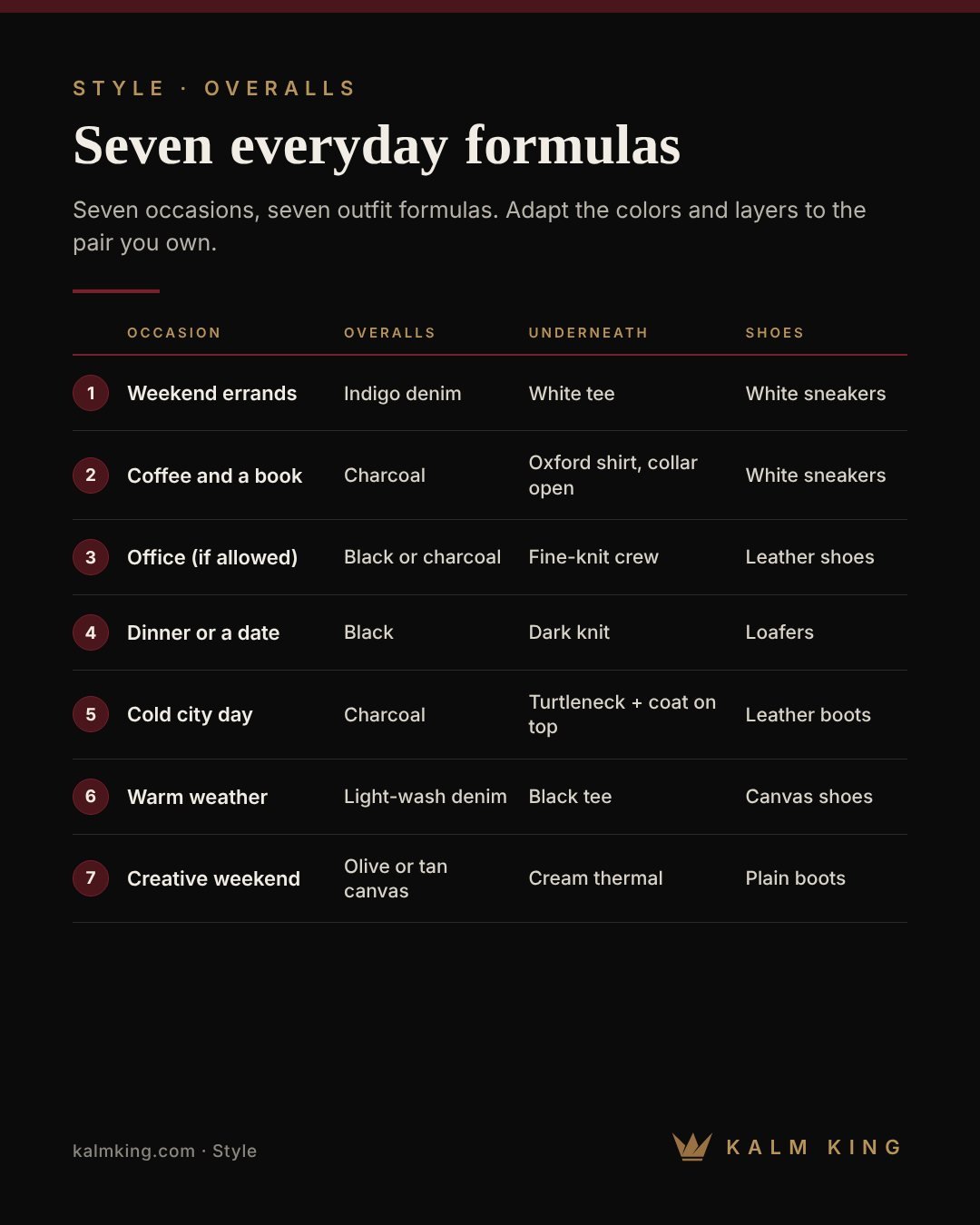
Here are seven occasions and seven outfit formulas. The examples use different colors and fabrics to show the range, but you don’t need seven pairs: adapt the colors and layers to the pair you own. The structure of each outfit is what matters.
1. Weekend errands: indigo, white tee, white sneakers
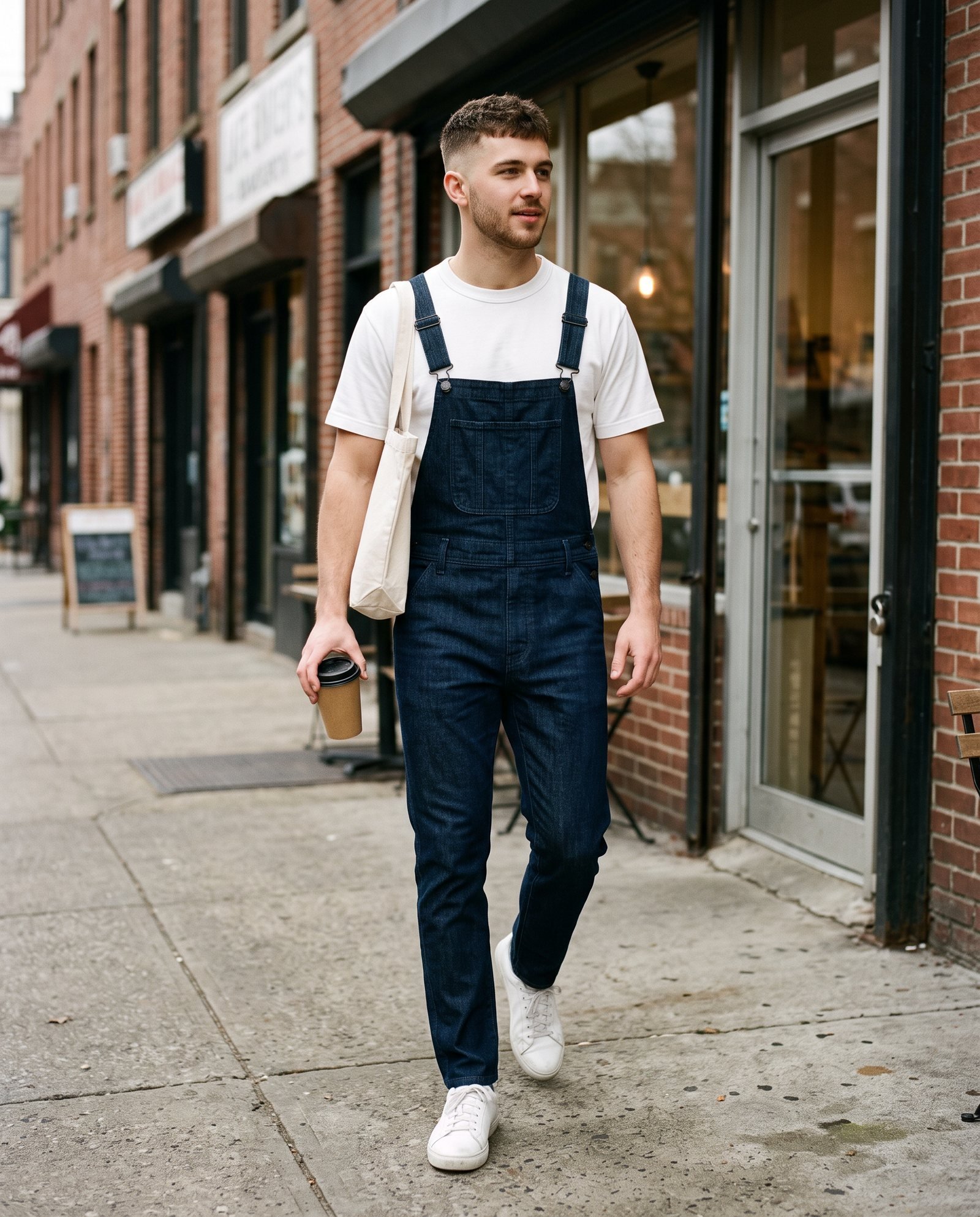
This is the starting point and the easiest outfit in the guide. Dark indigo overalls, a heavyweight white crew-neck tee and clean white leather sneakers. It works for coffee runs, the farmers market, a walk with friends or a casual lunch. Keep the tee plain and the sneakers clean, and the outfit reads fresh rather than rustic.
If you want a little more, add a canvas tote, a cap or simple sunglasses. Leave the bandana at home.
2. Coffee and a book: charcoal overalls and an oxford shirt
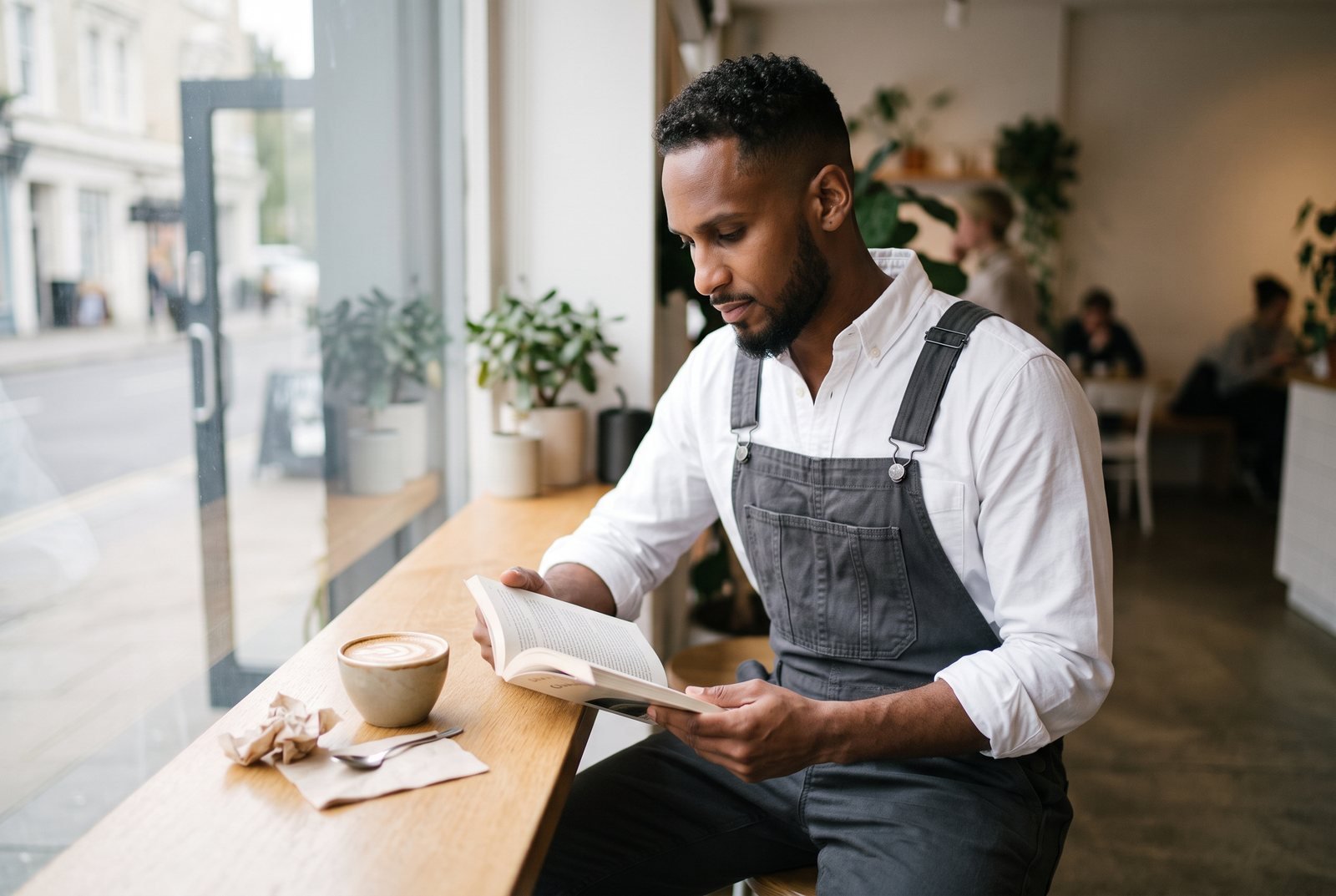
Swap the tee for a white or light blue oxford shirt with the collar open and the sleeves rolled once. Charcoal or dark grey overalls make this look calmer and slightly more grown-up than blue denim. It’s a good outfit for a slow Saturday, a museum or meeting someone for coffee when you want to look put together without trying too hard.
The collar is what does the work here. It sits above the bib and frames your face, which instantly makes the outfit look more considered.
3. Office-friendly: black overalls, fine knit, leather shoes
Can you wear overalls to work? That depends entirely on your workplace. In a creative office, a studio or a relaxed startup, black or charcoal overalls with a fine-knit crew-neck sweater and smooth leather shoes can pass as smart-casual. In a traditional office with a dress code, they probably won’t, and it’s worth reading the room before you try.
If you do wear them to work, keep everything else sharp: a dark, solid color, a knit with a clean neckline, minimal hardware and a jacket you can throw on for meetings. Avoid distressed denim, paint marks and workwear details like hammer loops.
4. Dinner or a date: black overalls, knit, loafers
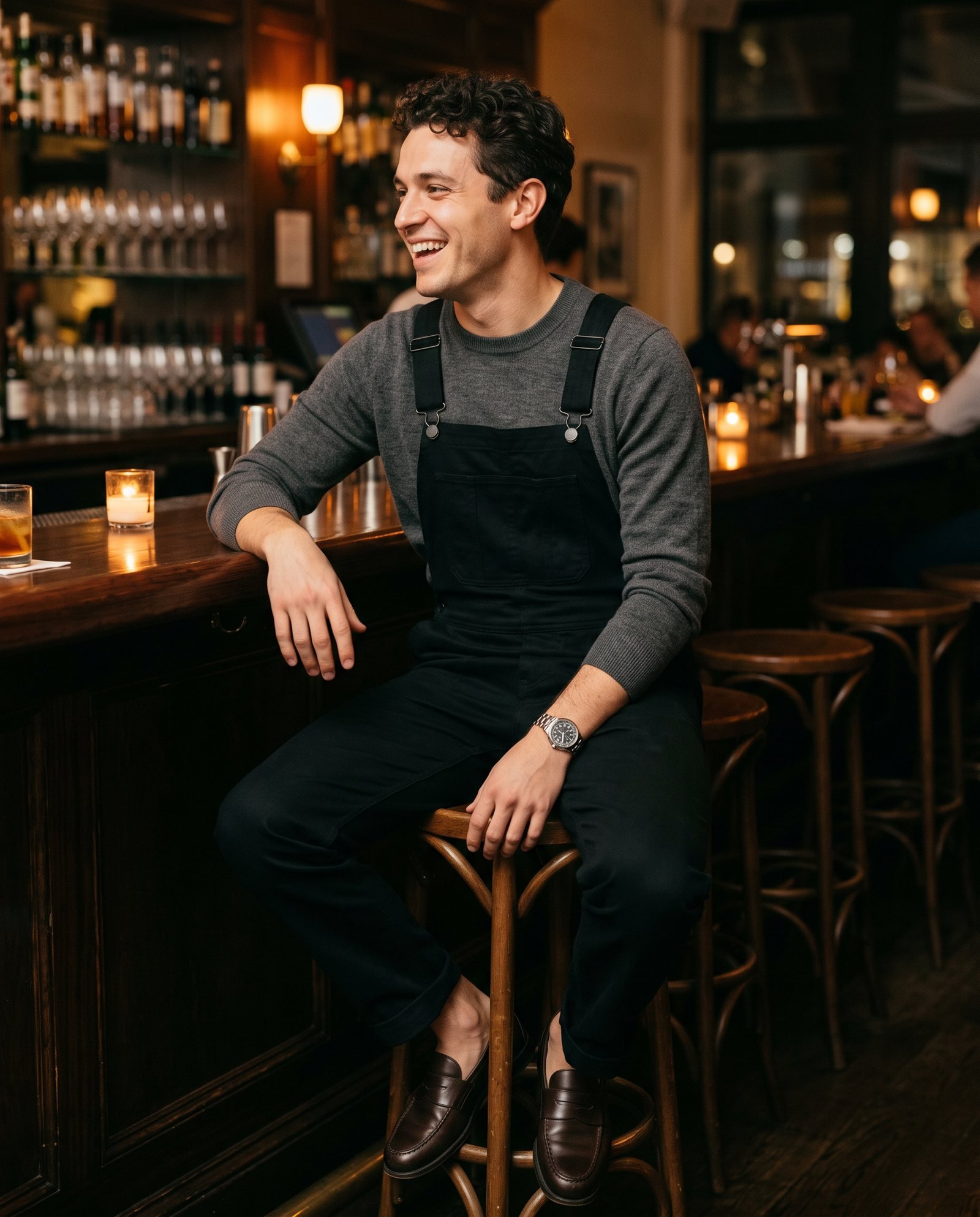
This is the outfit that convinces most skeptics. Black overalls, a charcoal or black merino-style sweater, dark leather loafers and a simple watch. In warm, low light it looks relaxed, confident and very deliberate. It suits a casual restaurant, a cocktail bar, a gallery opening or a date where you want to look interesting rather than formal.
Keep the palette tight, either all dark or dark with one lighter piece, and make sure the fit is close. Dinner is where baggy overalls look the most out of place.
5. Cold city day: charcoal, turtleneck, waxed or wool jacket
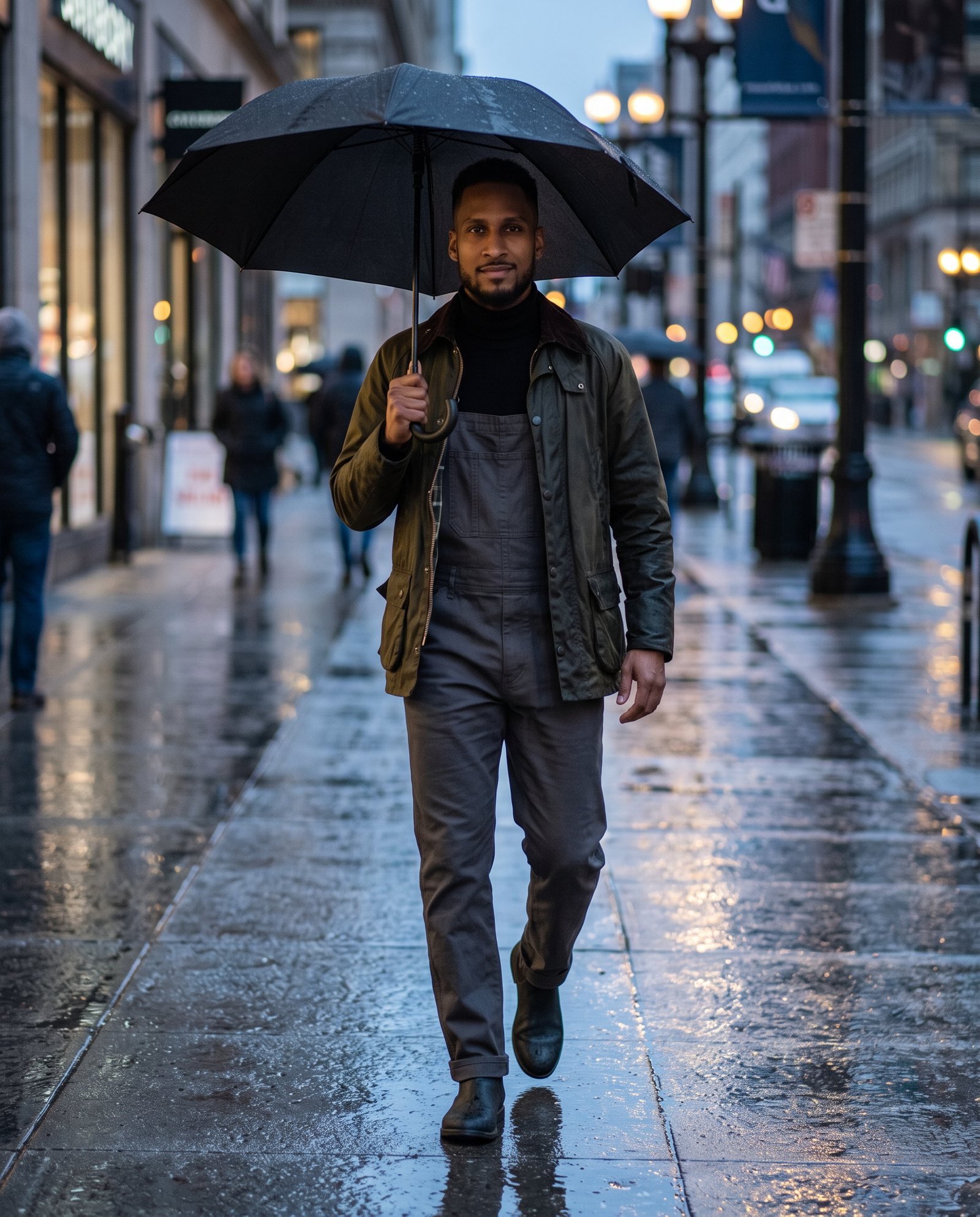
When it gets cooler, put most of the warmth on top rather than stuffing it underneath. Charcoal or dark denim overalls with a thin black turtleneck or a fine knit make the base. What goes over them depends on the weather, because outer layers are not interchangeable for warmth.
On milder days, an unlined waxed cotton jacket or a chore coat can give the outfit a clean, structured shape. For damp or windy weather, choose a jacket with suitable rain or wind protection. Once it’s properly cold, switch to a warm wool overcoat or an insulated jacket, and choose it for the temperature, how long you’ll be outside and whether you need wind or rain protection. For long cold days outdoors, a moisture-moving base layer under the turtleneck helps more than a thick cotton sweater.
Either way, the jacket covers most of the bib, so the overalls show mainly from the waist down and at the chest when you open it. Add leather boots or dark sneakers with some grip, and a scarf if needed. It’s one of the most polished ways to wear overalls for commuting, city walks and errands in the rain.
6. Warm weather: light-wash denim and a black tee
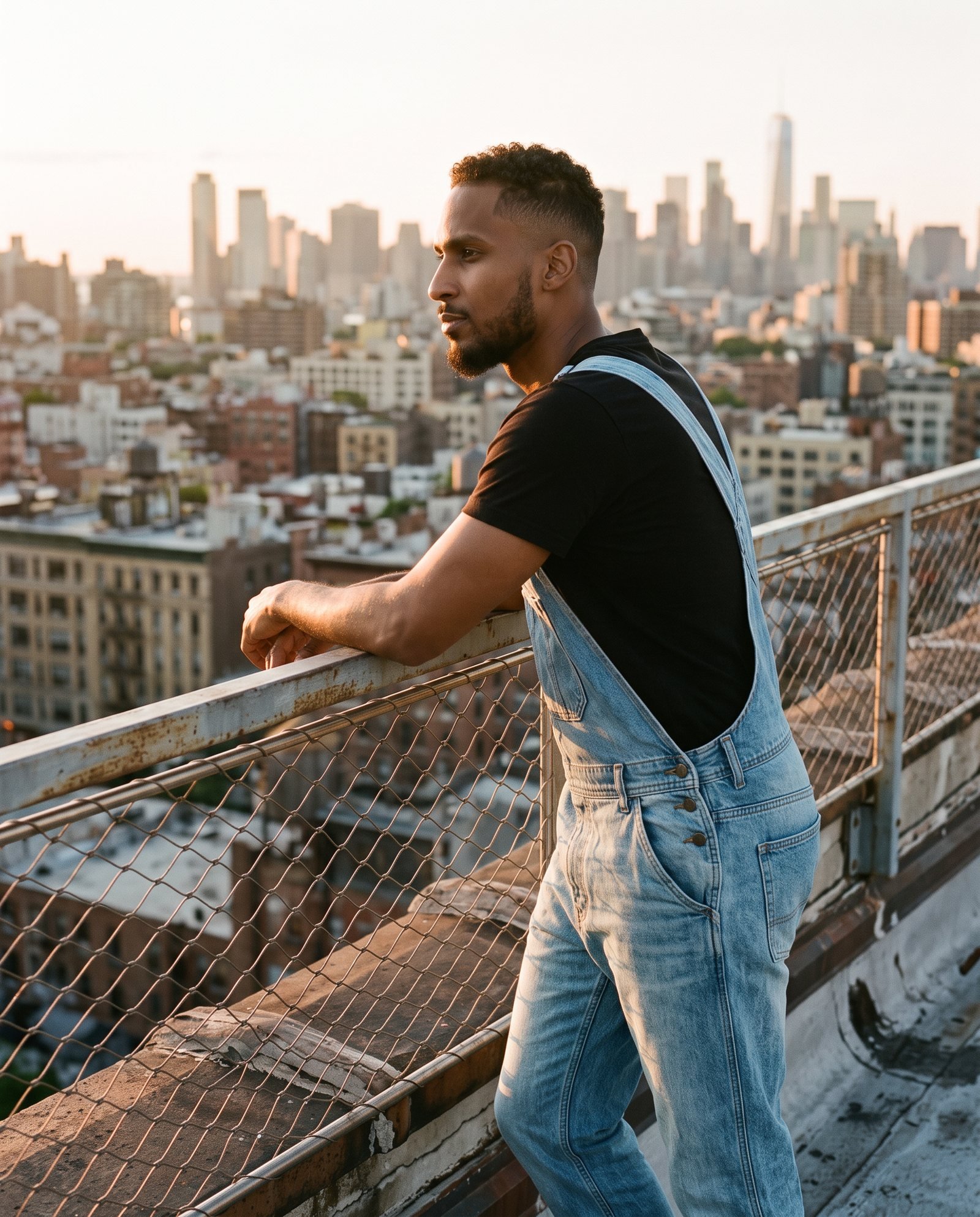
Light-wash overalls with a black or dark tee flip the usual color balance and look fresh in late spring and summer. Lighter-weight fabric makes a big difference in heat, because the bib adds an extra layer over your chest. Sneakers or simple canvas shoes finish it.
On really hot days, shortall versions or a breathable tank underneath are options, though a tee looks more grown-up in most settings. Keep the fit close so the outfit doesn’t tip into vintage-costume territory.
7. Creative weekend: olive or tan canvas, on purpose
There’s nothing wrong with leaning into the workwear heritage, as long as you choose it rather than fall into it. Olive or tan canvas overalls with a cream thermal, sleeves pushed up, and simple leather boots look great for a workshop day, gardening, a market stall or a creative project. The difference from costume is restraint: one heritage piece, plain supporting layers and a good fit.
Skip the full theme. No flannel, straw hat and bandana all at once.
Shoes that work with overalls
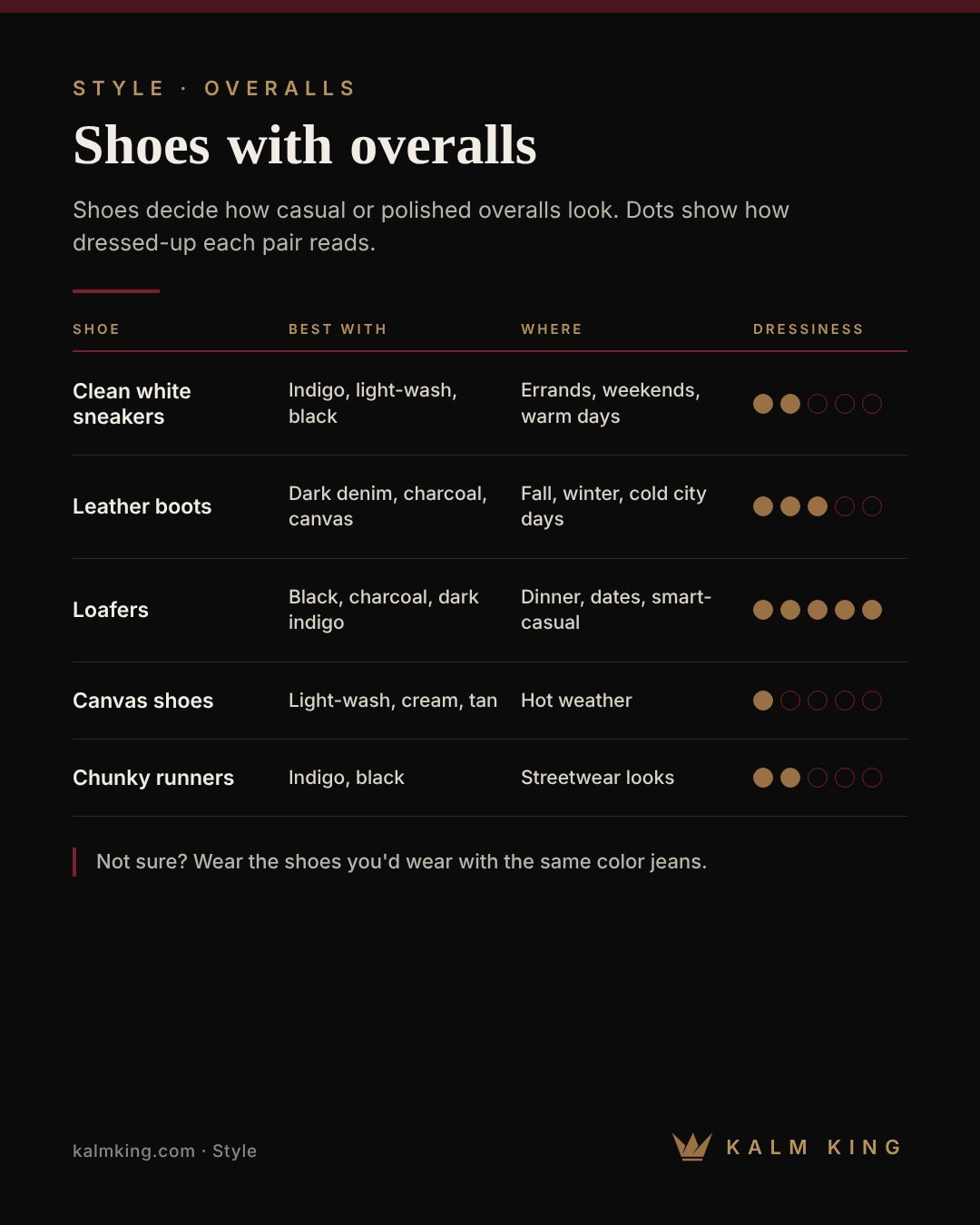
Shoes decide how casual or polished overalls look more than any other piece. The hem matters too: a clean, slight break or a single neat cuff looks better than a pile of fabric sitting on the shoe.
- Clean white leather sneakers. The most versatile choice. They work with indigo, light-wash and black overalls and keep everything modern.
- Leather boots. Best in fall and winter, with heavier fabrics and darker colors. Plain boots look smarter than chunky work boots.
- Loafers. The fastest way to dress overalls up. Best with black, charcoal or dark indigo and a close fit.
- Canvas shoes or simple slip-ons. Good for warm weather and light-wash denim.
- Chunky running shoes. They can work with a streetwear outfit, but they make the whole look heavier and more casual.
If you’re not sure, wear whatever shoes you’d wear with the same color jeans. That rule rarely fails.
Black overalls and color choices
Black overalls are the easiest way to make the look feel modern. They hide workwear associations better than blue denim, they dress up with loafers and knitwear, and they pair with almost every color underneath. The trick with an all-dark outfit is texture: mix a smooth twill with a soft knit or a matte leather shoe so the outfit doesn’t look flat. We explain that idea more fully in three ways to make black feel considered.
For other colors, keep one rule in mind: the more unusual the overalls, the plainer everything else should be. Cream, olive or tan overalls look great with white, black, navy or grey on top. Patterned overalls and patterned shirts together are very hard to pull off.
Small details that make overalls look deliberate
- Wear both straps up. One strap down has a long history in fashion, but on most grown men it looks careless rather than relaxed. Both straps up, adjusted evenly, reads cleaner.
- Adjust the straps to the outfit. A thicker layer underneath can change how the bib sits. Check the bib height in a mirror each time you change what you wear under it.
- Mind the side openings. If a long shirt hem pokes out at the sides, tuck it in or choose a shorter top.
- Keep the bib pocket light. A phone and keys in the bib pull it forward. Carry heavier things in a back pocket or a bag. That also helps when you take the overalls down in a restroom, since anything loose in the bib pocket can fall out.
- Plan for the bathroom. Bib overalls usually need at least one strap unclipped, and often both, to use a restroom seated. It’s worth practicing at home so it becomes routine. Once the straps are unclipped, gather the straps and the lowered bib together and hold them forward and up in one hand, or fold them over your lap, so nothing touches the floor.
- Hem or cuff long legs. Too much length at the ankle is one of the fastest ways to look borrowed. A tailor can hem overalls the same way as jeans.
- Wash them gently. Follow the care label, and check strap length and leg length after the first wash. Some fabrics shrink a little, which can change how the bib and crotch sit.
A quick mirror check before you head out
Overalls have more moving parts than jeans and a shirt, so a thirty-second check in the mirror is worth the habit. Run through these before you leave the house.
- Front view. Does the bib sit flat and level, with the top edge somewhere around mid-chest? If it tilts or gapes, even out the straps.
- Side view. Is the bib close to your chest rather than hanging forward? Are any shirt hems poking out of the side openings?
- Sit down. Sit on a chair for a few seconds. If the straps dig in or the crotch pulls hard, loosen the straps a notch and check again standing.
- Hem. Do the legs land cleanly on your shoes, or is fabric bunching at the ankle? Cuff once if needed.
- The whole outfit. Count the statements. If you’re wearing overalls plus a loud pattern plus a statement hat, take one away.
After a few wears this becomes automatic, and you’ll know your own settings for each top and jacket you pair with them.
How to feel confident in overalls
The first time you wear overalls out, you’ll probably feel more noticed than you actually are. That’s normal with any new silhouette. Start with outfit 1 on a weekend, wear them somewhere relaxed, and see how they feel through a whole day of sitting, walking and moving. Confidence usually comes from comfort and repetition rather than from the clothes alone.
There’s also some interesting research on how clothes and first impressions interact, which we summarized honestly, limits and all, in can clothes change how you feel? The short version is that dressing in a way that feels like you matters more than following any single rule.
Overalls aren’t for every occasion. A formal wedding, a job interview at a conservative company or a black-tie event are not the moment. But for weekends, creative work, casual dinners and city days, a well-fitted pair styled with restraint looks sharp, comfortable and entirely grown-up.
Frequently asked questions
How do you style overalls for men without looking like a farmer?
Choose a pair that fits close to your body, wear plain layers underneath such as a white tee or a grey knit, and finish with shoes you would wear with jeans, like clean sneakers or loafers. Avoid stacking workwear references such as plaid flannel, bandanas and work boots in the same outfit.
What do men wear with overalls?
A plain crew-neck tee is the easiest base. A henley, oxford shirt or fine knit works when you want a more polished look, and a jacket or overcoat goes on top in cold weather. Clean white sneakers, leather boots and loafers are the most versatile shoes.
Can men wear overalls to work?
It depends on the workplace. In creative or relaxed offices, black or charcoal overalls with a fine knit and leather shoes can pass as smart-casual. In a traditional office with a dress code they usually don’t, so check your workplace norms first.
Can you wear overalls on a date?
Yes. Black or dark overalls with a dark knit sweater, leather loafers and a simple watch look relaxed and deliberate for a casual restaurant, bar or gallery. Keep the fit close and the colors tight.
What shoes go with men’s overalls?
Clean white leather sneakers are the most versatile. Leather boots suit cooler months, loafers dress overalls up, and canvas shoes work in warm weather. A good rule is to wear the shoes you would wear with the same color jeans.
Should you wear one strap down on overalls?
Most grown men look neater with both straps up and adjusted evenly. One strap down tends to read as careless rather than relaxed outside of very casual or deliberately retro outfits.
Are overalls still in style for men?
Overalls have moved between workwear and fashion for decades, from youth style in the 1960s to hip hop in the 1990s. Today they work best styled simply, with a close fit and modern shoes, rather than as a throwback costume.
FIELD NOTES
Get the Overalls Fit Kit, free.
Your measurement card, the six fit checkpoints and a checklist to take shopping. Join Field Notes for new guides and a say in what Kalm King makes.
THE KALM KING JOURNAL
Continue reading
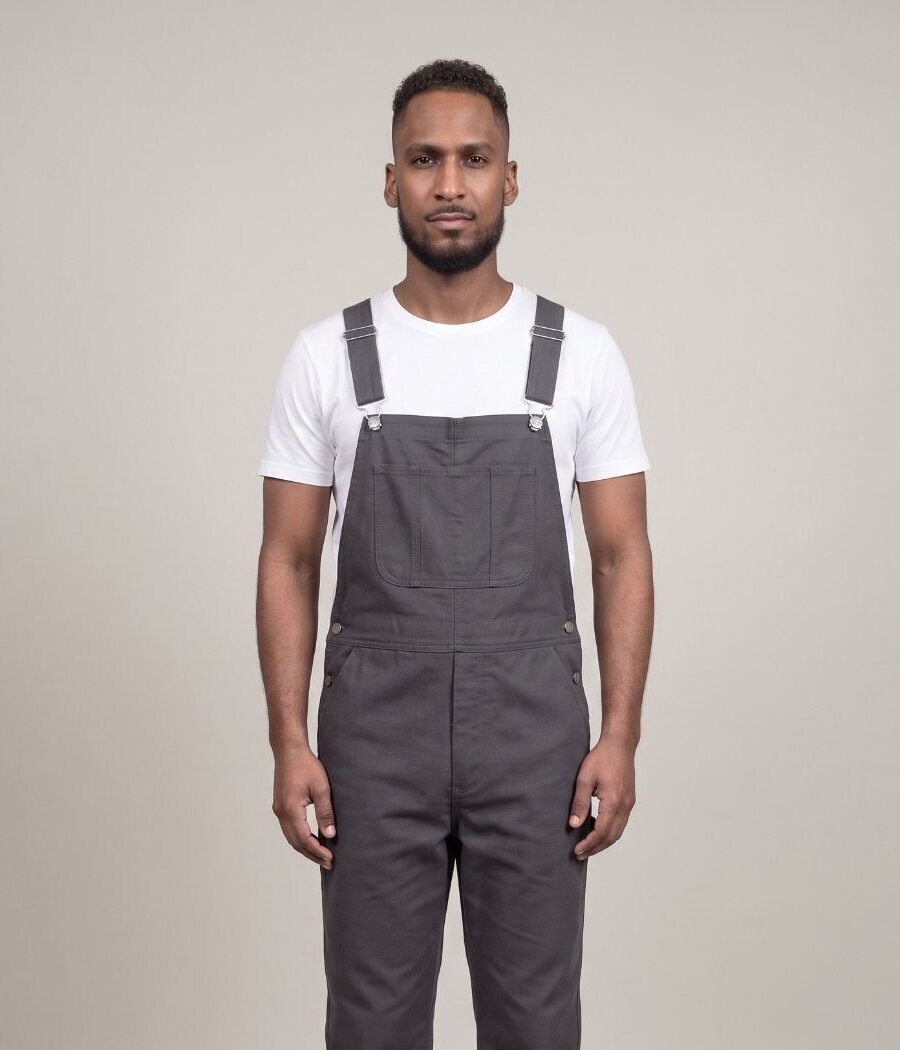
How Should Men’s Overalls Fit? Bib, Rise, Seat and Length
How men’s overalls should fit: where the bib sits, how to set the straps, rise, seat and length, plus a sit test and fixes for common fit problems.
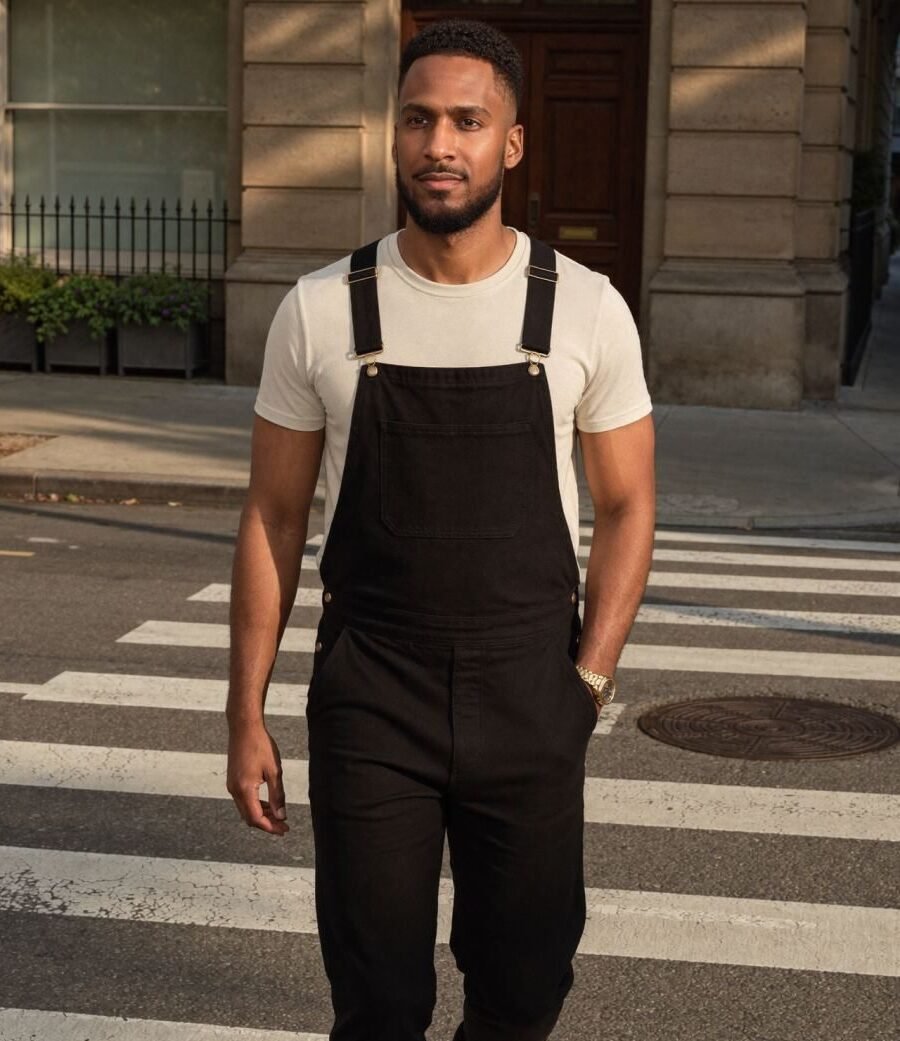
What to Wear Under Overalls: A Practical Guide for Men
What to wear under men’s overalls for warm days, cooler weather and real cold, plus how to handle necklines, bulk, hoodies and tucking.
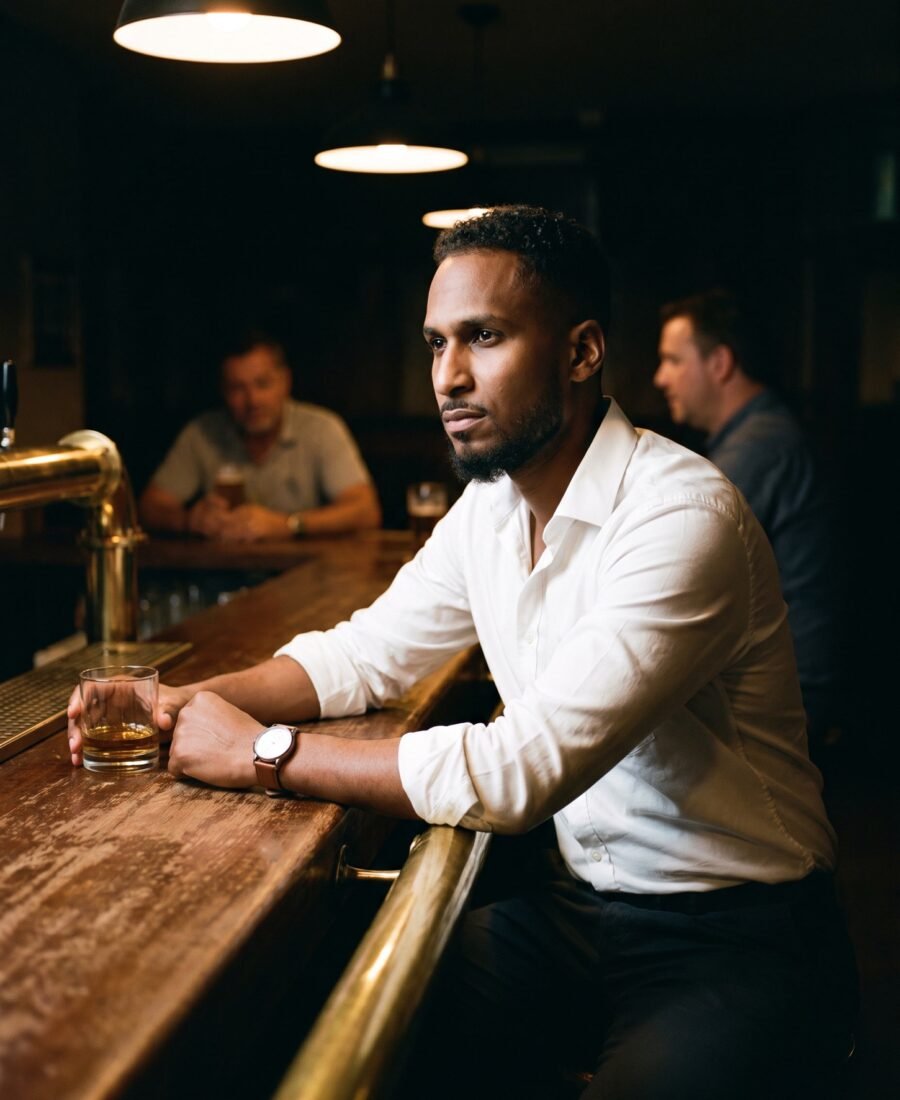
Can clothes change how you feel? What the research actually says
Can clothes affect confidence and first impressions? A research-backed look at fit, context, bias and getting dressed with intention.