
Size & Fit Reference

Size & Fit Reference
Measure once. Shop with a clear head.
How to measure, what to check and where each garment usually goes wrong, in one place. Bookmark it, use it before you buy, and open the full guide when you want the detail.
This page doesn’t give you a size. Size labels change from brand to brand, so the real answer is always the maker’s own chart, read with your own numbers.
- 5Garments
- 3Ways to measure
- 1Fit Card to keep
How to measure
Size charts mix up three different kinds of number. Know which one you’re looking at before you compare anything.
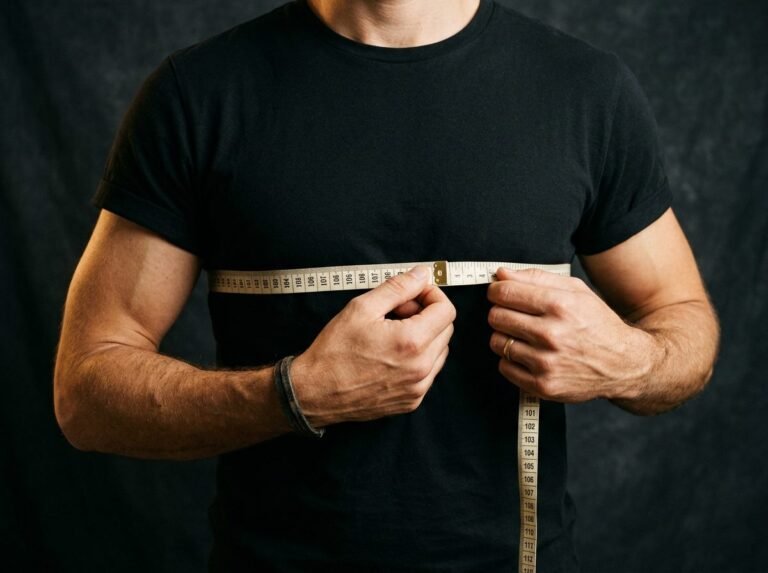 1 · You
Body measurement
A soft tape around your body: chest, waist, seat, thigh. It describes you, not the garment. Use it with charts that say “body measurements”.
 2 · The garment, flat
Flat garment width
A straight line across a garment laid flat, front only, smoothed but not stretched. Pit-to-pit on a tee is the classic example.
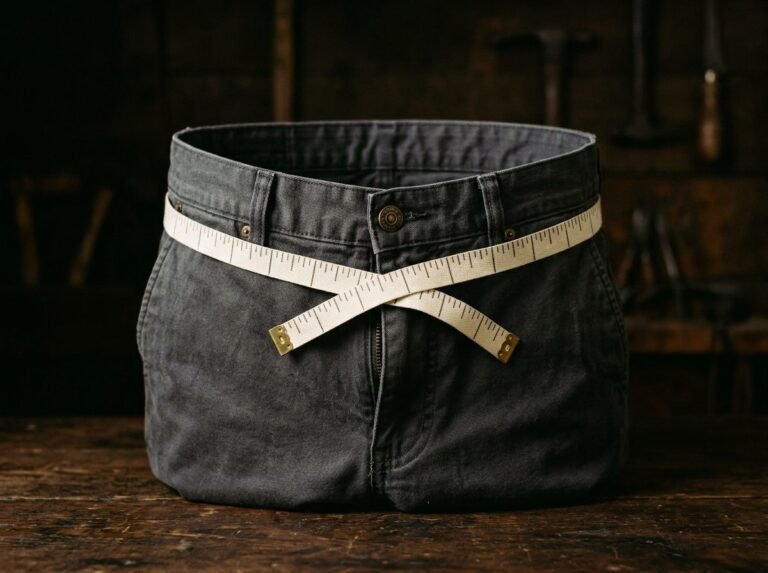 3 · The garment, around
Full garment circumference
All the way around the garment itself. Roughly double a flat width. It tells you the garment’s size, not how much room you’ll have.
Never compare a flat garment width with your body measurement. Compare like with like: a flat number with a flat number from a piece you already own, or your body number with a chart that says it uses body measurements.
Measure the clothes you already like
A piece that fits you well is the most useful measuring tool you own. Lay it on a table, smooth it without stretching, and write the numbers down with a note on how it feels (“great length, slightly tight in the arms”). Then any product page that lists garment measurements becomes easy to check. Different brands take some measurements at different points, such as a set distance below the armpit, so read their method too.
Garment 1 of 5
T-shirts
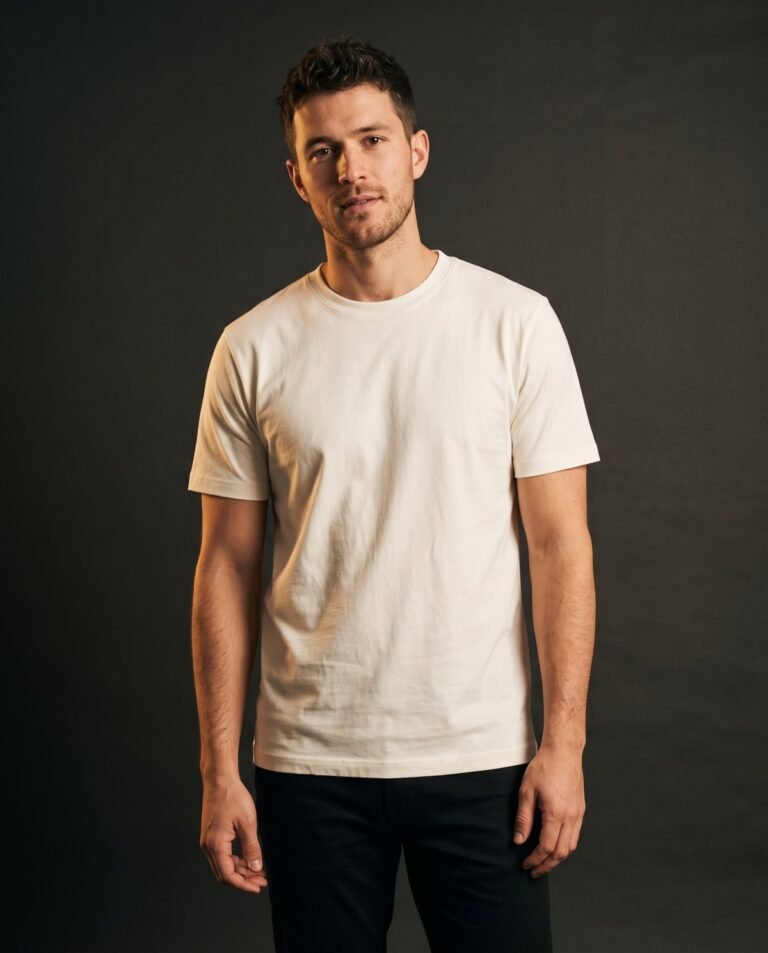
Judge a tee against the cut it was made to be: fitted, classic, relaxed or oversized. A dropped shoulder on an oversized tee is the design working, not a sizing mistake.
| Measurement | Type | How |
|---|---|---|
| Chest (pit-to-pit) | Flat | Straight across, just below the armholes. |
| Shoulder | Flat | Seam to seam, straight across. |
| Body length | Flat | From the highest point of the shoulder, beside the collar, straight down to the hem. |
| Sleeve | Flat | From the shoulder seam to the sleeve end. |
| Chest | Body | Around the fullest part of your chest. Only for charts that list body measurements. |
Fit checkpoints
- Neckline: sits where its design places it. No pressing on your throat, no standing away from your neck.
- Shoulders: on a classic tee, the seam sits close to where your shoulder ends.
- Sleeves and armholes: raise your arms. Nothing cuts into your upper arm, and the whole shirt doesn’t drag up.
- Chest: breathe deeply, cross your arms and reach forward without the fabric straining.
- Hem: works with the trousers you actually wear, tucked or untucked. Check front and back.
Where to find the maker’s chart Look for “size chart” or “size guide” on the product page, and check whether it lists body measurements or garment measurements. If it lists neither, ask the retailer before you buy.
Full guide: How should a men’s T-shirt fit? →Garment 2 of 5
Tank tops
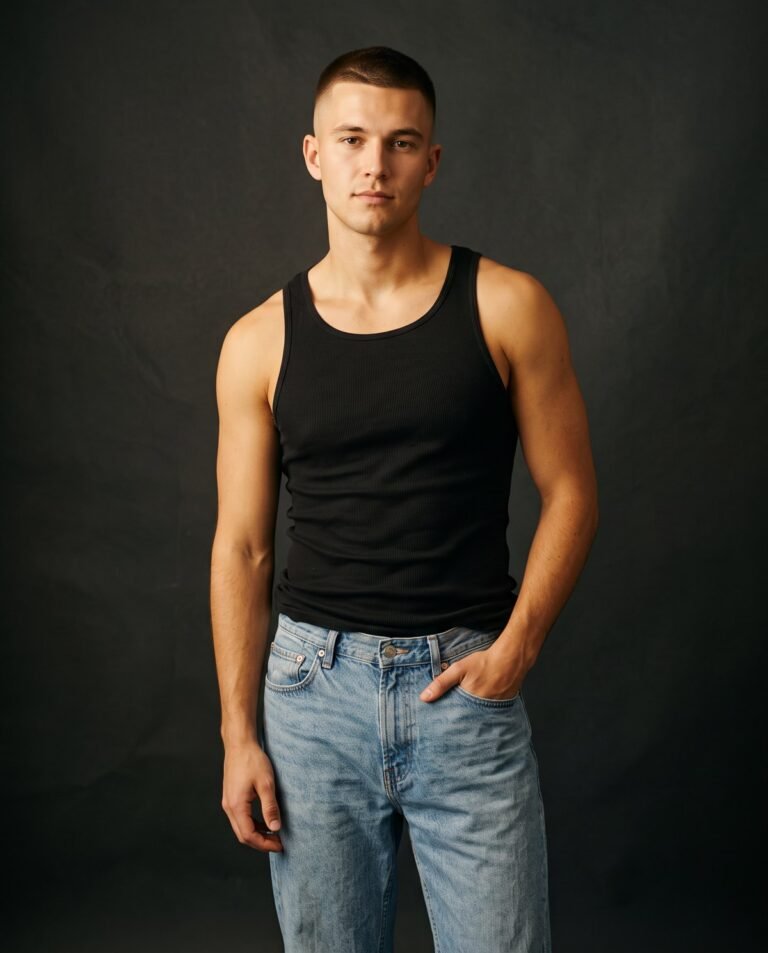
Decide the job first. A tank made to tuck under a shirt and a tank made to wear on its own are cut differently, even in the same size.
| Measurement | Type | How |
|---|---|---|
| Chest width | Flat | Straight across, just below the armholes. |
| Body length | Flat | From the highest point of the shoulder strap, straight down to the hem. |
| Armhole depth | Flat | Vertically, from the top-of-strap level to the bottom of the armhole. Few brands list it, but it explains a lot when you compare two tanks. |
Fit checkpoints
- Neckline: sits where you want it, including under an open shirt.
- Straps: lie flat and stay on your shoulders.
- Armholes: no digging, and the side coverage you’re comfortable with.
- Torso: close, relaxed or oversized, on purpose.
- Hem: long enough to stay tucked when you sit, or a clean length worn on its own.
Where to find the maker’s chart Compare your flat numbers with the retailer’s garment measurements if it publishes them, and check how it measures chest width.
Full guide: How should a men’s tank top fit? →Garment 3 of 5
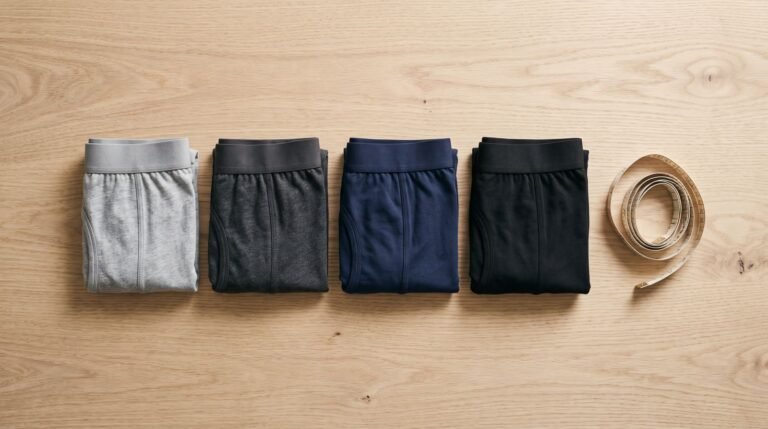
Boxer briefs
Underwear sizes don’t travel well between brands, and they don’t follow your trouser size. Use the chart for the exact pair you’re buying.

| Measurement | Type | How |
|---|---|---|
| Waist | Body | Around you, where the waistband actually sits. That’s often a different spot from your jeans. |
| Thigh | Body | Around the fullest part of one thigh. Few charts list it, but it tells you whether to look for an athletic or relaxed thigh. |
| Inseam of a pair that fits | Flat | Laid flat, from the crotch seam to the leg hem. |
Rise and inseam are different. Rise runs from the crotch up to the waistband and decides where the band sits. Inseam runs from the crotch down to the leg hem and decides thigh coverage.
Fit checkpoints
- Waistband: stays where the cut means it to sit. No digging, folding over or sliding down when you sit.
- Rise: lets the band sit at its intended height without pulling at the crotch.
- Front: comfortable. Not flattened, not squeezed, not so loose you keep repositioning.
- Seat: smooth across the back, without sagging or pulling when you sit.
- Thigh opening: lies close. No pinching, rolling or deep line, and no gaping.
- Inseam: the thigh coverage you want, still hidden under the shorts you wear.
Where to find the maker’s chart Use the size chart for that exact product, and follow the brand’s instruction for where to measure your waist. Check the retailer’s return rules before trying underwear on.
Full guide: How should boxer briefs fit? →Garment 4 of 5
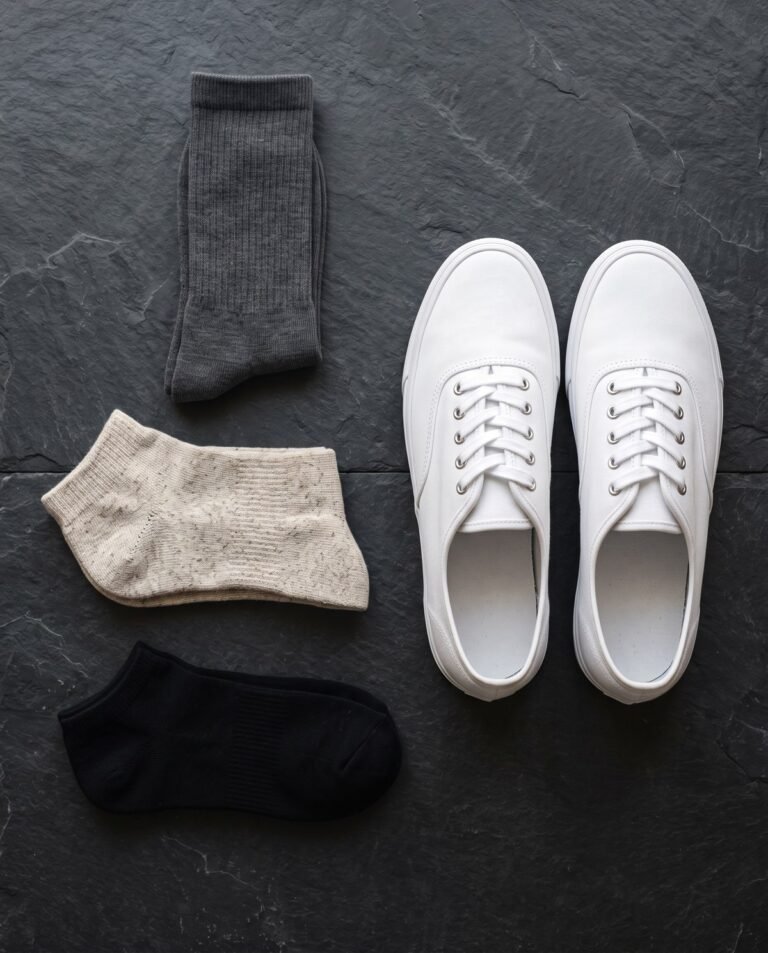
Socks
Socks are sized by shoe-size ranges, not with a tape. The chart gets you close; the heel, toes and cuff tell you the rest.
| Note | Type | Why |
|---|---|---|
| Shoe size and system | No tape | Sock sizes cover a range of shoe sizes, and US, UK and EU numbers differ. Note which system you mean. |
| Foot width and calf | No tape | Not on most charts. A wide foot or broad calf may need a different cut, not a bigger size. |
| Height that works | No tape | No-show, ankle, quarter or crew, chosen for the shoe and the day. |
Fit checkpoints
- Heel: the heel pocket cups your heel. Not up on your Achilles, not under towards your arch.
- Toes: fabric lies flat, with no loose fold at the end. You can flex your toes.
- Width: no pulling across the widest part of your foot, no loose wrinkles on top.
- Cuff: stays where it was designed to sit without leaving a deep groove.
- In the shoe: walk, sit and stand. No bunching, slipping or pressure points.
Where to find the maker’s chart On the product page, match your shoe size and its system (US, UK or EU) to the sock size range.
Full guide: How to choose everyday socks →Garment 5 of 5
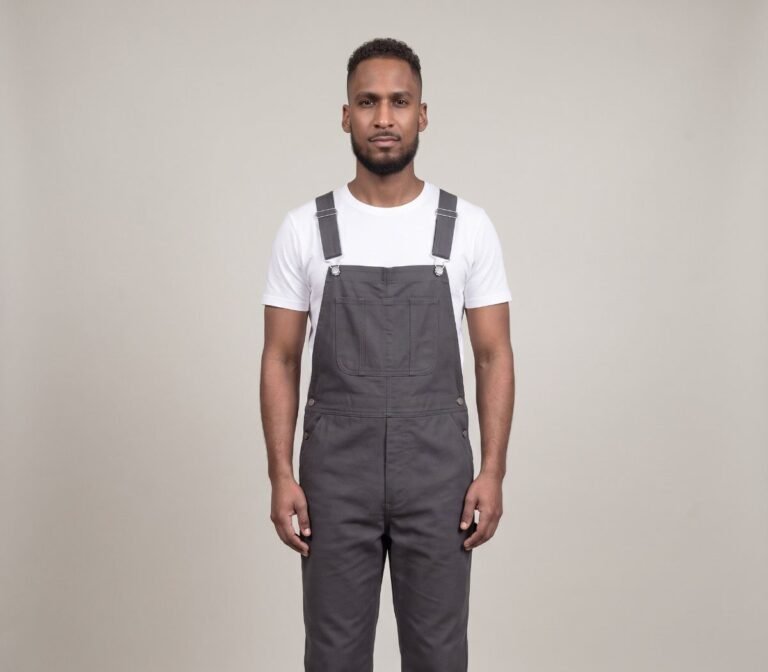
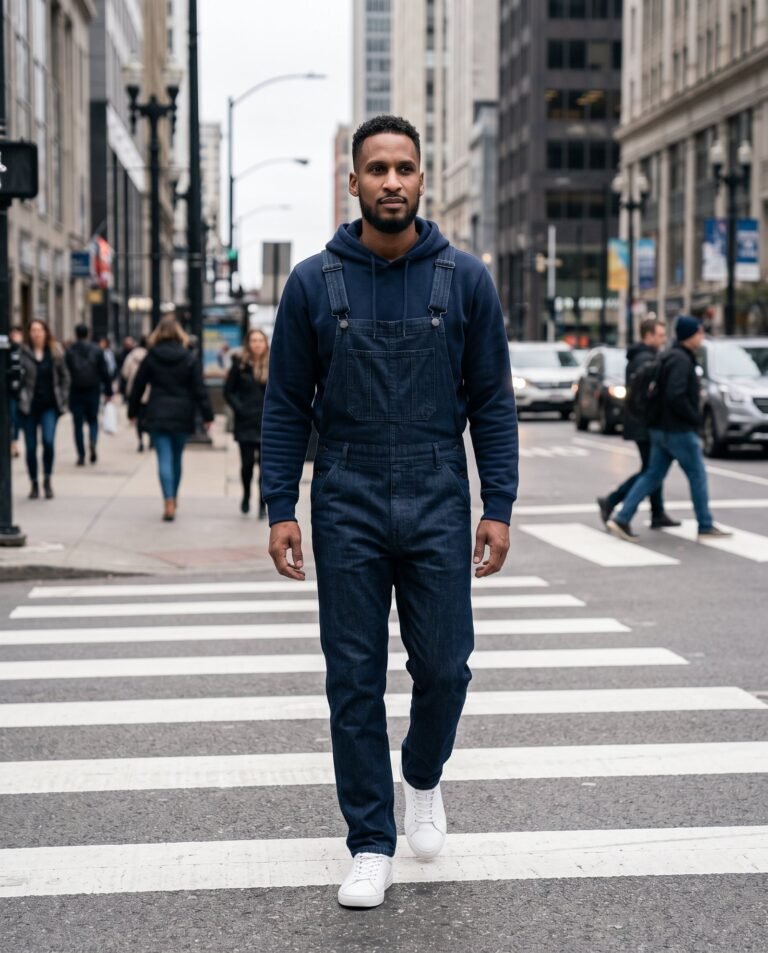
Overalls
Overalls sizing usually starts with trouser measurements, plus one extra variable: your torso. Set the straps first, then judge everything else.
| Measurement | Type | How |
|---|---|---|
| Natural waist | Body | Bend side to side and find the natural bend. It may not be the narrowest point. |
| Seat | Body | Around the fullest part, feet together, tape level. |
| Inseam | Body or Flat | Crotch to the length you want, or lay trousers you like flat and measure crotch point to hem. |
| Torso | Notes | No single standard. Check how much strap adjustment the brand lists and whether it offers tall or long-torso options. |
Fit checkpoints
- Bib height: around mid-chest is a useful starting point for many everyday bibs.
- Straps: lie flat on your shoulders without digging in.
- Side openings: lie fairly close when you stand. A wide gape usually means the waist is too big or the layer underneath is too bulky.
- Waist and rise: nothing pulls at the crotch when you stand tall.
- Seat and thigh: smooth from behind, with no strain across the thighs when you sit.
- Length: a slight break over the shoe, or one clean roll at the ankle.
Where to find the maker’s chart Follow that brand’s measuring instructions and compare with its own chart. Between sizes? It depends on the brand. Carhartt, for example, advises sizing up for its bib overalls; other brands cut differently.
Prefer paper? The free Overalls Fit Kit (PDF) has an overalls measurement card, the six checkpoints and a problem-solver.
Full guide: How should men’s overalls fit? →Inches ↔ centimetres
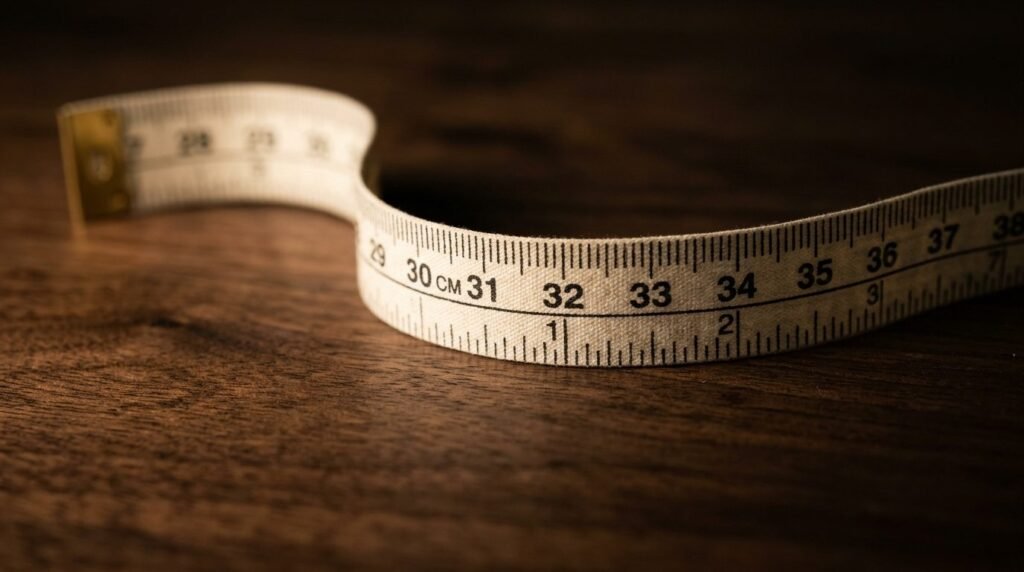
1 inch = 2.54 cm exactly. To get centimetres, multiply inches by 2.54. To get inches, divide centimetres by 2.54. Here, results are rounded to one decimal place, and your original number is always shown next to the result.
For example, 32 in = 81.3 cm, and 53 cm = 20.9 in.
Converting units doesn’t convert sizes. A 32 in waist is 81.3 cm everywhere, but one brand’s size 32 or M won’t match another’s. Always use the chart for the product you’re buying.
Find your fit problem
One symptom can have several causes. Find the part that’s failing before you change the size.
Riding up
Boxer brief legs. The leg opening may grip too hard (deep red line, hem rolls), sit too loose (gapes and bunches), or be too short for your thigh. Your trousers may be dragging it up, or the elastic may be worn out. Check: after dressing, smooth each leg down before fastening your trousers. If an old pair has started riding up, replace it; no size fixes tired elastic. How to stop boxer briefs riding up →
Tee or tank lifting when you reach. Usually the armhole and sleeve shape, not just the size: a low armhole can pull the body up. Try: a cut with a different armhole before changing size. T-shirt sleeves and armholes →
Pulling or straining
Tee across the chest. Horizontal pull lines when you move suggest the chest is too narrow. If it’s tight in several places (chest, armholes, sleeves), the next size up is reasonable; then repeat the movement check. Size, cut or length →
Overalls at the crotch, straps digging in. Let the straps out first. If it still pulls, try a longer-torso cut or a larger size, rechecking waist and seat. A “tall” label can mean longer legs rather than a longer torso. Overalls fit problems →
Overalls across the thighs when seated. The leg is too narrow for you: size up or choose a more relaxed leg.
Sagging or bagging
Overalls seat or a low bib. Shorten the straps first; a sagging seat often improves. If the bib still sits too low with the straps fully shortened, the torso may be too long for you: try a shorter-torso cut before a smaller size. Bib height and straps →
Crew socks falling down. Look for a stretched-out cuff or a pair that’s simply tired. A firmer cuff helps; replacing worn pairs helps more. How to keep socks from sliding down →
No-shows slipping off your heel. Check the size range, the heel grip and how loose the shoe heel is. A sized (not one-size) pair or a slightly higher cut can stay put.
Tight or awkward armholes
Tank: chest fits, armholes pinch or ride up. Try a cut with wider or lower armholes, or a relaxed fit in your usual size, rather than sizing up and gaining length you didn’t want. Tank armholes →
Tank shows more side than you’d like. A deep cut is a design choice, not a sign the tank is too big. Choose a higher-cut armhole or a sleeveless tee.
Tee bunches under the arm. The armhole shape can be wrong even when the chest and length match your numbers. Compare a different cut, not just a different size.
Too long
Tee: chest and shoulders fit, body too long. Try a shorter length option, a boxier cut or a hem alteration. Sizing down loses the chest room. How long should a T-shirt be →
Tank: fits everywhere, hem too long untucked. Look for a tank made to wear on its own, or alter the hem.
Overalls: a heavy stack at the shoe. Roll once, or have them hemmed. Length is the easiest fix, so judge everything else first.
Boxer brief legs showing under shorts. Check the inseam length listed for that product and test it with the shorts you actually wear.
My Fit Card
Fill it in once, print it or keep it on your phone, and take it shopping. Body numbers and garment numbers are kept separate, so you always compare like with like.
Your numbers stay on this device. Nothing is sent to Kalm King.

Read the full guide
- T-shirtsHow should a men’s T-shirt fit?
 T-shirt careWhy T-shirts shrink and how to help prevent it
 T-shirt careHow to keep your T-shirt collar from stretching
- Tank topsHow should a men’s tank top fit?
- Boxer briefsHow should boxer briefs fit?
 Boxer briefs fixHow to stop boxer briefs from riding up
- SocksHow to choose everyday socks
 Socks fixHow to keep socks from sliding down
- OverallsHow should men’s overalls fit?
 Overalls styleHow to style overalls for men