
October 8, 2026
What to Wear Under Overalls: A Practical Guide for Men
What to wear under men's overalls for warm days, cooler weather and real cold, plus how to handle necklines, bulk, hoodies and tucking.
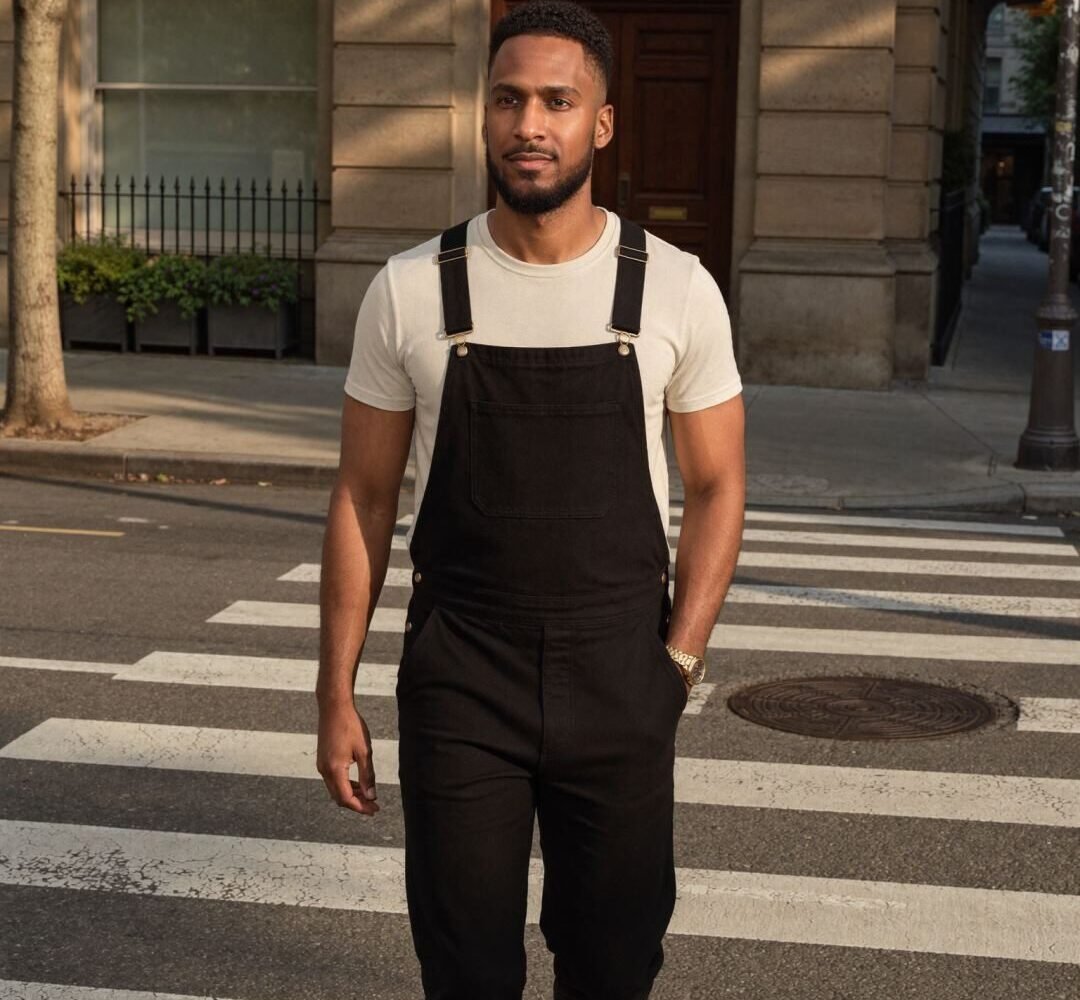
Overalls do most of the talking in an outfit, so what goes underneath has a quieter job: fill the space around the bib, keep you at the right temperature and stay out of the way. Get those three things right and the whole look settles down. For building the rest of the outfit around them, see our guide to how to style overalls for men.
The short answer: a plain crew-neck tee works almost everywhere, a long-sleeve tee or thin knit takes over when it cools down, and in real cold the warmth should mostly go on top as a jacket rather than underneath as a thick sweater. The rest of this guide explains why, and how to adjust for the weather and the occasion.
First, which overalls are we talking about?
This guide is about everyday bib overalls worn as clothing: a bib at the chest, straps over the shoulders and trouser legs below. Insulated or protective work overalls are a different case. If yours are for a job site, cold storage or anything with safety requirements, follow the manufacturer’s guidance and your workplace rules first. Style comes second there.
The four things that decide what goes underneath
1. The neckline against the bib
The bib covers the middle of your chest, so the neckline of whatever you wear underneath frames it. A crew neck sits cleanly above the bib and reads tidy. A henley or a collared shirt adds a little more interest at the top. Very deep or wide necklines tend to compete with the bib edge rather than frame it, so most people find simpler necklines easier to wear.
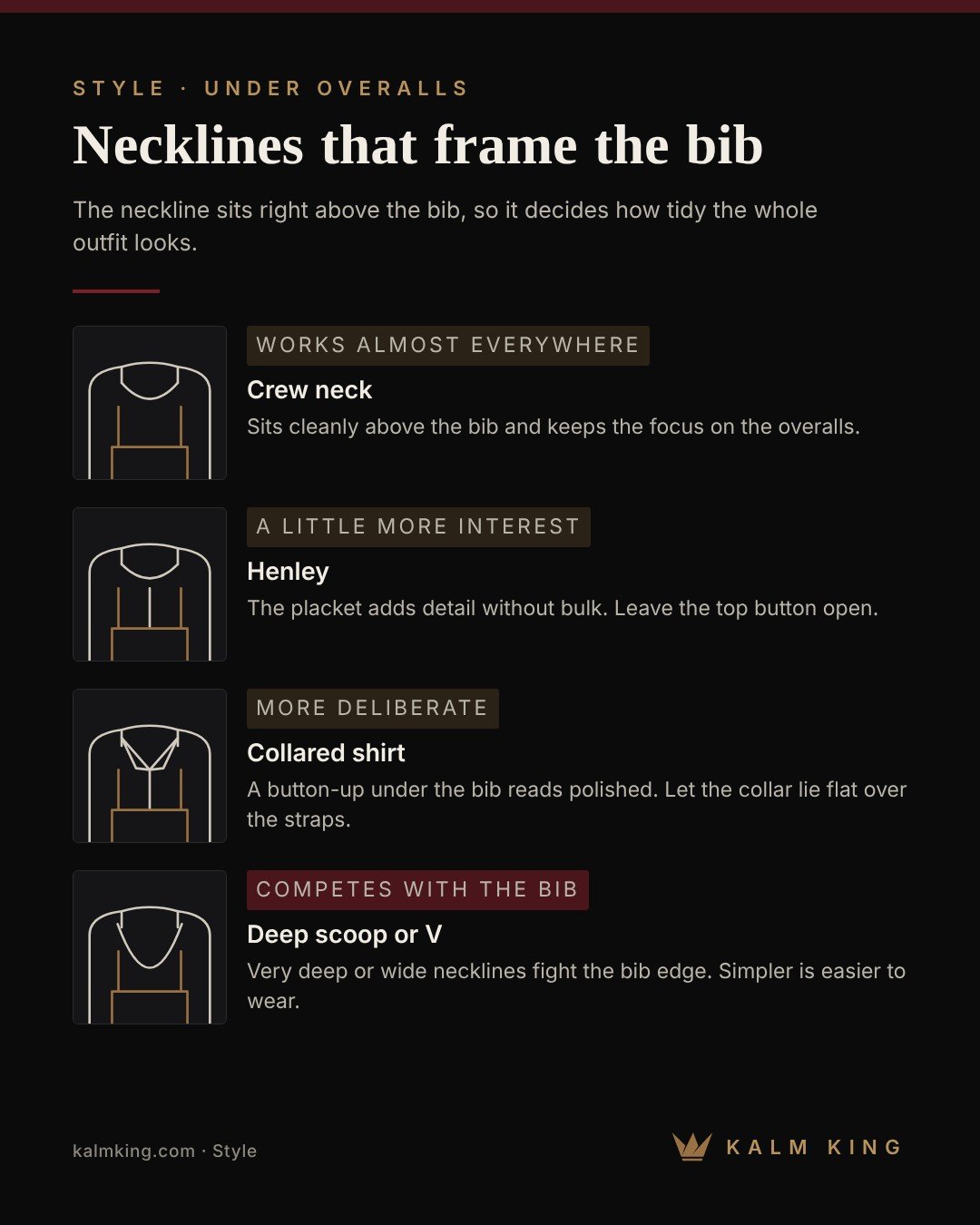
2. Bulk at the shoulders and torso
Straps press whatever is underneath against your shoulders, and the sides of overalls are usually more open than a pair of trousers. A thick layer can bunch under the straps, push the bib forward or make the side openings gape. Thinner layers lie flatter. If you want more warmth, it usually works better to add it on top than to stuff it underneath.
3. Fabric for the temperature
In dry heat, a breathable cotton tee is comfortable. In cold weather, cotton next to the skin is a weaker choice if you might sweat, because it holds moisture and can leave you chilled. Outdoor retailer REI makes this point in its layering guidance and recommends a moisture-moving base layer for cold conditions. For everyday city wear the stakes are lower, but the principle still helps on long, cold days outside.
4. Hems and tucking
Most tees and shirts sit fine under the bib untucked, because the overalls cover the waist anyway. A long shirt hem can bunch at the side openings, though. If that happens, tuck it in or choose a shorter cut. Check yourself from the side as well as the front.
Fabrics that work under overalls
The fabric of the layer underneath matters as much as its shape, because it sits between you and a heavier outer garment all day. A few reliable options cover most situations.
- Cotton jersey. The fabric of most T-shirts. It’s soft, easy to wash and comfortable in mild and warm weather. Mid-weight jersey tends to hold its shape under the straps better than very thin, clingy versions.
- Linen and linen blends. Light and breathable for hot days, though linen creases easily. A linen-blend shirt under the bib can look relaxed rather than rumpled.
- Oxford cloth, chambray and flannel. Woven shirting gives you a collar and a little structure. Oxford and chambray suit milder days; flannel adds warmth when the temperature drops.
- Fine-gauge knits. Thin wool, cotton or blended knits lie flat under the straps and look considered with very little effort.
- Base-layer fabrics. For long, cold days outdoors, layering guidance such as REI’s recommends fabrics that move moisture away from the skin, such as wool or synthetics, rather than cotton.
Whatever you choose, check the care label before you commit to it as a regular under-layer. Something you’ll wear often under overalls should be easy to wash and keep looking good.
Layering at a glance
Weather is the biggest single factor in what goes underneath, so it helps to think in a few simple bands rather than exact temperatures. How warm you feel also depends on wind, sun, how active you are and how you run, so treat these as starting points.
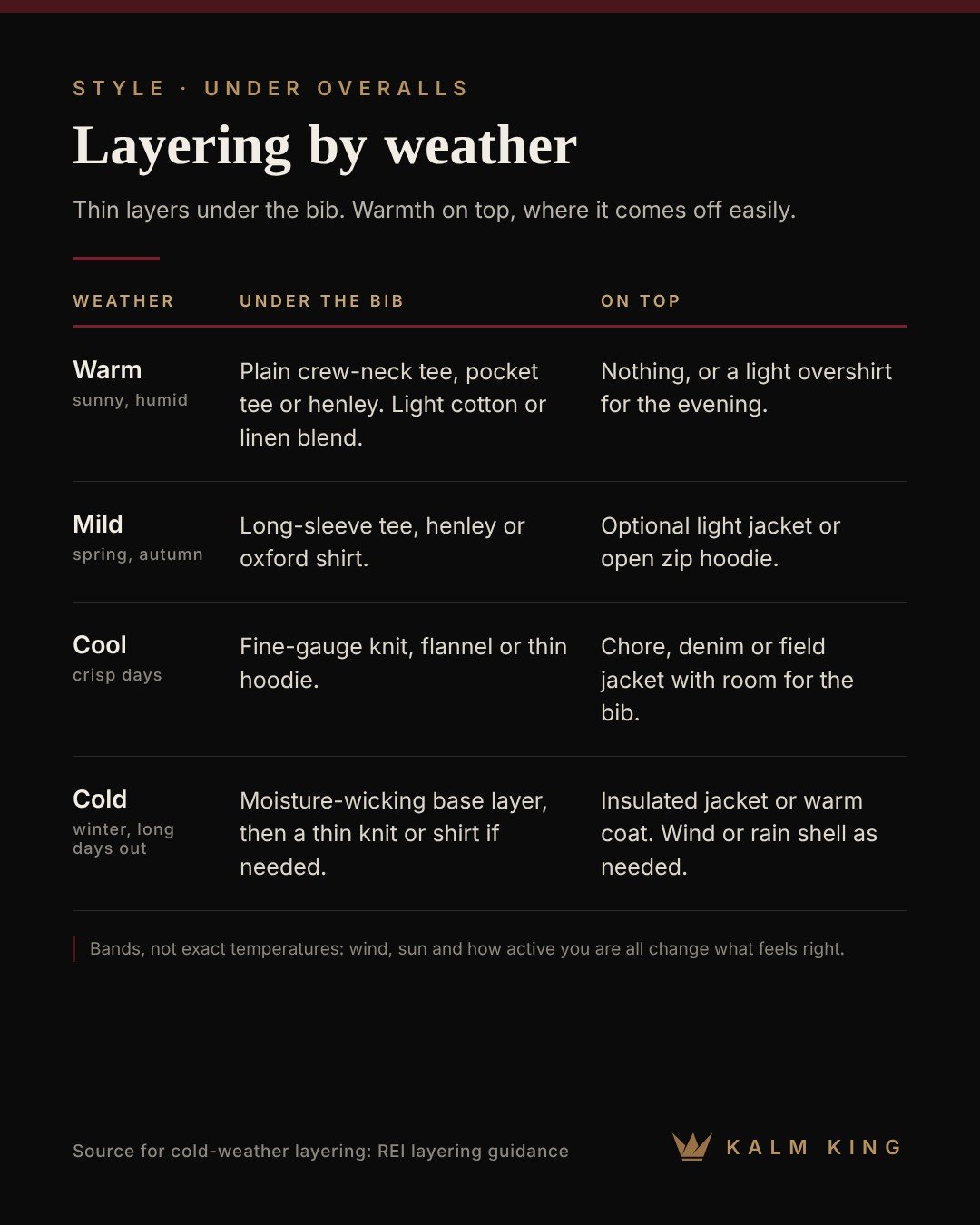
Two habits make these bands easier to use. First, dress for the coldest part of your day rather than the moment you leave the house. Second, keep the layer under the bib thin enough that you’d be comfortable indoors with the jacket off, since that’s where most people end up spending part of the day.
Warm weather
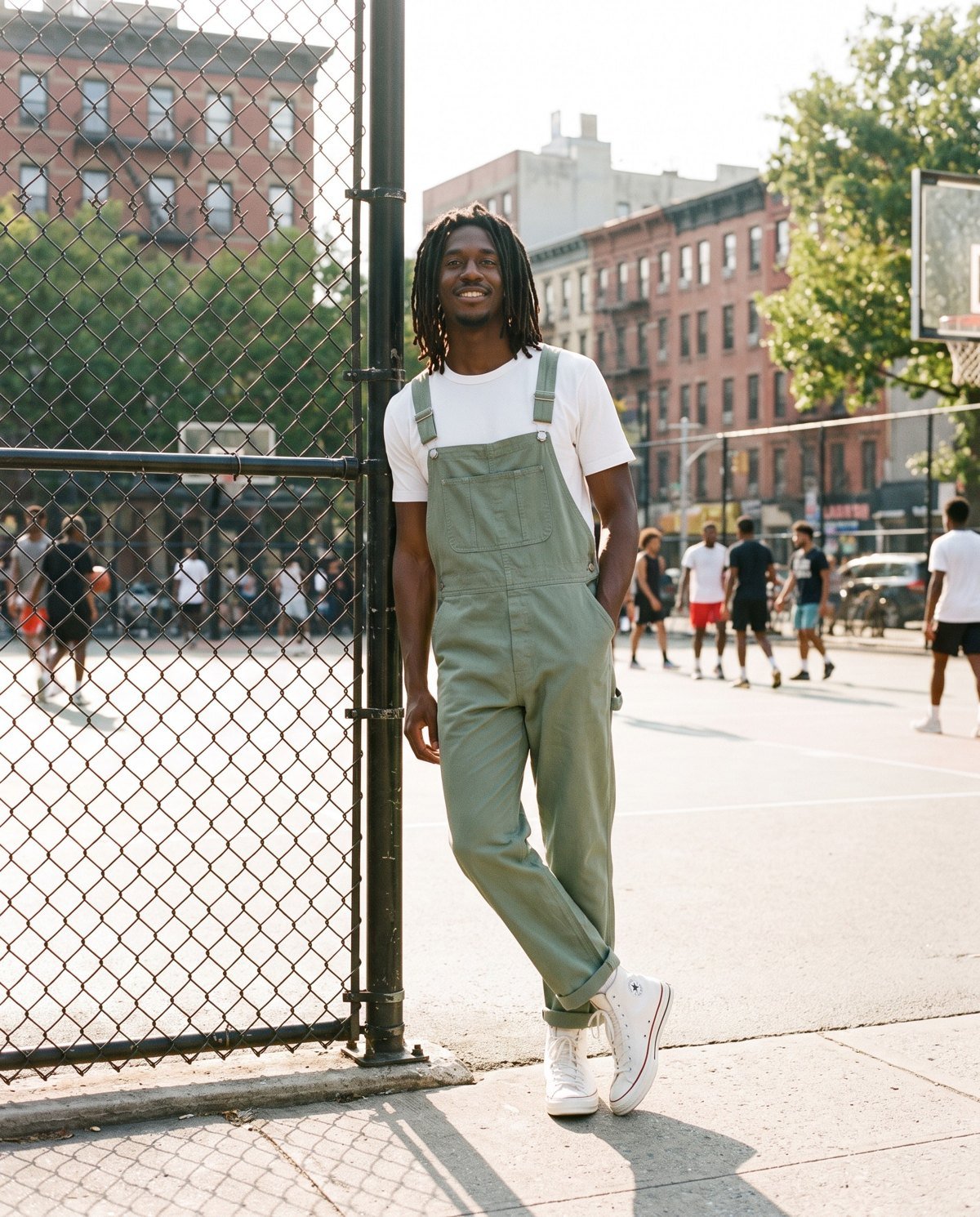
- Plain crew-neck tee. The default for a reason. White, grey or black keep the focus on the overalls’ shape.
- Pocket tee or henley. A small detail at the chest without adding bulk.
- Short-sleeve button-up. Worn under the bib, a lightweight short-sleeve shirt makes the outfit look a little more deliberate. Keep the fabric light so it doesn’t bunch under the straps.
Skip anything heavy in summer. One thin layer and a shoe that suits the day are usually enough.
Cooler days
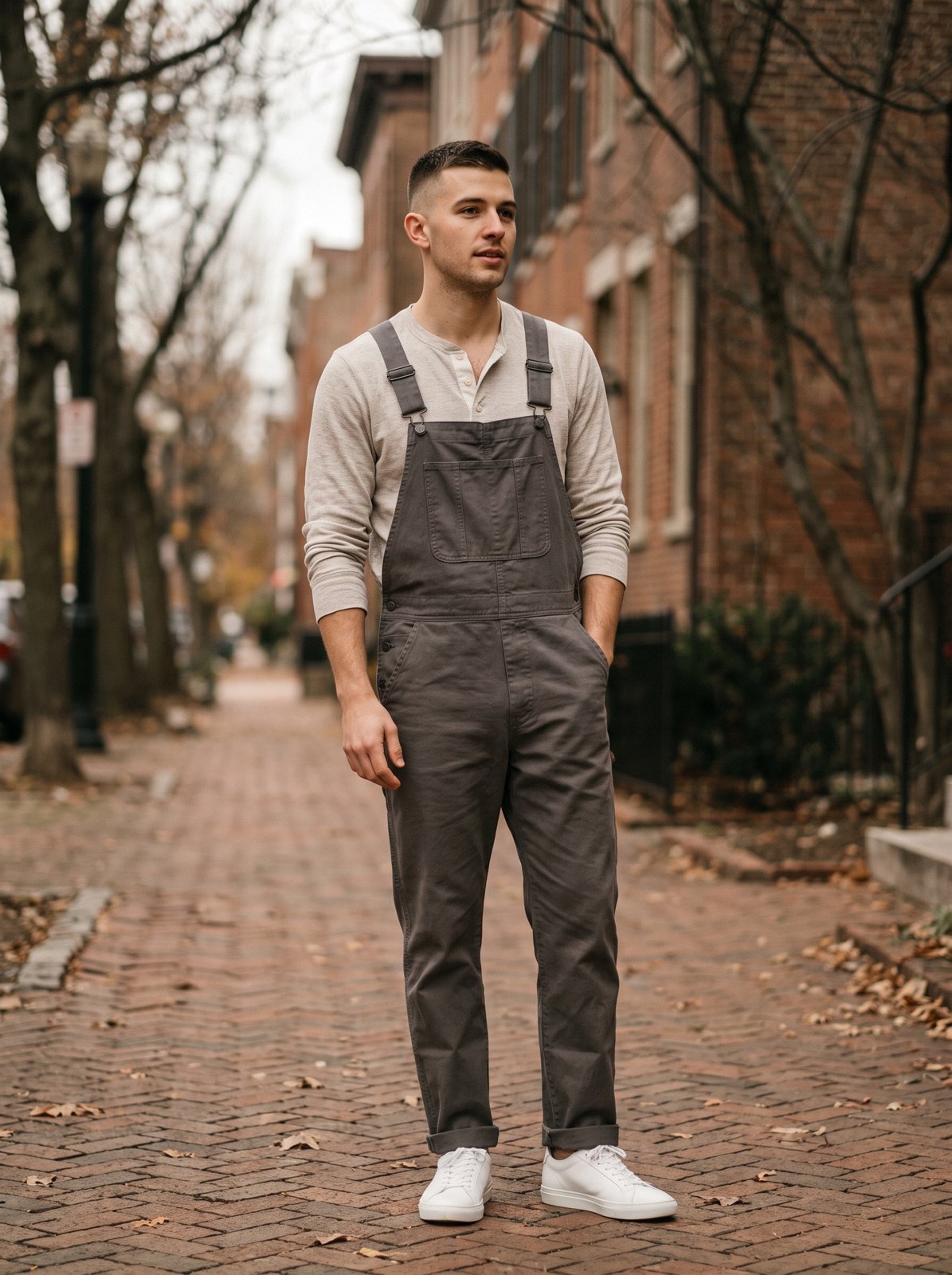
- Long-sleeve tee. The simplest step up from a T-shirt. Push the sleeves up slightly if the cuffs feel fussy.
- Thin knit. A fine-gauge crew-neck sweater lies flat under the straps and looks considered without effort.
- Button-up shirt. An oxford, flannel or other mid-weight shirt adds a collar and some structure. Roll the sleeves once if the look feels too buttoned-up.
- Hoodie. It works for a relaxed look. A thinner hoodie sits better than a heavy one, and the hood needs to fall over the straps rather than tug against them. A zip hoodie worn open over the overalls is another option and keeps the bib visible.
Cold weather
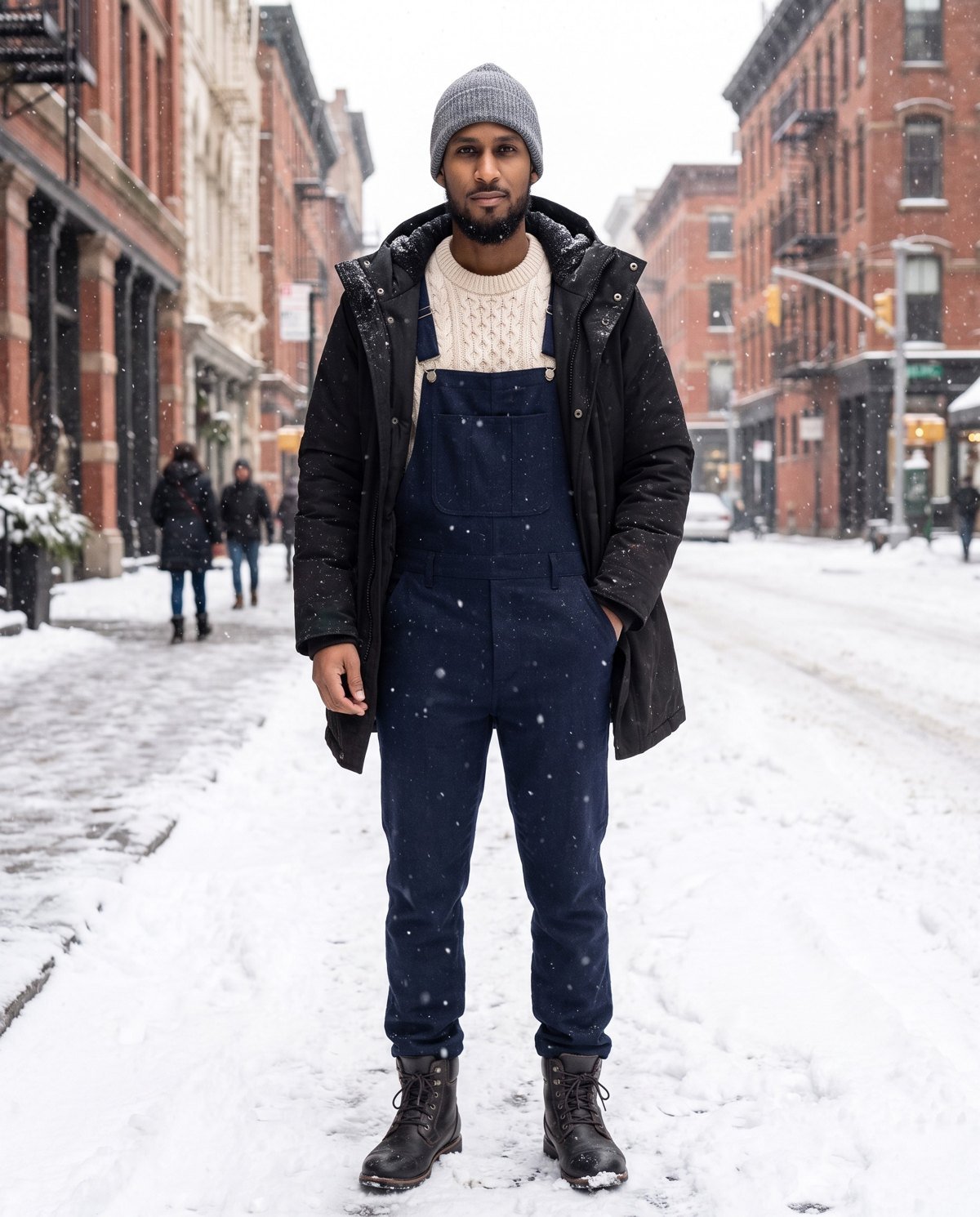
For cold weather, start with a moisture-wicking base layer, add enough insulation for the temperature and your activity, and use wind or rain protection when needed. Keeping bulky insulation over the bib can make the outfit easier to adjust.
- Underneath: a thermal or long-sleeve base layer, then a thin knit or shirt if you need it.
- On top: a warm coat or insulated jacket with room for the bib. Save an unlined chore or denim jacket for milder conditions; warmth and weather protection depend on its fabric and construction.
The jacket does the heavy lifting. A chunky sweater under the straps is often warm but awkward: it bunches, changes the shape of the bib and is hard to remove indoors. A jacket keeps the overalls’ lines clean and comes off when you walk inside. When you choose one, the usual jacket fit rules still apply, starting with where the shoulder seam sits.
Dressing for the occasion
Weekend and errands
A tee or hoodie, simple sneakers and an easy jacket if needed. Nothing to overthink.
A creative or relaxed workplace
A button-up or fine knit underneath, plus clean, simple shoes, makes overalls look intentional. Dress codes vary widely, so check what your workplace actually allows. No combination makes overalls suitable for every office.

An evening out
Keep it dark and simple: a black or deep-colored tee or knit, tidy shoes and one layer on top if it’s cool. If your overalls are black, our guide to making black feel considered covers how texture and contrast keep an all-dark outfit from going flat.
Tank tops, or nothing underneath?
Both come up a lot, especially in summer.
A tank top or sleeveless tee works on hot days and gives a more relaxed, warm-weather look. It shows more of the shoulders and arms, so it reads more casual than a T-shirt, and the straps sit directly on skin around the shoulder blades. Choose a tank with a neckline that sits comfortably above the bib, and make sure the straps don’t rub where the tank ends.
Going without anything underneath is more of a style statement than an everyday option. It can look striking in the right setting, but there are practical drawbacks: the straps sit directly on bare skin, the bib can rub, and the overalls themselves take on sweat and need washing far more often. For most days, a light tee or tank does the same job with fewer trade-offs.
Under overalls for different days
Weather isn’t the only thing that changes what goes underneath. What you’ll actually be doing that day matters just as much, from crouching in a garden to sitting on a long train ride, so it’s worth matching the layer to the activity as well as the forecast.
Hands-on days: DIY, gardening and projects
Overalls started as work clothing, and they’re still good for it. Underneath, choose something durable and easy to wash, such as a mid-weight tee or an old flannel shirt. Avoid loose sleeves or long hems that could catch, and pick colors that won’t show every mark. If you’ll be kneeling or reaching a lot, the movement test from the fit guide matters even more.
Travel days
Long days in transit reward layers you can add and remove. A tee or long-sleeve tee under the bib, with a knit or light jacket on top, handles changing temperatures between outside, a train carriage and an air-conditioned building. Knits and jersey tend to hold up better than crisp woven shirts after hours of sitting.
Hot, sunny days outside
Light colors and breathable fabrics keep things comfortable. A loose, light tee covers the shoulders where the straps sit and helps protect skin from the sun. Keep anything heavy for later in the day, when the temperature drops.
Getting the proportions right on top
When you add a layer over the overalls, its length changes the outfit’s shape. Shorter jackets that end around the hips keep the bib and straps in view and suit most builds. Longer coats work well in cold weather and can look sharp, especially in a single color with the overalls underneath, but they hide more of the garment. Either way, leave enough room across the chest so the jacket closes without pressing the bib flat.
Shoes complete the line. Clean, simple sneakers work with almost every combination in this guide, while boots suit heavier fabrics and colder months. Whatever you pick, keep the hem tidy: a slight break or a single roll usually looks more deliberate than a heavy stack at the ankle.
Choosing colors that work with your overalls
The color of the underlayer sits right next to your face and frames the bib, so it shapes the whole outfit. You don’t need a color theory lesson, just a few dependable pairings.
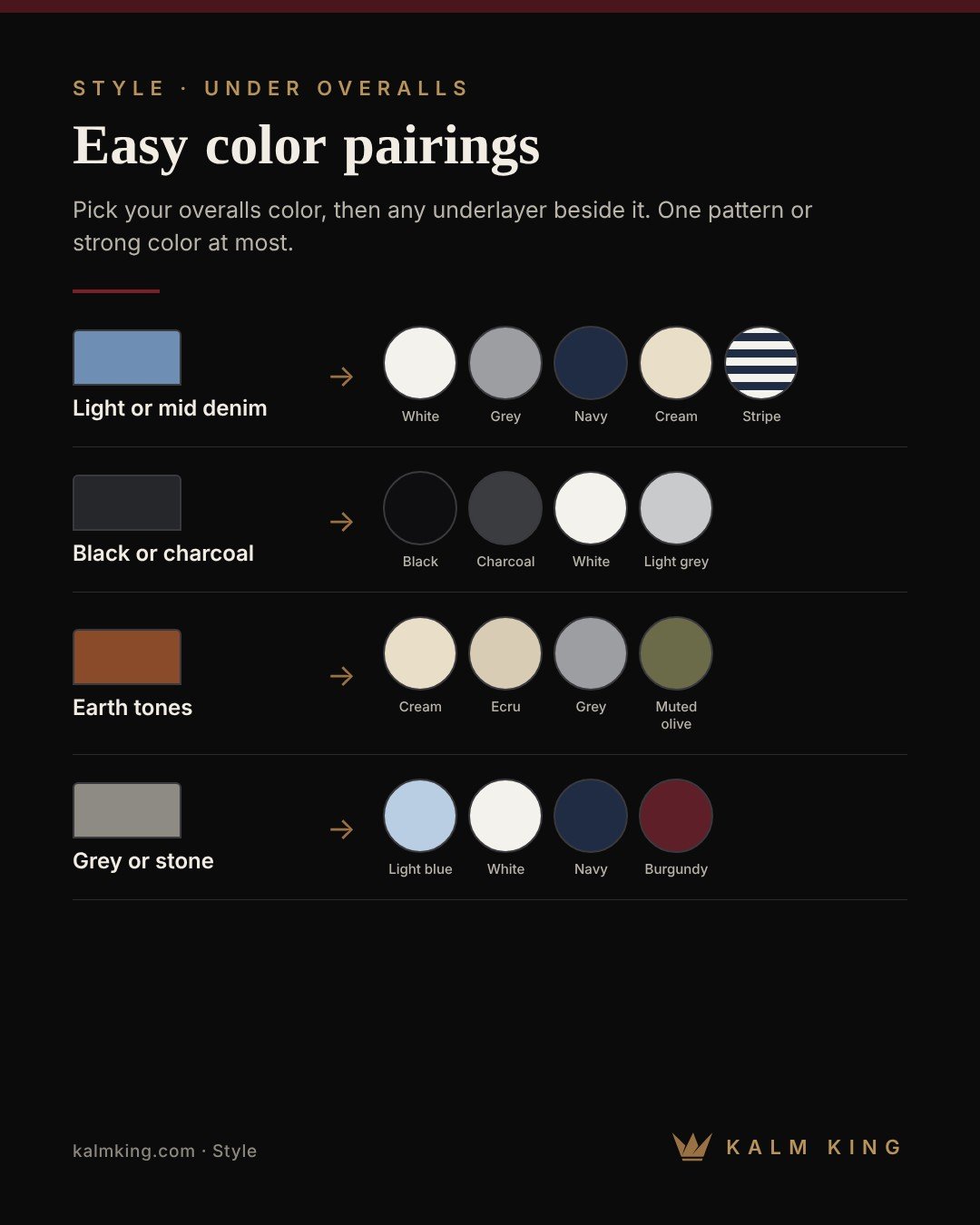
- Light or mid-wash denim. White, grey, navy and cream are hard to get wrong. Stripes work well here too, as long as they’re the only pattern in the outfit.
- Dark, black or charcoal overalls. Go tonal with black or charcoal for a quieter look, or use a white or light grey tee for clean contrast.
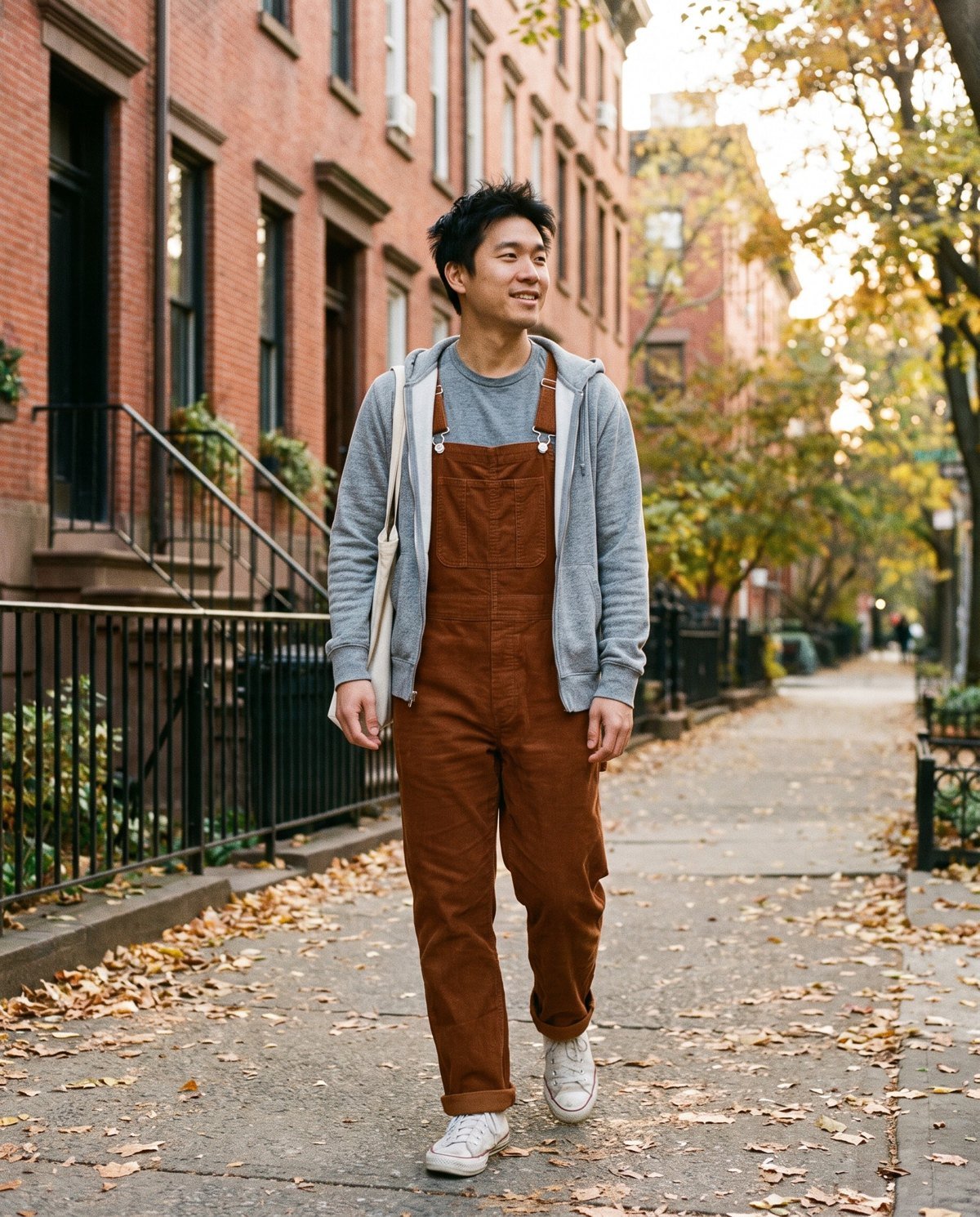
- Earth tones: brown, rust, olive and tan. Cream, grey, ecru and muted warm colors sit comfortably with these. A grey hoodie or tee softens a strong rust or brown.
- Grey or stone overalls. These take almost anything. A light blue shirt or a darker knit adds a little more definition.
If you’re unsure, choose a plain neutral and let the overalls be the main piece. One pattern or one strong color per outfit is usually enough.
Matching texture and weight
Beyond color, the weight and texture of the underlayer should feel at home next to the overalls. Heavy canvas or rigid denim pairs naturally with sturdier pieces: flannel, a mid-weight knit or a thicker tee. Lighter, washed denim or soft cotton overalls suit lighter layers, such as jersey tees, chambray and linen blends. Corduroy has its own texture, so a smooth knit or plain tee usually balances it better than another heavily textured fabric.
The main thing to avoid is a mismatch that looks accidental, such as a delicate, shiny fabric under rugged work-style overalls. Contrast can work, but it should look like a choice. When in doubt, keep one element plain and let the other carry the texture.
How the layer underneath should fit
An underlayer that fits well on its own can still look wrong under overalls, because the straps and bib change how it sits. A few checks help.
- Close, not tight. The layer should follow your shape without pulling. Very loose tees can balloon out at the sides of the bib, while very tight ones can show every strap line.
- Shoulders that line up. If the shoulder seam sits well past your shoulder, the straps will sit on loose fabric and look untidy.
- Sensible length. A hem that ends somewhere around the hips is easy to wear untucked. Very long hems are the ones that bunch at the side openings.
- Collars that lie flat. With a button-up, make sure the collar sits evenly over the straps rather than being pinned under one side.
- Sleeves that suit the look. Short sleeves that end mid-bicep look neat; long sleeves can be pushed or rolled once if the cuffs feel fussy.
The overalls themselves need to fit too, of course. If the bib, straps or seat aren’t sitting right, no underlayer will fix it, so it’s worth reading how men’s overalls should fit before you build outfits around a pair.
Five easy combinations
- White crew-neck tee and clean sneakers.
- Grey henley with the sleeves pushed up.
- Light blue oxford shirt under the bib, sleeves rolled once.
- Fine-gauge black knit and a simple jacket on top.
- Moisture-wicking base layer, thin knit and an insulated jacket or warm coat chosen for the conditions.
A small rotation that covers the year
You don’t need a big wardrobe to wear overalls well. A handful of pieces covers most days:
- Two plain crew-neck tees, one white and one grey or navy.
- A henley or pocket tee for a little more interest.
- A long-sleeve tee for mild days.
- One button-up shirt, such as an oxford in spring and summer or a flannel in autumn and winter.
- A fine-gauge knit in a neutral color.
- A base layer for the coldest, longest days outside.
Add one or two jackets that fit over the bib, and you can dress for most everyday conditions without thinking too hard. Most of these pieces work with the rest of your wardrobe too, so they earn their place beyond overalls.
Keeping your underlayers looking right
Underlayers sit close to the skin and get washed often, so they wear out faster than the overalls. A little care keeps them looking intentional.
- Follow the care label. It’s the best guide to washing temperature and drying for that specific fabric.
- Watch collars and necklines. A stretched or wavy neckline shows above the bib straight away. That’s usually the point to retire a tee to weekend or work duty.
- Keep whites white. Washing whites together helps them stay bright, and a white tee is the piece that shows wear first.
- Deal with pilling. Knits can pill where the straps rub. A fabric shaver or a de-pilling comb, used according to the garment’s care label and the tool’s directions, tidies them up.
Quick checklist before you head out
- The neckline frames the bib rather than competing with it.
- Nothing bunches under the straps or pushes the bib forward.
- The side openings lie flat, with no long hem bunching out.
- The fabric suits the weather and how long you’ll be outside.
- Warmth for real cold sits on top, as a jacket or coat.
- One pattern or strong color at most, with the rest kept simple.
Common mistakes
- A neckline that fights the bib. Simple necklines frame it; busy ones compete with it.
- Too much bulk under the straps. Move the warmth to the outside.
- A heavy hood pulling at the straps. Choose a thinner hoodie or wear a zip-up open on top.
- Shirt hems bunching at the sides. Tuck in, or choose a shorter cut.
- Cotton next to the skin on a long, cold day outdoors. Switch to a base layer that handles moisture.
The underlayer is a supporting role. When it frames the bib cleanly and suits the weather, the overalls look like a choice rather than a costume, and you can stop thinking about them. If wearing something bolder still feels like a step, our look at what research says about clothes and confidence is a good companion read.
Sources
- REI Co-op. “How to Dress in Layers: Tips for Staying Warm.” REI Expert Advice.
Frequently asked questions
What do men wear under overalls?
Usually a plain crew-neck tee in warm weather, and a long-sleeve tee, thin knit or button-up shirt when it cools down. In real cold, wear a base layer underneath and put most of the warmth on top as a jacket.
Can you wear a hoodie under overalls?
Yes. A thinner hoodie sits better than a heavy one, and the hood should fall over the straps rather than pull against them. A zip hoodie worn open on top of the overalls is another option.
Should you tuck your shirt into overalls?
You usually don't need to, because the overalls cover the waist. If a long shirt hem bunches at the side openings, tuck it in or choose a shorter cut.
What should I wear under overalls in winter?
A base layer next to the skin, a thin knit or shirt if needed, and a warm jacket or coat on top. Outdoor layering guidance advises against cotton next to the skin in cold conditions if you might sweat.
Can you wear a tank top under overalls?
Yes, especially on hot days. A tank gives a more casual look and leaves the shoulders bare under the straps, so choose one with a neckline that sits comfortably above the bib and check that nothing rubs.
Should the shirt under overalls be fitted or loose?
Close but not tight usually works best. A very loose tee can balloon out at the sides of the bib, while a very tight one shows every strap line. Shoulder seams that line up with your shoulders keep the straps sitting neatly.
Can you wear a button-up shirt under overalls?
Yes. An oxford, chambray or flannel shirt worn under the bib looks more deliberate than a tee. Keep the fabric light enough that it doesn’t bunch under the straps, and roll the sleeves once if the look feels too formal.
What color shirt goes with denim overalls?
White, grey, navy and cream are the easiest choices with light or mid-wash denim. Stripes also work, as long as they’re the only pattern in the outfit.
FIELD NOTES
Get the Overalls Fit Kit, free.
Your measurement card, the six fit checkpoints and a checklist to take shopping. Join Field Notes for new guides and a say in what Kalm King makes.
THE KALM KING JOURNAL
Continue reading
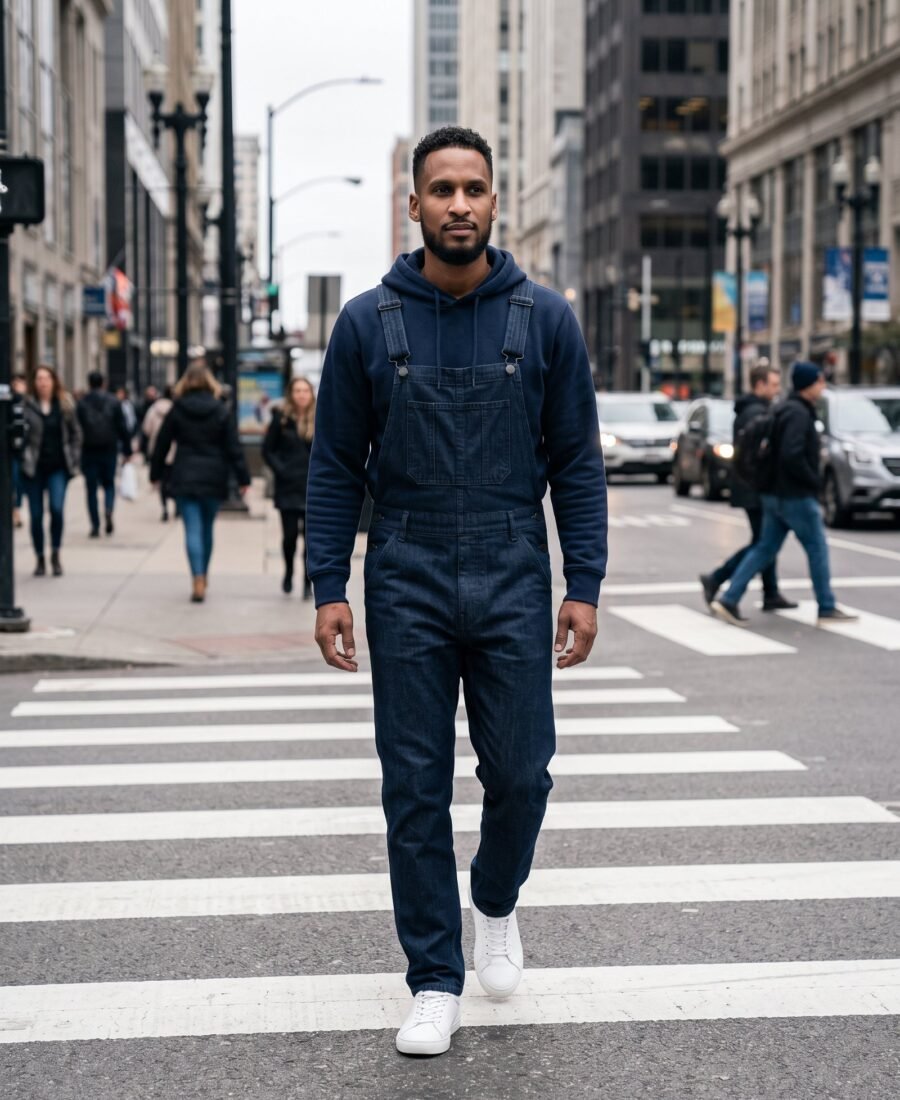
How to Style Overalls for Men: Everyday Outfits Beyond Workwear
How to style overalls for men without looking like a farmer or a kid: fit rules, what to wear underneath, shoes and seven everyday outfits to copy.
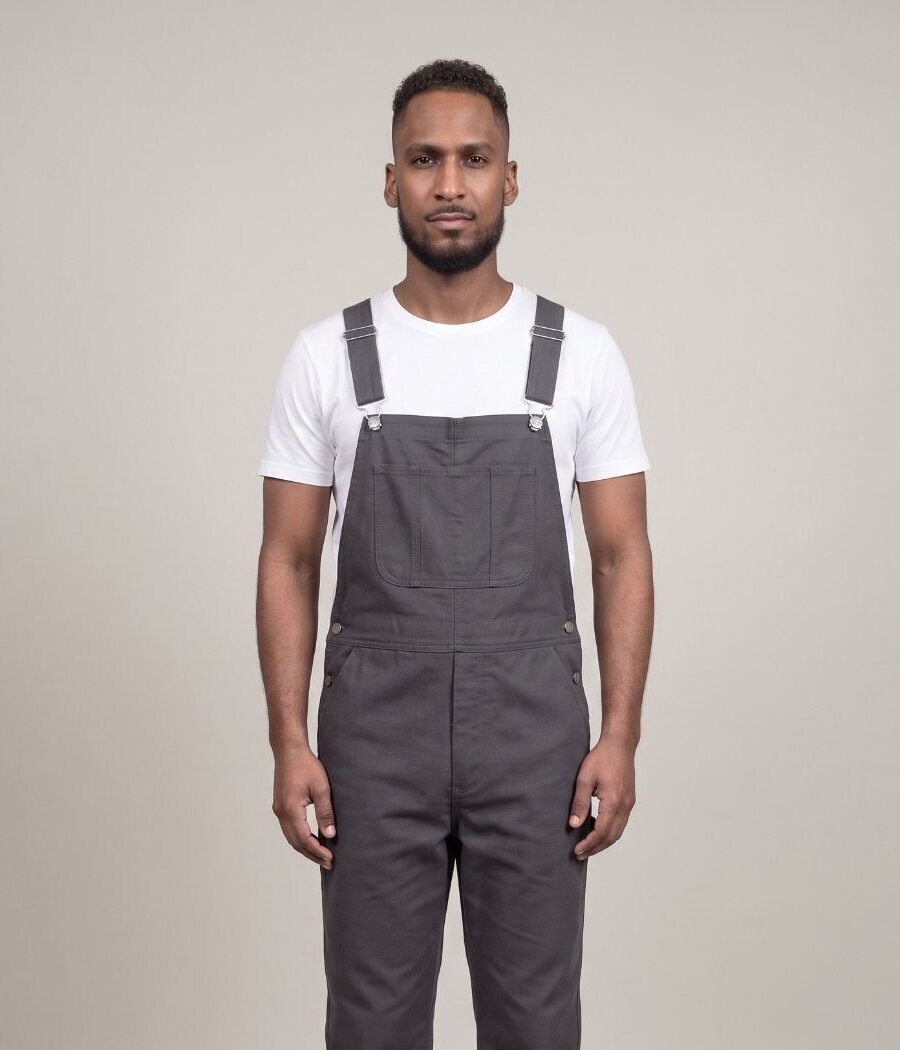
How Should Men’s Overalls Fit? Bib, Rise, Seat and Length
How men’s overalls should fit: where the bib sits, how to set the straps, rise, seat and length, plus a sit test and fixes for common fit problems.

Can clothes change how you feel? What the research actually says
Can clothes affect confidence and first impressions? A research-backed look at fit, context, bias and getting dressed with intention.