
October 8, 2026
How Should Men’s Overalls Fit? Bib, Rise, Seat and Length
How men's overalls should fit: where the bib sits, how to set the straps, rise, seat and length, plus a sit test and fixes for common fit problems.
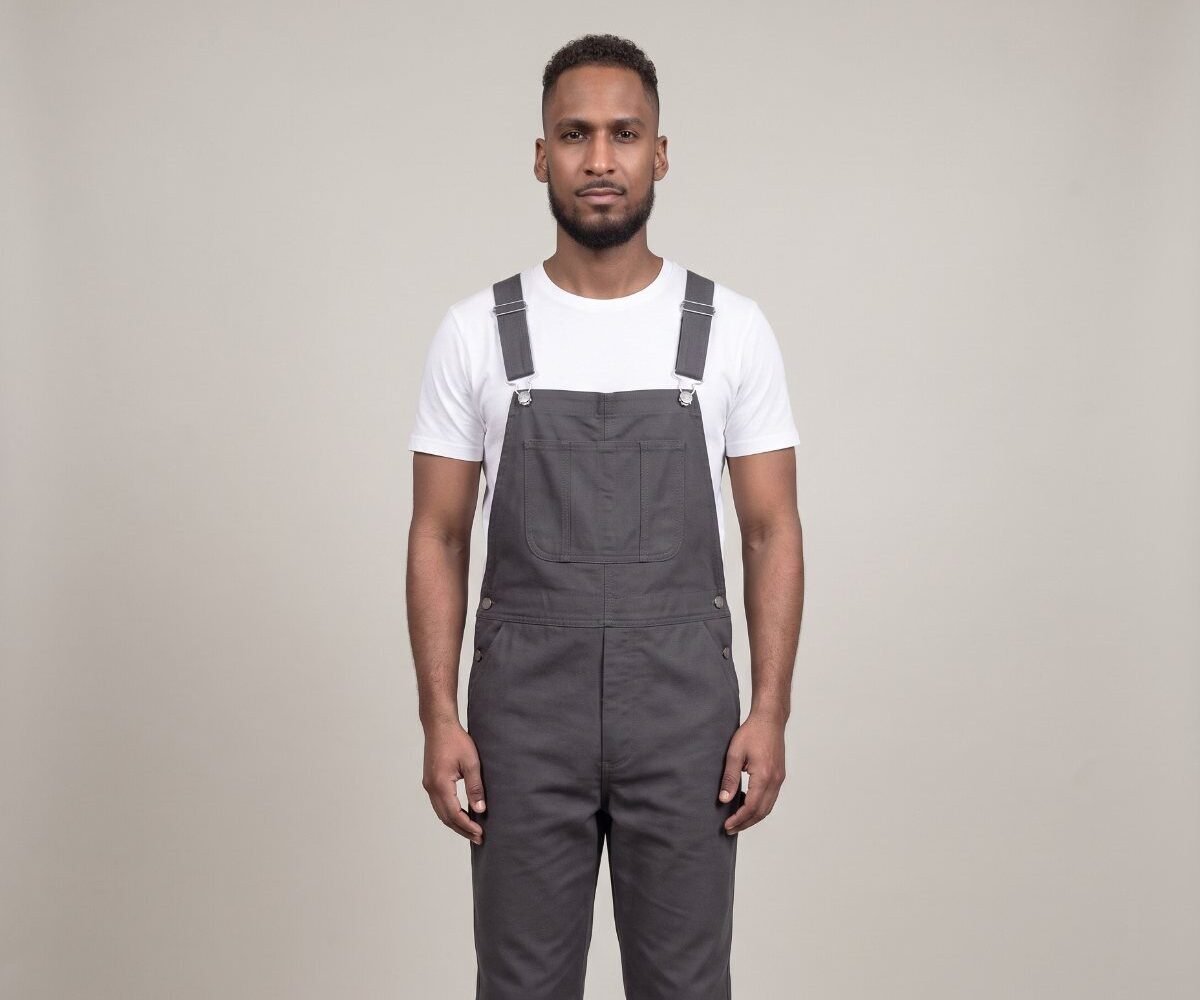
Overalls are forgiving in some places and unforgiving in others. A loose leg can look relaxed and intentional. A bib that sits at your stomach, straps that dig into your shoulders or a seat that sags rarely looks deliberate. Get a handful of fit points right and overalls stop looking borrowed and start looking like yours. Here’s how men’s overalls should fit, point by point.
The short answer: around mid-chest is a useful starting point for the top of the bib, the straps should lie flat without digging in, the side openings should stay close when you stand, and nothing should pull at the crotch or seat when you sit down. Length is the easiest thing to fix, so judge everything else first.
Which overalls this guide covers
This is a fit guide for everyday bib overalls worn as clothing: a bib at the chest, straps over the shoulders and trouser legs below. Insulated, flame-resistant or other protective work overalls are sized and fitted for safety and movement on the job, so follow the manufacturer’s guidance and your workplace’s rules for those.
Measure before you buy
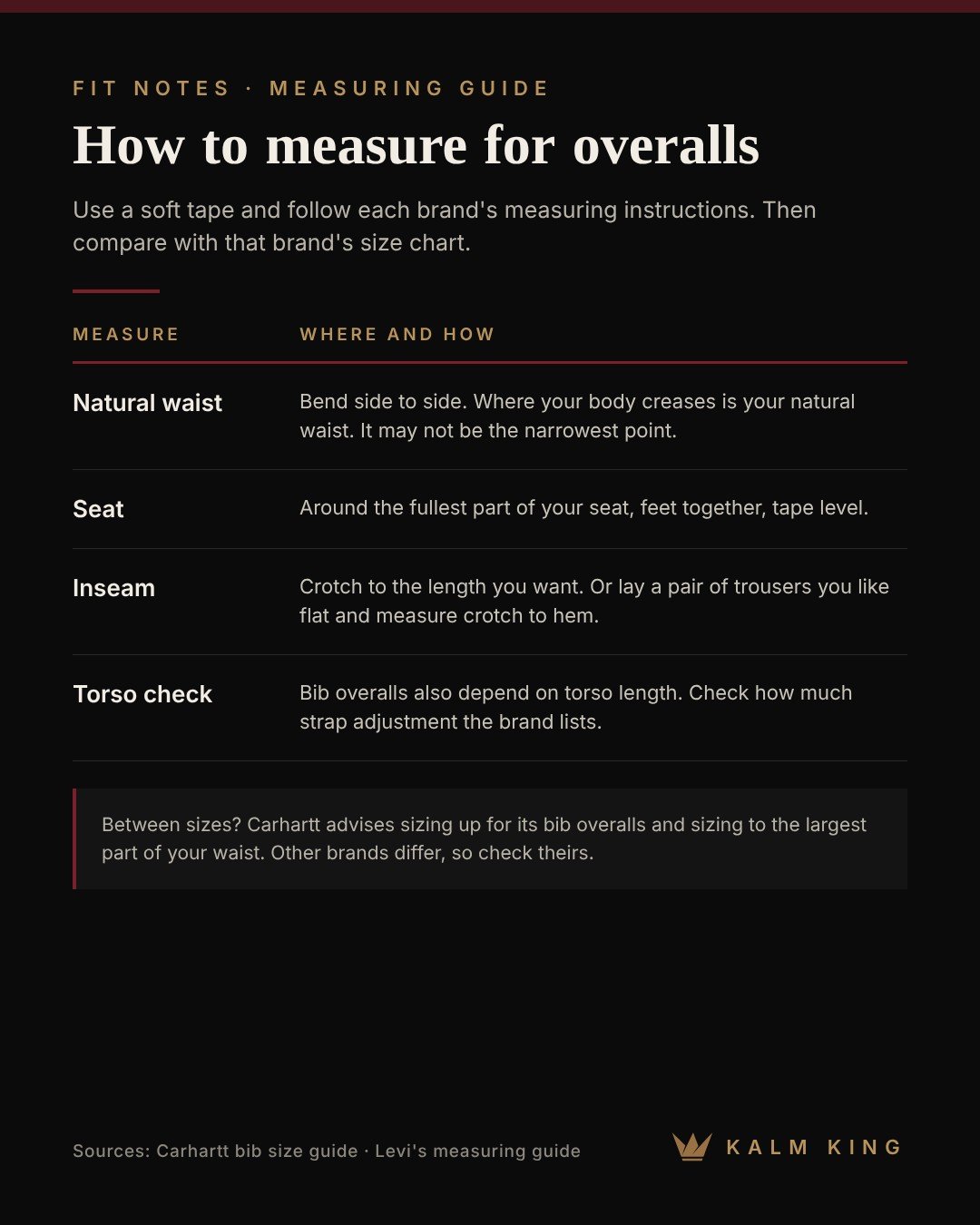
Overalls sizing is usually based on the same measurements as trousers, with one extra variable: your torso. Use a soft tape and follow each brand’s measuring instructions (Carhartt, for example, specifies measuring over undergarments), then compare with that brand’s size chart.
- Natural waist. Carhartt’s bib size guide describes it simply: bend side to side and find the natural bend in your body. That is your natural waist, and it may not be the narrowest point.
- Seat. Measure around the fullest part, feet together, keeping the tape level.
- Inseam. Measure from the crotch to the length you want. Carhartt also suggests laying a pair of trousers you like flat and measuring from the crotch point to the hem, and Levi’s describes the same crotch-to-hem garment measurement.
- Torso. There’s no single standard measurement, so check how much strap adjustment the brand lists and whether it offers tall or long-torso options.
If you fall between sizes, Carhartt’s guidance for its bib overalls is to size up and to size to the largest part of your waist. That advice is specific to its fit; other brands cut differently, so read their notes too.
The six overalls fit checkpoints
Put the overalls on, set the straps so the bib sits where it should, then work through these standing up. Repeat the last three sitting down.
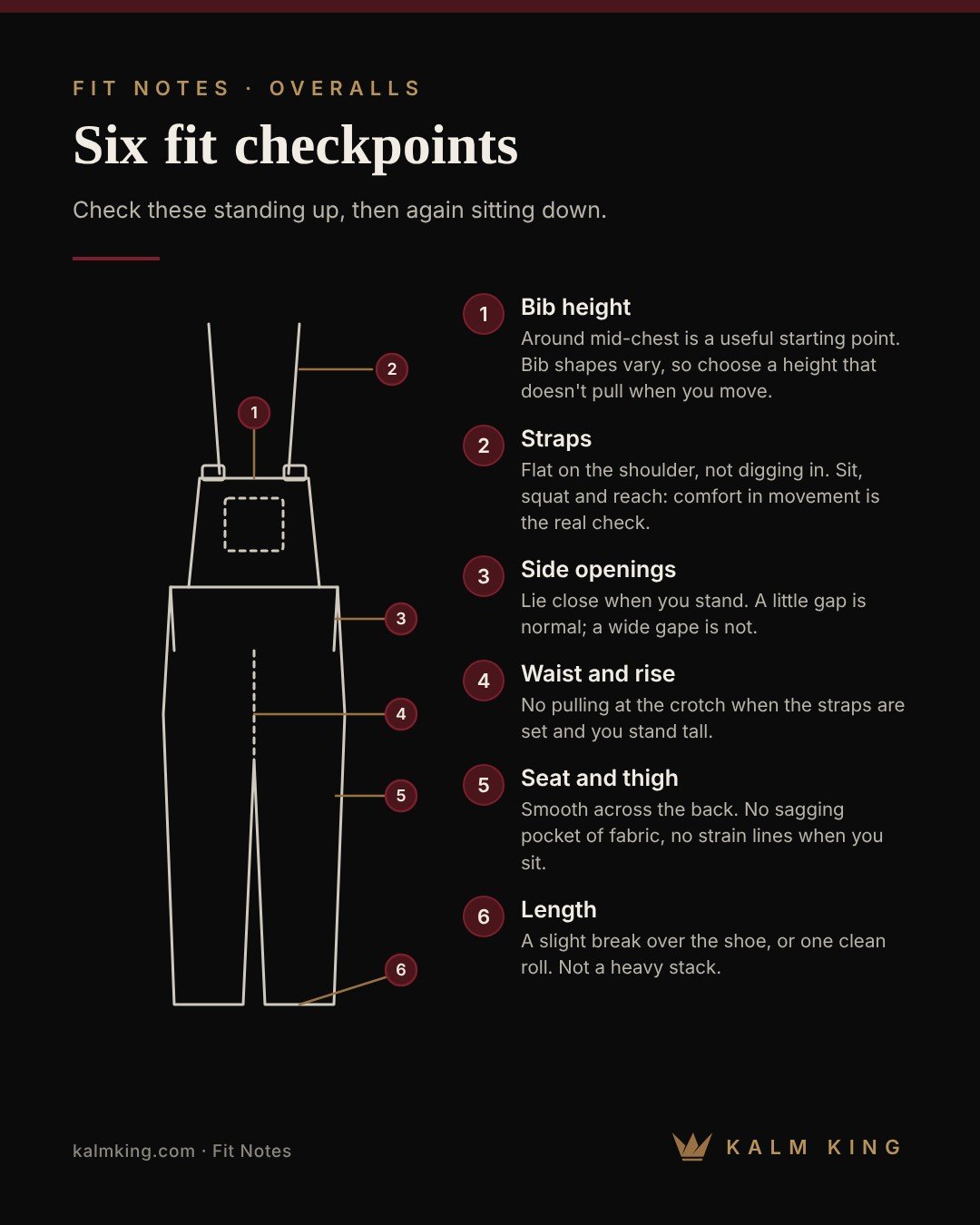
1. Bib height
For many everyday bib designs, around mid-chest is a useful starting point. Bib shapes vary, so prioritize a comfortable position that works with your proportions and doesn’t pull when you move. Bib height is set by the straps, so this is where you start.
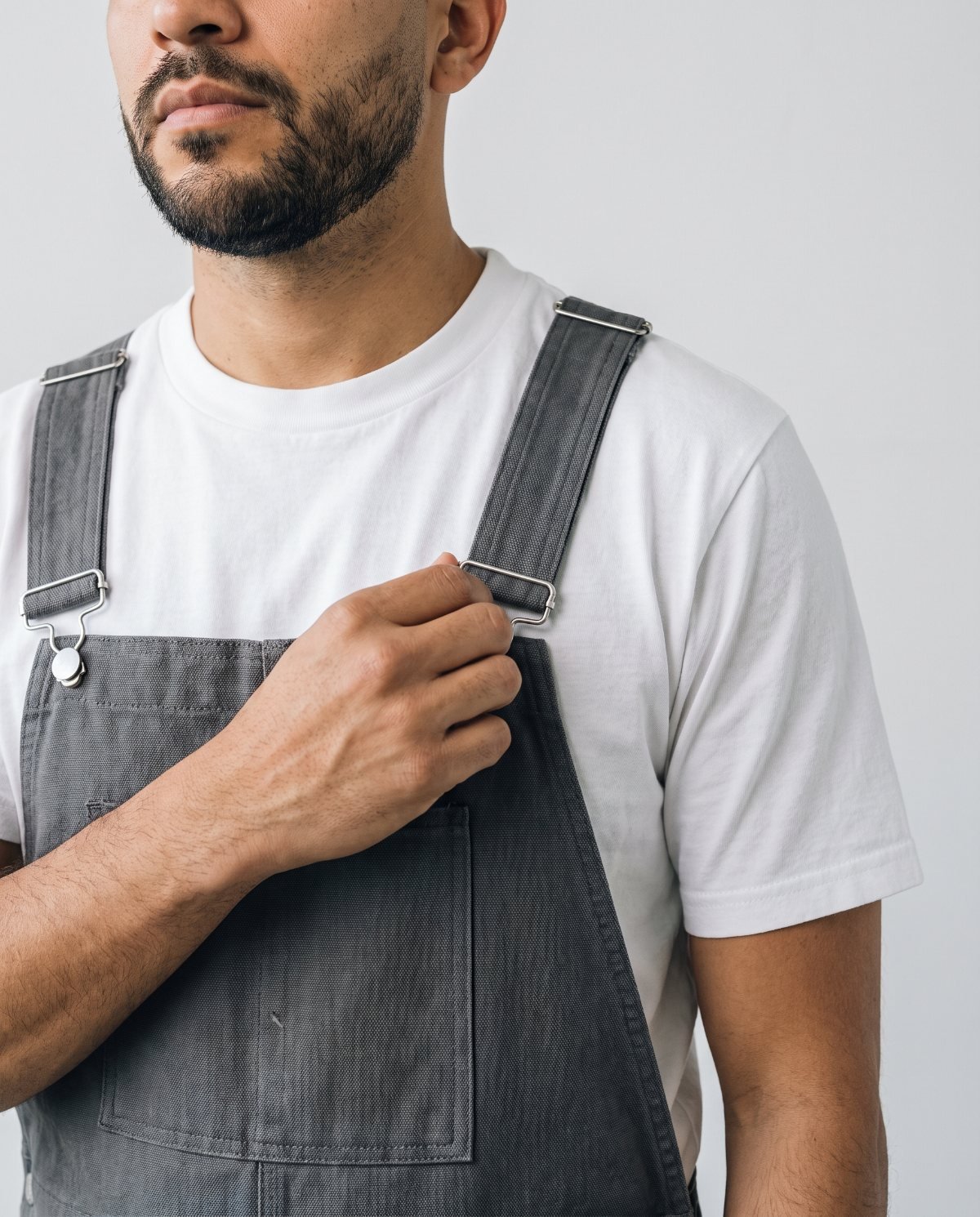
2. Straps
With the bib at a comfortable height, the straps should lie flat on your shoulders without digging in. Where the adjusters end up doesn’t matter on its own; comfort and movement are the real check. If the straps are fully lengthened and the bib still sits too high or the crotch pulls when you sit or reach, try a longer-torso cut; a larger size may help, but recheck the waist and seat.
3. Side openings
Most bib overalls have openings at the hip, often with buttons. Standing, they should lie fairly close. A little gap is normal; a wide gape usually means the waist is too big or the layer underneath is too bulky. Our guide to what to wear under overalls covers how to keep layers from pushing the sides out.
4. Waist and rise
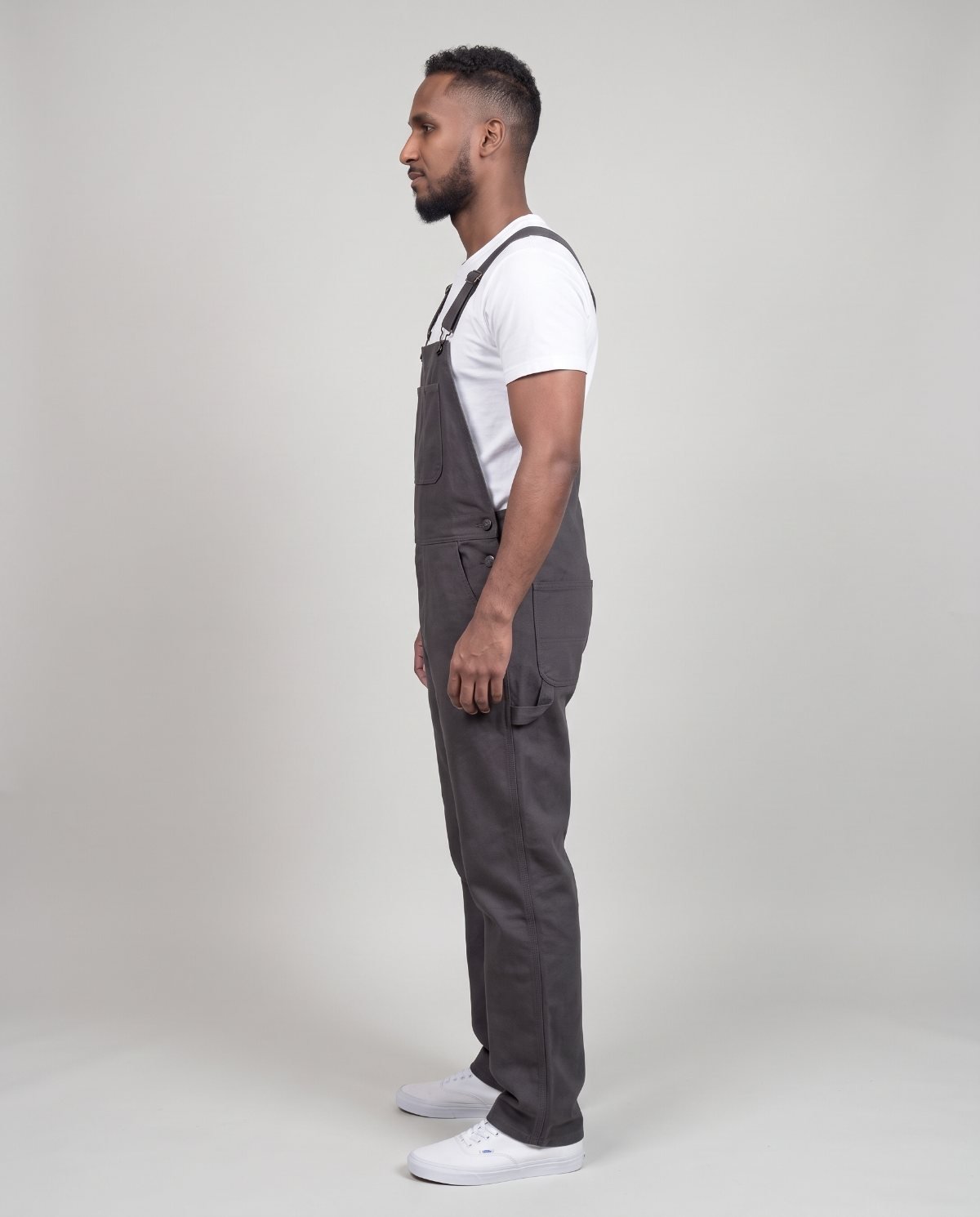
Once the straps are set, nothing should pull at the crotch when you stand tall. Pulling there means the rise or the torso is too short for you. Loosening the straps helps only until the bib drops too low.
5. Seat and thigh
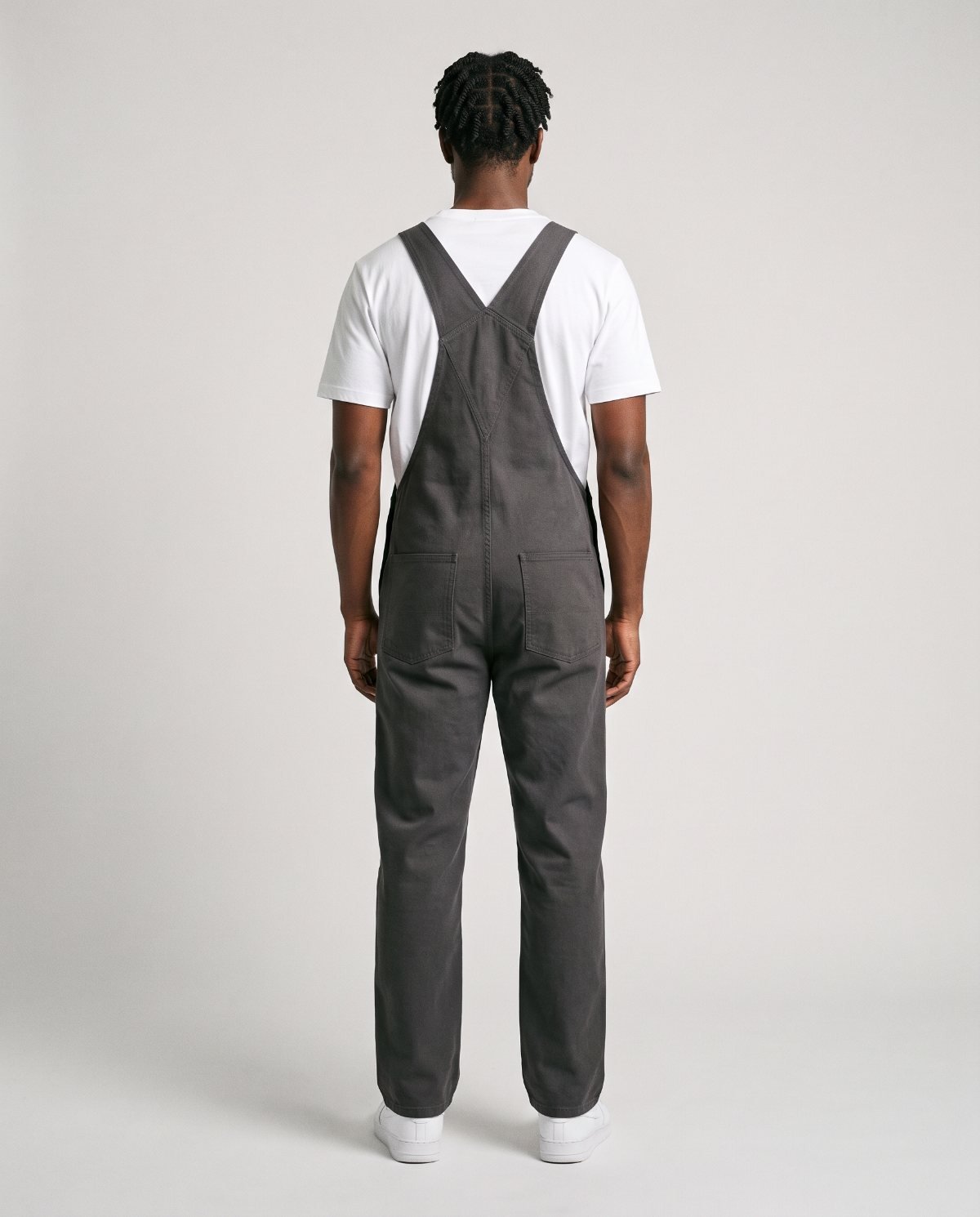
From behind, the seat should be smooth: no sagging pocket of loose fabric, and no horizontal strain lines. A sagging seat often improves when you shorten the straps. If it doesn’t, the size is too large there. Strain lines across the thighs when you sit point to a leg that’s too narrow for you.
6. Length
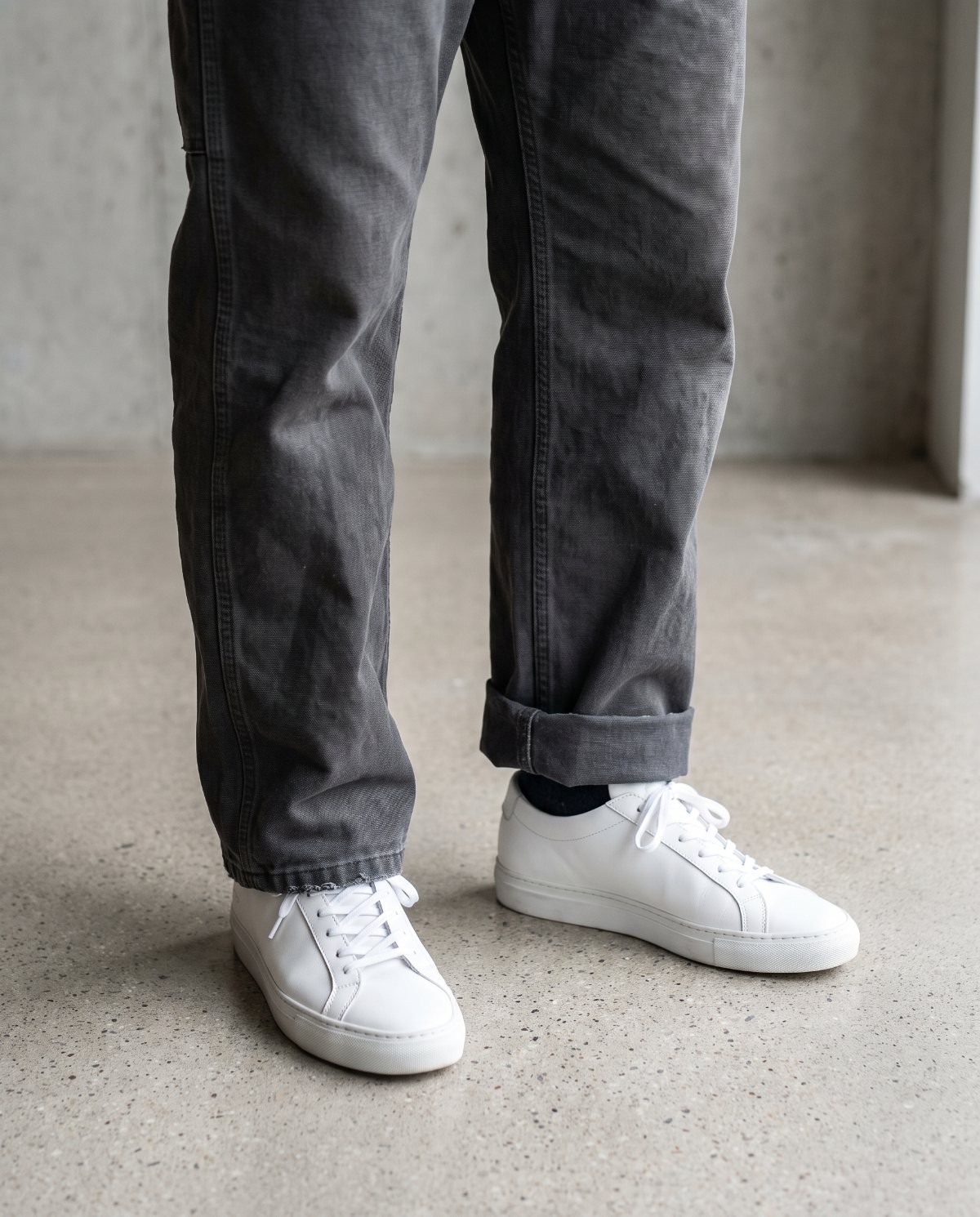
A slight break over the shoe, or one clean roll at the ankle, both look intentional. For the clean fit this guide covers, a heavy stack at the shoe works against you, though some relaxed styles stack on purpose. Length is also the easiest fix, so don’t reject a pair that fits everywhere else just because it’s long.
Leg cut: relaxed, straight or tapered
The leg cut changes how the whole garment reads, so decide what you want before you judge the fit. Brands name their cuts differently, so read the fit description and, where it’s listed, the leg-opening measurement rather than relying on the name alone.
- Relaxed. More room through the seat and thigh, often with a wider leg opening. This is the most forgiving cut for movement and for layering underneath. Some relaxed styles are meant to bunch a little, but if the fabric gathers heavily behind the knee or pools at the shoe, check the size and length before blaming the cut.
- Straight. The leg falls in a fairly even line from the thigh to the hem. It’s the easiest cut to wear with most shoes and the simplest to judge: from the side, look for one clean line from hip to ankle.
- Tapered. The leg narrows toward the ankle. It looks neater with low-profile sneakers, but it shows tightness more readily. Check the thigh and knee when you sit and squat, and expect hemming to be a little more involved, as covered in the tailoring section below.
If you’re unsure, a straight cut in the right size is a safe first pair. It’s the easiest to judge in a mirror, and it works with the widest range of shoes and layers. Once you know which cut suits you, note it alongside your measurements so your next pair is quicker to choose.
Matching the hem to your shoes
The right length depends partly on what’s on your feet, so judge it in the shoes you’ll wear most often.
- Low sneakers. A slight break, or a single roll sitting just above the shoe, keeps the line clean.
- Boots. Taller shoes take up length, and a roll can sit awkwardly against a boot shaft. A hem that falls over the top of the boot with a slight break usually looks tidier.
- Chunky soles. A wider leg opening tends to balance a heavier shoe, while a narrow tapered leg can make it look oversized.
If you switch between sneakers and boots, a single roll gives you flexibility: wear it rolled with sneakers and unrolled with boots, as long as the unrolled length doesn’t drag on the ground.
Fitting overalls around your layers
Overalls are rarely worn on their own, so fit them over the kind of layer you’ll actually wear. A pair that sits cleanly over a T-shirt can feel tight at the side openings and shoulders over a thick sweater, and a pair sized around winter layers can look loose in summer.
- Try them on over your usual layer. If you mostly wear tees, fit them over a tee. If they’re mainly for colder months, try them over a mid-weight knit or shirt.
- Recheck the straps when you change layers. A thicker layer can lift the bib slightly, and the straps may need letting out.
- Watch the side openings. They’re the first place bulky layers show. If they gape over a sweater but sit well over a tee, the pair may not have room for that outfit, so decide which layers you’re buying it for.
- Leave room for outerwear. A jacket worn over overalls needs a little space for the bib and straps underneath, especially across the chest.
For what to wear underneath in different weather, see our guide to layering under overalls. Once the fit is right, our guide to how to style overalls for men turns the pair into complete outfits.
The sit, squat and reach test
Overalls connect your shoulders to your seat, so movement exposes fit problems that standing still hides. Before you commit:
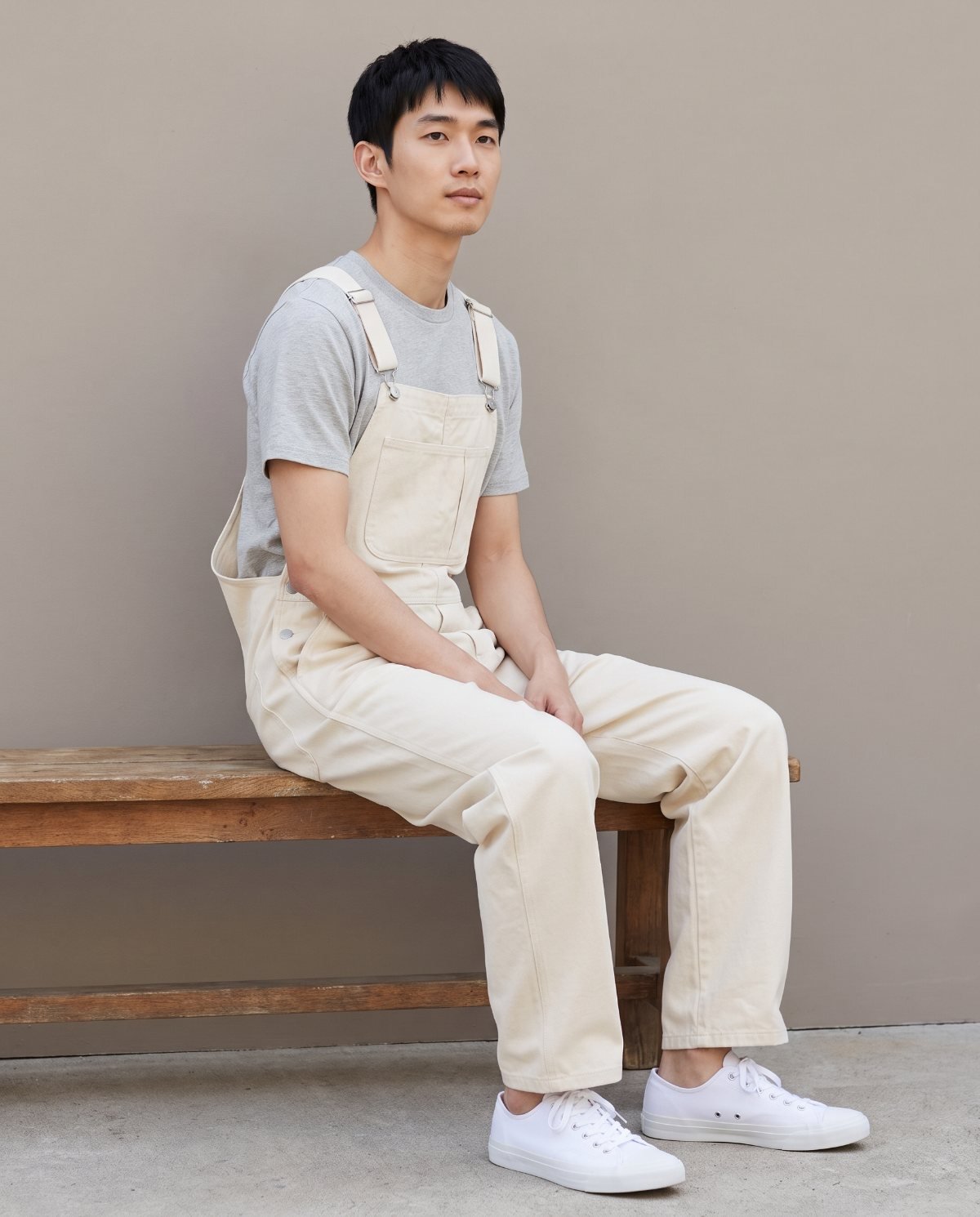
- Sit down on a chair or bench. The straps shouldn’t tighten into your shoulders, and the seat shouldn’t strain.
- Squat or crouch as if to tie a shoe. You should be able to get down without the crotch or back pulling hard.
- Reach up with both arms. The bib will lift a little; it shouldn’t drag the whole garment up into the crotch.
How overalls fit different builds
Size charts are built around typical proportions. Many people differ somewhere, and overalls tend to show it in a few predictable places. Use these notes as starting points, then confirm with the six checkpoints and the sit test.
Tall or long in the torso
If the garment is too short through the torso, the bib may remain too high or the crotch may pull even with the straps fully lengthened. Look for a longer-torso cut, then recheck the bib, rise and seat; do not choose it by your height alone. Check whether a brand’s “tall” option refers to the inseam, the torso or both, and measure your inseam separately, because a long torso doesn’t always come with long legs.
Shorter or short in the torso
If the garment is too long through the torso, the bib may remain too low even with the straps fully shortened. Try a shorter-torso cut or different bib shape, while checking the seat and rise. Straps reaching their shortest setting are not a problem if the overall fit and movement are comfortable. Extra leg length is the easy part, because a hem or a single roll handles it.
Carrying weight at the chest or stomach
Overalls can be comfortable here because there’s no waistband digging in, but the bib needs room to lie flat. Check from the side: the bib should rest against you rather than tent forward or press in. The side openings matter more too, so make sure they close comfortably when you sit, not only when you stand.
Muscular thighs or a larger seat
Size for the seat and thigh first, then use the straps to set the bib. A pair that fits your waist but strains across the thighs will feel worse every time you sit or crouch. A relaxed cut often solves this better than going up a size, which can leave the bib and torso too big.
Slim build
The risk is excess fabric rather than strain: a seat that sags and side openings that gape. Shorten the straps first, then try a smaller size or a straighter cut. Avoid sizing down so far that the torso becomes too short.
Overalls fit problems and what to try
Adjust the straps first. Many issues change once the straps are set correctly, so judge the size after that.
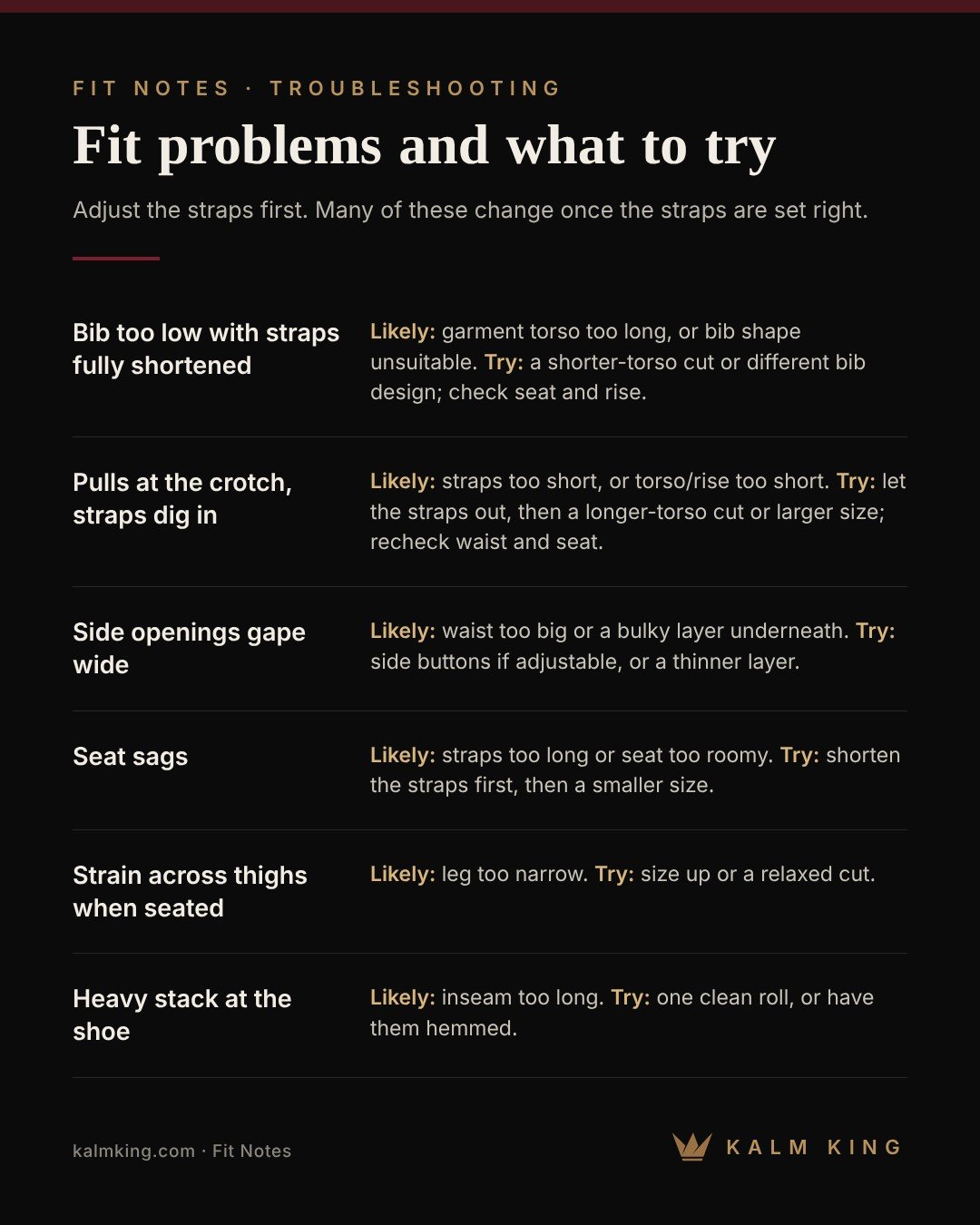
- Bib sits too low even with the straps fully shortened: the garment may be too long through the torso for you, or the bib shape may not suit your proportions. Try a shorter-torso cut or a different bib design; check the seat and rise before trying a smaller size.
- Pulling at the crotch and straps digging in: let the straps out. If it still pulls, try a longer-torso cut or a larger size, while rechecking the waist and seat. A “tall” label can mean longer legs rather than a longer torso, so check the brand’s notes.
- Side openings gape: use the side buttons if they’re adjustable, or switch to a thinner layer underneath.
- Seat sags: shorten the straps, then consider a smaller size.
- Strain across the thighs when seated: size up or choose a more relaxed leg.
- Heavy stack at the shoe: roll once, or have them hemmed.
What a tailor can and can’t fix
Hemming the legs is usually a straightforward alteration, though a tapered leg or a special hem finish can complicate it. Straps are usually adjustable already, and some can be shortened. Rise, seat and torso length are built into the pattern, so they are much harder to change. Buy for those, and treat length as adjustable.
Fabric, washing and how fit changes over time
Two pairs in the same size can fit differently because of the fabric. Heavier, rigid fabrics such as duck canvas and unwashed denim hold their shape and can feel stiff at first. Washed or softer fabrics drape more and usually feel closer to their final fit from the start. Fabrics with some stretch allow more movement, though they can relax with wear.
- Shrinkage. Cotton can shrink, particularly with hot washes and tumble drying. Check whether the brand describes the fabric as pre-washed or pre-shrunk, and follow the care label. Once you decide to keep the pair, follow the maker’s washing or soaking instructions before permanent hemming, then remeasure the inseam. Pre-shrunk fabric may still change slightly.
- Breaking in. Stiff fabrics often soften and ease at the seat and knees with wear. That’s a reason to allow for a little stiffness, not to buy a pair that’s tight. A pair that pulls on the first day is unlikely to feel right later.
- Straps over time. Strap adjusters can slip or settle with wear. Recheck the bib height every so often, especially after washing.
When you try a new pair, judge it in the fabric it’s made from. Don’t rely on washing or breaking in to rescue a poor fit; follow the care label and reassess the fit afterward.
Buying overalls online without guessing
Online, you lose the mirror and the sit test, so lean on numbers instead.
- Measure yourself using the brand’s own instructions, as described above.
- Measure a pair you already like. Lay trousers or overalls that fit you well flat and note the waist, inseam and, if you can, the leg opening. Compare these with any garment measurements the brand lists, which can be more useful than a body-measurement chart.
- Read the fit notes. Look for words like relaxed, straight or tapered, whether the brand suggests sizing up or down, and whether tall or short options exist.
- Check the strap adjustment. If you’re long or short in the torso, how much adjustment the straps offer is often the deciding detail.
- Check the returns policy before you order. If you’re between sizes and returns are simple, ordering two sizes and sending one back can save time.
- Test at home before you remove the tags. Set the straps, run through the checkpoints, then sit, squat and reach. Do this before washing, because many retailers won’t take back washed items.
Customer reviews can reveal patterns, such as many buyers saying a style runs small, but treat any single review with caution. Different bodies and preferences produce very different verdicts.
Common overalls fit mistakes
- Sizing by waist alone. Overalls also have to fit your torso.
- Judging fit before setting the straps. Everything shifts once the bib is at the right height.
- Testing only while standing. Sit, squat and reach before you decide.
- Rejecting a good pair for length. Length is the easiest fix.
- Assuming every brand fits the same. Use each brand’s own size chart.
- Hemming before the first wash. Once you’re keeping the pair, follow the maker’s washing instructions first, then remeasure the inseam.
Quick overalls fit checklist
Run through this list each time you try a new pair, whether in a store or at home. If one point fails, go back to the matching section above before you decide, because most problems come down to the strap setting, the torso length or the seat.
- Straps set first, with the bib at a comfortable height; around mid-chest is a useful starting point.
- Straps lying flat on the shoulders without digging in.
- Side openings lying fairly close, standing and sitting.
- No pulling at the crotch when you stand tall, sit, squat or reach.
- A smooth seat, with no sagging fabric or strain lines.
- Thighs comfortable when you sit.
- A slight break or a single roll at the hem, judged in your usual shoes.
- Fit checked over the layer you’ll wear most.
Fit principles carry across your whole wardrobe. If you’re working on how tops and jackets sit, our piece on why the shoulder changes everything is the place to start. And if you’re buying overalls for someone else, how to buy clothes for him without guessing covers getting measurements without spoiling the surprise.
Sources
- Carhartt Reworked. “Men’s Bibs Size Guide.”
- Levi’s. “How to Measure Jeans.”
Frequently asked questions
How should men’s overalls fit?
Around mid-chest is a useful starting point for the top of the bib, the straps should lie flat without digging in, the side openings should stay fairly close and nothing should pull at the crotch or seat when you sit. A slight break or a single roll at the hem finishes it.
Where should the bib sit on overalls?
Around mid-chest is a useful starting point for many everyday bib designs. Fully shortened straps are not a problem on their own: check whether the bib sits comfortably and you can sit, squat and reach without pulling. If it still sits too low, try a different torso length or bib shape.
Should overalls be loose or fitted?
Comfortably loose through the seat and leg is fine, but the bib and straps should still sit cleanly. Relaxed is not the same as sagging, and fitted is not the same as tight.
Should I size up or down in overalls?
It depends on the brand. Carhartt, for example, advises sizing up for its bib overalls if you’re between sizes. Always check the specific brand’s size chart and fit notes.
Should overalls be tight in the crotch?
No. With the straps set, you should be able to stand, sit, squat and reach without the crotch pulling. If it pulls, let the straps out first; if it still pulls, the torso or rise is probably too short for you.
Do overalls shrink when you wash them?
Cotton overalls can shrink, especially with hot washes and tumble drying, and even pre-shrunk fabric may change slightly. Follow the care label, and once you decide to keep a pair, wash it as the maker instructs before permanent hemming, then remeasure the inseam.
FIELD NOTES
Get the Overalls Fit Kit, free.
Your measurement card, the six fit checkpoints and a checklist to take shopping. Join Field Notes for new guides and a say in what Kalm King makes.
THE KALM KING JOURNAL
Continue reading
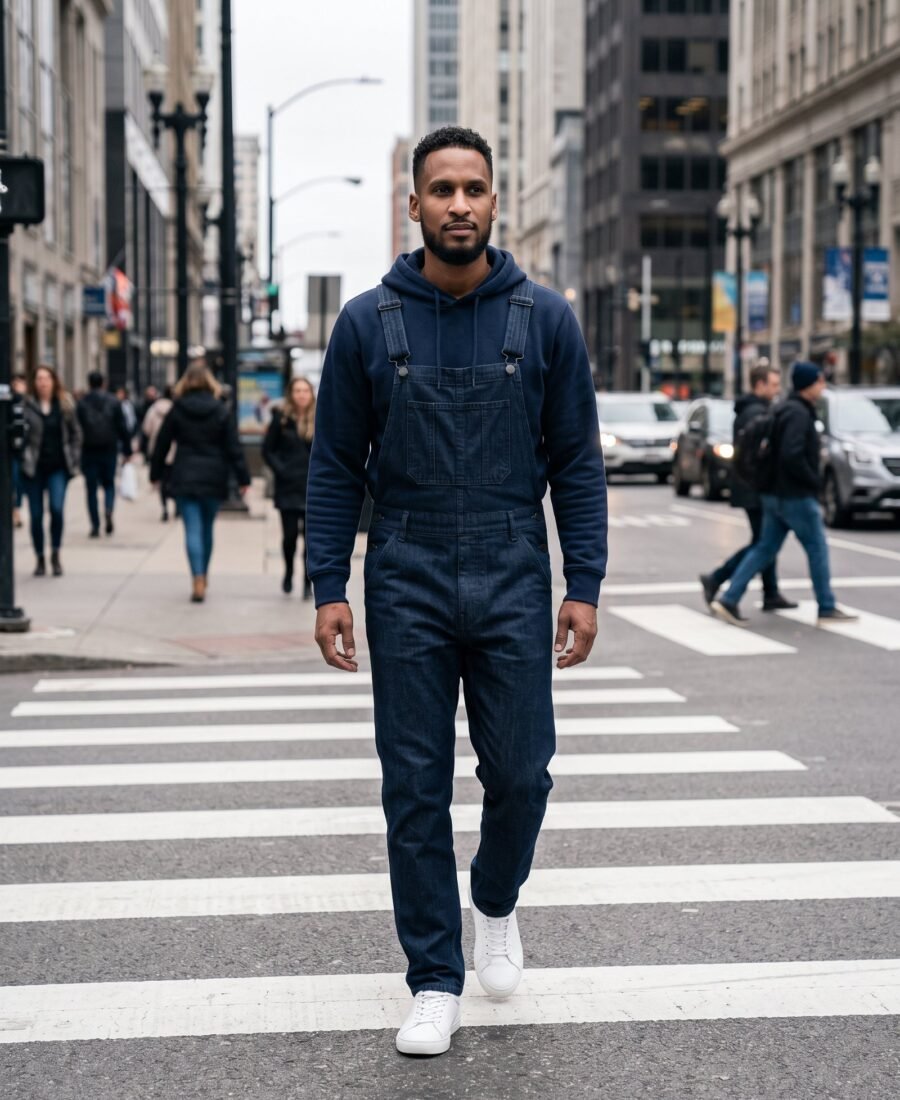
How to Style Overalls for Men: Everyday Outfits Beyond Workwear
How to style overalls for men without looking like a farmer or a kid: fit rules, what to wear underneath, shoes and seven everyday outfits to copy.
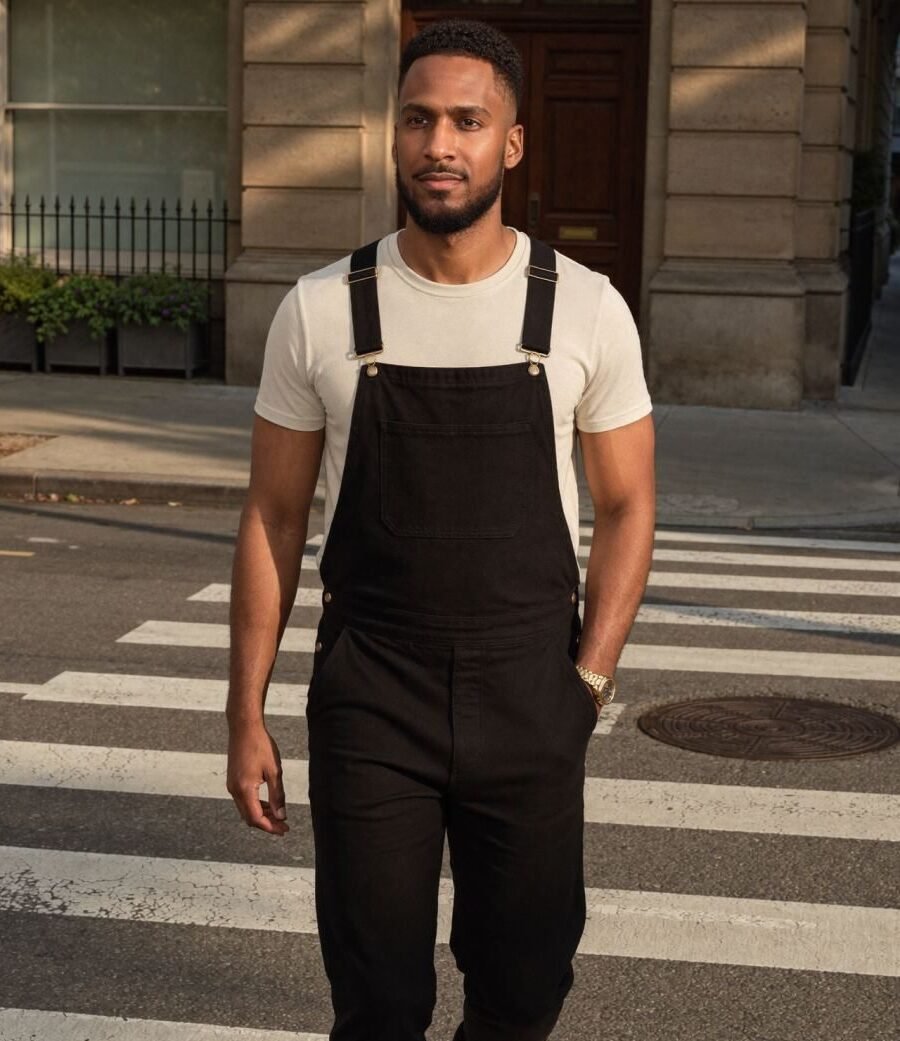
What to Wear Under Overalls: A Practical Guide for Men
What to wear under men’s overalls for warm days, cooler weather and real cold, plus how to handle necklines, bulk, hoodies and tucking.

Can clothes change how you feel? What the research actually says
Can clothes affect confidence and first impressions? A research-backed look at fit, context, bias and getting dressed with intention.