
September 20, 2026
Three ways to make black feel considered
Black works hardest when the outfit has texture, proportion and one small point of contrast.
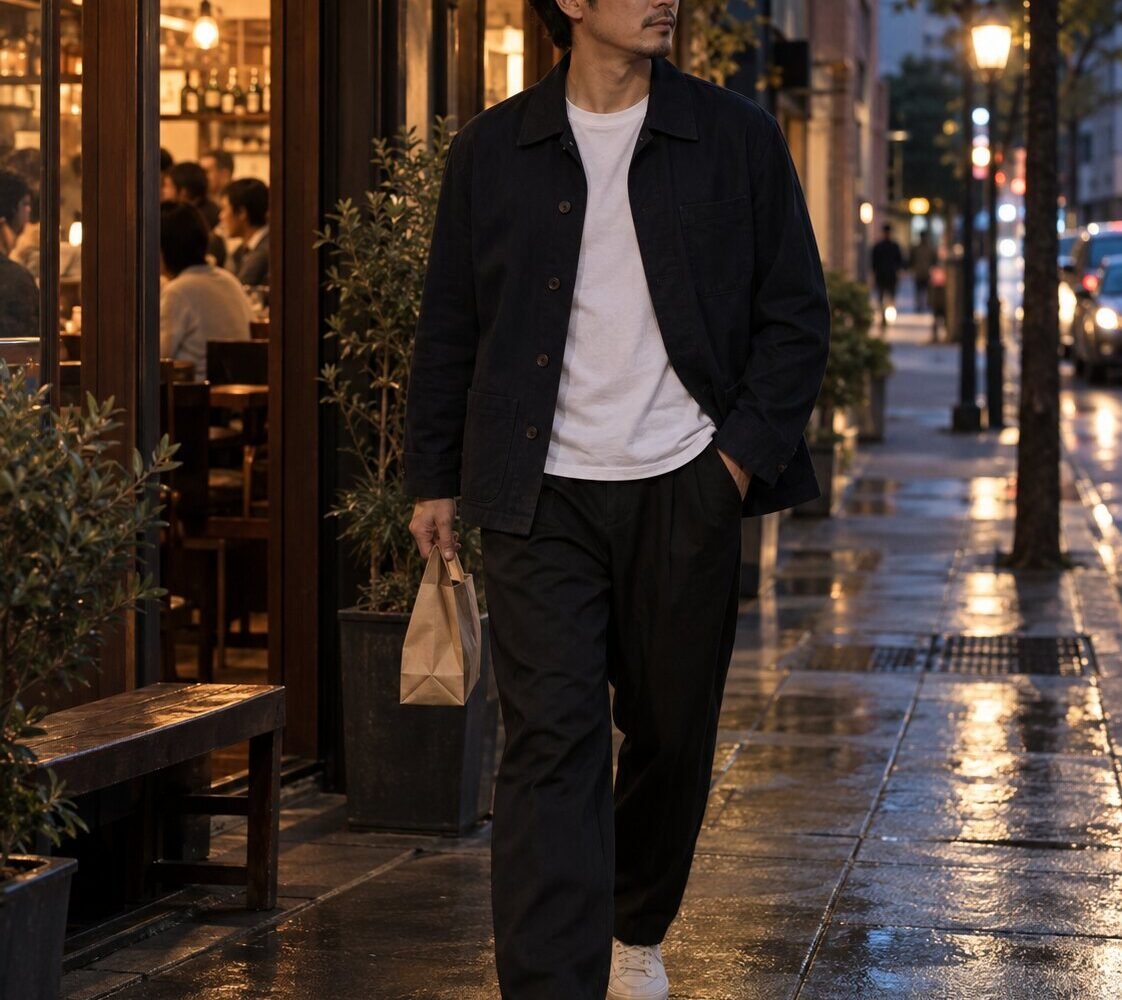
Black makes getting dressed look easy, which is why an all-black outfit can expose every weak decision. When color stops separating the pieces, the eye notices surface, shape and proportion instead. A flat cotton shirt, smooth trousers and polished shoes can merge into one dark block. Change one fabric or one silhouette and the same palette begins to look deliberate.
The useful question is whether the pieces give one another enough definition. Three choices do most of that work: texture, proportion and a controlled point of contrast.
Start with surface, not another shade
Two black garments can look completely different under the same light. Brushed wool absorbs light softly. Leather returns a sharp highlight. Washed denim shows its weave and fades along seams. Poplin looks clean and dry, while satin or nylon catches movement. Those differences keep the outfit readable without adding a new color.
Build around one clear surface contrast. Pair a matte knit with a smoother trouser, a crisp shirt with worn denim, or a structured wool coat with a softer jersey layer. You do not need every piece to announce a different texture. One strong change is usually enough.
Check the outfit in daylight. Some garments sold as black lean blue, brown or grey. That variation can work when it looks intentional, especially with washed denim or garment-dyed cotton. It becomes distracting when two formal pieces almost match but do not. If a jacket and trouser are meant to read as a suit, buy them as a set. If they are separates, make the difference obvious through fabric or shape.
Give the silhouette a hierarchy
An outfit needs one dominant shape. If the shirt, trousers and outerwear are all close-fitting, the result can feel severe. If all three are oversized, the body disappears and the hems compete. Decide which piece carries the volume, then let the others support it.
A relaxed overshirt works over a cleaner T-shirt and straight trouser. A wide trouser benefits from a shorter jacket or a top that ends clearly at the waist. A long coat can carry the outfit when the layers underneath stay simple. The aim is to keep the silhouette from expanding everywhere at once.
Shoulders are especially visible in black because the outline does so much work. A conventional jacket should finish close to the shoulder point, while a dropped overshirt needs enough width through the sleeve and body to look designed. Use the checks in Why the shoulder changes everything before judging the rest.
Use contrast where the eye needs a stop
Contrast does not require a bright sneaker. It can be the white edge of an undershirt, a silver watch, a warm brown belt, exposed skin at the wrist or a brass zipper. A small change gives the eye a place to land and separates the neckline, waist or footwear from the rest.
If the upper half feels heavy, open the collar or show a lighter layer at the neck. If the trousers and shoes disappear into one shape, use a different leather finish or allow a small break of sock or ankle. If the center looks empty, a belt buckle, chain or watch can introduce a harder surface without becoming the subject.
Research on dress and person perception is useful here, but it does not prove that black produces one universal reaction. A study found higher attractiveness ratings for subjects photographed in black or red than in several other shirt colors. The authors also found signs that color affected wearers’ posture or expression, not only viewers’ judgments. The young, limited sample makes this evidence of a possible effect, not a rule. A broader review of dress research likewise notes that color meanings vary with culture, time and context.
What you can control is coherence. Clean fit, intentional texture and appropriate formality do more for an impression than the color name on the label. Our guide to clothes, confidence and first impressions explains why context and fit matter more than one wardrobe trick.
Build one reliable black outfit
Start with the piece you wear most. Add trousers with a visibly different surface or weight. Decide where the volume belongs. Finish with footwear that matches the formality, then inspect the outfit from several feet away.
- Can you distinguish the top from the trousers?
- Does one piece clearly control the silhouette?
- Do the shoulders and hems look intentional?
- Is there one useful point of contrast?
- Are the blacks close enough to match, or different enough to look deliberate?
- Does the outfit suit where you are going?
If you are buying black clothing for someone else, do not assume the safest color makes the garment a safe gift. Fit, fabric and daily life still decide whether it leaves the closet. Use How to buy clothes for him without guessing to read the evidence already hanging in his wardrobe.
Sources
- Roberts, S. C., et al. “Distinguishing Between Perceiver and Wearer Effects in Clothing Color-Associated Attributions.”
- Howlett, N., Pine, K., Orakçıoğlu, I. and Fletcher, B. “Dress Is a Fundamental Component of Person Perception.”
Frequently asked questions
Do all the black pieces need to match exactly?
No. Separate pieces can vary when the difference looks intentional through fabric, wash or shape. Pieces meant to read as a suit should match.
How do you stop an all-black outfit from looking flat?
Combine surfaces that react to light differently, place volume in one part of the silhouette and add one controlled point of contrast.
Can navy or brown be worn with black?
Yes. Deep navy and dark brown can work as quiet contrasts when their role is clear, especially in footwear, outerwear or a single layer.
THE KALM KING JOURNAL
Continue reading

Can clothes change how you feel? What the research actually says
Can clothes affect confidence and first impressions? A research-backed look at fit, context, bias and getting dressed with intention.
Why the shoulder changes everything
Learn where a shirt or jacket shoulder seam should sit, how to spot pulling or overhang, and how to measure a garment that already fits.

How to buy clothes for him without guessing
His closet already contains the best clues. Read the labels, notice the repeats and buy for his actual life.